The one-acre line that decides your permit
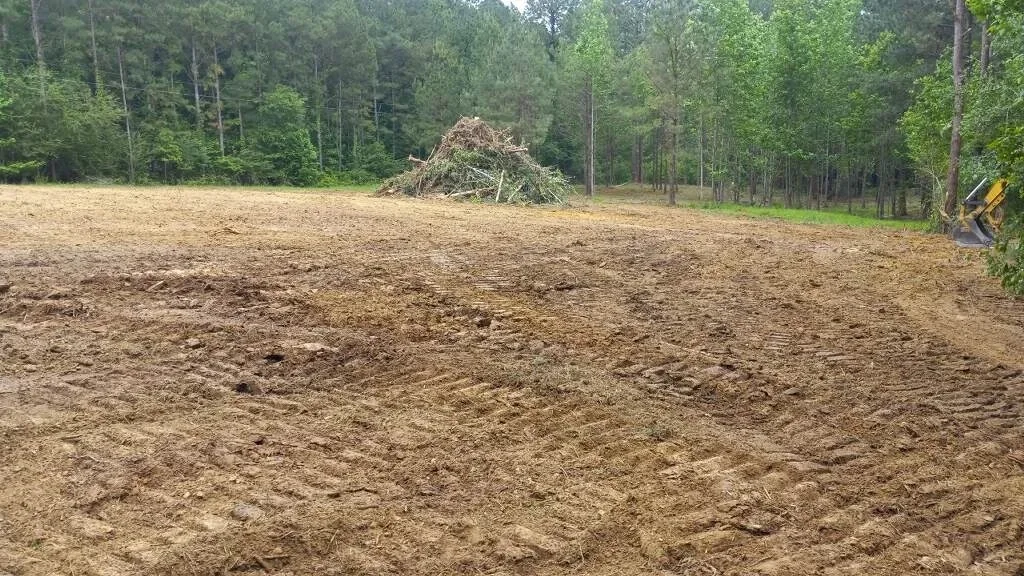
In Haywood County, the single question that reshapes a culvert quote more than any other is whether your work disturbs more than one acre of land. If it stays under, you're working under local grading rules and a county driveway permit. If it crosses the one-acre threshold — common on the larger valley parcels between Waynesville and the Jonathan Creek bottoms, or any job paired with new driveway cut and fill — you're into the state erosion control permit, a soil and erosion plan, and often a licensed designer. That paperwork alone can add real cost before a shovel touches dirt. The EPA treats sediment runoff from disturbed ground as a primary water-quality problem, which is why the threshold exists and why it isn't a box you can waive.
Practically: a straightforward driveway culvert on a quarter-acre lot rarely trips it. A culvert plus a genuine cut-and-fill driveway up a wooded slope almost always does. Know which one you own before you compare bids.
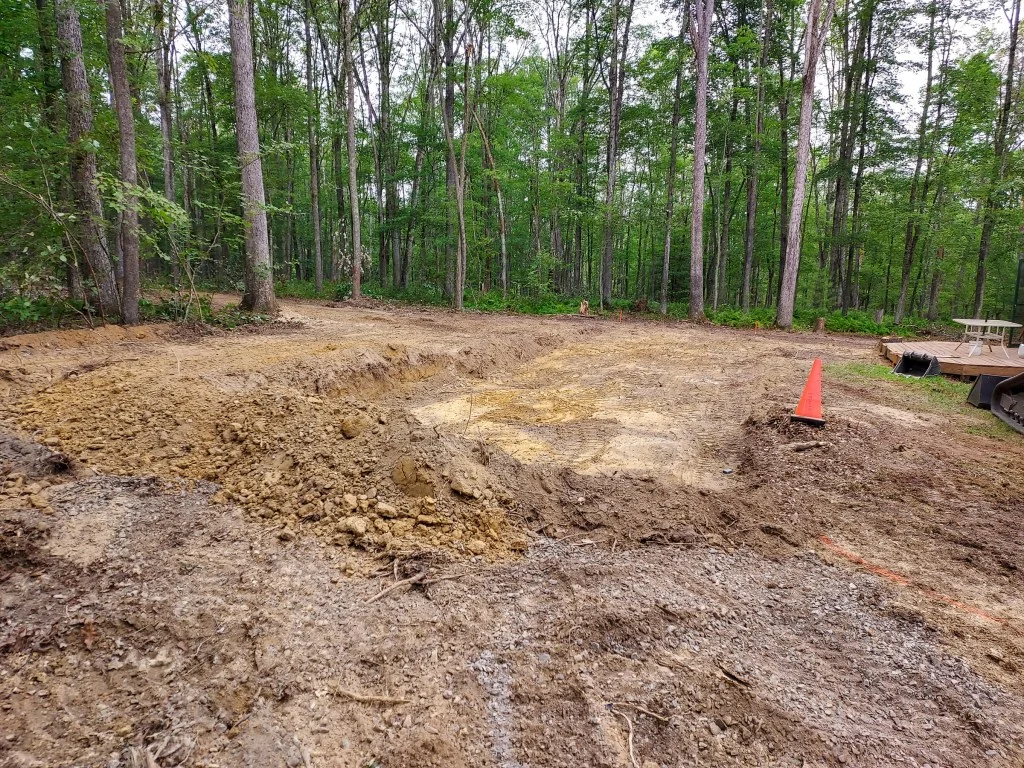
On the valley floor around Hazelwood and the flat blocks off Howell Mill Road, a culvert replacement might disturb a few hundred square feet and never come near the line. Head up toward the steep lots off Ratcliffe Cove or the roads climbing toward the Blue Ridge, and a single driveway cut can move the number past one acre before you've finished the first pass. The slope of the parcel, not the size of the pipe, decides your permitting path.
What Waynesville terrain does to pipe work
Waynesville is the Haywood County seat, tucked into valley floor between Richland Balsam's wet western slope and the Pigeon River drainage. Lots here fall into two real categories: downtown and Hazelwood blocks sitting on old graded flat, and the hillside parcels off Russ Avenue, Ratcliffe Cove, and the roads climbing toward the Blue Ridge that were never flat to begin with. A culvert in the first category is a sizing exercise. A culvert in the second is a sizing exercise plus a gradient problem, because the pipe has to handle not just your driveway runoff but the upslope water that crosses your drive line whether you planned for it or not.
The tells that you are in the second category: rust-colored staining at the pipe mouth, water standing at the low end for days after rain, a riprap apron that keeps washing out, and any 6-inch pipe doing the job of what should be a 15-inch. Undersized pipe is the single most common failure on these hillsides — it doesn't fail loudly, it just backs up during the storm that matters.
One more local wrinkle: the ground here is a mix of weathered clay and decomposing rock that holds water differently than the sandy bottoms down toward the Pigeon River valley. A trench dug in that clay can hold water like a bathtub until it's backfilled, which is why bedding material and proper grade matter more here than in flatter, better-draining counties. Contractors working this county learn to cut the trench so it drains, not so it stores.
Scope vs. price: what each job actually runs
Local jobs price like the ground they cross. The full Haywood County grading cost table covers the broader picture; for pipe specifically, the table below is the working range. Concrete and long runs climb toward the top of the band — long runs or concrete pipe run $6,000–$9,500 depending on length and pipe class.
| Scope | Typical installed range | What moves the number |
|---|---|---|
| Standard residential driveway culvert, short run | $1,500–$2,800 | Pipe diameter, trench depth, riprap at outlets |
| Longer driveway run, steep gradient | $2,800–$4,500 | Length, slope, headwall or endwall, drainage corrections |
| Concrete pipe upgrade or extended run | $6,000–$9,500 | Pipe class, joint type, engineering, heavy embankment |
Any bid without a pipe-diameter line, a gradient line, and an outlet-protection line is incomplete, not cheap. Sediment and scour control are code requirements, not options — the ICC plumbing and grading provisions and the state erosion rules both treat them that way.
What separates the low end from the high end on a typical Waynesville driveway: a short corrugated-metal run on flat ground with a simple riprap outlet sits at the bottom of the band. Add a headwall at the inlet, a longer pipe to reach a safe discharge point, and a concrete endwall at the outlet, and the same driveway pushes toward the middle. Cross the line into concrete pipe with engineered joints — common where heavy embankment or repeated flood exposure makes metal pipe a poor bet — and you are into the top of the band before any permitting cost is added.
When the weather history is the whole story
The federal disaster record explains a lot of Haywood County culvert calls: 19 declared events touch this county across 1973-2026, overwhelmingly storm and flood family. Those events are why the county's sizing assumptions are conservative and why a pipe that was fine for ten years can suddenly be the pipe that caused the washout. The National Weather Service tracks the same pattern — the heaviest rainfall here arrives fast, from upslope, and off pavement.
That has a practical consequence for culvert selection: size for the storm you will eventually get, not the storm you got last year. Upsizing one pipe diameter is the cheapest insurance in this trade.
It also changes how you place the outlet. On a steep Haywood County drive, water exits the pipe with real velocity, and an unprotected outlet erodes a headcut that works its way back uphill toward the pipe itself. That is how a culvert that looked fine in June becomes a driveway washout in the next big rain. Riprap, a headwall, or an energy dissipator at the discharge keeps the energy from eating your driveway from the back end forward.
Hiring the right crew for culvert work
Three checks specific to Haywood County: ask whether the crew handles the erosion permit side when the job crosses the one-acre line — otherwise you are coordinating a designer, a permit, and a pipe installer separately, and the sequencing matters; ask how they protect the outlet (riprap, headwall, or energy dissipator), because outlet failure is what kills most installs; and ask for the pipe class and joint type in writing. The NC Licensing Board for General Contractors sets the threshold where a project needs a licensed general contractor, so confirm the license line before you sign. When you're ready to compare local crews, the Waynesville grading contractor guide covers what a proper site visit includes, and the culvert and driveway pipe overview walks through pipe material choices.
A proper site visit in this county involves walking the upslope drainage area, checking where water crosses the drive, and measuring gradient — not just looking at the existing pipe. If a contractor quotes from the truck without that walk, the number is a guess. Ask what they found upstream before you decide which bid to take.