The one-acre line decides your job class
Almost every driveway question in Lake Junaluska comes down to how much ground it touches. Haywood County's terrain pushes lots against the one-acre threshold set in the NC erosion and sedimentation rules: fall under it and you are in the standard county review lane, cross it and the state permit carries real line items. On a lot with more than an acre of exposed soil between the drive, turnouts, borrow pits, and the cut-and-fill that mountain lots demand, expect to see a sediment basin or trap, silt fence detail, temporary seeding, and inspection recordkeeping priced into the quote. That package routinely adds several thousand dollars to a job that looks identical on paper to a neighbor's half-acre driveway. The trap most homeowners walk into is a low quote that silently omits it. If your driveway crosses a creek, has a fill slope near the property line, or serves a new build on a cut pad, ask the question on the first call — before anyone sets a stake.
It helps to picture why the acre threshold bites so hard here rather than on flat piedmont ground. A 250-foot drive climbing from the lakeshore benches toward the ridge road may only be twelve feet wide, which sounds like a fraction of an acre. But add the cut slope on the uphill side, the fill slope on the downhill side, the cleared shoulder where the machine had to work, a turnaround or parking pad, and the borrow area for stone, and the disturbed footprint balloons. On the tighter lots around the lake, that push over one acre is more common than owners expect, especially on a new-home build where the driveway, house pad, and utility trench are all opened in the same season. On existing lots doing only a driveway refresh, you are almost always under the line. The honest move is to have the disturbed area actually measured on the plan, not eyeballed, because the review lane your job lands in changes the budget before a single load of stone arrives.
What mountain gravel drives actually cost here
Lake Junaluska sits on the benches and slopes between the lake and the ridges running toward Waynesville, and the price follows the grade. Flat pull-off drives on the valley floor price near the low end; drives that climb toward the ridge road or cut through rhododendron-heavy ground price higher because of clearing, cut volume, and drainage. The scope table below reflects how Haywood County jobs actually break down. For the region-wide picture, our Haywood County grading cost breakdown covers labor and equipment rates side by side.
| Scope | Typical range | Notes |
|---|---|---|
| Gravel refresh only (new stone on sound base) | $1,200-$3,200 | Drive is already cut and draining |
| Full install, short flat drive (under 100 ft) | $3,200-$5,500 | Rough grade, base stone, surface gravel, culvert if needed |
| Full install, standard residential drive (100-300 ft) | $5,500-$9,500 | Cut-and-fill, drainage, crown, two gravel lifts |
| Steep or long drive, heavy clearing | $9,500-$18,000+ | Grade work, retaining or boulder toe, extra stone volume for stability |
| Permitted grading above one acre (state erosion permit adds) | +$2,500-$6,000 | Design, sediment control install, inspections, seeding |
Ranges are honest regional bands, not quotes. Two drives the same length can land $4,000 apart on drainage alone.
The spread is real and it is mostly about stone volume and haul distance. A short, near-level pull-off near the lakefront needs a thin lift and maybe a load or two of surface stone. A drive climbing at a working grade may need twice the base depth to keep the surface from rutting under a loaded truck, plus a boulder toe or stacked rock where the fill slope wants to creep. Add clearing through mature hardwood and rhododendron, where stumps and root mat have to come out and the holes get backfilled and compacted, and the equipment hours climb. Haul distance matters too, since aggregate has to be trucked in on the same winding roads the crew is trying to improve. None of this is padding. It is the difference between a drive that sheds water for a decade and one that needs a do-over after the first wet March.
Base failure is the second bill you don't want
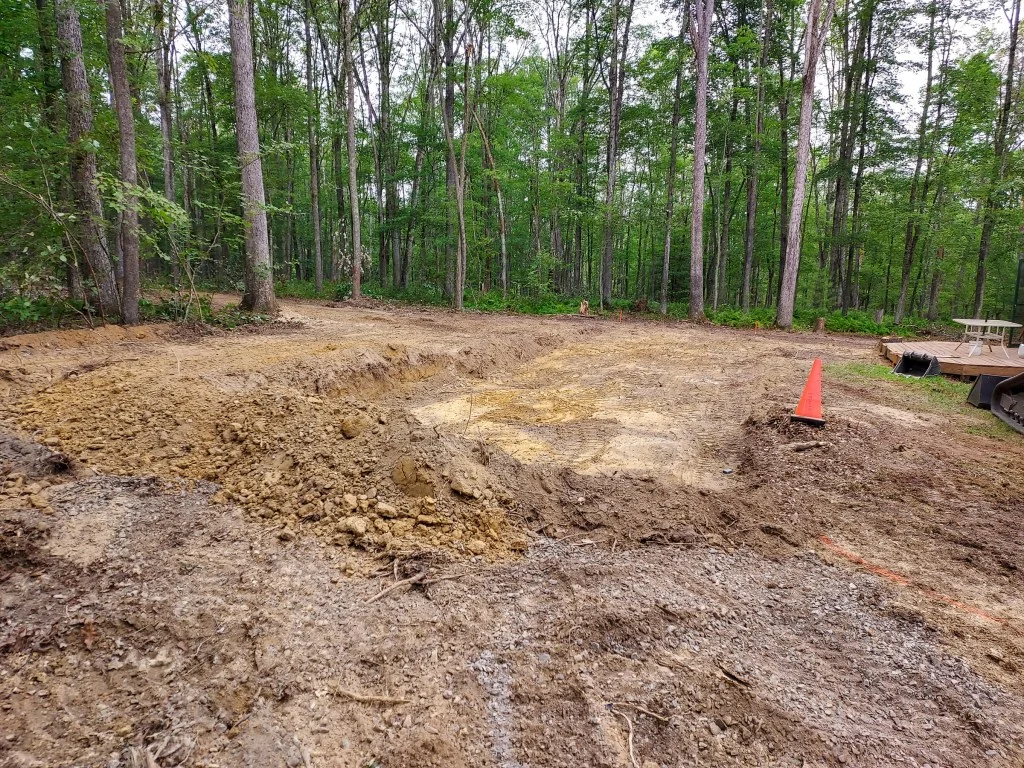
The clay and weathered rock under many Lake Junaluska lots holds water like a cup, and a gravel drive laid directly on it turns into a soft spot every wet spring. The crew that fixes that later is charging you twice. The right sequence here is the one our driveway grading and gravel build covers in detail: strip the organics, get the subgrade shaped and compacted to a true grade, install the drainage crossings before the stone, then put down base aggregate and crown before the surface lift. A drive that climbs the ridge needs the crown and ditch working from day one, and often a culvert sized to pass storm flow from the uphill side. Because these drives commonly fall within the driveway grading and gravel scope, the grading contractor that builds your subgrade and the one placing gravel often end up the same crew. If you'd rather just sort out who to call, our Lake Junaluska grading contractors page covers the checks — licensing thresholds, proof of erosion-control experience, and references on steep ground.
Watch for the tell-tale warning signs on an existing drive before you accept a cheap refresh. If the surface stone is pumping muddy water or ruts appear in the same two spots after every rain, the problem is underneath, and adding more gravel to the top just buries it. Soft spots that feel spongy underfoot in the wet months usually mean the subgrade was never stripped or compacted, or the organics are still in place breaking down. A drive that loses its crown flattens into a birdbath, and once water ponds, it works into the base and the whole thing starts to sink. On steep pitches, a proper build also means thinking about traction for the vehicle that uses the drive every day, not just drainage, which is one more reason the grader and the gravel crew should be looking at the same plan.
Runoff upstream and downhill, not just under your tires
The federal disaster record touches Haywood County: 19 declared events in 1973-2026, overwhelmingly storm, flood, and landslide family. Neighborhoods along the lake and its feeder streams know what a saturated slope does. That history sets the drainage rules that matter here: your drive's drainage has to hand water to a defined outlet, not to the neighbor below. Cut off the uphill side with a ditch and take it to a culvert or stone channel, spread flow so it doesn't concentrate into a gully, and stabilize any bare cut slope the day the machine leaves. Drainage guidance from the National Weather Service and state grading rules both point at the same idea — move the water deliberately or it picks its own path, usually through somebody's yard. On steep lots, the cheapest headache to avoid is the one you design out before building.
Uphill neighbors and downstream neighbors are both part of the picture in a lakeside community where lots sit stacked on the grade. Water that leaves your cut slope as a sheet is manageable; water that collects into one channel and hits the next property as a concentrated jet causes complaints, washouts, and sometimes real damage claims. The fix is boring and effective: a defined ditch, energy dissipation at the outlet, and stone or riprap where flow dumps out rather than bare dirt. On lots draining toward the lake or one of the feeder streams, keeping sediment on site is part of the same discipline, since the EPA and state rules both treat silt leaving a construction site as a water-quality problem, not just a driveway problem. Seeding or matting a bare slope quickly is often the single cheapest line item that prevents an expensive spring.
Paperwork, licensing, and getting on the schedule
Driveway and grading work has a licensing line worth knowing. In North Carolina, general contractors must be licensed once a project crosses the dollar threshold, and grading and driveway projects are not exempt from the rule. Check the threshold at the NC Licensing Board for General Contractors before signing anything, and ask whether work above one acre needs an approved erosion plan filed before start. Local grading permits through Haywood County processes are the second checkbox. Most reputable crews handle both for you, but you should still know which side of both lines your job sits on. On timing: spring rains push schedules out, so book before the wet season if you can choose.
Some jobs pull in more than one trade checklist. If the driveway plans involve a new water line tap, a septic line under the drive, or any plumbing work tied to a new structure, the contractor side of that falls under the NC State Board of Examiners of Plumbing, Heating and Fire Sprinkler Contractors, and those inspections need to happen before the gravel goes down over the trench. Sequencing matters: utilities first, then subgrade, then drainage crossings, then stone. A homeowner who lines those up in the wrong order ends up paying to have fresh gravel opened back up. Book the site visit early in the year if at all possible, because the good weather window on these slopes is short and everyone on the ridge is calling at the same time.