What Mills River ground does to a driveway
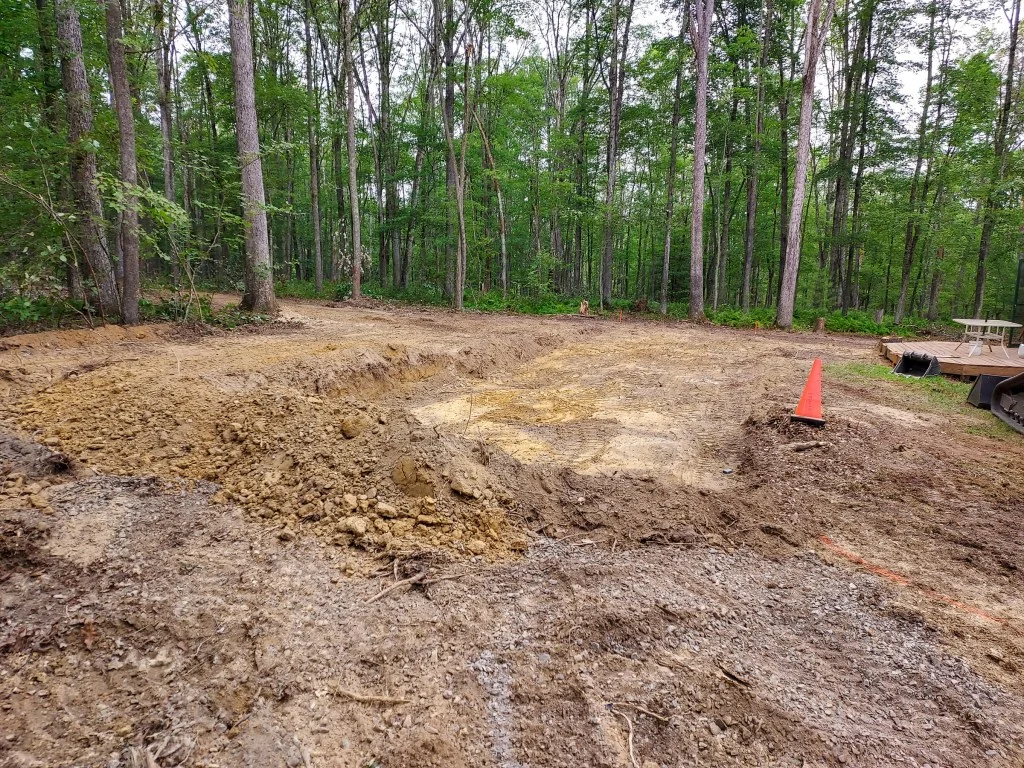
Most of Mills River sits on red clay over weathered rock, with a layer of old fill on the lots that were graded for subdivision. Those three materials fail differently under a driveway. Clay holds water until it is saturated, then goes soft and pumps. Rock refuses to drain at all, so water sheets across whatever is on top of it. Old fill settles unevenly for years and leaves you with dips that collect exactly the runoff you are trying to move off the drive.
On the steeper lanes toward the Blue Ridge escarpment and the older farm-to-road tracks near the river bottoms, the failure is usually washout: one storm carves a channel down the center or along the uphill edge, and by the next season there is a trench where your gravel used to be. The fix is never just more stone dropped in the rut. Water found that path once; it will find it again unless the grade and the channel are corrected.
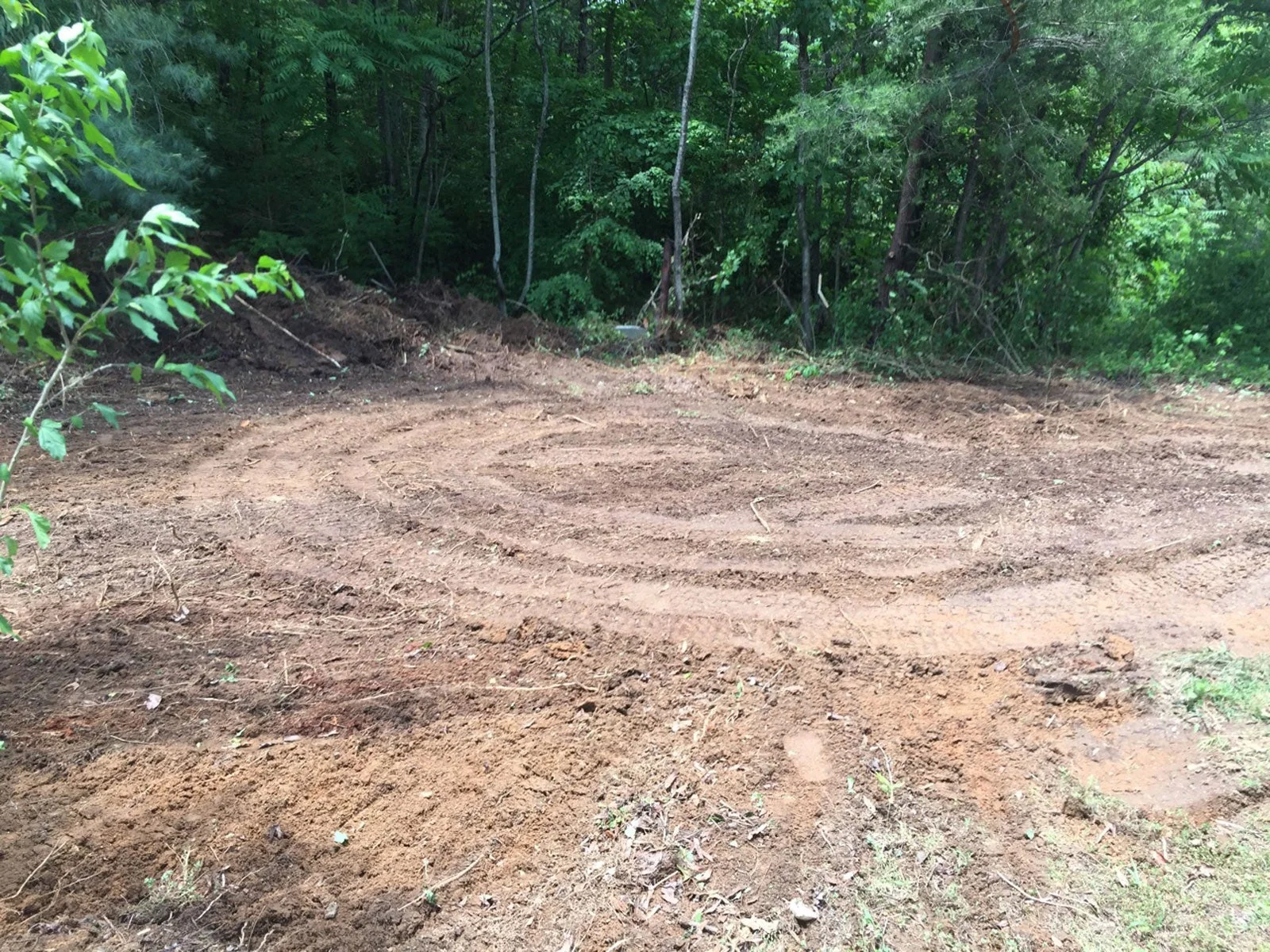
You can usually tell which material is running the show just by walking the drive after a hard rain. A drive on pure clay will be slick and hold a sheen of water in the low spots for a day or more. A drive over shallow rock will be dry in the high spots but scoured clean in the low ones, with the gravel pushed to the edges. And a drive on old fill will show a washboard pattern, because the fill is settling at different rates under the same surface. Each of those reads points to a different fix, and pricing the job without that read is how homeowners end up paying twice.
Mills River also sits in a transition zone where the flat bottomland near the French Broad and the feeder creeks meets the rising ground toward Asheville and Fletcher. That means two drives a mile apart can have completely different drainage behavior. A drive off a bottomland farm road may fight a high water table and slow sheet flow; a drive climbing toward the escarpment fights velocity and concentrated runoff. The scope, the stone, and the ditching all change with that split.
Reading the damage before you price the fix
Three things separate a small job from a larger one on a Mills River drive. First, whether the water arriving is only rain on the drive itself or runoff from uphill ground, a barn pad, or a neighbor's graded lot — off-site water raises the scope immediately. Second, whether the drive has any crown or cross-slope left; a flat clay drive has nowhere to shed, so every storm remakes the ruts. Third, whether rock is shallow enough that the crew is grading soil or trenching stone.
That third one is why bids here swing so widely. A drive where you can cut a clean ditch by hand is a different job than one where the ditch has to be cut through weathered rock. If the drive also crosses a low spot where water stands after rain, expect a culvert on the quote. The relevant building rules and site-drainage expectations come from the state code adopted through the International Code Council model, and grading that moves water toward a structure instead of away from it is the single most common cause of the callbacks we see.
Walk the drive and note where the gravel is thickest and where it has vanished. Gravel migrates downhill and outward, so a bare strip along the center usually means the crown is gone and water is running the middle. A bare strip along one edge usually means the cross-slope is wrong and water is running the shoulder, cutting it away. If the bare spot is at the bottom of the hill and the stone has piled up at the culvert or the road apron, the problem is velocity, not volume, and a water bar or a series of them may be the honest answer instead of a full regrade.
Also check the transition where the drive meets the county road or the shared lane. That apron is where a lot of Mills River washouts start, because road runoff drops onto the private drive and the drive has no inlet to take it. Fixing the apron and adding an inlet there is often cheaper than rebuilding the whole drive, and a good crew will tell you so.
The Mills River price picture, by scope
Numbers below assume a typical residential drive, not a commercial entrance. Clay, rock, and how far stone has to be hauled and spread set where you land in each row. See the working detail in the Henderson County grading cost breakdown, and treat any quote that omits drainage on a steep drive as incomplete rather than cheap.
| Scope | Typical range |
|---|---|
| Regrade existing gravel drive, no new stone | $350–$1,200 |
| Washout repair, regrade plus fresh stone | $400–$1,500 |
| Washout repair with ditching and culvert | $800–$2,800 |
| Engineered drainage on a steep grade | $2,500–$6,500 |
Stone type matters as much as stone quantity. Clean crushed stone with no fines lets water pass; clay-heavy crusher run packs tight and can seal the surface, which is fine on a crowned drive and wrong on a flat one. On a long Mills River drive, crews often use a clean stone on the running surface and a heavier, binding stone at the steep sections and the apron, where traction and stability matter more than drainage.
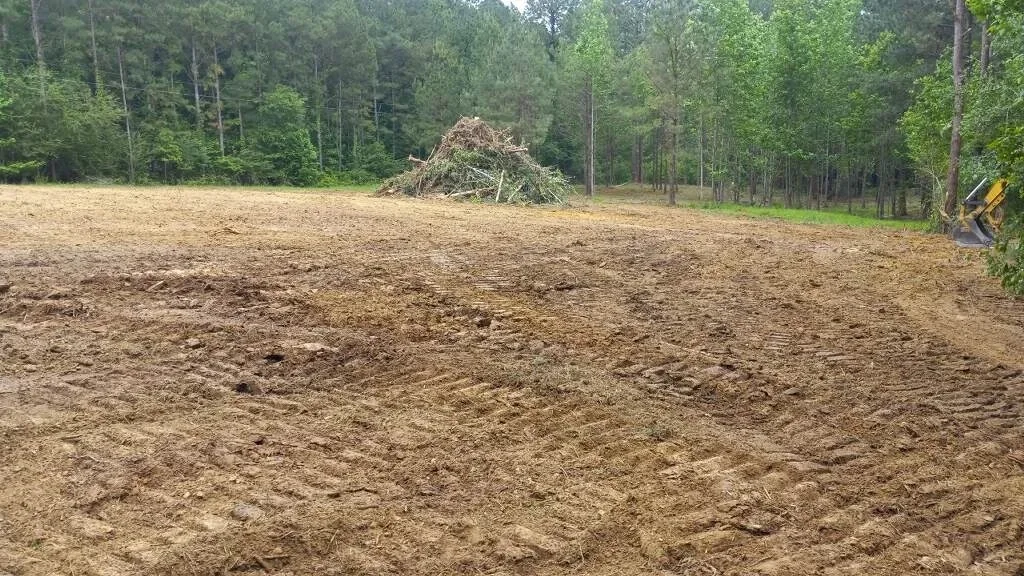
Length and access drive the rest. A 200-foot drive with a turnaround is a different day than a 600-foot lane climbing to a homesite, even when the damage looks similar. If the stone truck cannot back all the way to the work area, stone has to be staged and moved twice, and that labor shows up in the total. Ask the crew how many tons they expect and where the truck will stand, because those two answers explain most of the gap between two bids on the same driveway.
Ditching is priced by the foot in most cases, and rock is the wild card. A ditch that cuts through soft clay and old fill moves fast; one that has to pick through weathered rock and ledge slows to a crawl and may need a different machine. If your quote lists ditching as a single lump sum with no footage, ask for the linear feet and the assumed ground condition. That one question tells you whether the bidder actually walked the site.
Water history is part of the estimate
Henderson County has seen 16 federally declared disaster events across 1978-2026, mostly storm and flood family, and the pattern shows up on driveways before it shows up anywhere else. A drive that survived twenty ordinary seasons can lose its entire surface in one high-intensity rain event on a saturated clay slope. Before a crew sells you a thicker stone layer, the drainage question should be answered: where does the uphill water go, what happens at the culvert, and does the drive shed to daylight or into a ditch that backs up.
Weather forecasting for scheduling matters here too. Grading wet clay smears it and makes compaction worse, so crews will often wait for a dry window; the National Weather Service outlook is a reasonable gauge of whether your job starts this week or after the next front clears. The broader material and stormwater guidance from the EPA is worth a read if your drive discharges toward a stream or wetland edge, which is common near the river bottoms.
The tropical remnants and stalled frontal systems that reach the southern Appalachians are the events that do the real damage here, because they drop a lot of rain on ground that is already saturated. When the clay is full, water stops soaking in and starts running, and a drive that has no shaped channel for that runoff becomes the channel. That is why a driveway repair priced only on the visible rut tends to come back after the next big system.
If your drive crosses a creek branch or a swale that only runs in wet weather, note it. A dry swale that carries storm flow a few times a year still has to be crossed with a properly sized culvert and protected inlets, or the crossing will scour at both ends. Culvert sizing is not guesswork; it depends on the drainage area above the crossing and the storm the county and state expect it to pass.
Choosing a grading crew in Henderson County
Ask three questions. Does the crew work Mills River ground regularly, meaning they know how red clay and shallow rock behave in a wet season? Does the quote separate grading from drainage, so you can see what the ditch and culvert actually cost? And does the scope say where the water goes when it leaves the drive?
On larger jobs, North Carolina licensing rules from the state general contractors board apply once a project crosses the statutory threshold, so confirm the license situation on anything beyond routine residential repair. If you want the scope explained line by line before you commit, the driveway grading and gravel guide walks through what each item covers, and the Mills River grading contractors page covers how we scope and schedule local work.
Get the scope in writing with the footage, the stone type, and the drainage plan spelled out. A one-line quote that says regrade and add gravel is not enough to compare against another bid, and it leaves the two most expensive items, ditching and culvert work, undefined. A useful quote also states how the finished drive will shed water and what happens at the driveway apron where it meets the road.
Finally, ask what the crew will do if they hit ledge or a buried stump where the ditch is supposed to go. On Mills River ground that is a real possibility, and the answer tells you whether the bidder has done this work in this county or is pricing from a template. A crew that knows the ground will name the contingency up front rather than surprise you with a change order mid-job.