What actually moves a grading bid in Leicester
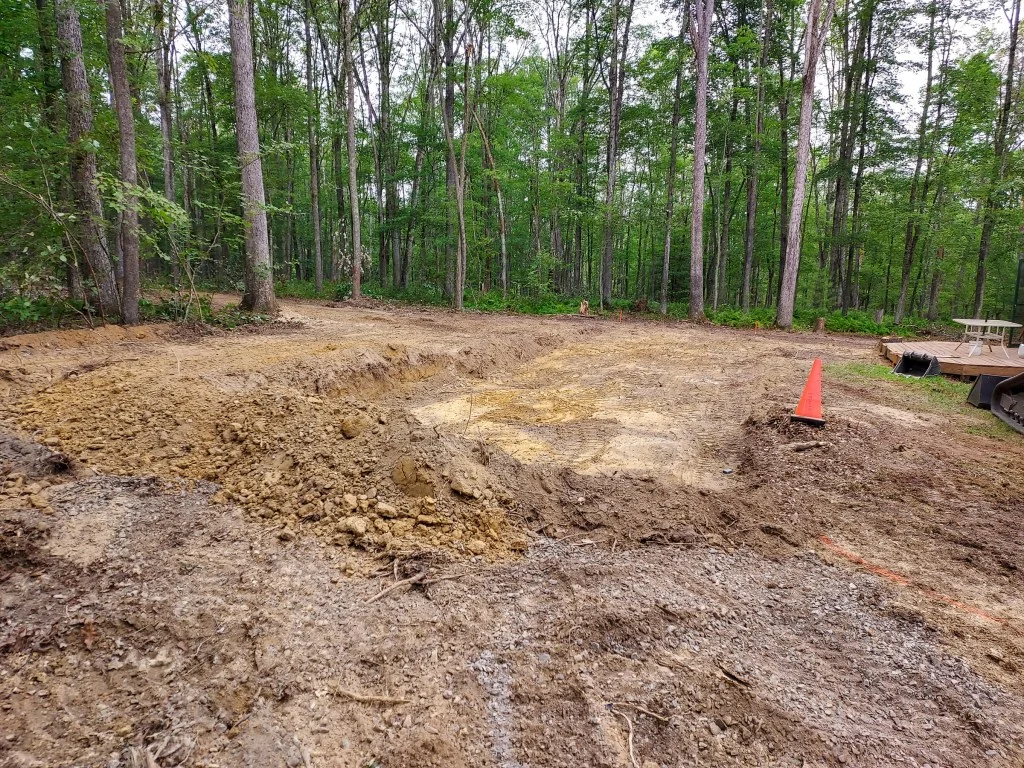
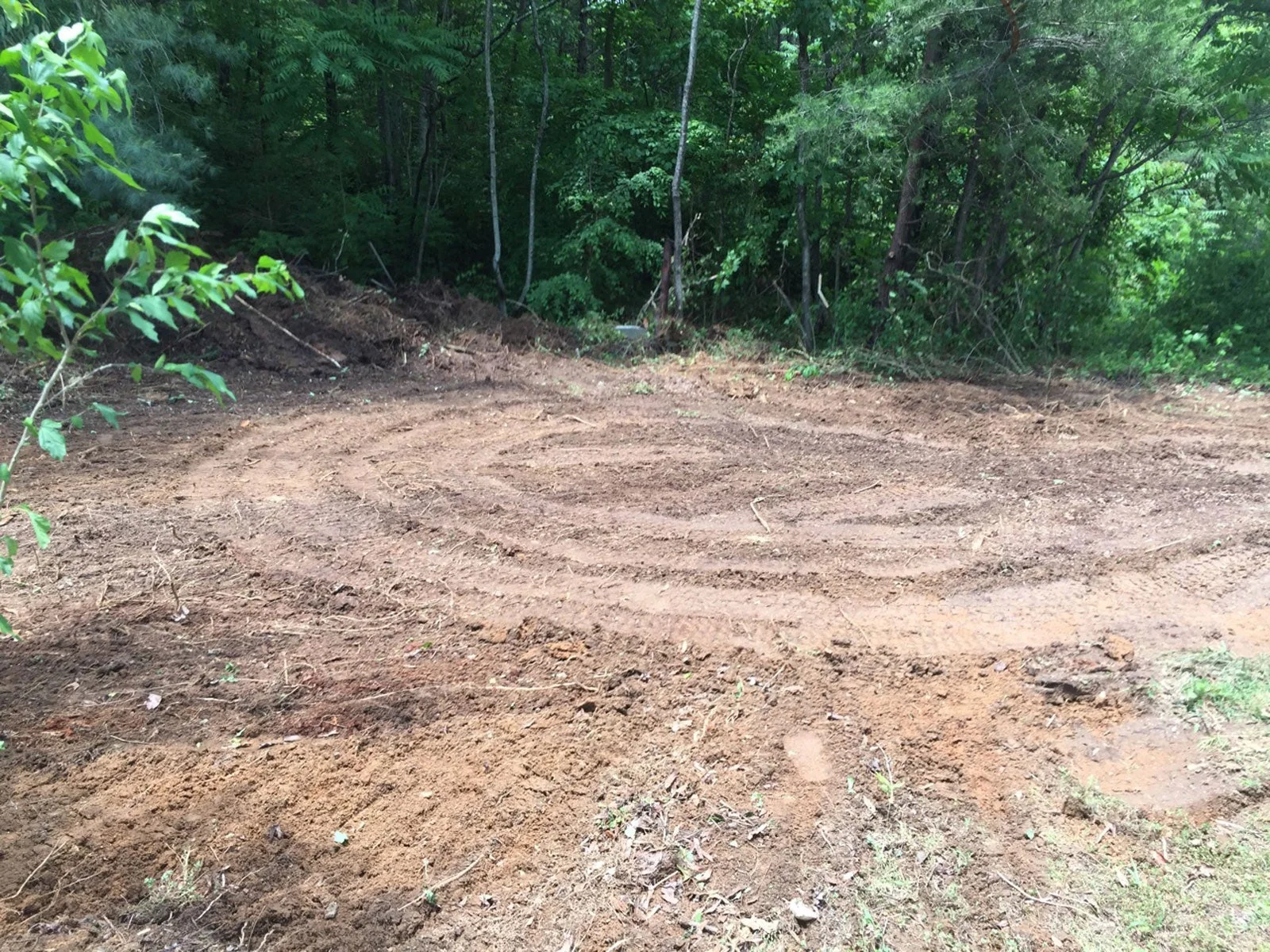
Two Leicester lots of the same size can price a thousand dollars apart before anyone touches a machine. The number is built from a short list of line items, and the first one is dirt: Buncombe County's red clay holds water, swells when wet, and refuses to compact like the sandy subsoil a lot of national pricing assumes. That means more scarifying, more lift-and-compact passes, and often import of better structural fill, which is where budgets quietly climb. On a lot in the Leicester valley where the subsoil has some sand and gravel in it, the same pad might compact in half the passes — and that difference shows up on the invoice, not on the drawing.
Second is grade change. A homesite cut into a ridge off Alexander Road may need 300 yards moved to make a flat pad and a driveway that holds; a flatter lot down toward the Sandy Mush bottomland may move fifty. The machine hours per yard go up on a slope too, because the operator is benching and tracking instead of just pushing.
Third is haul. If there's more cut than fill, somebody pays to truck the surplus off-site, and that trucking line can rival the earthmoving line on a small job. Dump sites in this corner of Buncombe aren't next door to every ridge lot, so a twenty-minute round trip becomes forty, and the per-load cost stacks fast.
Fourth is water. Every graded lot here has to move stormwater somewhere legal, and on sloped ground that means a designed swale or diversion ditch rather than a hopeful slope toward the neighbor. The full service picture lives on the grading and excavation page; the money picture is below.
Scope against price, line by line
These bands reflect typical residential work in the Leicester area and will shift with access, rock, and how far spoils have to travel. Treat them as a starting frame for a conversation, not a quote. A lot with a narrow gravel drive off a county road, for instance, may need a smaller machine or a mat run just to reach the pad, and that access cost has nothing to do with the yardage moved.
| Scope | Typical range |
|---|---|
| Grading a flat building pad, minimal cut | $1,200–$3,000 |
| Cut-and-fill pad on a moderate slope | $3,000–$6,000 |
| Driveway grade and gravel base, up to ~300 ft | $2,500–$6,500 |
| Drainage swale, diversion, or culvert install | $700–$3,000 |
| Small-pond or retention excavation | $4,000–$8,000+ |
| Site regrade after failed drainage | $2,500–$7,500 |
The Buncombe County grading cost breakdown carries the fuller table, including mobilization and erosion-control allowances that rural jobs need. A bid that omits silt fence and stabilization is not cheaper; it's just incomplete. Rock is the wild card nobody can quote from a photo — a lot off a Leicester ridge road can turn up more weathered rock than the soil probe suggested, and that changes the hourly math mid-job.
Clay, slopes, and why water is the real budget
Leicester's terrain is the story: ridge ground toward the Blue Ridge escarpment, bottomland along the creeks, and subdivision lots in between that were cut into whatever was there. Heavy clay soil doesn't drain, so grade is the drainage system. Get the fall wrong by a few inches and the first big storm will find the foundation, the driveway, or the neighbor's yard, and the repair costs more than the original grade did. That is the single most expensive mistake in this trade locally, and it rarely shows up until months after the machine leaves.
This is also flood-and-storm country. Buncombe County has 19 federally declared disaster events on record spanning 1973-2026, and the pattern is heavy rain rather than slow accumulation. That history is why the NC Department of Insurance Office of State Fire Marshal treats site drainage and erosion control as code items, not optional upgrades, and why the National Weather Service flood and rainfall data is worth checking before you commit to a finished grade. In practice that means sizing the swale and culvert for the rain this county actually gets, not a national average, and pointing the outlet somewhere that already carries water.
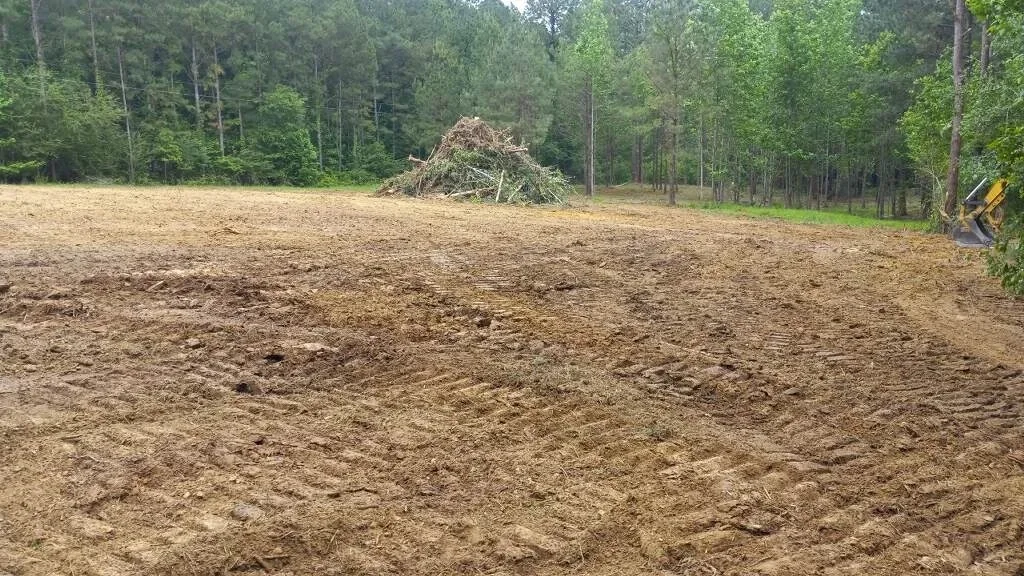
If trees need to come out before the machine arrives, that work runs alongside it — see land clearing in Leicester for how clearing and grading get sequenced. Pulling stumps after a pad is cut is far more disruptive than doing it first, so the schedule matters as much as the price.
Licensing, permits, and what a clean scope includes
North Carolina draws a line between landscaping and construction: once a grading job crosses the statutory threshold, or is tied to a building project, it falls under general contracting rules enforced through the NC Licensing Board for General Contractors. Any excavation near utilities or septic also has rules, and the NC Board of Examiners of Plumbing, Heating and Fire Sprinkler Contractors governs the septic and water-line side of that work. For Leicester homeowners on well and septic, that second piece is not hypothetical — most lots here are on both.
A complete Leicester scope names the pad elevation, the cut and fill volumes, where surplus dirt goes, the drainage plan with swale or culvert sizes, and the erosion control that stays in place until grass holds the soil. If those five items aren't in writing, the bid is a guess. It also helps to spell out who is responsible for calling 811 before digging, since a buried line on a rural lot can stop a job for a day or more while everyone waits.
Finally, ask what happens to the spoil pile. On a sloped Leicester lot, a stockpile left in the wrong place becomes next spring's mudslide onto the driveway, and moving it a second time is a cost nobody budgets for.