Where the water comes from on a Weaverville driveway
Weaverville driveways fail from the top down, not the bottom up. The town sits in a bowl of ridges north of Asheville, and most homes here were built on grades that shed water toward the road whether the builder planned for it or not. The trouble usually starts uphill: a spring seep above the drive, a neighbor's lot graded toward your gravel, or a gutter downspout that dumps eight feet from the edge of the driveway and lets gravity do the rest. Water crosses the surface, finds the low shoulder, and starts cutting.
Around Reems Creek and the upper end of Barnardsville Highway, drives run long and steep enough that a hard rain reaches the apron with real energy behind it. The hollows off Flat Creek and Paint Fork drain fast, and a lot that looks fine in a dry August turns into a ditch after a two-inch storm. That's the terrain here: mountain hollows that funnel runoff onto the nearest cut grade, which is usually somebody's driveway.
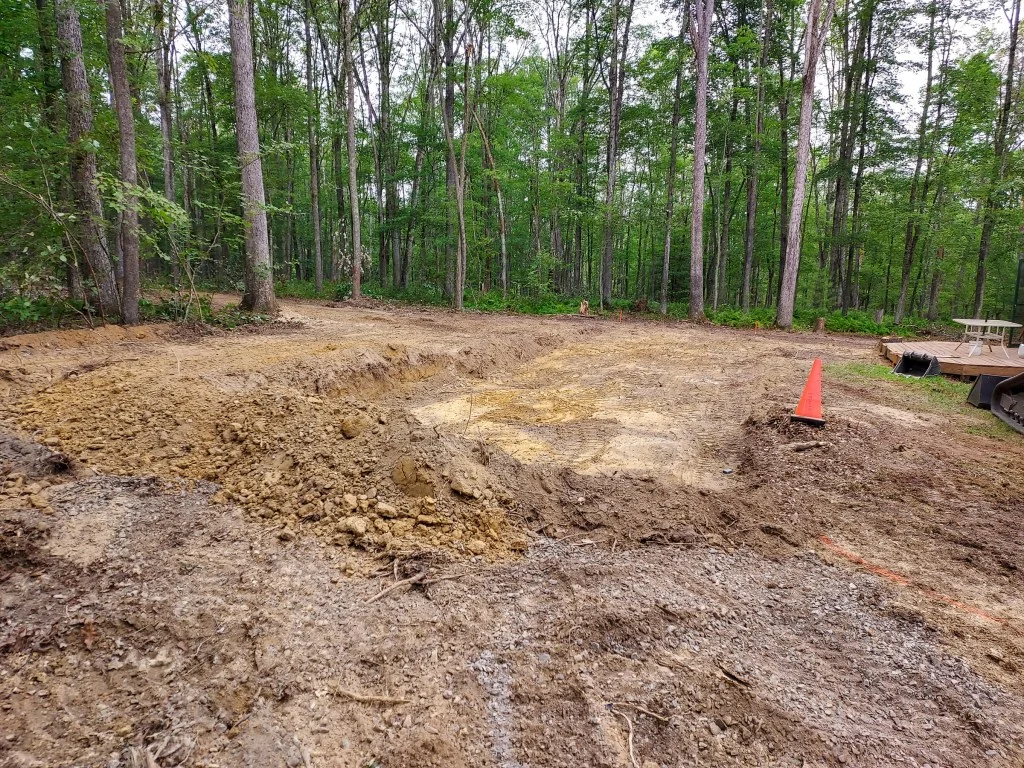
The result is the pattern Weaverville owners know well — a channel down one wheel track, exposed rock where the fines washed out, gravel fanned across the apron after every hard rain, and a culvert that plugged years ago and now runs over the top instead of through it. Silt, leaves, and gravel are the usual culprits; mountain streams carry all three. The repair is never just fresh stone. The grade has to send that water somewhere it can leave the property, or the next storm undoes the work.
One more local wrinkle: many Weaverville lots are cut into a slope, so the driveway is often the only flat-ish surface. House, shop, and turn-around all sit on the same bench, and that bench has to direct water off both the uphill and downhill sides. Get that wrong and water ponds against a foundation instead of running to a ditch.
Gravel, asphalt, or both — what the fix actually is
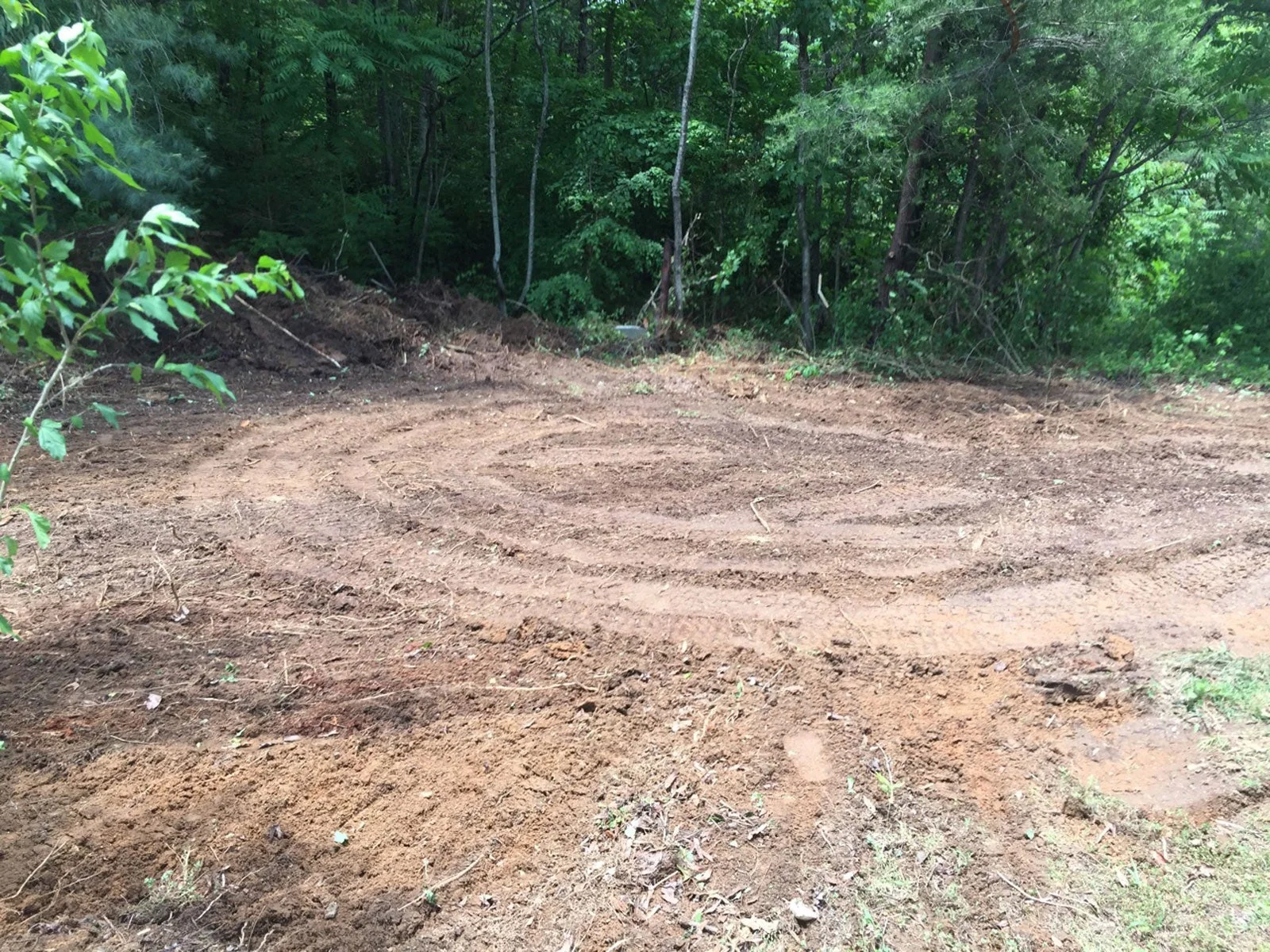
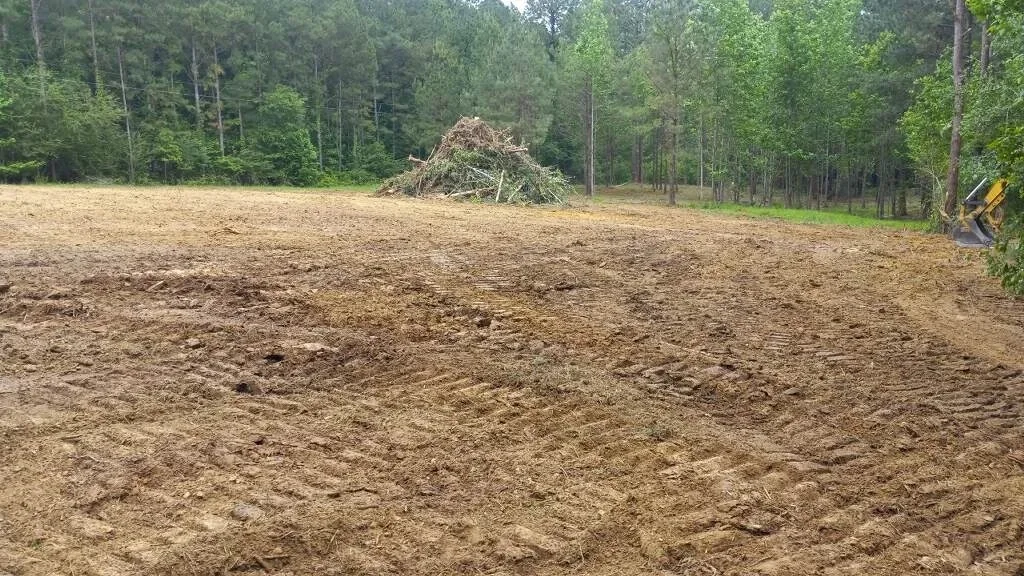
Weaverville has a genuine mix: gravel drives on the older lots off Reems Creek and Barnardsville Highway, asphalt aprons on the newer subdivisions, and a lot of gravel-over-old-asphalt where someone patched instead of rebuilt. That mix matters because the repair scope depends on what's underneath. Regrading a gravel drive means re-cutting the crown and shoulder so water sheds to a defined edge. A washout needs the trench filled, compacted, and capped with appropriately sized stone — not just dumped and spread.
Gravel-over-asphalt is the one to watch. It looks solid for a season or two, then the old asphalt pans water, the gravel floats, and the whole thing ruts. Sometimes the honest fix is stripping back to the asphalt and rebuilding the base, which costs more but ends the repeat repairs. On a Weaverville lot with clay-heavy soil and a nearby septic field, that stripping step is often what separates a one-time repair from a yearly patch job.
Where a steep grade is involved, the honest scope includes a ditch, a culvert, or a series of water bars before any stone goes down. That's the difference between a repair that lasts one season and one that lasts a decade. The driveway grading and gravel guide walks through how those layers stack, and it's worth ten minutes if you're comparing two quotes that don't agree on depth.
What it costs in Buncombe County
Scope drives price more than size here. A short, gentle gravel drive with a washed rut is a half-day job; a long slope with an uphill seep and no outlet is engineered drainage. The table below shows the working ranges, and the full Buncombe County grading cost breakdown covers the line items:
| Scope | Typical range |
|---|---|
| Regrade existing gravel drive (crown and shoulder) | $350 – $1,200 |
| Washout repair — regrade plus fresh stone | $400 – $1,500 |
| Washout repair with ditching and culvert | $800 – $2,800 |
| Engineered drainage on a steep grade | $2,500 – $6,500 |
Two things push a Weaverville job toward the top of a band: grade and where the water has to go. A drive that can shed to a daylighted ditch is cheaper than one that needs a culvert under the apron or a catch basin at the bottom. Any quote that ignores drainage on a sloped lot is incomplete, not cheap.
Depth of stone matters to the number too. Two inches of crusher run over a cut crown is a light regrade; four to six inches of compacted base is a rebuild, and it costs accordingly. On the clay soils common around Weaverville, the thinner spec tends to rut again fast, which is a false economy if the drive sees trucks or a trailer.
A few local cost realities are worth naming. Long, narrow access off a mountain road can add time to move equipment and stone in and spoil out — those hours show up in the number. Anything that touches a driveway crossing a creek arm or a drainage swale needs a properly sized culvert, and that's a materials cost, not labor padding. And if the outlet has to cross a neighbor's grade, that conversation happens before the work, not after — it changes the plan and sometimes the scope.
Storm history and why the grade keeps moving
This county has seen 19 federally declared disaster events across 1973-2026, and the pattern is flood and storm family — exactly the events that rearrange a driveway. Every heavy rain that reaches the National Weather Service flood thresholds for this area puts water on grades that were cut decades ago, and each one moves a little more material downhill. The National Weather Service outlook for the mountains is the practical reason to fix grade problems before the next wet season rather than after.
Tropical remnants are the ones that catch people. When a system stalls against the Blue Ridge and drops several inches in a short window, the small gullies that feed Reems Creek and the Swannanoa system fill in minutes, and every driveway below a cut slope gets a share of that flow. A hundred-year storm isn't needed to wreck a drive; an ordinary wet autumn with three or four heavy events in a month will do it.
If a washout is recurring, the cause is almost always an uncontrolled outlet. Fixing the grade upstream, not the gravel downstream, is what stops the cycle. That usually means adding or enlarging a ditch, cleaning the existing culvert, or installing a water bar above the first rut, rather than buying another load of gravel that washes out on schedule next spring.
Hiring and the rules that apply
Most driveway regrading in Buncombe County doesn't cross the threshold that requires a licensed general contractor, but larger drainage and grading jobs can. The NC Licensing Board for General Contractors sets that line, and it's worth asking any bidder where their job falls. If a repair touches water lines or a septic system near the drive, licensed trades are involved — the NC State Board of Examiners covers who can legally do that work.
For anything that changes how stormwater leaves your lot, the county has an interest in runoff not being pushed onto a neighbor. Sediment moving off a graded slope is the other issue: disturbing bare ground near a creek arm or storm inlet can trigger erosion-control expectations, and the EPA pages on stormwater are a reasonable primer on why the outlet matters as much as the grade. In practice, that means catching the silt before it reaches a ditch that runs to a stream. Ask how the plan handles both the outlet and the spoil before work starts. Our page on grading contractors serving Weaverville covers what a proper site visit looks like and how to compare scopes.
Paperwork is worth checking once, not every job. In most Weaverville cases a driveway fix is a handshake-and-scope agreement, but if a bidder hesitates to put the drainage outlet in writing, that's a signal about how the job will go.
Reading a quote before you sign
A complete Weaverville driveway quote names four things: the grading depth and crown, the stone size and depth, the drainage outlet, and how the crew handles the material that comes off. If the quote is just a number and "fix driveway," it isn't a scope. On a steep lot, expect the drainage line to be the largest single item — that's normal, not padding.
Ask two concrete questions. Where does the water leave the property, and what happens if that outlet plugs? A good answer names a specific ditch bottom, culvert, or swale and says how it will be kept clear. A vague answer about "proper drainage" usually means the homeowner is paying for the same repair next year.
Timing matters too. Late spring and fall are the busy stretches; a washout that's still growing shouldn't wait behind a cosmetic regrade. Emergency movement, like a channel cutting toward a foundation, gets priority scheduling. If a storm is forecast, cover the raw cut with a tarp and stakes to slow a small problem until a crew can get out — it's the cheapest thing you can do while you wait.
Finally, keep the quote on site. When someone else looks at the drive later or a question comes up about what was installed, having the stone size and depth in writing ends the discussion quickly.