Where the water comes from on a Flat Rock lot
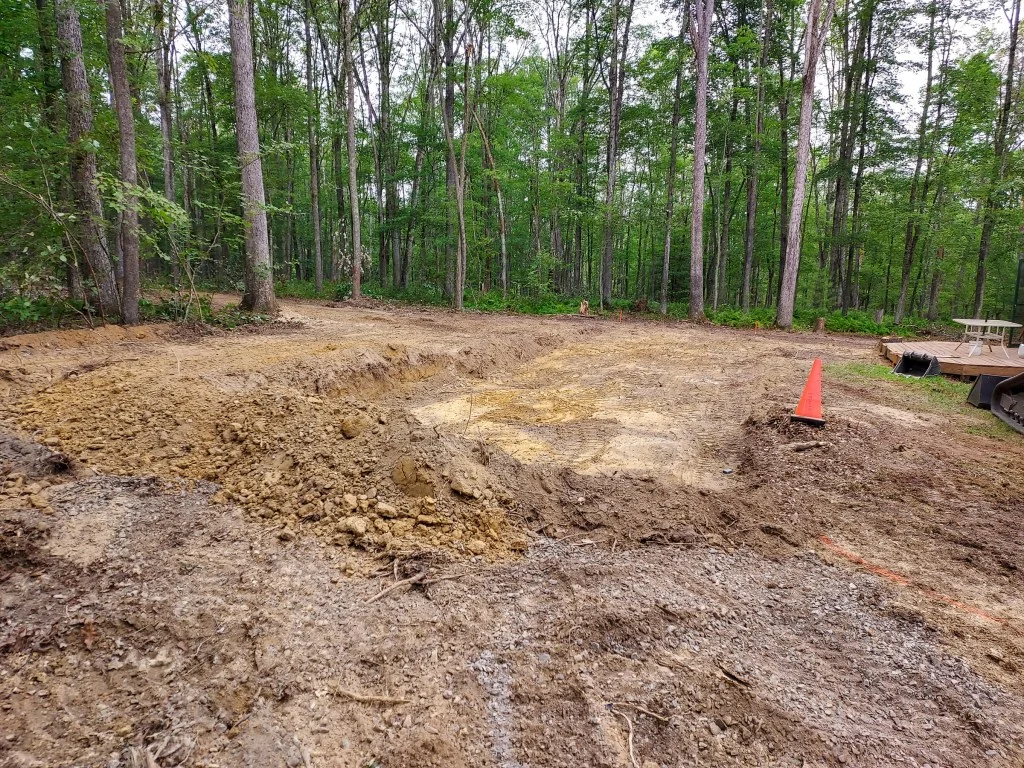
Flat Rock sits on the southeastern edge of Henderson County, where the Blue Ridge drops off toward the Green River valley, and that fact explains more clearing scopes here than any other. Lots off Greenville Highway and around the old Highland Lake grounds are cut into ground that falls steadily west and south. Water arrives from the high side, crosses the lot, and has to leave without taking your driveway, your septic field, or your neighbor's foundation with it.
Two lot types dominate. Estate parcels on the gentler benches of the old village hold mature hardwoods, a century of leaf litter, and a thin topsoil over clay. Ridge and valley-edge tracts further out toward the Green River are steeper, rockier, and hold water in pockets until it finds a seam. The clearing question on the first is what to keep; on the second, it is where the grade will send the runoff afterward.
If a contractor walks your land and never asks where the water goes, that is your answer about the contractor.
The Flat Rock scope-and-price picture
Clearing is priced by the acre, the diameter, and the slope. Henderson County ground is gentler than Transylvania, so most Flat Rock residential work lands in the middle of the site-wide range rather than at the top. The two numbers below the table decide whether you land low or high: stump disposal and whether the finish grade is engineered or eyeballed.
| Scope | Typical range |
|---|---|
| Light clearing — saplings, brush, mowed undergrowth on an acre or less | $750–$2,000 |
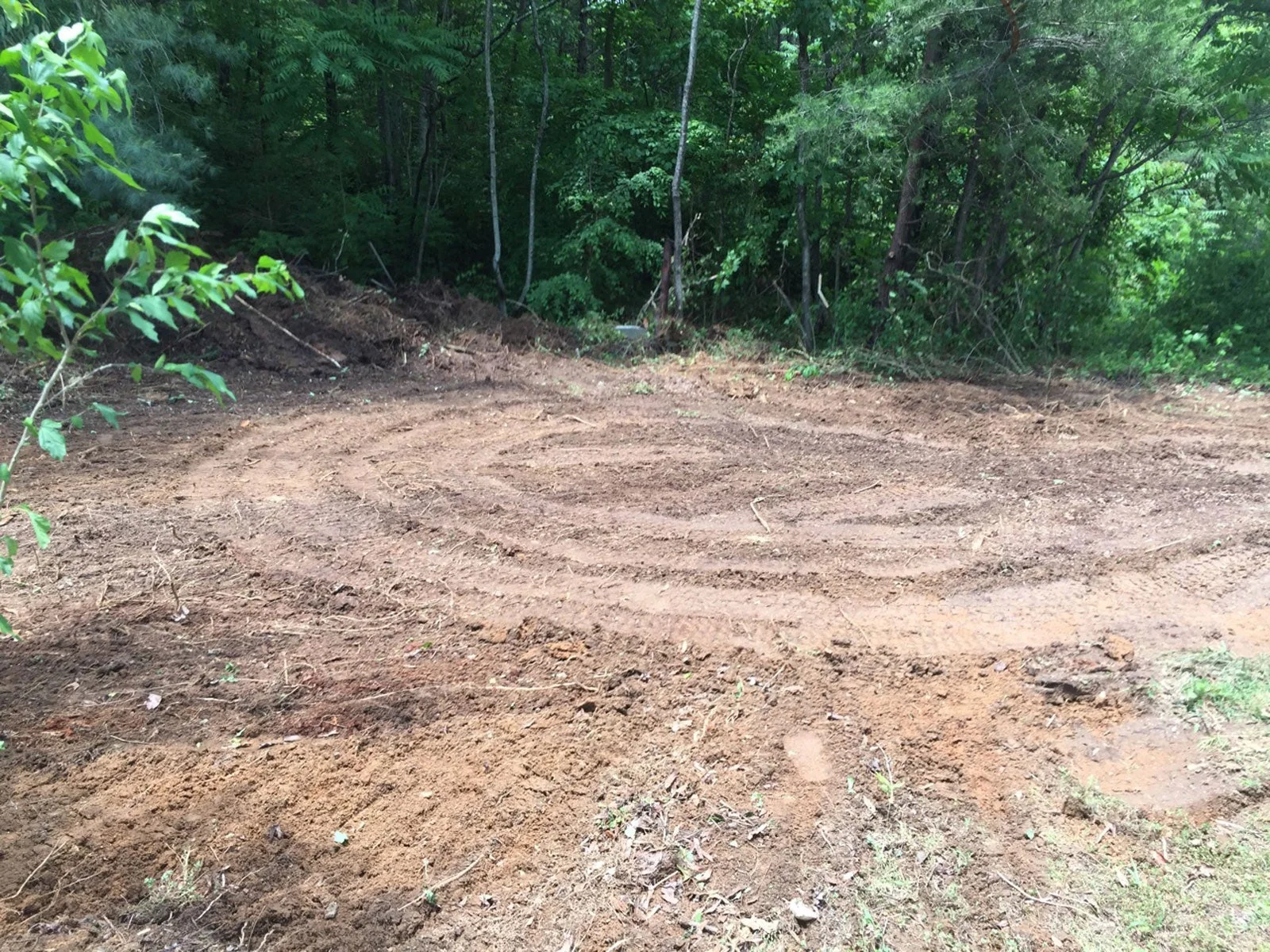
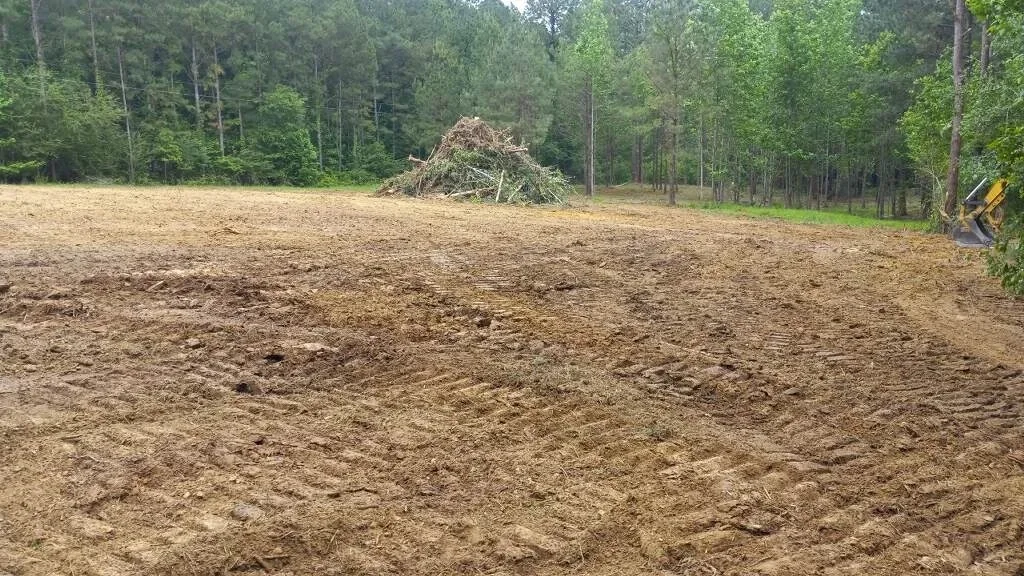
| Full clearing with stump removal, haul-off of debris | $1,500–$5,000 |
| Clearing plus rough grading to a buildable pad or driveway cut | $3,000–$8,000 |
| Steep, heavily wooded acreage with rock and long haul distances | $8,000–$10,000+ |
For a line-item read on the dirt work that follows the clearing, see the Henderson County grading cost breakdown; this page covers the clearing half of the same job.
Water first, dirt second — the sequence that saves money
The federal disaster record for this county is the real reason to sequence the work this way: 16 declared events touch Henderson County across 1978-2026, overwhelmingly storm and flood family. Every one of those events put water on ground that had been cleared and graded to a drier assumption. So the order is: read the lot's drainage before the machines arrive, cut the trees, then shape the grade so the water has an obvious path off the property.
NC residential code treats drainage around structures as a first-class requirement rather than a finishing touch; the ICC codes that North Carolina adopts carry the same logic. A lot that drains correctly needs less retaining wall, fewer french drains, and a shorter driveway culvert — usually the difference between a mid-range job and one that climbs toward the top of the band.
Burning is the other decision. Henderson County's air-quality rules, administered under the state's EPA-delegated program (see EPA for the federal framework), restrict open burning in ways that vary with conditions; grinding stumps into chips on site is usually the cheaper and quieter route anyway.
What to keep on a Flat Rock parcel
Most Flat Rock owners are not clearing a blank pad — they are opening up an overgrown lot for a house site, a pasture, or a long driveway, and the mature hardwoods are the reason they bought the place. Mark the keep trees first, before any machine rolls. Trees that lean toward the house site, trees within a fall-length of the proposed driveway, and trees with root plates disturbed by the grade cut are the ones that come down now, not after the build.
Here is where a grader and a clearing crew want to be the same operation: if the person shaping the grade has not seen the trees you intend to keep, they cannot design a cut that protects the root zones. That is the case for a single scope that covers clearing, stump removal, and finish grade rather than three separate bids.
If you want the full ladder of services on this kind of land, start with the land clearing overview and the Flat Rock grading contractors page for the crews doing the follow-on dirt work in this town.
Hiring well on Henderson County ground
Three checks specific to this corner of the county. First, ask whether the crew has worked the difference between the village's clay-and-topsoil benches and the rockier ground toward the Green River — the equipment and the disposal plan are not the same. Second, ask whether they pull the county land-disturbance and grading permit themselves when the scope crosses the threshold; under the NC Licensing Board for General Contractors rules, larger jobs need a licensed general contractor, not just a clearing hand. Third, ask for the erosion-control plan in writing — silt fence, inlet protection, and where the stabilized construction entrance goes. On a lot that tilts like most of Flat Rock does, erosion control is the whole ballgame.
When you request a quote, tell the contractor where you think the water goes. Their response will tell you which kind of crew you have.