In Woodfin, the driveway problem is an access problem
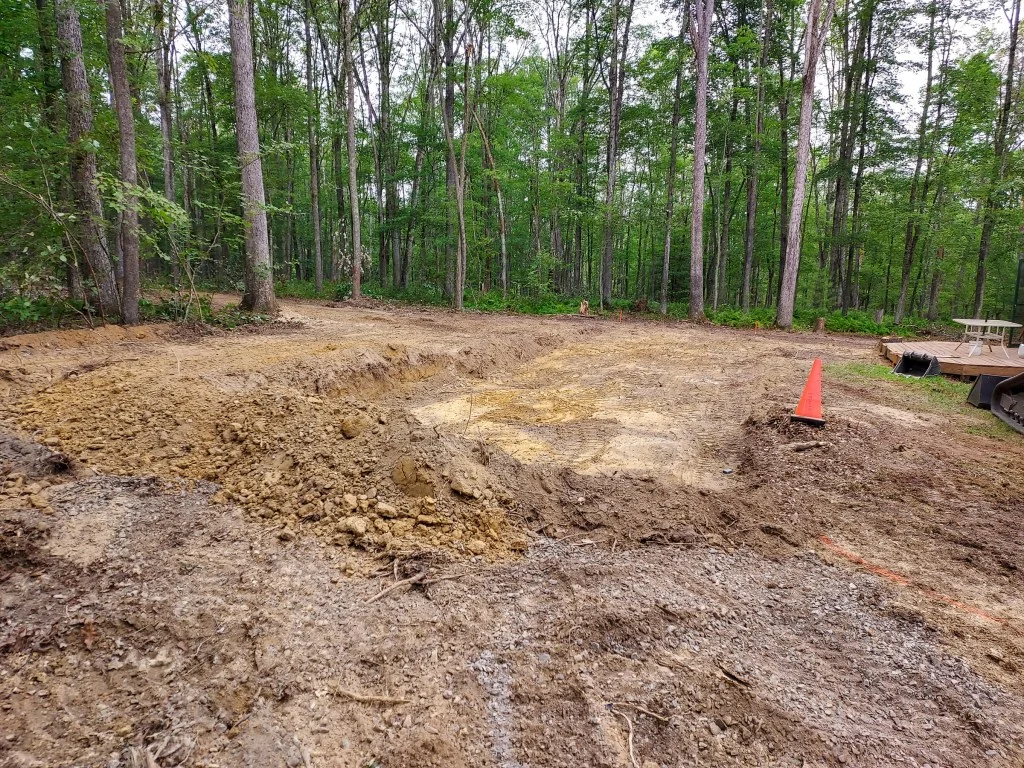
The lots that define Woodfin sit in a narrow band between the French Broad River and the steep ground rising toward Elk Mountain — and that band is where most of these calls come from. River-side lots are flat but wet, sitting on decades of flood-deposited ground. Ridge-side lots are dry but tilted enough that a truck bed won't level, and the switchback roads off the river corridor were never cut for a tandem dump truck and a loaded skid steer to share. Before anyone quotes gravel by the ton, the real question is how the machines get in and how the dirt gets out. A driveway that could be built for the price of stone on flat ground costs meaningfully more here because the haul is the job.
Woodfin also has its own character within Buncombe County: small-lot mill housing, river cottages raised above flood grade, and newer builds on subdivided slope. Each one changes what equipment can physically reach the work.
Consider what that means in practice. A river cottage on a tight lot off a two-lane road may have room for a dump truck to back in and dump, but no room to turn around once loaded — so the crew stages the truck at the road and runs the skid steer in and out, bucket by bucket. That's slower, and time is money. A ridge lot above the river corridor may have a long, narrow gravel run that was cut by whoever built the house, and the first job is figuring out whether that run can take a loaded truck at all. If it can't, the material gets staged at the bottom and walked up, and the estimate reflects it. None of this is exotic for Woodfin; it's just what the ground here demands. The crews who quote low are usually the ones who didn't walk the site and didn't ask.
What the haul and grade actually cost
Woodfin prices track the whole county, with an access premium on top. The Buncombe County grading cost breakdown carries the working table; the version for this town looks like this:
| Scope | Typical range |
|---|---|
| Short flat apron, minimal grading, stone top-up | $2,400–$4,200 |
| Full base installation, 100–250 ft, minor slope | $4,000–$7,500 |
| Slope work with cut, culvert, and drainage | $6,500–$9,800+ |
| Culvert or French drain add-on | $800–$2,800 |
| Per-load gravel delivered (quarry haul factored) | varies by stone type and distance |
Two line items move the number the most, and neither is gravel. The first is how much excavated material has to leave the site — a cut-in driveway on a hillside generates spoil that has to go somewhere legal. The second is the quarry haul: crushed stone is heavy, and every loaded mile from the pit to your property is priced into the load. Up here that distance is real, and it never gets cheaper.
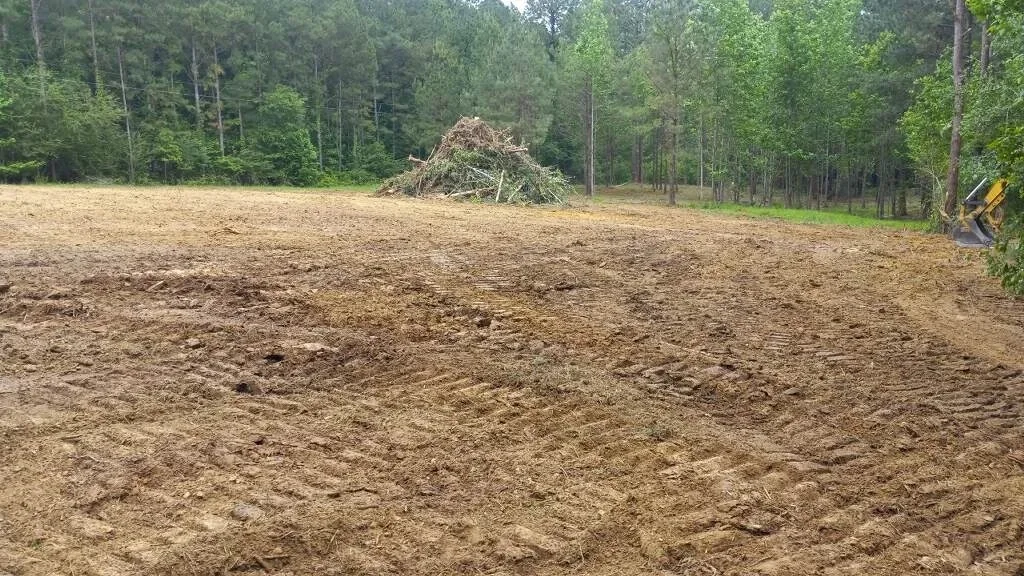
It helps to understand why the haul dominates. A tandem dump truck holds somewhere in the range of a dozen-plus tons of crushed stone, and a driveway that needs three or four loads is not unusual on a longer run. If the pit is across the county, each of those loads carries the same fuel and driver time, and there's no way to shave it — you can't put half a truck on the road. That's why the same driveway spec can price differently on two sides of the river. On the flatter river-side lots, the truck can often get right to the work and dump where the skid steer needs it, which trims the handling. On the ridge roads, the load may have to be dropped at the street and re-handled up the slope, which adds machine time on top of the haul. Spoil is the mirror image: cut material that can't be spread on-site has to be loaded and trucked out, and on a tight Woodfin lot there's often nowhere to stockpile it while you wait for a truck. It leaves the same day or it sits on the driveway you're trying to build.
Grade compounds all of it. A driveway climbing toward the ridge needs more base depth to stay put under water and weight, and it needs drainage designed in, not added later. That's more material, more machine hours, and more careful work at the crown and the ditch. None of these are upcharges a contractor invented; they're the physics of putting a road on a hill above a river.
Drainage before stone, stone before pride
A gravel driveway on a Woodfin slope lives or dies on where the water goes after it rains. The federal disaster record for this county makes the point without argument: 19 declared events touch Buncombe (1973-2026), mostly storm and flood family, and every one of them pushed water at ground that was graded for a drier assumption. On a hillside driveway, water that isn't crowned off the surface and caught in a ditch will cut a channel through your stone within a season. The NC Building Code Council and NCDOI treat grading and drainage as first-class requirements for exactly this reason, and any driveway scope that ignores them is a re-do waiting on the next big rain.
Ask any crew how they crown the surface and where the uphill drainage daylight. If the answer is vague, the driveway will tell you the truth next March.
There's a local wrinkle worth knowing. On the river side, the problem is often the water table more than the rainfall — ground that stays soft and pumps under a loaded truck. That calls for geotextile fabric under the base and a stone gradation that lets water move rather than sit. On the ridge side, the problem is concentrated flow: rain that sheets off the slope above and arrives at your driveway all at once. That calls for a cut-off ditch uphill of the drive and a culvert under it, sized so a heavy storm passes without overtopping. A driveway that handles the ordinary rain and fails the big one isn't finished; it's deferred. The National Weather Service outlook for this part of the mountains is a reasonable place to start understanding what "big" means here, but the honest local answer is that this river corridor knows how to rain, and the grading has to assume it will.
Getting the machines in without wrecking the place
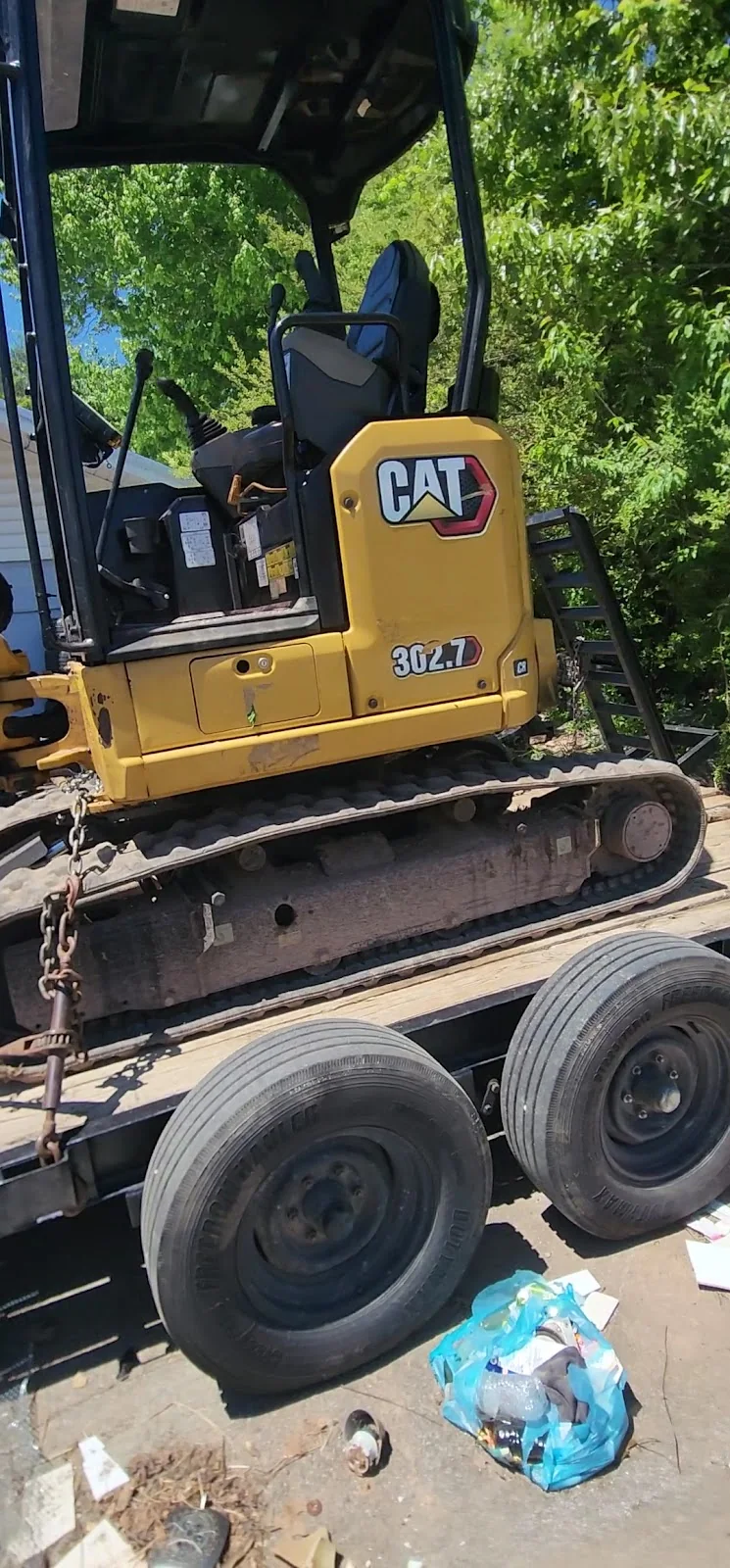
The access angle cuts both ways. A driveway wide enough for a loaded tandem is the deliverable, but the equipment that builds it has to get there first — and in Woodfin that often means a compact machine, a smaller truck, or a staged material drop at the road. This is where the Woodfin grading contractors with river-corridor and ridge-road experience separate from crews that only work flat subdivisions. The right scope says plainly what equipment is coming, how many loads it takes in and out, and where spoil gets staged if it can't leave same-day.
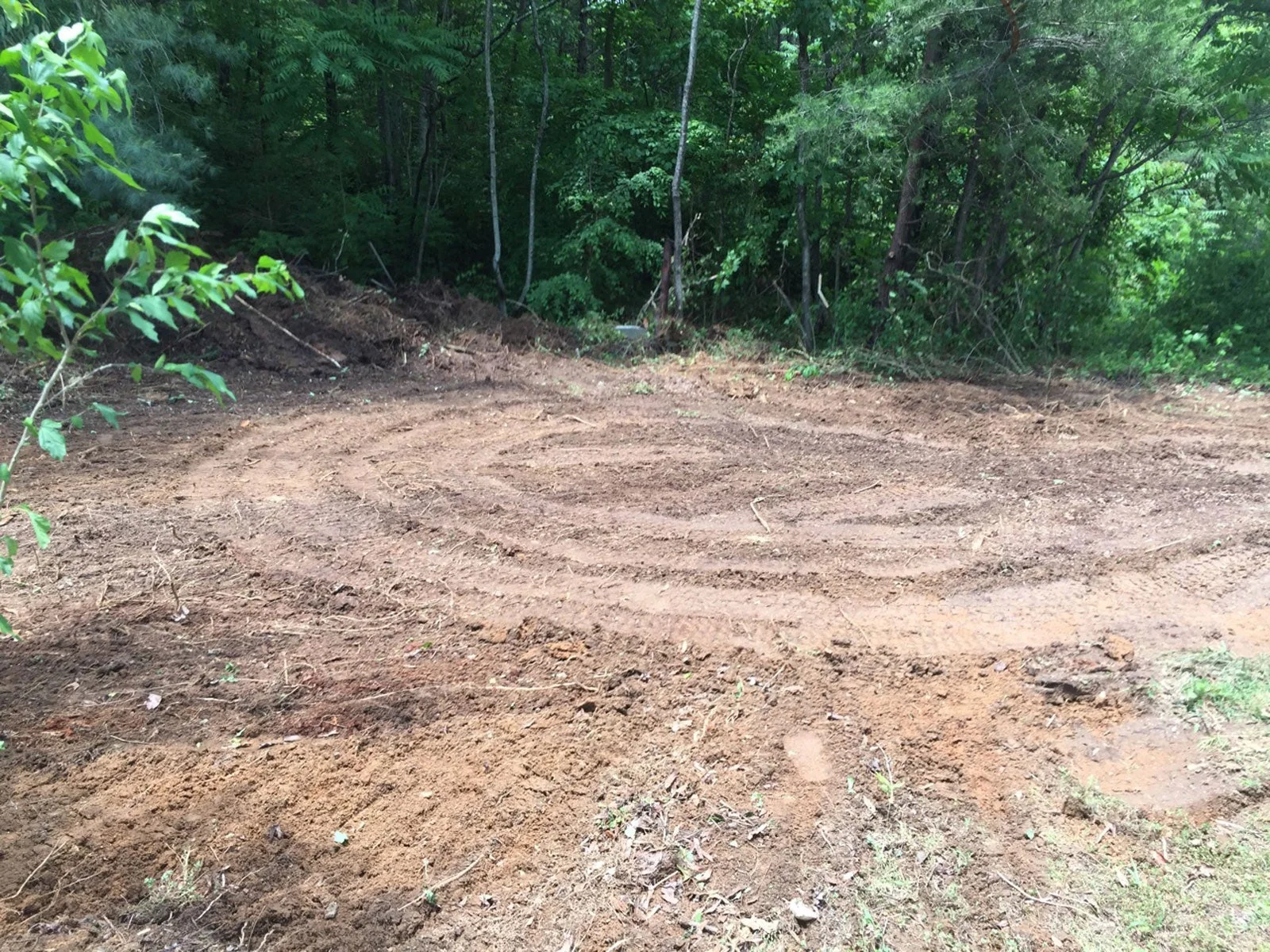
There's also a preservation piece that matters on these lots. A skid steer working a tight yard off a river cottage can tear up a lawn, a septic field, or a fence line if the operator isn't careful, and the damage costs more to fix than the driveway saved. The crews who do this well walk the access before they quote, mark what stays, and plan the machine paths. On ridge lots, the concern flips to the slope itself: a loaded machine on wet clay can slide, and the fix is matting, a gentler path, or working when the ground is drier. A quote that doesn't mention any of this is a quote from someone who hasn't worked ground like Woodfin's.
The other half of doing it right is what happens to the driveway before the gravel shows up. Base preparation — clearing, excavation, compacted sub-base, and fabric if the subgrade is soft — is invisible in the finished product and completely determines whether it holds. The driveway grading and gravel guide walks through what that base prep should include, because the cheapest-looking quote is almost always the one that skipped it.
What to verify before you sign
Three checks matter here. First, the licensing threshold: North Carolina requires a general contractor's license once a job crosses the statutory cost, and gravel driveways can clear it once slope, cut, and drainage are folded in — verify status through the NC Licensing Board for General Contractors. Second, ask for a reference on a slope or river-corridor driveway in this county, not a flat-lot job three towns over. Third, ask where the stone is sourced and roughly how far it travels, because the quarry distance is the single line that quietly inflates the estimate after the fact. A crew that answers all three is a crew that has done this before, in ground like this.
Two more questions are worth asking in Woodfin specifically. Ask how the crew handles the transition where your driveway meets the public road, because in this town that edge is often on a slope or near a ditch, and a bad apron funnels water straight onto the county road — which is a problem for you as much as anyone. And ask what happens if the subgrade turns out worse than it looked, because on river-side ground it sometimes does. A contractor who prices a reasonable allowance for that scenario, rather than treating it as a surprise change order, is telling you they've built driveways on this ground before. Get the scope in writing: depth of base, stone type, drainage details, and how spoil is handled. On a job this shaped by access and haul, the written scope is what separates a driveway that lasts from a bill that keeps growing.