What Laurel Park's ground does to a leveling job
Laurel Park sits on the rises just south of Hendersonville, and its lots show it: short, steep driveways, terraced backyards, and houses built into slopes that were cut and filled decades ago. Under a thin topsoil layer you hit red clay that swells when wet and cracks when dry, and under that, rock shows up in unpredictable places — sometimes a foot down, sometimes at the surface on the ridge side. That combination is why two yards on the same street can carry very different price tags for what looks like the same job. Clay regrades with a skid steer and a laser level. Rock requires a different conversation entirely. Old fill from a 1960s build pad settles unevenly, so a low spot near the foundation often isn't a grading problem at all — it's a compaction problem, and the fix is deeper than spreading dirt.
The old fill pattern is worth understanding because it shows up block after block. When these neighborhoods were developed, builders pushed cut dirt from the uphill side of the lot to the downhill side to create a level pad for the house. That pushed fill was never compacted to modern standards. Fifty or sixty years later, it has settled at a different rate than the undisturbed ground around it, which is why so many Laurel Park yards have a soft corner near the foundation or a dip that follows the old pad edge. A contractor who understands this reads the yard differently than one who just sees a low spot and reaches for the tiller.
The tells worth acting on: water pooling against the foundation after every storm, a lawn that stays spongy days after rain while the rest of the yard drains, soil visibly pulled away from the foundation wall, and a low corner that keeps getting lower each season. Movement that changes with the weather is drainage; a dip that only deepens is settlement.
Slope aspect matters here too. Lots on the west-facing ridges above Laurel Park Highway dry out faster and the clay shrinks harder in summer, opening cracks that channel water straight down to the fill layer. East-facing lots below the ridge stay wetter longer and grow moss where the grade is even slightly off. Neither condition is a defect — they're just the two different jobs hiding behind the same square footage.
The Laurel Park price picture
Henderson County jobs price by scope and access, not by address — the full Henderson County grading cost breakdown walks through the line items. The short version: a simple clay regrade with a defined swale runs at the low end; a job that needs drainage correction, haul-off of spoiled soil, and re-seeding climbs toward the middle; steep-lot work with rock or a retaining element lands near the top of the band. Treat any bid that skips the drainage question as incomplete rather than cheap.
Access is the quiet multiplier on these lots. A driveway that drops 15 feet from the road to the house means every yard of topsoil, every load of spoil, and every machine either comes down that grade or gets carried. Narrow driveways lined with mature rhododendron or stone walls — common in the older Laurel Park neighborhoods — can add hand-work hours that a wide-open flat lot never sees. That doesn't push the job past the band, but it reliably pushes a small job toward the middle of it, and it's the reason two quotes on the same scope can differ by a thousand dollars without either being wrong.
| Scope | Typical range |
|---|---|
| Spot leveling, small low areas, no drainage change | $1,800–$2,800 |
| Full-yard regrade to positive slope, clay soil, reseed | $2,500–$4,500 |
| Regrade plus swale or French drain correction | $3,500–$6,000 |
| Steep-lot terrace, rock encounter, or retaining element | $6,000–$9,500 |
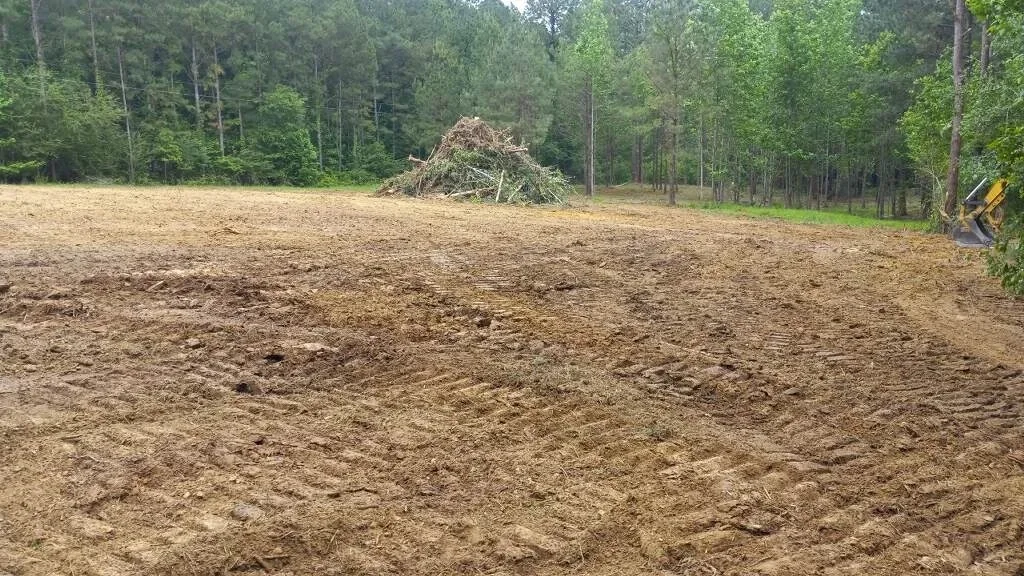
Two line items worth asking about in writing: whether haul-off of spoiled soil is included, and whether the finish grade includes seed and straw or just dirt. On a clay regrade in this town, the difference between a hauled-off job and an on-site spread job can be several hundred dollars, and the difference between bare dirt and a seeded finish is the difference between a yard that holds its grade through the next storm and one that doesn't.
Water management is the real product
Most Laurel Park leveling calls trace back to water. The federal record here is not abstract: 16 declared events have touched Henderson County across 1978-2026, overwhelmingly storm and flood family, and each one pushed runoff at yards graded for a drier assumption. Positive slope away from the foundation is the first requirement, and it is also a code matter — the NC Licensing Board for General Contractors is the place to verify who is legally allowed to contract the work once a job crosses the state threshold. Before anyone sells you a regrade, the drainage question gets answered: where does the uphill neighbor's runoff go, where do the gutters discharge, and does the yard have a defined exit for water or just a low spot that collects it. The yard leveling guide covers what a proper first visit actually inspects.
On the ridge lots above town, the answer is often a swale cut along the property line that carries the neighbor's sheet flow around the house instead of through the yard. On lots that back up to the wooded draws, it's more often a French drain or a dry creek bed that gives the water somewhere to go during a two-inch rain. Neither is exotic — both are ordinary Henderson County practice — but they get planned before the machine shows up, not after. A regrade that fixes the surface without answering where the water exits is a job that comes back next spring.
Gutter discharge deserves its own mention. Downspouts that dump at the foundation are among the most common causes of the exact symptom homeowners call about, and moving them is inexpensive relative to regrading. Any honest walkthrough checks that first, because sometimes the fix is a $200 extension and not a $4,000 regrade.
Clay, rock, and fill: three different jobs
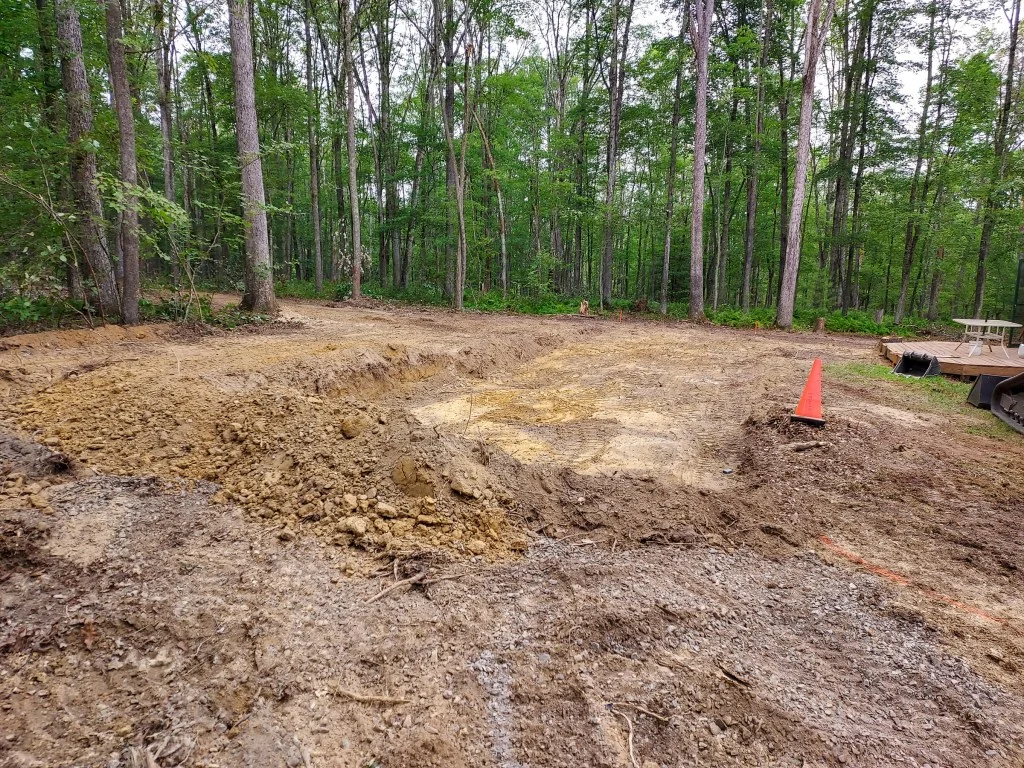
Red clay is workable but unforgiving — it compacts hard, drains slowly, and needs the right moisture to grade cleanly. Rock changes the math: a shallow rock shelf may mean the plan shifts from cutting to building up, and that decision belongs to someone who has walked the lot, not to a phone estimate. Old fill is the quiet one. If a low spot sits where a previous build pad was, the soil underneath may still be settling, and adding topsoil just hides the problem for a season. Each of those three conditions points to a different scope, and the honest version of a quote says which one you have. The Laurel Park grading contractors page explains how to screen for that.
Rock on these lots tends to show up in bands rather than uniformly. A yard can cut clean for twenty feet and then hit a shelf that stops the machine cold. The two honest responses are to either build up over the shelf instead of cutting through it, or to bring in a rock-breaking attachment and price the extra time. What makes a quote dishonest is a number that assumes neither and discovers the shelf on day one. A contractor who has worked this ridge will tell you upfront that rock is a possibility and roughly what it does to the price if it appears.
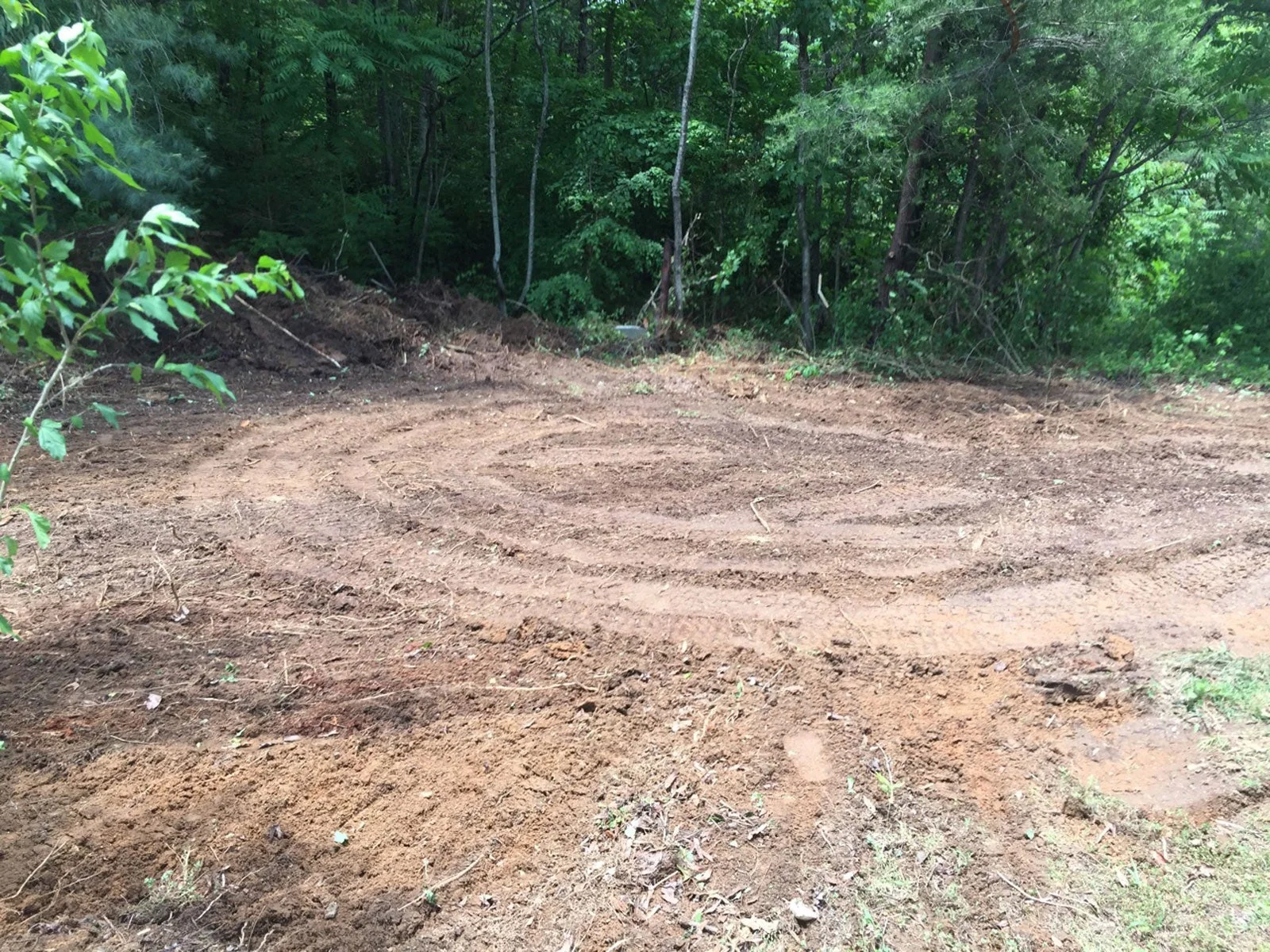
Clay itself has a moisture window. Grade it too wet and it smears and compacts into a surface that sheds nothing; grade it too dry and it clods and refuses to hold a slope. The window in this part of Henderson County is usually a few days on either side of a rain, which is why scheduling a clay regrade has as much to do with the weather as the crew's calendar. That's not a delay tactic — it's the difference between a grade that survives the next storm and one that doesn't.
Hiring well on slope lots
Three checks specific to this town: ask whether the crew has graded a lot with your slope and soil (a flat-lot crew on a ridge property is a different risk); ask how they handle erosion control and where disturbed soil goes, since stormwater rules here are not optional and the EPA maintains the stormwater guidance the state builds on; and ask what happens if they hit rock. The answer to the rock question separates crews that plan from crews that improvise. For anything touching drainage tied to a structure, verify licensing through the NC Licensing Board before signing.
A fourth check worth doing on these lots: ask to see a finished job, or at least a photo of one, on ground similar to yours. A regrade that looks fine on a flat quarter-acre tells you nothing about how a crew handles a 20 percent slope with an old fill pad at the bottom. The crews that do this work well in Laurel Park have jobs they can point to, and they won't hesitate to describe what the ground did when they opened it up.
Finally, get the drainage plan in writing even though it's not a permit-level document. Where the swale goes, where the drain outlet daylights, and where the spoil soil ends up are three sentences that prevent most of the arguments that happen after a grading job. A quote that includes them is a quote from someone who has thought about your yard rather than about the invoice.