Where the water comes from on a Marshall driveway
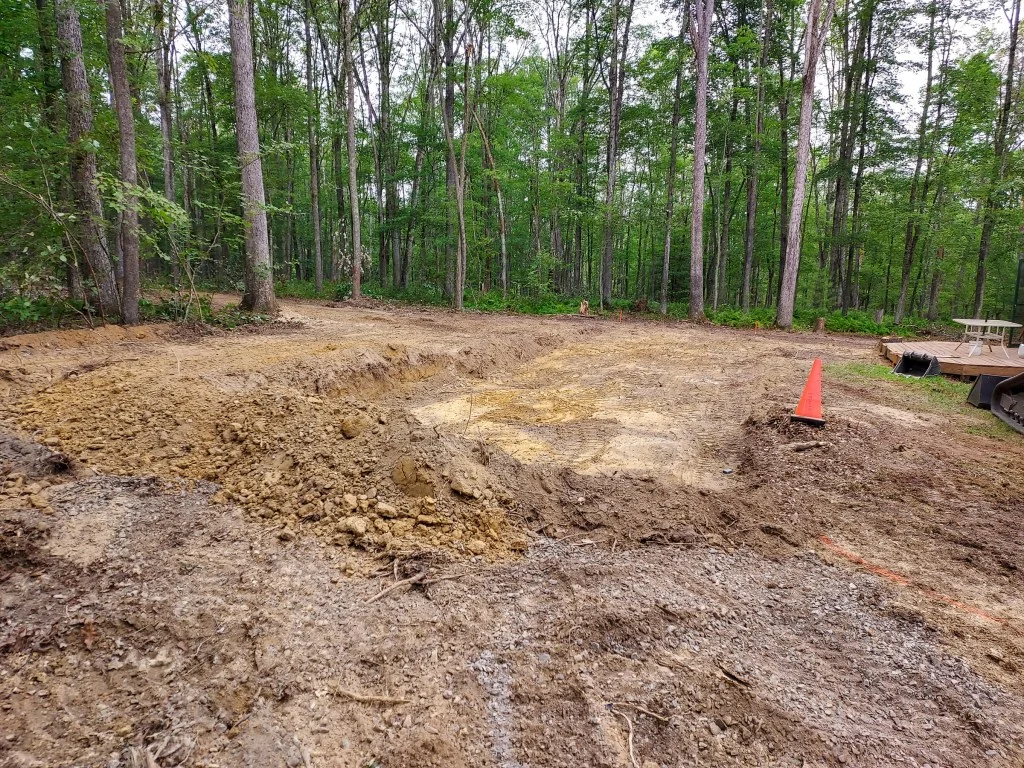
Most driveway damage around Marshall starts uphill, not on the drive itself. Madison County's terrain tilts hard toward the French Broad, and a driveway cut into that grade collects water from every acre above it — from the bank behind the house, from the neighboring ridge, from a spring that runs wet all winter and disappears by July. That water arrives at the driveway faster than the gravel can shed it, and it leaves through the cheapest exit it can find: a channel down the wheel tracks, a trench at the road apron, or a washout where the culvert used to be.
The honest fix starts with redirection, not more stone. Water that gets pushed off the drive into a vegetated swale or a proper ditch before it picks up speed never gets the chance to cut. Water that keeps crossing the drive will rip out fresh gravel within a season — which is why so many Marshall washouts get re-graveled every spring and fail again every fall.
What a Madison County driveway repair actually includes
Roughly half the calls here are driveways that were fine until a storm turned the county's red clay into a river. The other half are long gravel runs on grades steep enough that the stone never really stops moving. Both get the same three questions: where does the water enter, where does it have to leave, and is the current slope capable of getting it there without eroding the roadbed itself.
The scope table below reflects local pricing. Real bids land inside these ranges depending on slope, drive length, and how much stone has to come in versus how much can be reworked on site.
| Scope | Typical price range | What it covers |
|---|---|---|
| Regrade existing gravel drive | $350 – $1,200 | Crown restoration, reworking existing stone, light compaction |
| Washout repair, regrade + fresh stone | $400 – $1,500 | Filling ruts and channels, crowning, new gravel on the worn sections |
| Washout repair with ditching and culvert | $800 – $2,800 | Cutting a diversion ditch, setting or replacing a culvert, stone surfacing |
| Engineered drainage on a steep grade | $2,500 – $6,500 | Designed drainage, rock check dams or lined channels, crowned and compacted surface |
Anything priced above the top row is a drainage project that happens to include a driveway, and it should be quoted as one. See the full Madison County grading cost breakdown for how those line items stack up by scope.
Madison County's storm record is the reason this page exists
The federal disaster record explains why driveway washout repair is a standing service here rather than an occasional one: 21 declared events have touched this county across 1978-2026, and the overwhelming majority were storm and flood family declarations that pushed water hard against slopes built for a drier average. When the National Weather Service issues a flash flood watch for the French Broad valley, the calls that follow are almost always the same shape — a culvert plugged with debris, a driveway cut in half, a gravel apron gone down to the road.
That pattern is not going away, and it changes the design assumption. A driveway that sheds ordinary rain well enough still has to survive the kind of runoff a summer storm can deliver in an hour. Culvert sizing, ditch depth, and where the outlet discharges all matter more here than in flatter parts of the state. The National Weather Service forecast is worth watching before any major earthwork is scheduled.
Steep-grade driveways need a different playbook
On the long grades above Marshall and along the ridge roads out toward Mars Hill, gravity alone will move gravel downhill no matter how well the drive is crowned. These drives need structures that slow the water and hold the stone: water bars, rock check dams, lined channels, sometimes a series of them spaced down the slope. It is more work up front and it is the only version that holds.
The International Code Council codes that drive local grading and drainage requirements treat surface water management as a structural concern for exactly this reason — a driveway that fails on a steep grade does not just look bad, it can undermine the road above it and the slope below it. If a contractor's plan for a steep drive is just more gravel, that is a maintenance contract, not a repair.
Permits, contractors, and what to ask before you sign
Most driveway regrading in Madison County falls under ordinary maintenance and does not require a permit, but work that changes drainage patterns, crosses a stream, or moves significant earth can pull in state and county review. When a job crosses the threshold, licensing rules from the NC Licensing Board for General Contractors apply to the contractor, not to you — but the burden of checking is yours.
Ask three things. First, have they worked driveways on your kind of slope before? A flat-lot grading crew will not read a 20 percent grade correctly. Second, where does the water leave the property, and is the outlet legal and stable? Third, what is the maintenance schedule — because any honest steep-drive plan includes one. Our Marshall grading contractor guide covers the rest of the vetting list. When you are ready for a scope, the driveway grading and gravel service page shows what a real quote should include.