Where the water comes from on a Waynesville driveway
Most driveway calls in Waynesville start with the same sentence: it was fine until it rained. That is because this town sits in a bowl of ridges, and a driveway here is usually a short, steep run between a county road and a house pad cut into a slope. The water arriving at that driveway comes from three places — the uphill woods or pasture above the cut, the road shoulder where the county ditch spills, and the roof, if downspouts empty anywhere near the top of the drive. The grade has to send all three somewhere deliberate. When it doesn't, the stone migrates, a gully opens along one wheel track, and the driveway starts delivering mud to the garage door.
Around Waynesville the pattern repeats street by street: a drive climbs off a two-lane county road at a grade that looks gentle from the mailbox, then steepens just past the tree line. The uphill side of that drive drains a slope that may be wooded, may be cleared pasture, and may belong to someone else. Water does not read property lines. By the time it reaches your gravel it has already gathered volume and speed, and where it crosses the drive is where the ruts begin. On the lower side, the drop to the house pad or to a creek branch is often short enough that a failed edge sends stone straight into the yard.
The fix is rarely just more gravel. On a Waynesville lot, it is reading the fall of the land, deciding where water should cross or leave the drive, and building the surface to shed it. That is the whole job, and it shapes everything below. A drive that sheds to the left into a wooded swale behaves completely differently from one that has to cross under a culvert before it can reach the road, and the two get priced differently for that reason. The terrain here rarely allows a flat, straight run, and any honest scope has to account for the bends, the cut banks, and the way the county road ditch sits at the mouth of the drive.
Reading the damage before you price it
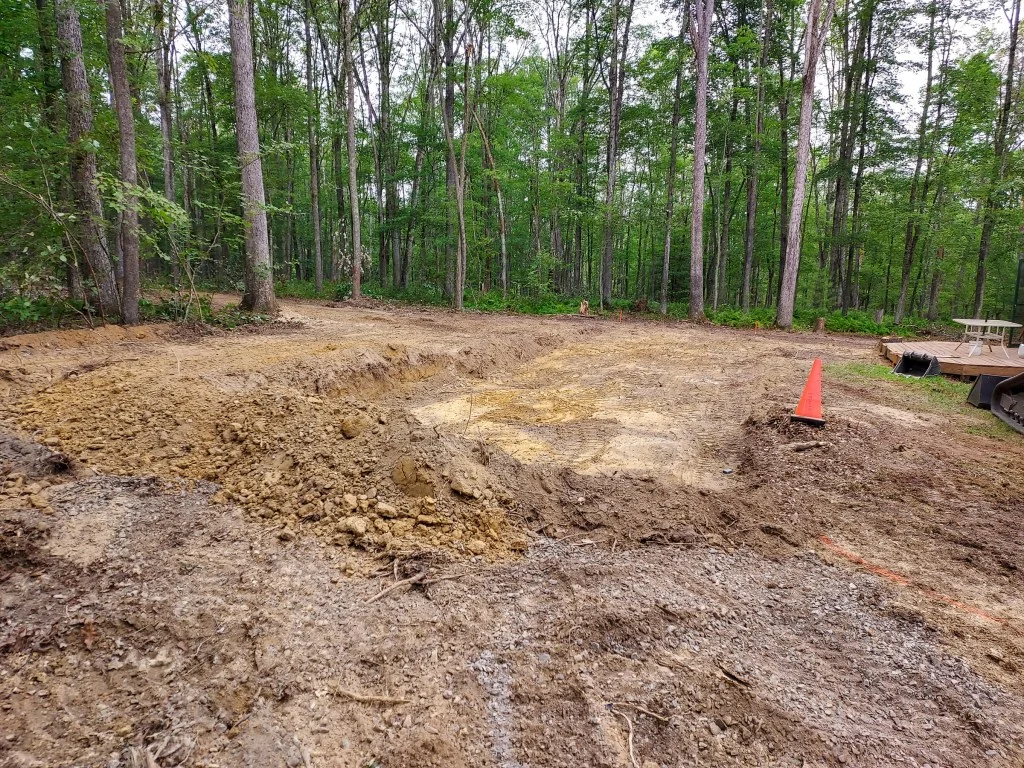
A shallow rut that shows up after every storm is a grading problem — the crown is gone and water is running in the tracks instead of off the edges. A washout is a drainage problem — a concentration of flow cut a channel deep enough to matter, often where a culvert is undersized or a ditch stopped working. A driveway that is failing at the culvert mouth, or where it meets the county road, is usually a road-shoulder and ditch question rather than a driveway question, and the honest answer is sometimes to fix the inlet before touching the stone.
Worth acting on: stone that has moved off the drive and onto the lawn, a channel you can put a shovel blade into, water pooling within a few feet of the house or garage slab, and any section that has gotten noticeably rougher over one season. Slow change is wear; fast change is water finding a new path, and it will keep widening that path until the grade is changed.
Two specific failures show up over and over on Haywood County slopes. The first is the clogged or crushed culvert at the drive mouth: leaves, gravel, and storm debris pack the inlet, water backs up, and the next hard rain goes over the top of the drive instead of through it, peeling the surface off in sheets. The second is the lost crown on a curve. A drive that bends around a cut bank loses its high center first at the bend, because that is where tires track hardest, and once the crown is gone the water has a straight-line path down one wheel rut all the way to the bottom. Neither one is fixed by dumping stone. Both are fixed by restoring the shape and giving the water a defined place to go — a broad shallow swale on the uphill side, a turnout that spills to a wooded draw, or a properly sized crossing pipe set at the right invert elevation. When you walk a drive with a contractor, ask which of these two failures they see, because the answer tells you whether you are buying grading or drainage.
What driveway repair costs in Haywood County
Prices track scope, not driveway length alone. The working ranges below are the same ones quoted across the county — see the full Haywood County grading cost breakdown for the line-item detail. Steep-grade jobs above town routinely carry additional drainage line items that flatland quotes never show; treat a bid without them as incomplete rather than cheap.
| Scope | Typical range |
|---|---|
| Regrade existing gravel driveway (blade, crown, recompact) | $350 – $1,200 |
| Washout repair — regrade plus fresh stone | $400 – $1,500 |
| Washout repair with ditching and a culvert | $800 – $2,800 |
| Engineered drainage on a steep grade | $2,500 – $6,500 |
Two local factors move a job toward the top of its band: how steep the run is, and whether the water arriving at the drive belongs to a neighbor's slope or a county ditch. Both change how much dirt has to move before any stone goes down.
A short drive off a flat county road in the valley bottoms near the French Broad can often be brought back with a single grading pass and a few tons of stone, which is why the low end of the band is real and not a teaser. A drive climbing a cut on one of the ridges above town is a different job: the machine may need to work from the top down, stone has to be placed in lifts rather than dumped, and a ditch or crossing pipe may have to be cut in before the surface will hold. That is the work that lands in the upper bands, and it is also the work that, done once, stops the annual spring call. Ask for the scope in writing with the drainage items listed separately, so you can see which band you are actually in.
Grading first, stone second
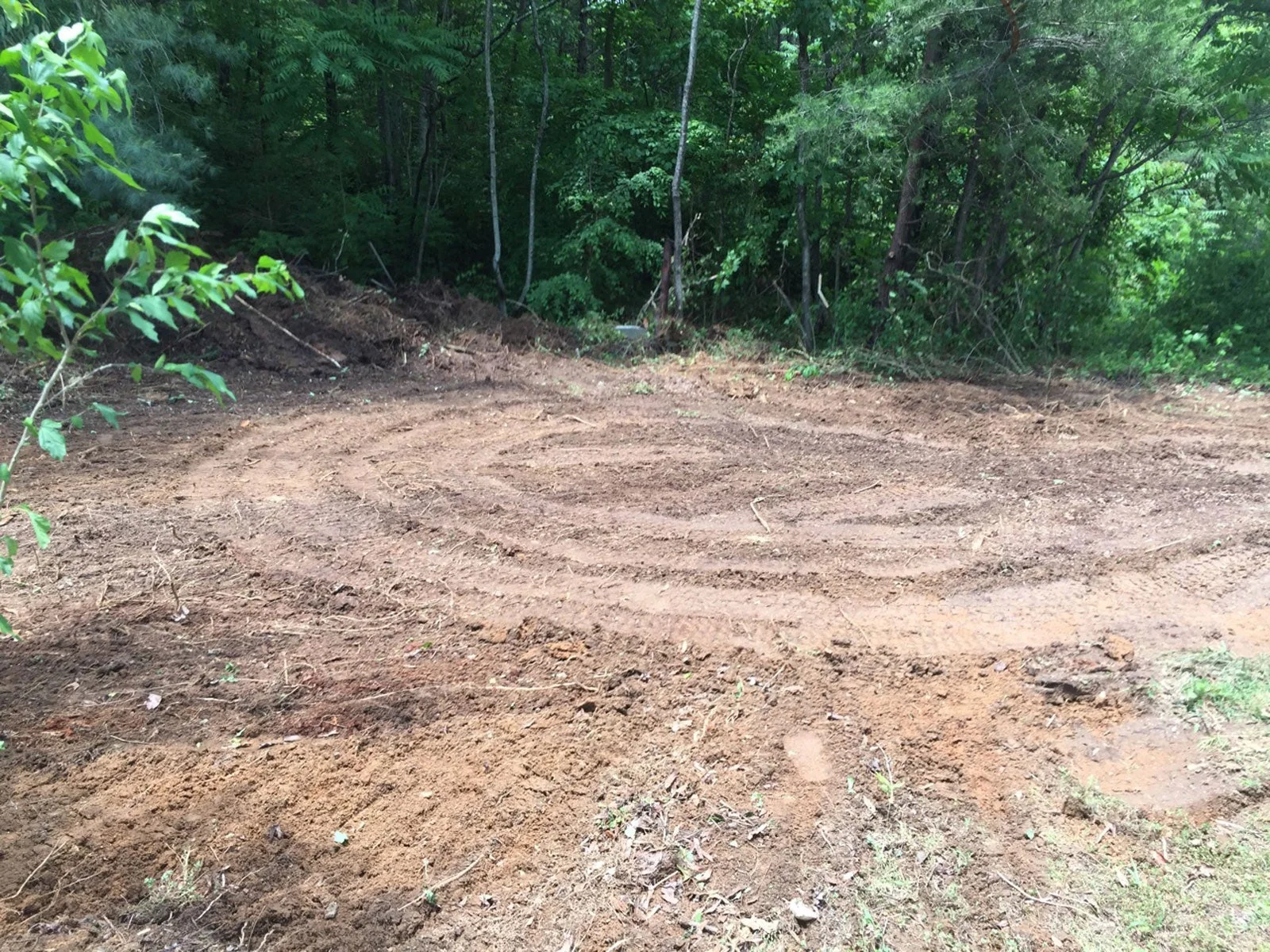
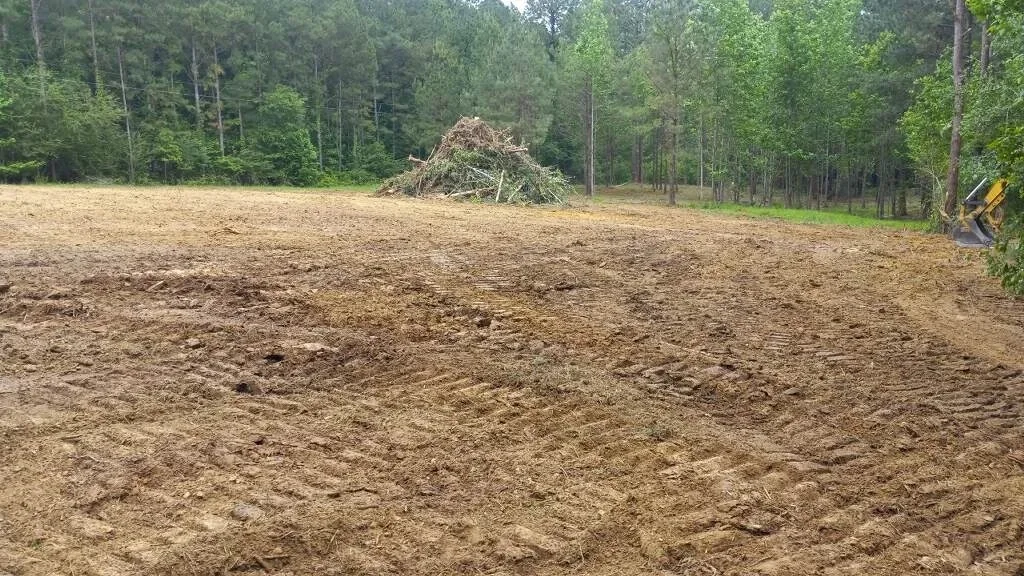
The instinct after a washout is to order a load of gravel. In this terrain that usually buys one good month. New stone laid on a grade that still points water at the channel just becomes the next load of stone in the ditch. The sequence that holds is: get the water off the drive, reshape the surface so it sheds to the edges or to a defined crossing, compact the base, and then place and crown the stone. Where a driveway needs a real rebuild rather than a repair, the driveway grading and gravel guide walks through what that involves.
Storm history is the reason this matters here. 19 federal disaster declarations touch this county (1973-2026), overwhelmingly the storm and flood family, and each one put water against grades that were built for drier assumptions. The National Weather Service keeps the local rainfall record that explains why a driveway can be fine for years and then fail in one season.
There is a practical test for whether a driveway was built for the water it now receives. Stand at the top and look downhill in a heavy rain, or right after one: the water should be leaving the drive at planned points, not running the full length of it. If it runs the whole way, the drive is acting as a stream channel, and every storm is deepening it. On the slopes around Waynesville, a rebuilt drive typically gets one of three water strategies — a crowned surface that sheds both ways to vegetated edges, a series of broad shallow swales that turn water off at intervals, or a single controlled crossing where the drive dips and a culvert carries the concentrated flow under. The right choice depends on the fall of the lot and where the water can legally and sensibly go, which is also why drainage that discharges toward a creek branch or wetland has to respect the stormwater rules the EPA publishes for where runoff may go. Getting that part right the first time is what separates a repair from a recurring bill.
Hiring a crew in Waynesville
Three checks specific to this county. First, ask how they will handle the water arriving from above the drive — if the answer is only about stone, keep looking. Second, ask who handles the county-road ditch or culvert inlet if that is part of the problem, since that work sits in a different lane than driveway grading. Third, on any job that crosses the state threshold for a general contractor license, ask to see it; the NC Licensing Board for General Contractors sets where that line falls. For drainage work that discharges toward a waterway, the EPA publishes the stormwater rules that govern where runoff may go.
Good crews here will walk the drive with you in the rain if they can, because that is when the water shows its route. When you are ready to get scoped, the Waynesville grading contractors page covers what a first visit should include.
Two more things worth asking on a slope lot. First, how will the crew access the work — a drive too soft or too narrow for a loaded truck changes how material gets placed and how long the job takes. Second, what the finished surface should look like and how it should be maintained: a crowned gravel drive needs occasional blading, and knowing that up front prevents the next washout. A written scope that names the drainage fix, the stone, and the finish grade is the sign of a crew that has done this in Haywood County before, not one learning the terrain on your job.