Where the water comes from on a Waynesville dig
Most lots around Waynesville sit either on a slope shoulder off the hills ringing town or on a graded bench cut into one, and both send water at the work site. On a cut, the uphill face releases surface flow and shallow groundwater straight at the excavation; on a filled pad, the imported material stores water until it finds the seam where it meets the original ground. Waynesville's position west of the Blue Ridge and the county's long record of federal disaster declarations (19 events across 1973-2026, overwhelmingly storm and flood family) is not trivia here — it explains why the National Weather Service flood and hydrology outlooks are worth checking before a cut season starts.
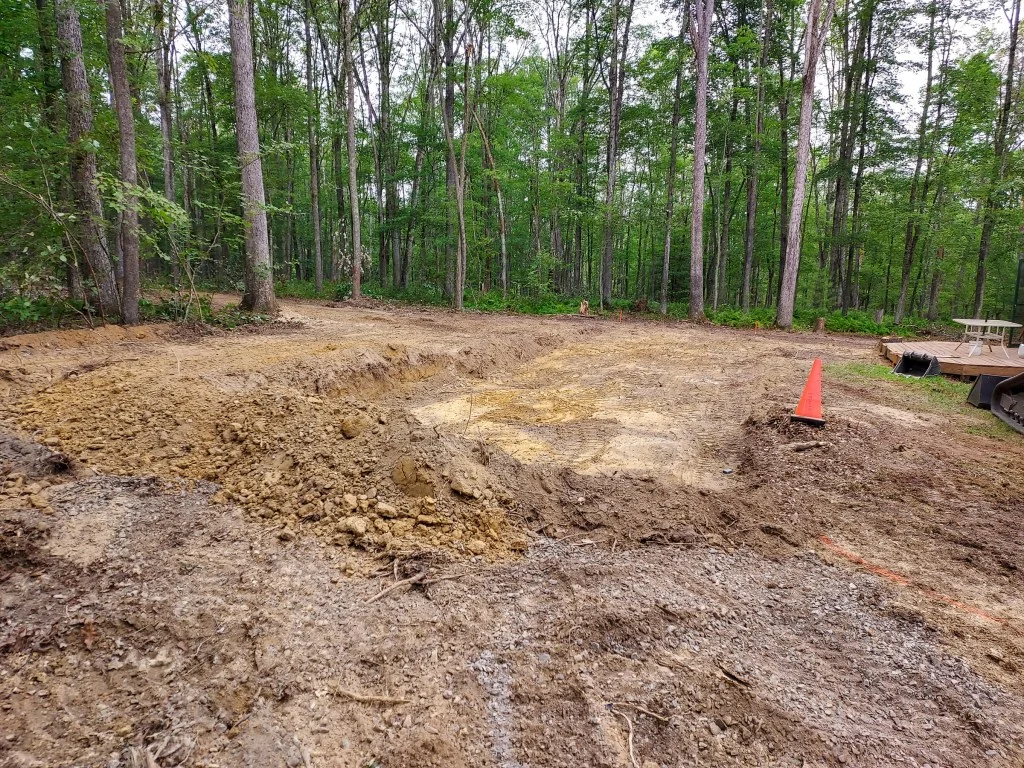
The practical consequence: a scope that only lists machine hours is unfinished. Where does the uphill water go while the hole is open, and where does it go after backfill? Grading, a diversion swale, a proper outlet — that sequence is the difference between a dry footing and a mud hole that has to be re-dug.
Drive the older in-town streets off Main and you can read the same story in the houses: foundations that sit high on the uphill side with a swale cut across the lawn, downspouts daylighted to the curb rather than dumped at the corner of the footing. That pattern is not decoration. It is what happens when a builder had to move roof and slope water past a basement that would otherwise stay wet. New construction on the same kind of lot inherits the same obligation, and a crew that does not plan for it will leave you a crawlspace that smells like the creek bottom.
On the benches above town, the water often arrives from a direction the owner does not expect — not from straight uphill, but along a shallow soil layer sitting on top of the clay. That perched water shows up as a seep in the middle of a cut face, days after a rain, when the surface already looks dry. A bid that assumes all water is surface water will underprice the dewatering, and the first wet week will expose that gap.
Haywood County site conditions that change the price
Excavation around the county seat runs into three things that flatland bids overlook. First, rock: shallow bedrock on ridge lots means ripping or hammering, and that line item scales with how much of the cut is rock rather than soil. Second, slope access: getting a machine onto a steep bench without tearing up the drive or undercutting the uphill neighbor. Third, haul-off: clay spoils that won't drain or compact need to leave the site, and in-town Waynesville lots rarely have room to stockpile.
None of this is exotic; it's just what the geology dictates. What it means for you is that the same nominal dig can land at very different points inside the standard band, and a bid that doesn't say whether rock, hauling, and drainage are included isn't comparable to one that does.
Haywood County's ground is a mix that rewards a slow look. Much of the county sits on weathered bedrock and residual clay, and the transition from diggable soil to refusal can happen inside a single bucket width. A footing trench that runs clean for thirty feet can hit a shelf of rock at the uphill corner, and that corner is usually the one carrying the most load. Knowing that before the machine arrives is the difference between a normal day and a day spent on the phone renegotiating.
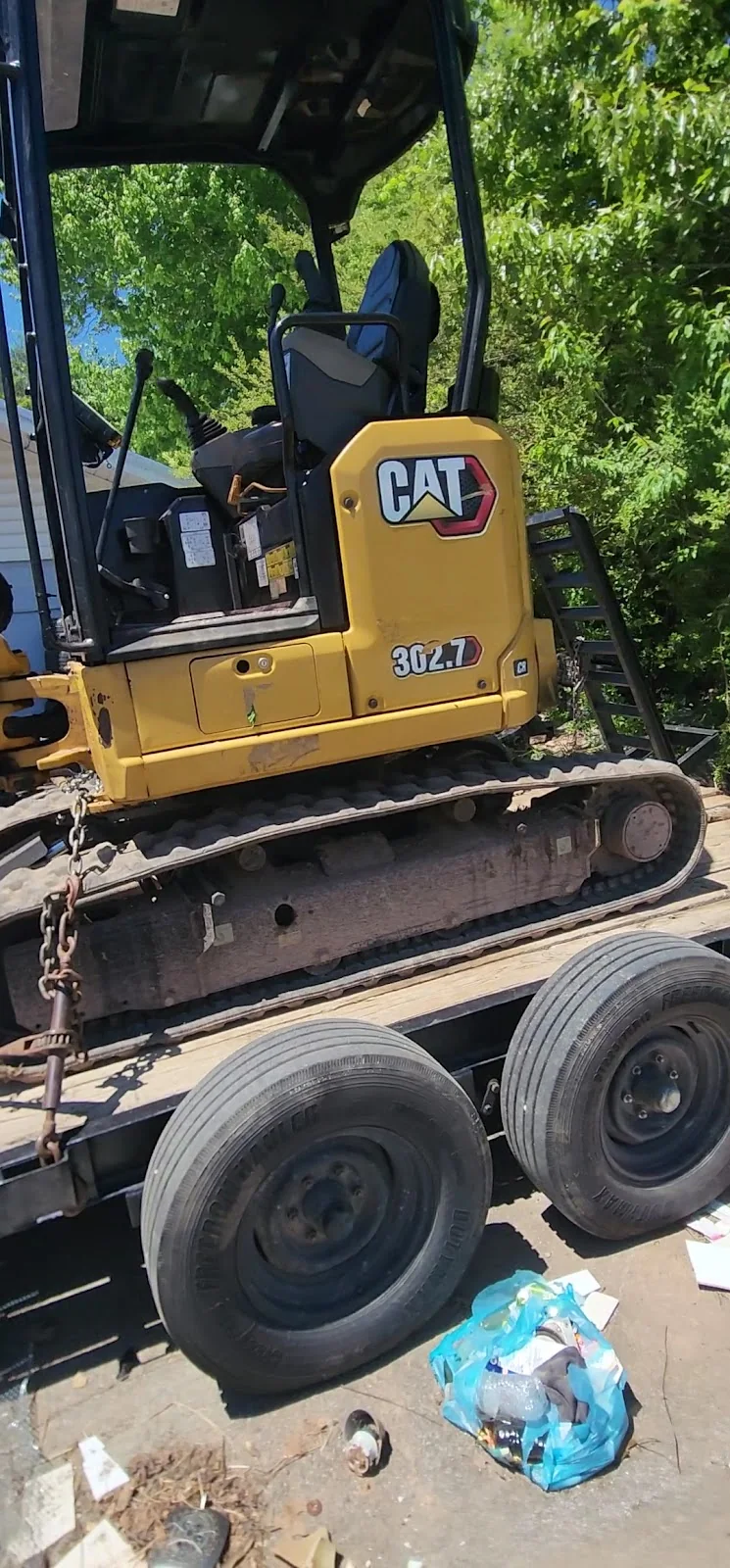
Access is the second local reality. A lot at the end of a narrow gravel drive above Russ Avenue, or a bench cut behind an existing house, may only take a compact machine, and a compact machine moves less dirt per hour. A bid built on a full-size excavator's production rate will not survive contact with a tight lot. The honest crews walk the access before they quote, and they tell you when the plan is a small machine, a long reach, or a conveyor-style spoil lift rather than pretending the big iron fits.
Haul-off is the third. Clay spoils from a Waynesville cut are heavy, they don't drain, and they won't compact into a usable fill without the right moisture and lift thickness. On an in-town lot with no room to stockpile, every yard that leaves is a truck, a driver, and a tipping fee. That is why two bids for the same hole can differ by thousands even when the digging looks identical on paper.
Scope versus price for typical Waynesville work
Residential excavation across the county generally sits between $1,800 and $4,500 for a single dig and $6,000 to $15,000 for full site work. Slope, rock, and haul distance push a job toward the top of its range; easy access and on-site spoil keep it lower. The local Haywood County grading cost figures line up with these bands, so a quote far outside them deserves questions, not a signature.
| Scope | Typical range | What moves it |
|---|---|---|
| Footing or pier dig, single | $1,800–$3,200 | Rock, hand-work near existing structure |
| Trench run (utility, drainage) | $1,800–$4,000 | Length, depth, crossing hardscape |
| Small pad or driveway cut | $2,500–$4,500 | Spoil removal, compaction spec |
| Full site excavation, new build | $6,000–$12,000 | Cut/fill balance, bench design |
| Full site with rock and haul-off | $10,000–$15,000 | Hammering, truck count, distance |
Read the table as a shape, not a promise. The low end of a footing dig assumes soil, easy reach, and a place to put the spoil. The high end of a full site assumes rock shows up, the trucks have somewhere to go, and the bench has to be cut rather than just scraped. Most Waynesville jobs land somewhere in between, and the fair bid tells you which assumptions it made so you can compare like with like.
One local pattern worth naming: on a slope lot, the excavation and the finish grading are not two separate purchases, even when two different crews do them. The dig sets the bench elevation, and the grading crew either works with that elevation or fights it. When both sides look at the grading contractors in Waynesville doing the finish work and the excavation crew agrees on the same cut sheet, the job runs clean. When they don't, the owner pays twice for the same dirt.
Permits, code, and who is allowed to dig
Grading and excavation that changes drainage or disturbs steep slopes on a Haywood County build generally needs to be part of the permitted construction set, and the NC Licensing Board for General Contractors sets the dollar threshold at which a project needs a licensed general contractor rather than a handshake. For anything touching a regulated waterway or wetland, the U.S. Environmental Protection Agency rules on dredge and fill apply, and they can stop a job mid-cut if the scope skipped that check.
Two things worth confirming in writing before dirt moves: that the crew carries the insurance the site requires, and that the erosion-control plan matches what the county approved. On a slope lot, silt fence placement is not a formality — a storm that pushes sediment onto a road or into a creek becomes your problem, not just the contractor's.
The county's storm and flood history behind those 19 federal declarations across 1973-2026 is the reason erosion control gets real attention here rather than a token fence at the property line. On a steep lot, a single heavy rain can move loose spoil a long way, and the repair usually costs more than the fence that would have held it. Installing the control measures before the cut, and inspecting them after every significant rain, is the cheap version of that lesson.
Permitting is also where a bid either proves it understands the site or reveals that it doesn't. A scope that ignores slope disturbance, drainage change, or proximity to a stream is not a cheaper job; it is a job with an unplanned stop in the middle. Ask to see the erosion and sedimentation plan, ask who is responsible for inspections, and ask what happens if the county flags the site. The answers belong in the contract, not in a phone call you can't prove later.
Choosing a crew for this terrain
Ask any Waynesville excavation contractor three questions. What is your plan for the uphill water during the dig? How do you handle rock — rip, hammer, or blast permit? And where does the spoil go? The answers separate crews who understand Haywood County ground from crews who bid machine hours and discover the rest later. The excavation contractor overview walks through what a proper bid includes, and grading contractors in Waynesville covers the finish-grading side that has to follow any dig. Get the drainage sequence in writing; it is the cheapest line in the job and the most expensive one to skip.
Two smaller signals matter too. A crew that walks the lot on foot before quoting has seen the seep, the shelf, and the tight turn at the top of the drive. A crew that quotes from the truck window has not. And a crew that tells you when a job is a bad fit — too steep for the machine they run, too tight for the trucks they use — is being honest, not difficult. On this terrain, a referral to someone better suited is a sign you are talking to the right people.
Finally, ask what the site looks like when they leave. On a Waynesville lot, the excavation is rarely the last trade. The finish grader, the foundation crew, and the landscaper all follow, and they all need the pad, the swale, and the outlet to be where the plan said they would be. A clean, marked, properly graded handoff is worth more than a low number on the invoice, because it is the thing that keeps the rest of the build on schedule and dry.