Access and haul decide this job, not the pipe
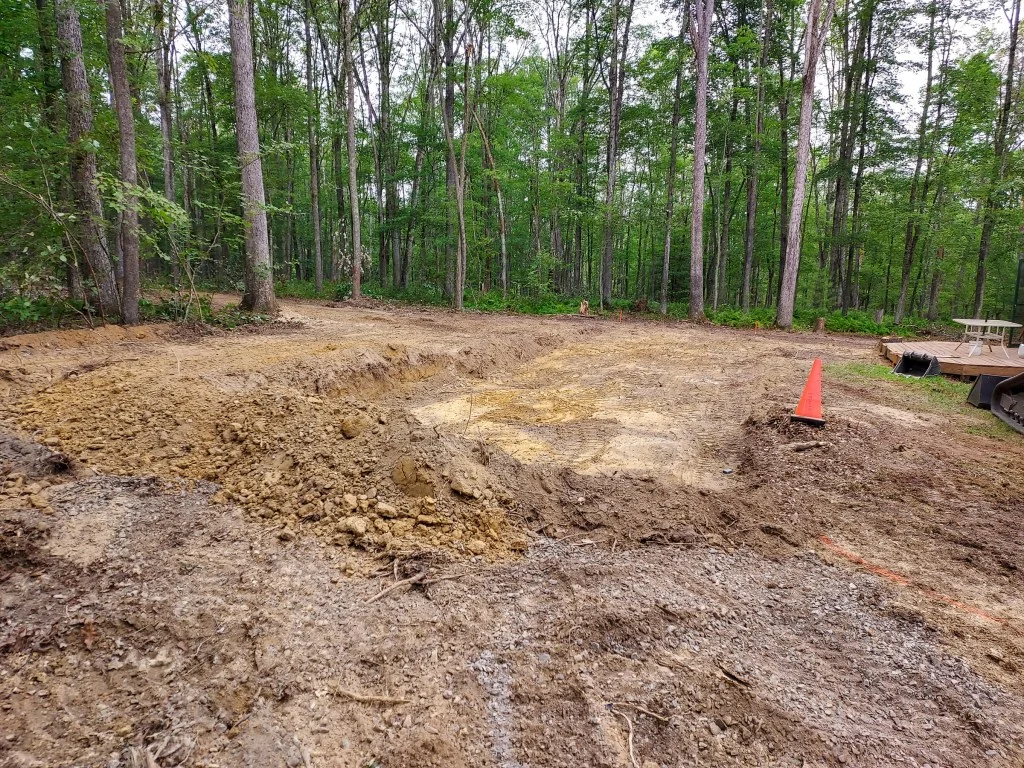
Henderson County driveways climb. They leave the valley floor at Bat Fork or the French Broad bottoms, cut across a hillside, and cross a branch that runs hard in spring. By the time you're standing at the washout on a Tuesday morning, the price question has already shifted: not what a culvert costs, but what it costs to get a machine to that culvert and to get a pile of wet clay back out.
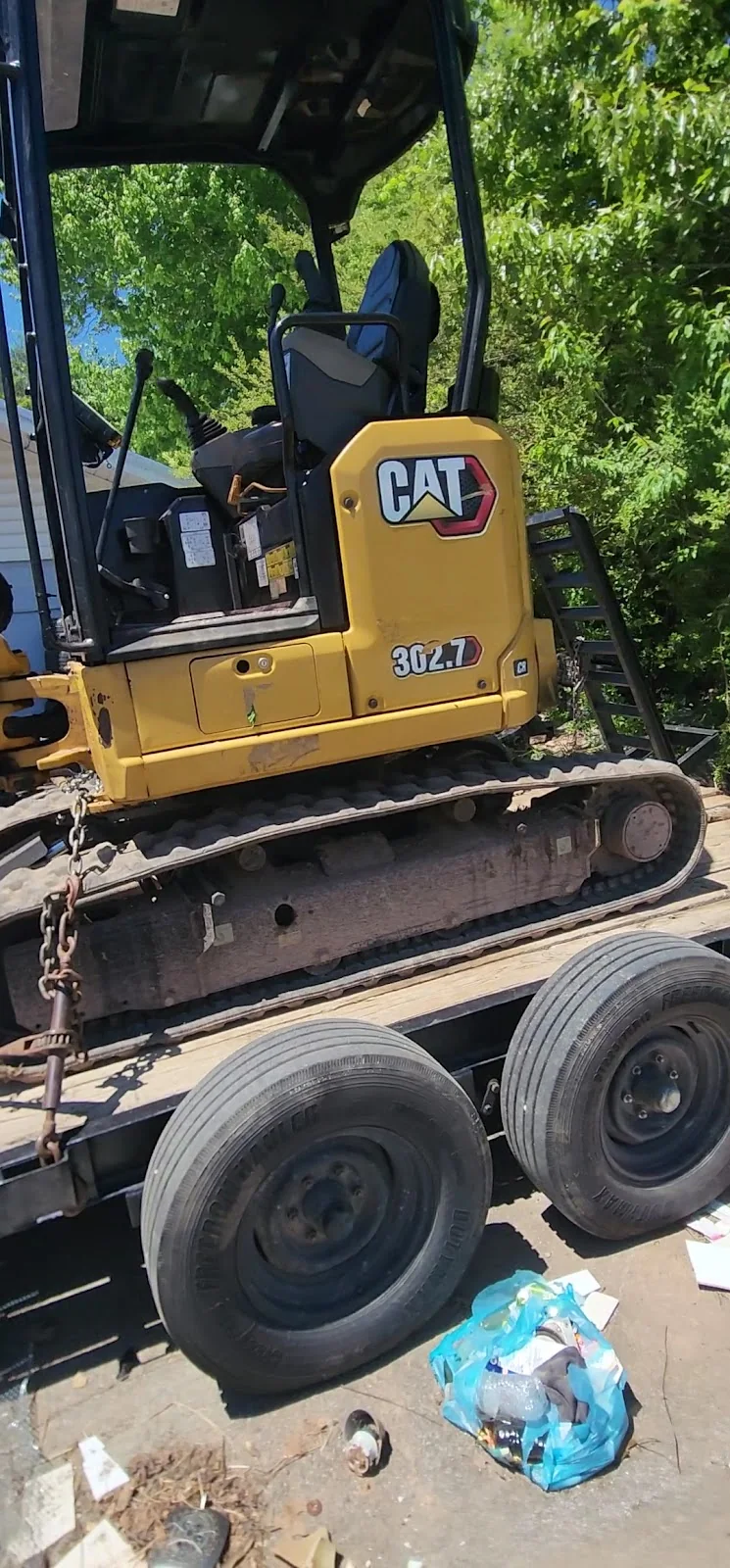
A pipe delivered to a flat driveway off a state road is a straightforward swap. The same pipe 600 feet up a single-lane gravel drive, past a tree canopy and a failing switchback, is a different scope. Track machines beat rubber-tired equipment on saturated Henderson County clay, but they need a lowboy and a turnaround, and the truck that hauls spoil has to back the whole way in or the operator has to shuttle it out bucket by bucket. Both show up on the invoice. Honest bids say so.
Where the gravel comes from and why that sets price
Hendersonville isn't sitting on a gravel pit. Clean washed #57 and #4 stone, the sizes that actually drain around a culvert and keep a driveway from pumping mud, generally travel in from quarries across the county line or out of the Fletcher and Buncombe corridor. Short hauls cost less per load, but every load still climbs the same driveway the crew is trying to fix.
That haul distance is the single biggest reason two bids on the same washout can differ by a third. A crew pricing stone as though it's a five-minute run up a Hendersonville street will underbid a job on a Saluda grade and discover it mid-project. When you compare quotes, compare them on truck counts and haul distance, not just the pipe diameter. The Henderson County grading cost breakdown lays out the same logic for excavation and stone line items.
What a proper culvert scope contains
A culvert isn't a pipe and two wing walls. A defensible scope for this terrain includes: an inlet and outlet that are cut clean and pitched enough to actually move water, proper bedding stone under the pipe so it doesn't settle and crack, washed stone backfill so water reaches the pipe rather than running around it, headwalls or riprap at both ends, and channel work downstream so the discharge doesn't scour the neighbor's bank. Where the drive crosses a natural branch, the pipe has to be sized to the watershed, not to whatever the previous owner bought.
This is where code and installation practice matter. The International Code Council publishes the residential drainage provisions most North Carolina counties lean on, and the state's general contractor licensing rules through the NC Licensing Board for General Contractors apply once a driveway job crosses the threshold into a larger site work contract. If your project touches a mapped stream or wetland, the EPA permitting picture is the other gate to check before a machine rolls.
Hendersonville cost picture
The table below shows what the money buys. Specifics vary with pipe diameter, run length, stone volume, and, in Henderson County more than almost anywhere, how far the crew and the truck have to crawl to get to the crossing. For an apples-to-apples discussion of pipe options, see the culvert and driveway pipe guide. When you're ready for a real number, the crew selection questions on the Hendersonville grading contractors page apply here too.
| Scope | Typical installed range |
|---|---|
| Short residential driveway culvert, corrugated plastic, easy access | $1,500–$2,500 |
| Standard driveway culvert with stone bedding, headwalls, and riprap | $2,500–$4,500 |
| Long run or steep hollow crossing with extended haul | $4,500–$6,000 |
| Concrete pipe, longer span, or engineered site work scope | $6,000–$9,500 |
Anything below the bottom row usually means either a short, dry, flat setup or a bid that's missing stone. Anything above the top row typically means the culvert came with a larger grading or stabilization problem attached, which is common on Henderson County hillside properties after a wet winter.
Water history is the local context
Foundation and drainage calls in Henderson County are not abstractions. The federal disaster record shows 16 declared events touching this county across 1978-2026, mostly in the storm and flood family. Every one of those events dumped concentrated water against driveways, branches, and crossings that were sized for a milder assumption about how hard it can rain on a Western North Carolina ridge. The National Weather Service keeps the regional rainfall and flood products that tell you which pattern keeps repeating.
The practical takeaway is to size the pipe for the branch you actually have, and to inspect culverts before spring. A culvert that's 80% clogged with leaf litter and gravel isn't holding; it's waiting for the next three-inch rain to send the driveway downstream. Cleaning and re-dressing an existing culvert is a much smaller line item than replacing it, and both are smaller than replacing the driveway it failed under.