What a clearing job actually looks like, start to finish
A clearing crew on a Waynesville-area lot does not just show up and push. The order matters, and in this county the order is set by the terrain. A typical sequence:
- Walk and mark. The first hour is spent identifying what stays: boundary trees, anything near a septic field, and the mature hardwoods a lot of Haywood County owners want kept. A crew that skips this step and starts cutting is guessing.
- Undergrowth and small stems first. Brush, saplings, and vines come down before any big timber. That opens sight lines and gives the equipment room to work.
- Felling and bucking. Larger trees come down and get cut into lengths — saw logs set aside if they have value, the rest into the burn or grind pile.
- Stump work. Stumps get ground or pulled. Pulling disturbs more soil; grinding leaves the root mass to rot, which is fine for a lawn and wrong under a future slab.
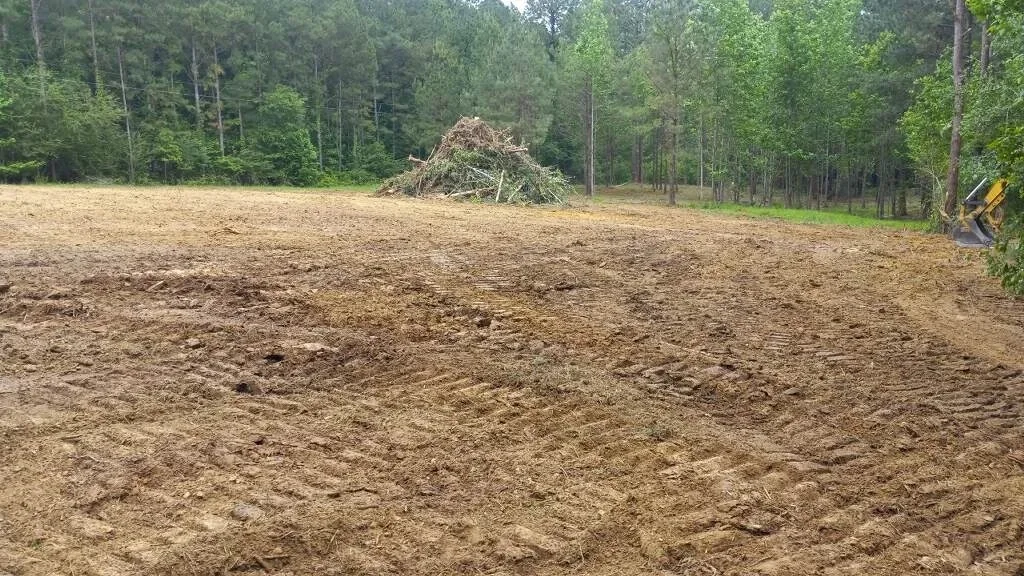
- Debris handling. Chipping, burning where allowed, or hauling off. This step alone can take longer than the felling.
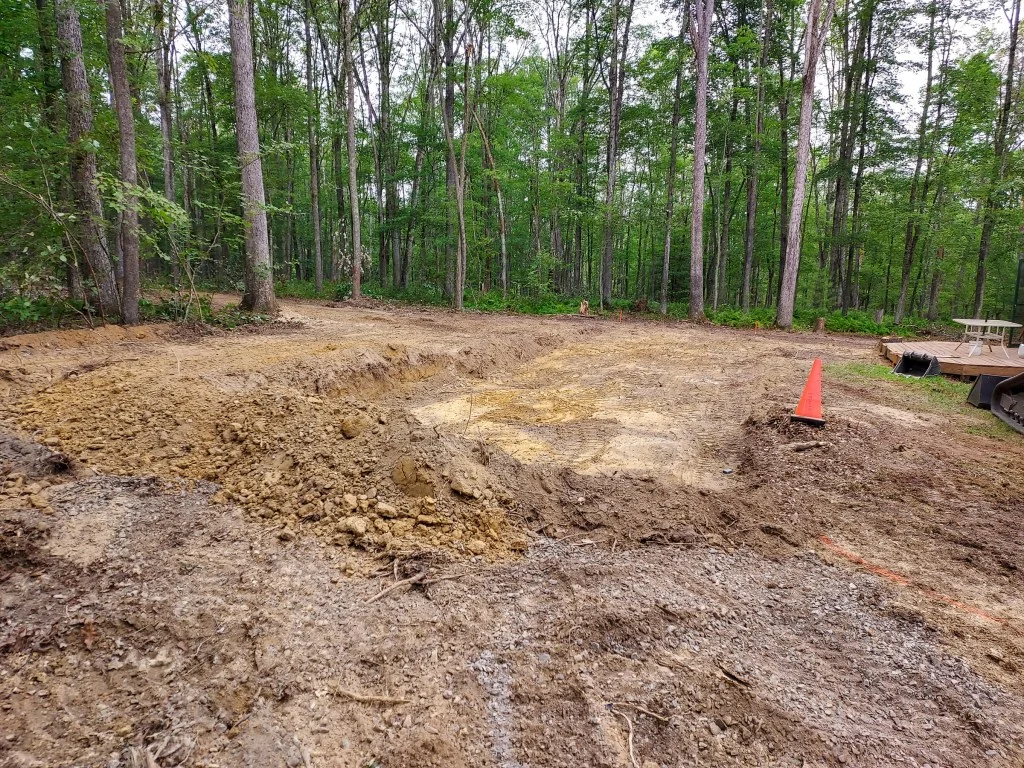
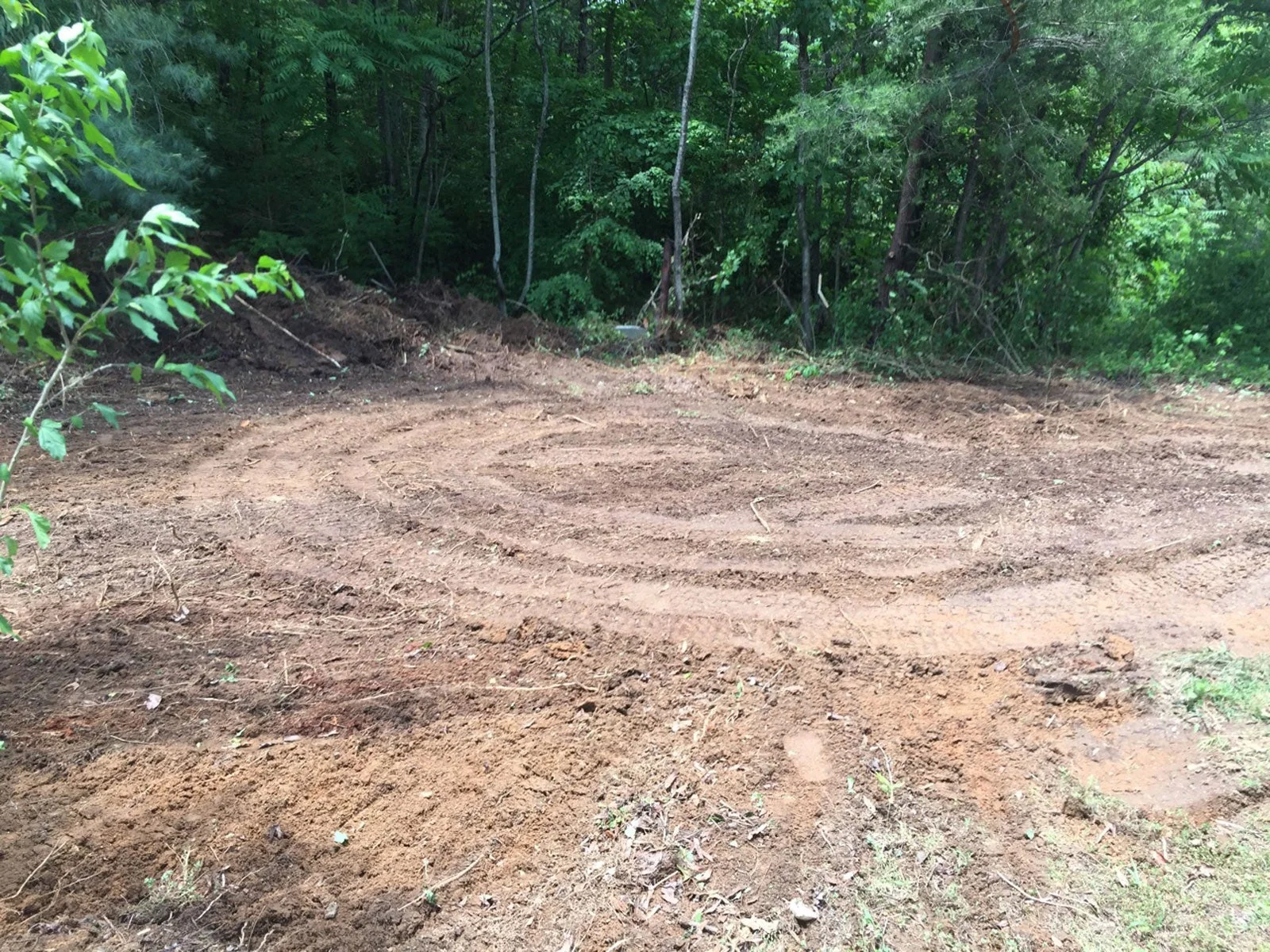
- Rough grade. The lot gets knocked down to something buildable or plantable, which is where clearing overlaps with grading.
On flat ground, a quarter-acre wooded lot is often a one- to two-day job. On the slopes that define so much of Haywood County, the same lot routinely stretches to three or four days, because equipment moves slower, debris has to be carried out instead of pushed, and the crew spends real time keeping the work from tearing up the ground below.
What Haywood County owners pay, by scope
These are working ranges, not quotes. Nobody can give you a firm number before walking the lot, because tree size and slope swing the price more than acreage does.
| Scope of work | Typical Haywood range | What drives it |
|---|---|---|
| Brush and sapling clearing only | $800 – $2,500 | density, access, whether debris stays on site |
| Selective thinning of a wooded lot | $1,800 – $4,500 | tree count, size, how careful the owner wants to be |
| Full clearing, small lot (under 1 acre) | $2,500 – $7,000 | stump count, slope, haul-off distance |
| Full clearing with stumps and rough grade | $5,000 – $12,000 | grade change, drainage, debris volume |
| Steep or heavily timbered acreage | $12,000 – $25,000+ | equipment limits, hauling, erosion control |
The jump from the third row to the fourth is usually the stump work and the grade, not the trees. Owners are often surprised by that, and it is worth asking every bidder to break those two lines out separately. For the region-wide picture, see the full land clearing cost guide.
Why the timeline stretches on mountain ground
Haywood County sits in a bowl of ridges, and that shapes clearing work in ways a flatland crew will not anticipate. Three real constraints:
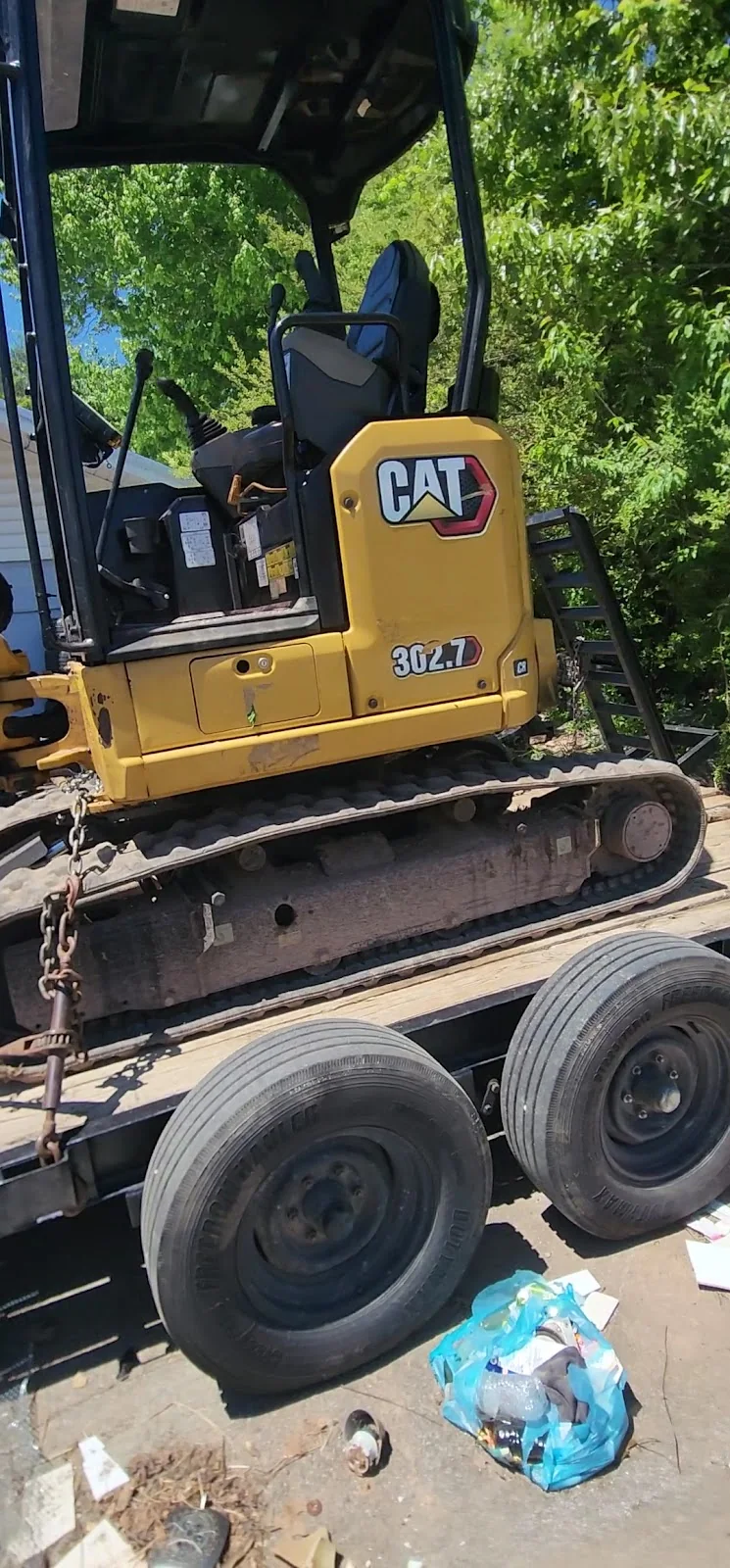
Equipment reach. A track hoe or skid steer can only work ground it can safely stand on. On the steeper lots around the county, crews end up hand-felling trees they would otherwise push, which is slower and more expensive per tree but safer for everyone.
Debris exit. On a flat lot, a dump truck backs up to the pile. On a hillside, the debris often has to be carried out a piece at a time, and every extra trip adds hours. This is one reason two lots of the same size can price thousands apart.
Water. The mountains here catch a lot of rain, and the federal record backs that up: 19 federally declared disaster events touch Haywood County (1973-2026), and many of them are storm and flood events. That history is why any responsible clearing job includes erosion control before the first tree falls. Bare dirt on a slope during a summer thunderstorm will move, and moving dirt is expensive to fix. The National Weather Service outlook for the region is worth checking before you schedule a burn day or a grade change.
None of this is a reason not to clear. It is a reason to hire crews who have worked this county's ground before, and to expect a timeline measured in days per acre rather than hours.
Permits, rules, and who can legally do the work
Clearing rules in North Carolina sit in a few different places, and Haywood County owners bump into all of them.
- Erosion and sediment control. Any land-disturbing activity over the state threshold needs an approved plan and inspection. The NC Office of State Fire Marshal publishes the code that county enforcement follows.
- Burning. Open burning of cleared debris requires a permit and is banned outright on some days. Never let a crew burn without one.
- Wetlands and streams. If the lot touches a creek or wet area, the EPA rules on waters of the United States may apply before any machine moves. This is a real stop-work risk on some Haywood parcels.
- Licensing. Large clearing contracts that cross the state's cost threshold for general contracting fall under NC Licensing Board for General Contractors rules. Ask for the license before you sign, not after.
A bidder who shrugs off the erosion plan or the burn permit is telling you how the rest of the job will go.
How to read a clearing bid without getting burned
Four things to insist on, in this market:
- Price the debris separately. Whether it is chipped, burned, or hauled is often the single largest line item, and it is the easiest one to hide.
- Ask what happens to the stumps. Ground or pulled, and whether that price is included. It rarely is unless you ask.
- Get the erosion plan in writing. On any Haywood slope, this is not optional and not free.
- Compare against the table. If a bid is far outside the range, make the contractor walk you through why. Slope and tree size are legitimate reasons. Vagueness is not.
If your project also needs site prep, the neighboring county's numbers are a useful cross-check: see grading cost in Buncombe County for how the terrain there affects excavation prices.