The order a Hendersonville pad actually gets built in
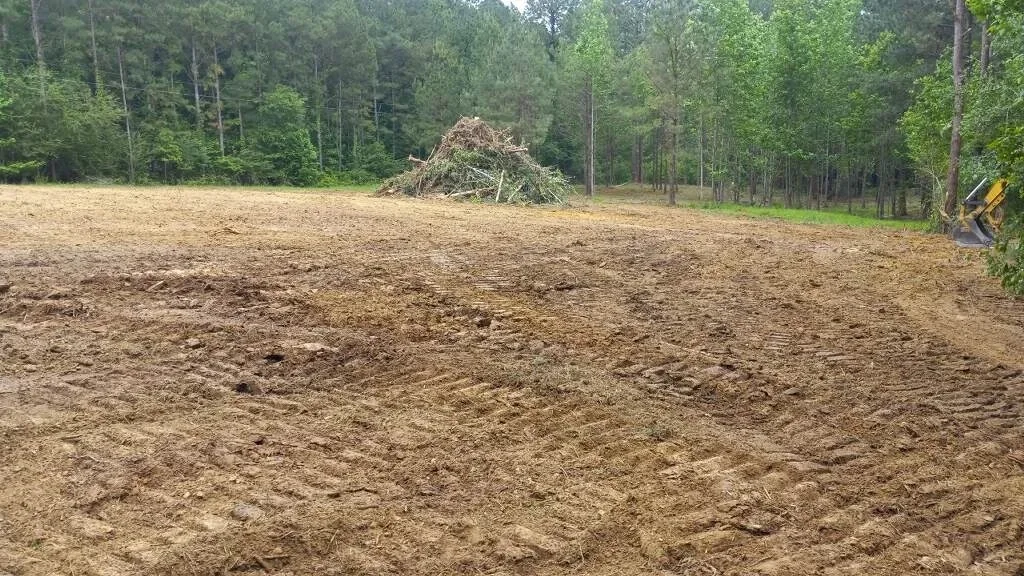
Ask three builders around town how long a pad takes and you will get three answers, because a Hendersonville pad is not one task. It is a sequence, and the days add up in a predictable order once you know the lot. A gentle, cleared lot on the valley floor off Upward Road can be finished inside a week. A wooded slope off Kanuga or a knoll out toward Edneyville runs two to four weeks because every step is slower and the machine time is longer.
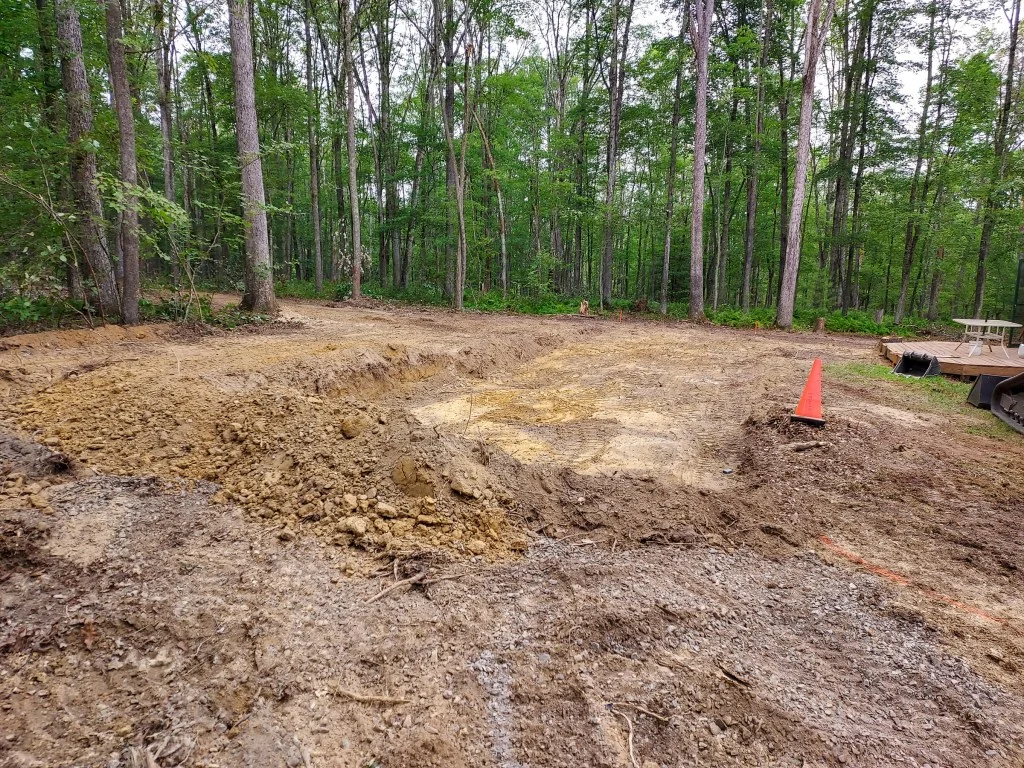
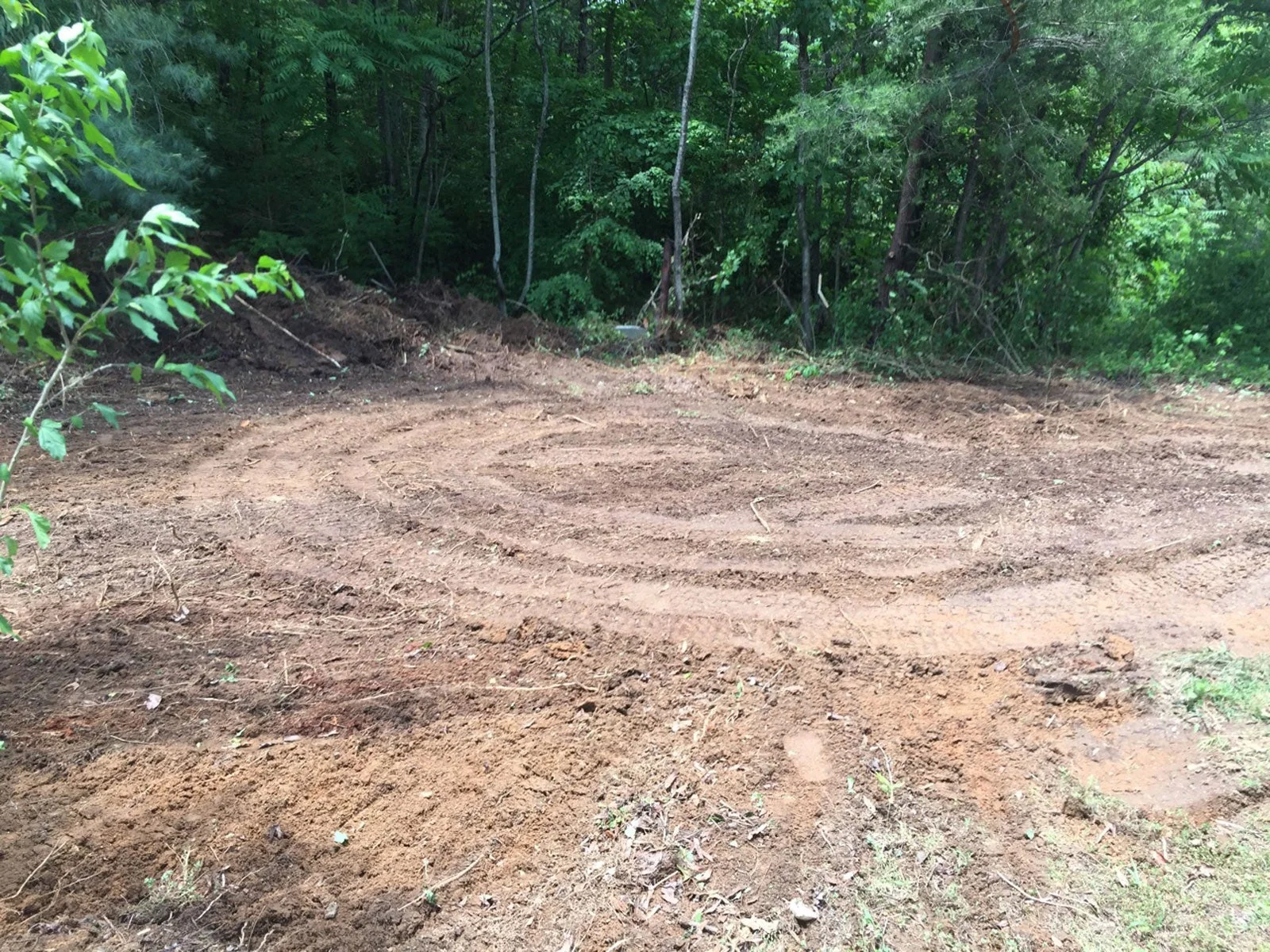
The order that matters: clear brush and trees inside the footprint plus a working margin, strip and stockpile topsoil separately from subsoil, cut the high side down and fill the low side, compact the fill in lifts with a sheepsfoot or plate, then fine grade to the exact pad elevation and confirm the slope away from the footprint. Skip the lift-by-lift compaction and the pad will settle a year after the house is framed, when fixing it means underpinning a finished structure instead of rolling a compactor over open dirt.
Two variables dominate the timeline in Henderson County: rock and water. Blue Ridge ground is famous for shallow rock; if the bucket hits refusal, the plan shifts to drilling and blasting or a redesigned elevation, and the schedule moves with it. Spring and early summer rain does the same thing from the other direction, because wet subsoil cannot be compacted to spec and the crew waits for it to dry.
What site prep costs in Henderson County, line by line
Pad pricing follows the work, not the acreage on the listing. The table below reflects typical Henderson County scopes; your specific number depends on slope, tree cover, rock, and how much fill is needed to bring the pad to grade. The county-level working table lives in the grading cost breakdown, and the general mechanics of pad construction are covered in the site prep and building pads guide.
| Scope | Typical range |
|---|---|
| Clear and grub only (light brush, small trees) | $1,200–$3,000 |
| Straightforward pad, gentle slope, no rock | $3,500–$7,000 |
| Pad with significant cut/fill and drainage grading | $8,000–$15,000 |
| Steep, wooded, or rocky lot (blasting, haul-off, engineered fill) | $15,000–$30,000 |
| Driveway cut and culvert install as part of pad job | $2,500–$8,000 add-on |
A bid that is far under the others usually leaves out one of the rows above. Ask which line items are included in writing before you compare totals.
Terrain decides the job more than anything else
Henderson County is where the Blue Ridge starts behaving badly for builders. The French Broad valley around Hendersonville proper is the easy side: broad lots, moderate slopes, soil you can cut with a decent-sized excavator. Cross the ridge line toward Saluda, try to build off Chimney Rock Road, or take a lot on the shoulder of Bearwallow and the same pad becomes an engineering exercise. Retaining walls, engineered fill under a geotechnical letter, and haul-off of unsuitable material enter the bid.
Drainage is the other Henderson County constant. The county sits in the wettest corner of the state outside the far mountains, and the National Weather Service's rainfall outlook for the region makes the point every spring. Water always wins the site; the only question is whether it drains around your pad or through it. A grading plan that routes surface water away from the footprint on day one saves the foundation, the basement, and the crawl space later.
Federal disaster records are the historical anchor: 16 declared events touch Henderson County (1978-2026), most in the flood and storm family. That history is the reason a serious bid includes drainage line items, and the reason the EPA's guidance on stormwater and erosion control applies to any job that disturbs ground: https://www.epa.gov.
Permits, licensing, and what a proper crew brings
Site prep and grading in Hendersonville means disturbing soil, moving water, and occasionally cutting into a slope that feeds a stream. The county and the state both have an interest. Erosion control plans are typically required above a threshold of disturbed acreage, and any pad near a waterway carries buffer rules. North Carolina's licensing thresholds matter for the contract itself: a general contractor's license is required once a project crosses the statutory dollar figure, and the rules are explained at the state board: https://www.nclbgc.org. For residential construction, HUD's guidance on site and foundation standards is the reference many inspectors lean on: https://www.hud.gov.
On the ground, the practical checklist is shorter. Ask for the compaction method and whether the crew can produce a density test if the builder's inspector wants one. Ask who signs off on final pad elevation and how it is staked or laser-verified. Ask what happens if rock gets hit. A crew with steep-lot experience in this county will answer all three without hesitation, and a crew that mostly works flat subdivisions will answer with a schedule that slips.
Choosing a site prep crew in this county
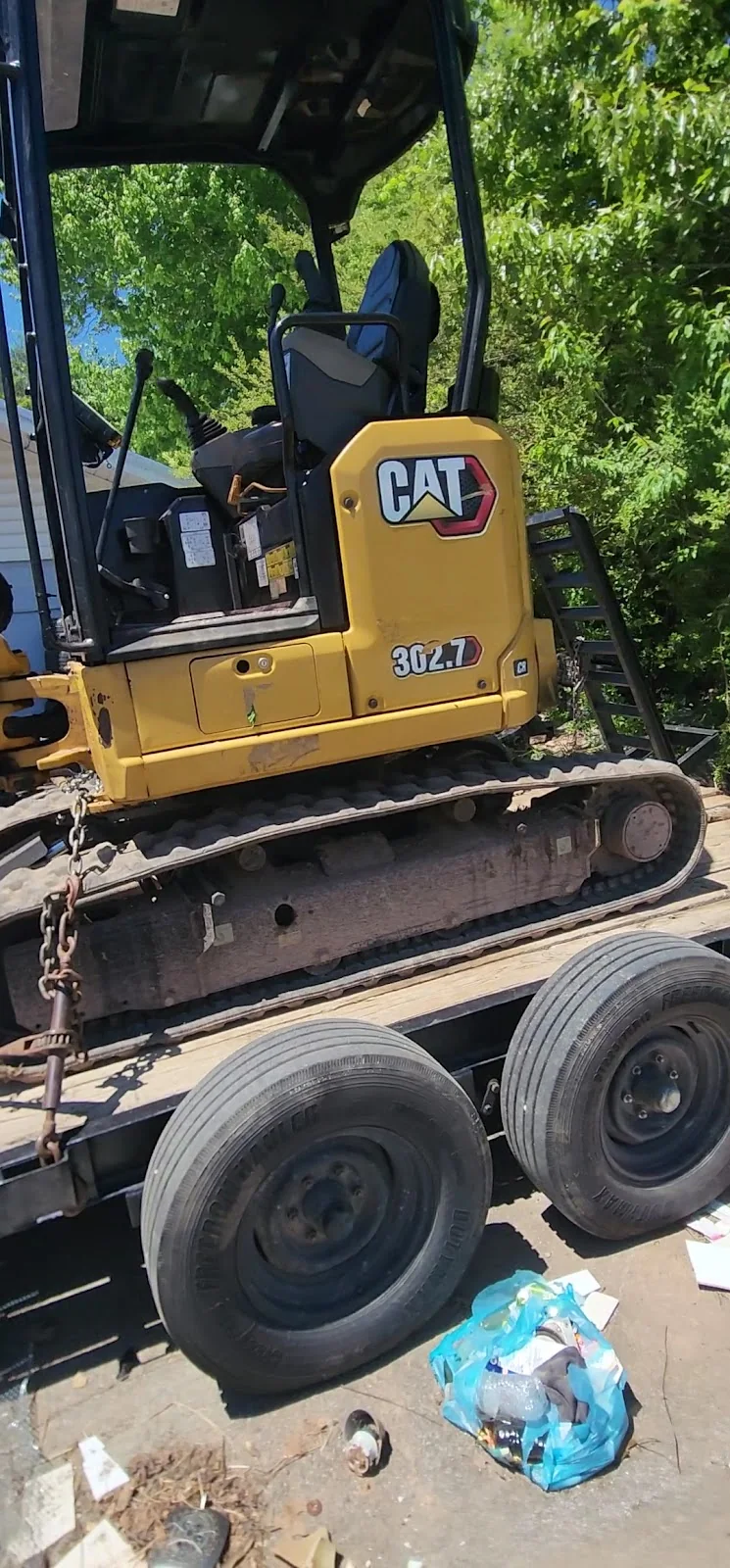
The crews who do this well around Hendersonville share a few habits. They walk the lot before bidding and usually show up with a shovel to check depth to rock. They separate topsoil from subsoil and stockpile the topsoil for later landscaping rather than hauling it away. They own or routinely rent the right machine for a steep lot instead of showing up with a skid steer that cannot safely work a 25-degree slope. And they schedule around the rain, not through it, because a pad compacted wet is a pad that fails.
If you are comparing bids, the local contractor directory at Hendersonville grading contractors is a starting point. Whoever you hire, put the sequence and the compaction method in the written scope, not just the price. The schedule follows the sequence, and the sequence is what you are actually buying.