The one-acre line that reshapes a Barnardsville bid
Most Barnardsville properties sit in the upper Reems Creek and Dillingham corridor, off US-19 North toward the mountain edge of Buncombe County. Lots slope, driveways climb, and the flat pad the house needs is made by cutting the uphill side and filling the downhill side. The state of North Carolina draws a hard line at one acre of disturbed ground: cross it, and the project needs the NCG01 construction stormwater permit before the first track turns.
That changes the quote more than any single line item. The permit obligates you to a written erosion control plan, a trained responsible person on site, silt fence and inlet protection installed before disturbance, and inspections that continue until ground cover is established and the state releases the site. Builders who routinely work under the threshold often forget the sequencing. Someone grading a one-acre pad on a Dillingham Road slope has to file a notice of intent, and that filing is not a formality — it sets the schedule for every trade after yours. The NC Department of Insurance, Office of State Fire Marshal publishes the code path, and the permitted land-disturbance thresholds are the numbers to check before assuming your job is exempt.
Reading mountain ground before you price the earthwork
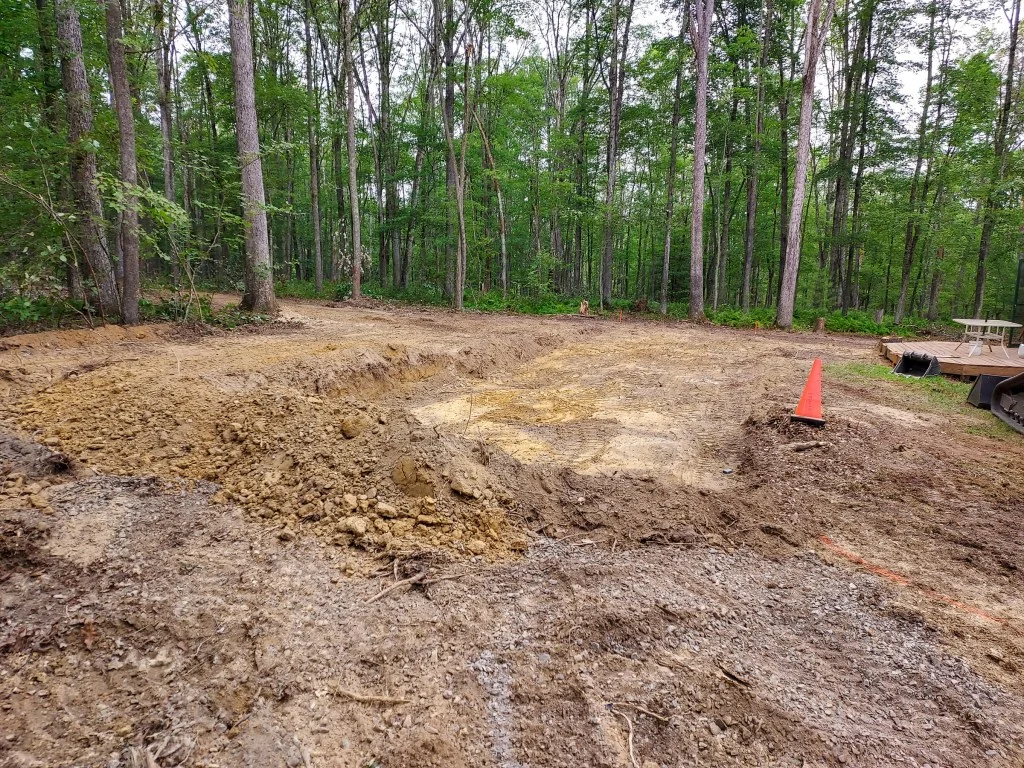
Barnardsville's ground is the northern Buncombe mix: steep wooded slopes that shed water fast, pockets of rocky clay, and old floodplain terraces along Reems Creek that handle rainfall completely differently from a ridge pad. A hillside cut-and-fill here typically involves:
Density testing on each compacted lift of structural fill. A retaining wall where the slope above the pad stays higher than a bank will hold. Drainage that does not dump the uphill neighbor's water onto your cut face. On the creek terraces, a clay-to-rock interface that drains poorly unless the grading plan routes water away rather than letting it pond.
The failure that shows up a year later is almost always a cut face that was never given a keyway into undisturbed soil, or fill placed in thick lifts without an engineer's compaction spec. Both look fine at the end of the job and both settle after the first wet season. Grading is where the foundation and driveway are decided, so the inspection that matters is the one during earthwork, not after.
Cost ranges for mountain-side grading work
These figures are regional bands for the Barnardsville and upper Reems Creek area, not fixed rates. Slope access, hauling distance to a spoil site, and whether rock is hit all move the number inside the band. The full county breakdown lives in the Buncombe grading cost table, and the service scope overview is on the grading and excavation page.
| Scope | Typical range | Notes |
|---|---|---|
| Single-pad finish grade and shaping | $1,200–$3,500 | Small pad, minimal cut, short haul |
| Cut-and-fill house pad, hillside lot | $2,800–$5,500 | Compaction lifts, drainage, spoil removal |
| Driveway grade and drainage | $2,000–$5,000 | Depends on length, slope, culverts |
| Full limited-site and lot grading | $4,500–$8,000 | Multiple pads, retaining, NCG01 plan |
| NCG01 permit filing and plan | $1,200–$3,500 | Filing, erosion plan, inspection schedule |
Add-ons that surprise owners: engineered retaining walls when the slope demands one, spoil hauling over narrow mountain roads, and the winter window when saturated ground delays the work and the inspection timetable.
Before you sign a grading contract here
The North Carolina Licensing Board for General Contractors at nclbgc.org sets the threshold at which a grading or excavation project requires a licensed general contractor — the dollar figure is updated periodically and is the one to verify before assuming any bidder is properly licensed for the scope they are offering.
Ask three questions before work starts: who signs the erosion control plan if the job crosses one acre; whether the quote includes density testing on the structural fill; and what the spoil-removal route is and who pays the disposal. On a Barnardsville hillside, the second and third answers frequently separate a competent bid from a cheap one that turns into a redo.
Sequencing clearing, grading, and the build
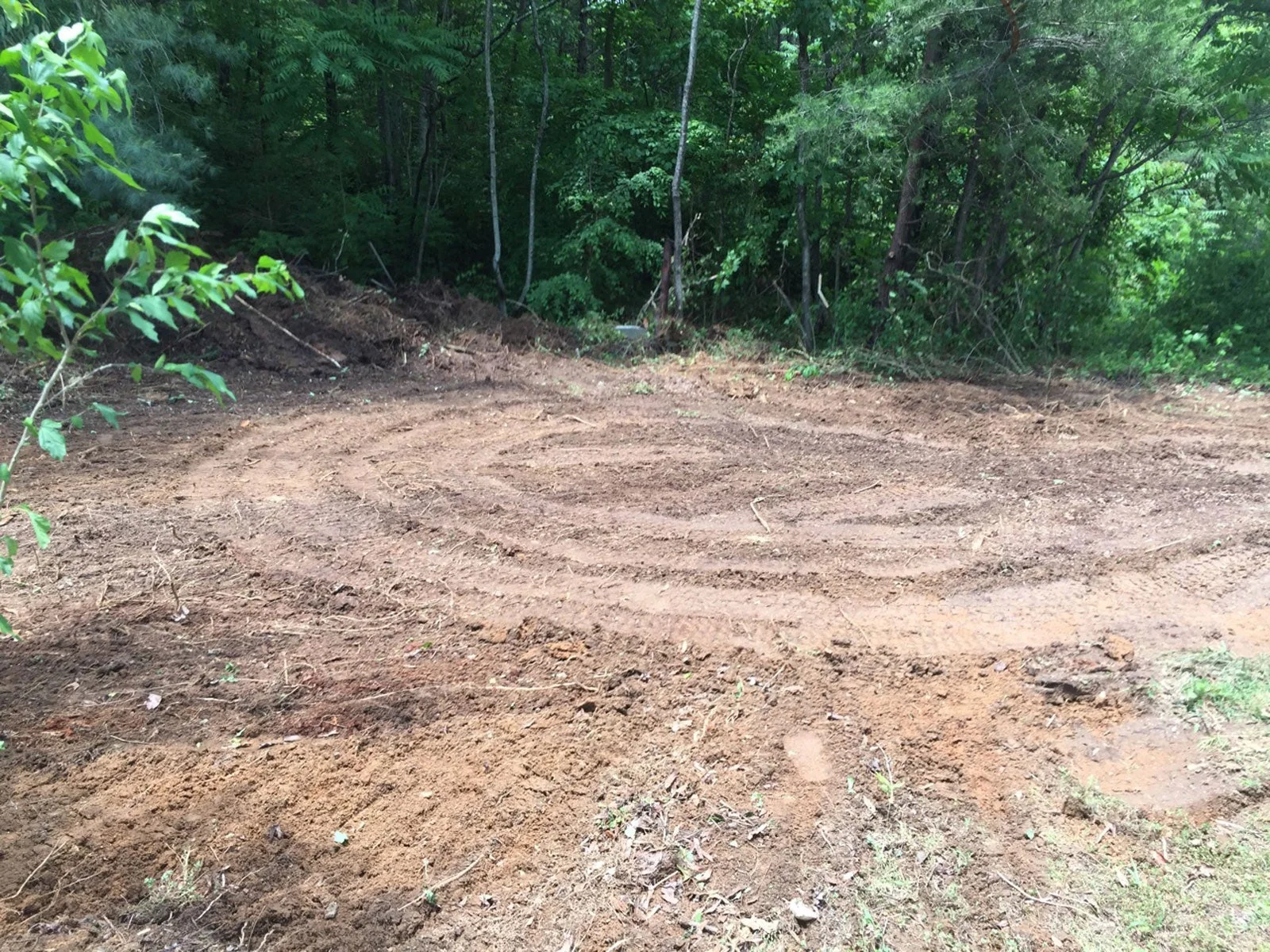
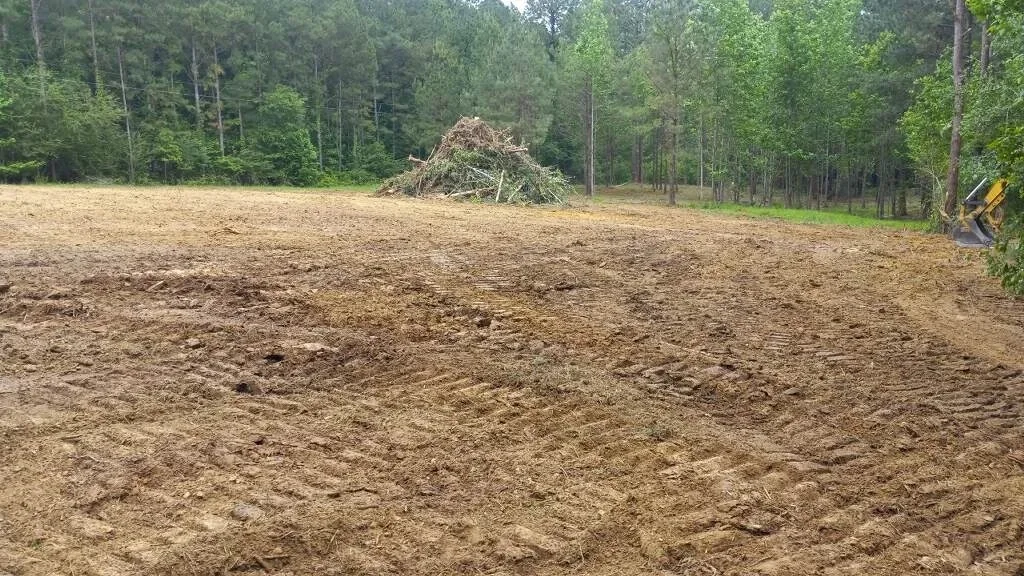
On slope properties the sequencing is its own planning problem. Clearing for access and a work area usually comes first — the Barnardsville land clearing page covers that scope and the debris options. Grading then reshapes the pad and the driveway before any foundation or utility trench is cut. Doing the grading after the foundation is in is possible, but it costs more because the equipment has less room to work and the structural fill has to be placed and compacted around already-built elements. Bring the grading contractor and the foundation contractor to the same early conversation. The drainage decision made during earthwork outlives everything built on top of it.
Rain and inspection timing
Mountain storm cycles drive the erosion-control schedule more than any calendar. The National Weather Service at weather.gov is the tool for watching frontal systems before a cut is opened. Federal disaster records show 19 declared events touching Buncombe County across 1973-2026, and the pattern is storm and flood family — the same events that turn an unstabilized cut face into a wash. The practical rule on a hillside here: do not expose bare soil longer than the plan allows, and never into a forecast wet week.