Getting machines in and dirt out of Montreat
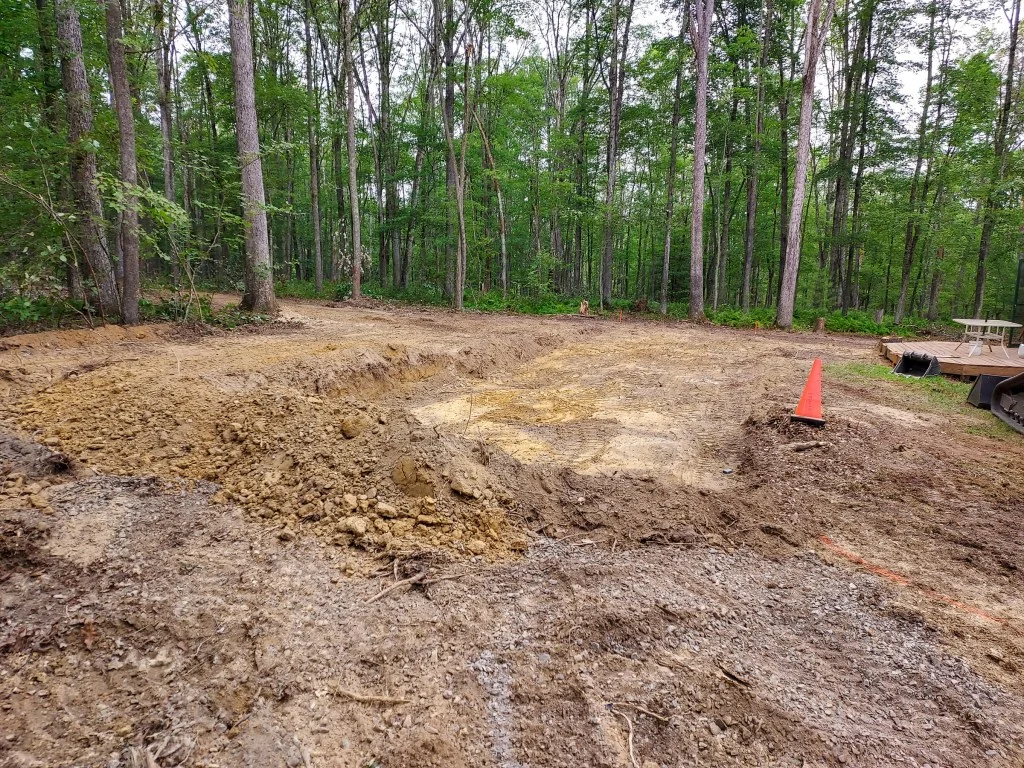
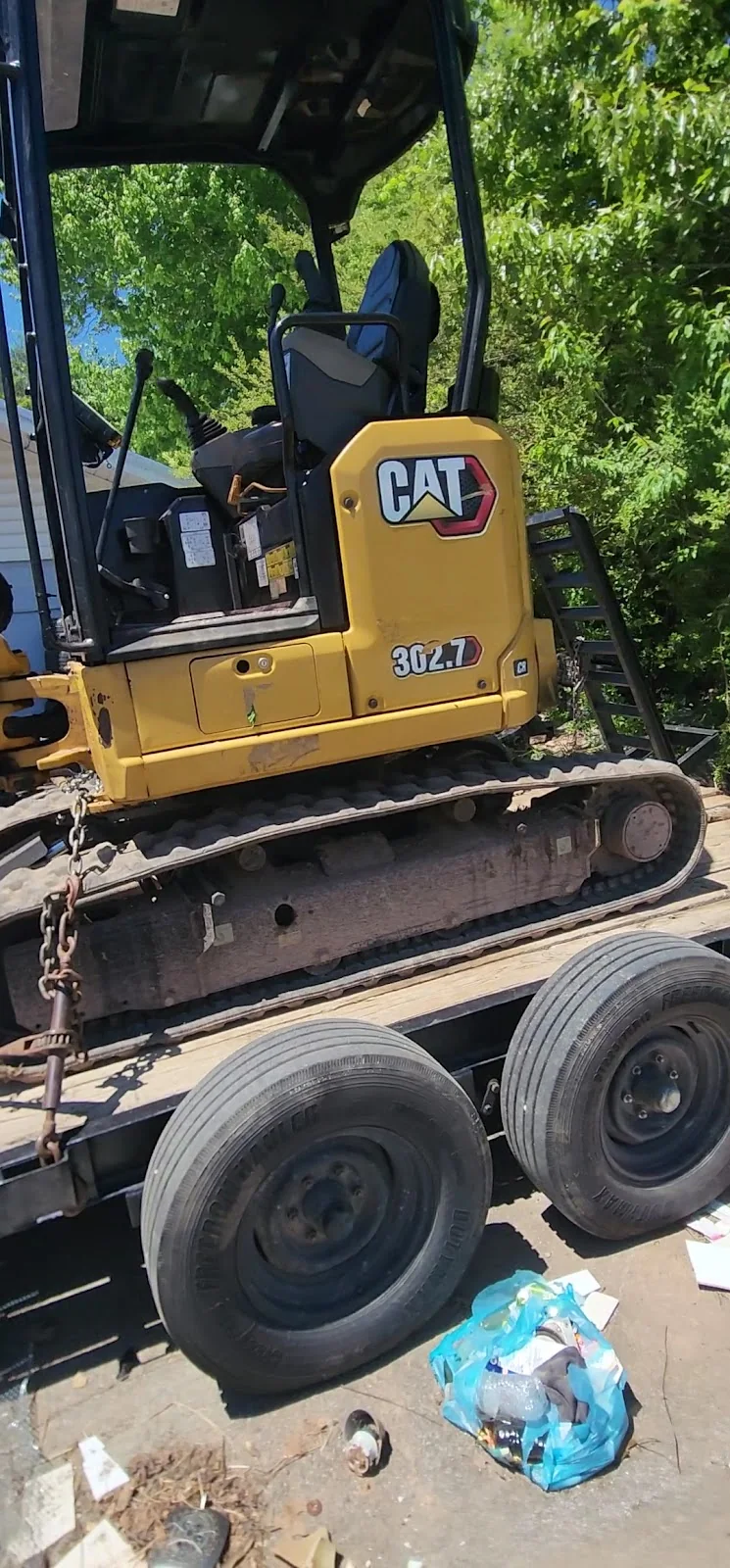
Montreat was laid out for walking, not for a 30-ton excavator. Most lots here sit on grades that flatten out only where somebody built a house, and the streets up toward the gate are narrow, canopied, and hemmed by stone walls and rhododendron. That single fact drives the price more than depth does: the machine that fits may be half the size of what a Weaverville job would use, and every bucket of spoils has to come back down the same path the digger went up. On the tightest lanes, that means a compact machine making repeated trips rather than one large machine making a few, and the labor hours climb accordingly.
Dirt is the other half of the equation. Western North Carolina bedrock breaks into clay, mica schist, and weathered granite that has to be hauled out, not just moved. The nearest commercial quarry and disposal sites sit down the mountain toward Black Mountain and Swannanoa, so gravel for backfill and bedding arrives with a trucking line item that flatland bids never show. When we scope a job on a Montreat ridge lot, machine size, haul route, and quarry distance get priced before the first shovel moves.
Consider what a single load actually involves here. A tri-axle cannot always make the turn into a private drive off a Montreat lane, so spoils may transfer to a smaller truck at a staging point near the road, or get stockpiled on site until a larger truck can be brought in during a window when the street is clear. Each transfer adds time, and time is the line item homeowners rarely see in a bid but always feel in the final invoice. The lots closest to the conference center and the older assembly grounds tend to be the most constrained; the ones further out toward the ridge have more room but longer hauls. Either way, the access premium is the defining cost driver on this mountain.
What excavation actually costs on a Montreat lot
Site-wide, foundation and footing excavation runs $3,500 to $18,000 depending on depth and access, with footings alone at $1,200 to $4,500. Montreat sits at the top of that range more often than the middle, because the access premium is real and it compounds with haul distance. The table below breaks out scope against price range so you can see which line items your lot is likely to trigger.
| Scope | Typical range | What pushes it up in Montreat |
|---|---|---|
| Footing trench, shallow, good access | $1,200–$2,400 | Deeper frost line on shaded north slopes |
| Full basement or crawl dig, moderate grade | $4,500–$9,500 | Spoils haul, narrow street width |
| Full basement, steep driveway, hand work | $9,000–$14,000 | Small machine, long tram, retaining considerations |
| Ridge lot, limited turnaround, engineered backfill | $12,000–$18,000 | Quarry distance, import gravel, shoring |
For a comparable county-wide baseline, the Buncombe County grading cost table shows how flat-land jobs price. Montreat almost never looks like those numbers, and any bid that does should be read twice.
Two Montreat-specific patterns show up again and again. First, crawl-space digs on the older cottage lots often cost more than their square footage suggests, because the original builders cut into the slope and left the uphill side shallow and the downhill side deep. Second, driveway regrading frequently gets bundled into excavation because the same machine that digs the foundation has to fix the route it drove in on. Homeowners who price those two items separately are usually surprised by the combined total.
Ground that behaves like mountain ground
The federal disaster record touches Buncombe County in 19 declared events spanning 1973-2026, overwhelmingly storm and flood family. On a Montreat slope, that history shows up as saturated subgrade, springs that appear for a season and vanish, and runoff from the neighbors above that arrives whether or not the sky is doing anything. An excavation that ignores water just moves the failure downslope. Slow seepage along a clay layer is the classic failure mode here: the footing looks fine in July and the downhill wall cracks by the following spring.
That is why the sequence here is dewater, dig, protect. The International Code Council codes treat foundation drainage and backfill compaction as structural requirements rather than finish work, and NC adopted them for good reason. If a bidder cannot explain where water goes before the footing is poured, they are guessing. The National Weather Service can tell you what a normal wet season looks like for this elevation, and it is wetter than the lowlands.
There is also the question of what happens uphill. On a Montreat lot, the surface above the dig belongs to someone else, and that owner's downspouts, driveway, and cleared yard all send water your way. A good excavation plan accounts for uphill flow with an intercept, not just a sump at the bottom of the cut. French drains, footing drains, and a positive gravity path to daylight are standard conversation on these lots, and any one of them omitted is a future callback.
Shoring, retaining, and the code line
Once depth crosses roughly four feet, or a cut face sits near a property line or an existing structure, the job stops being a trench and starts being a shored excavation. That is a safety requirement, not an upsell. Montreat lots routinely have another house or a public path within a short distance of the dig, so the shoring and retaining line item is often unavoidable. The alternative — an unprotected vertical face with a neighbor's foundation footing a few feet back — is exactly the scenario the safety rules exist to prevent.
General contracting thresholds in North Carolina are set by the NC Licensing Board for General Contractors, and excavation work is often rolled under a grading or general contract that crosses those thresholds. If you are hiring a grading and excavation contractor for a Montreat job, the Montreat grading contractor page covers what to check on credentials and references before work begins. The foundation excavation overview shows what a proper scope looks like end to end.
Retaining runs both ways here. Sometimes the dig itself needs a temporary shoring face; sometimes the finished house needs a permanent retaining wall to hold the uphill yard back. Those are different design problems, and mixing them up in a bid is common. The permanent wall belongs with the site plan, not buried inside an excavation line item, and separating the two makes the numbers easier to audit.
How bids read differently on these lots
A good Montreat excavation bid has four things a bad one does not: a stated machine size and access plan, a haul route and disposal destination, a written dewatering strategy, and a backfill spec that names the material and its source. Prices vary less because of labor rates than because of which of those items the bidder silently omitted. The cheapest number on a Montreat lot is very often the one with the most asterisks.
Two questions cut through it fast. First, ask where the spoils go and who pays the tipping. Second, ask what happens if the digger hits rock — a change-order rate should be in writing before the machine shows up, because finding schist at two feet is normal here, not a surprise. HUD and EPA resources on lead and asbestos are worth a look on pre-1978 houses near Montreat's older core, since disturbing painted dirt around a foundation carries handling requirements.
One more Montreat quirk: scheduling. Spring is wet, the roads drain slowly, and a load of gravel that would arrive on time in Black Mountain can get delayed by a soft shoulder or a washout. Contractors who have worked this mountain know to build float into the calendar, and that understanding shows up in how they bid the job. A bid that promises a fixed start and finish on a rainy-season lot without any weather allowance is worth questioning before you sign.