Where the water comes from on a Barnardsville dig
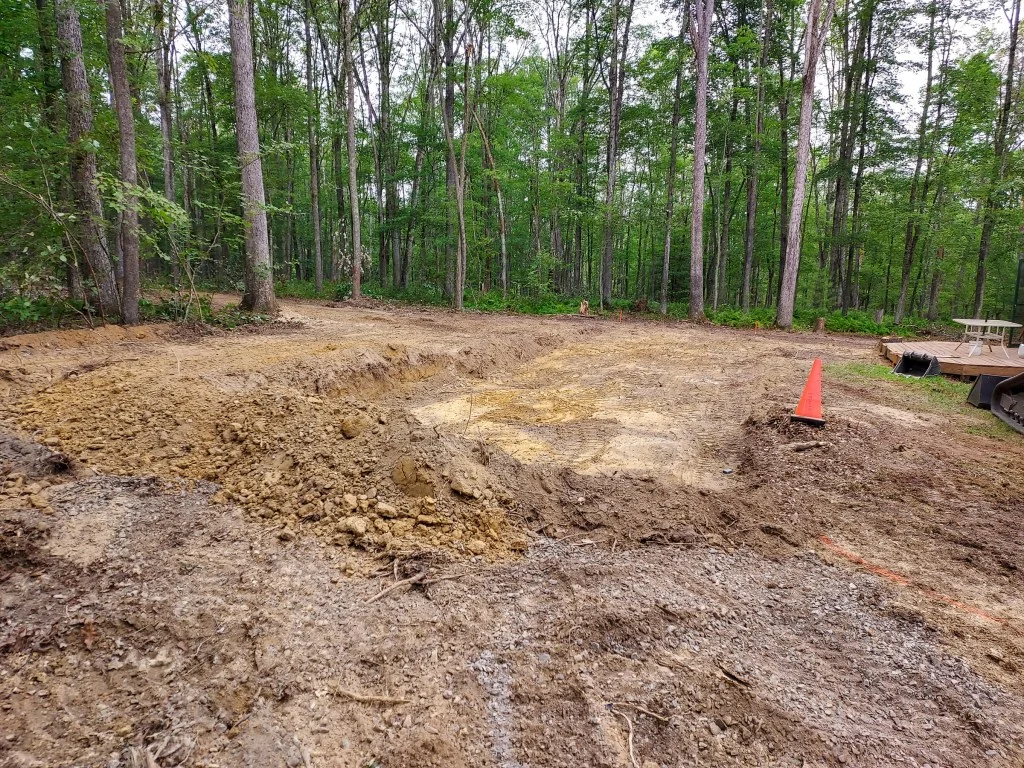
Most lots around Barnardsville are not flat pads with a house dropped on them. They are benches cut into the valley wall, and the water story starts uphill of the hole. Rain that lands above the cut sheet-f lows down the slope face and arrives at the excavation wall; springs that never showed on the surface can open up once a bucket strips the topsoil off a seam. If the trench is the low point of that slope, the hole becomes a catch basin, and a footing poured into standing water is a future crack in the making.
So the first excavation decision is not depth, it is where the grade sends the uphill water — a swale above the cut, a diversion that carries it around the footprint, a footing drain that daylights below the house instead of dead-ending at the wall. The National Weather Service tracks the flood and storm record for these valleys, and it is worth understanding before framing a basement as a dry room. On this terrain an excavator who talks about the cut before he talks about the bucket is the one you want.
The upper Ivy Creek valley around Barnardsville has seen repeated federal disaster declarations over the past several decades — 19 declarations across a 1973-2026-year record — and that pattern isn't statistical noise. It's the same terrain feature working on your lot every time a summer cell parks over the Blue Ridge and dumps two inches in an hour. The water you're managing during a footing dig is the same water that put those declarations on the books, just at a smaller scale.
A practical example: on a typical south-facing Barnardsville bench lot, the cut face might expose an inch or two of thin topsoil over weathered saprolite, with bedrock or a clay hardpan just below. That shallow profile means the bucket hits refusal quickly, and the drain must be placed carefully so it doesn't sit in a clay bowl that never empties. On north-facing cuts the soil stays wetter longer, and a spring that looks like a tiny seep at the toe of the cut can grow to a steady flow once the weight of the overburden is removed.
What the work actually covers
Foundation excavation here means stripping organics, cutting to the bearing stratum an engineer or code assumes, forming level footing trenches, and figuring out what to do with the spoil — on a narrow mountain drive there may be nowhere to push it, so it leaves by truck. A full basement means a bigger cut and a wall of earth that wants to move; a crawlspace or slab-on-grade means a shallower dig but the same drainage question. Footings are their own line item, trenched to dimension and poured clean, and separate from the excavation that makes room for them.
Anything built to be occupied runs through the state's general contractor licensing thresholds at the NC Licensing Board for General Contractors, and footing and foundation requirements trace to the residential code adopted through the International Code Council. That matters less as paperwork than as a check: a scope that skips bearing depth, inspection points, or dewatering is not a cheap bid, it is an incomplete one.
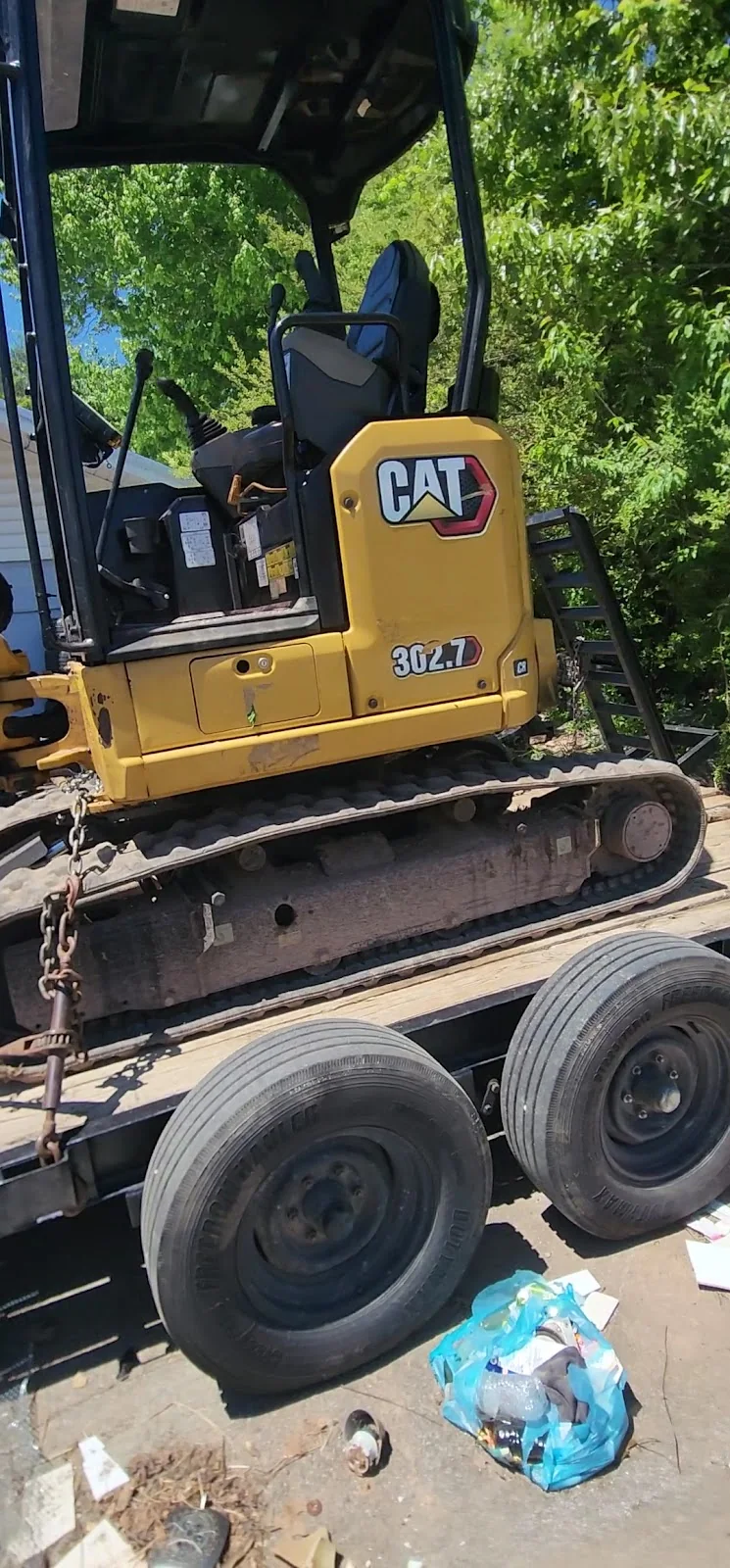
Terrain in the upper Ivy Creek drainage also shapes the equipment that can get to the lot. A standard full-size excavator and tri-axle dump truck need a driveway with reasonable grade, width, and turn radius — on a lot with a steep gravel drive and a switchback, the crew may have to bring in a smaller machine and haul spoil with a single-axle truck, which multiplies trips. That's a real cost factor and it's one of the reasons a Barnardsville bid can look different from a bid on a flat parcel in the French Broad bottomlands.
The Barnardsville price picture
Local pricing tracks access as much as volume. A lot with a straight pull-in and room to swing a machine prices like the Buncombe County grading table; a parcel up a steep gravel drive with a tight turn and no spoil space prices toward the top of the band because every yard comes out by truck and every wall may need shoring.
| Scope | Typical range |
|---|---|
| Footings only — trench, clean, pour-ready | $1,200–$4,500 |
| Crawlspace or slab excavation, easy access | $3,500–$7,500 |
| Full basement cut, machine-reachable lot | $7,500–$13,000 |
| Steep-access cut with trucked spoil and shoring | $13,000–$18,000 |
The full range for foundation and footing excavation is set by depth and access, and on these lots water control is what moves a job inside that range. Treat any bid far under the low end as one that has left the dewatering and haul-off out.
Two other local factors push cost north: the depth required to reach competent bearing on a colluvial slope (often deeper than the footing detail suggests on paper), and the volume of rock that has to be removed. Rock removal in the Blue Ridge is either hammered, pried, or blasted, and each method has its own cost profile that should be called out in the bid before the machine digs the first bucket. When a contractor can't say how they'll handle rock, that's the change order waiting to happen.
Reading the ground before the machine shows up
The second page of the valley has a different soil story than the flats below Barnardsville — more slope, more rock near the surface, more old fill from the last time somebody pushed a driveway. Two things worth doing before a bid is final: have the bearing elevation and drainage plan confirmed by whoever is signing off on the structure, and get the excavation and the finish grading priced by the same conversation, not two strangers. The crew that digs the hole and the crew that grades the lot around it should agree on where the water ends up, or the footing drain and the final grade will fight each other for years.
A caveat that applies across these hollows: what looks like solid ground in July can behave very differently after a wet fall. Slopes that hold well when dry can slump when saturated, and fill placed by a previous owner without compaction can look like native soil until the excavator opens it up. That's a reason to walk the lot after a rain, if you can, and to have the excavator do the same. Reading the ground before the machine shows up is cheaper than reading it after the cut wall has started to move.
What a fair scope looks like here
A complete Barnardsville excavation scope names the bearing depth, the dewatering plan, where spoil goes, how the uphill water is diverted, and who calls for inspection. A thin one says "dig foundation" and a number. Ask for the engineer's or designer's foundation plan in the bid, ask what happens if rock or a spring shows up mid-dig, and treat change-order language as part of the price. For how the broader site work fits together, the excavation overview is the place to start, and the local contractor list at grading contractors in Barnardsville is where to find crews who have dug on this terrain before.
One more practical note: on lots where the house will sit close to the cut bank, retaining or shoring the uphill wall is often necessary to protect both the excavation and the finished structure. It is a separate scope from the footing dig itself and should be priced as such. When a bid lumps it in silently, either it's been underestimated or it hasn't been thought through, and neither is good news when the wall has to hold back a saturated slope through a wet mountain spring.