The order a Mars Hill pad actually gets built
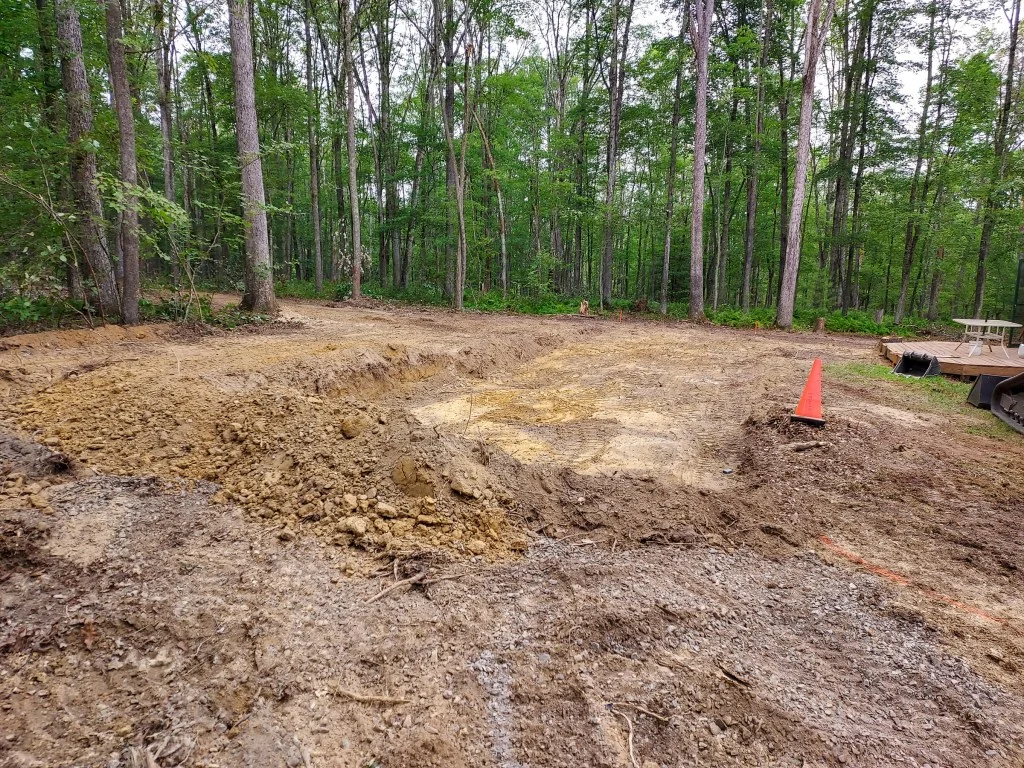
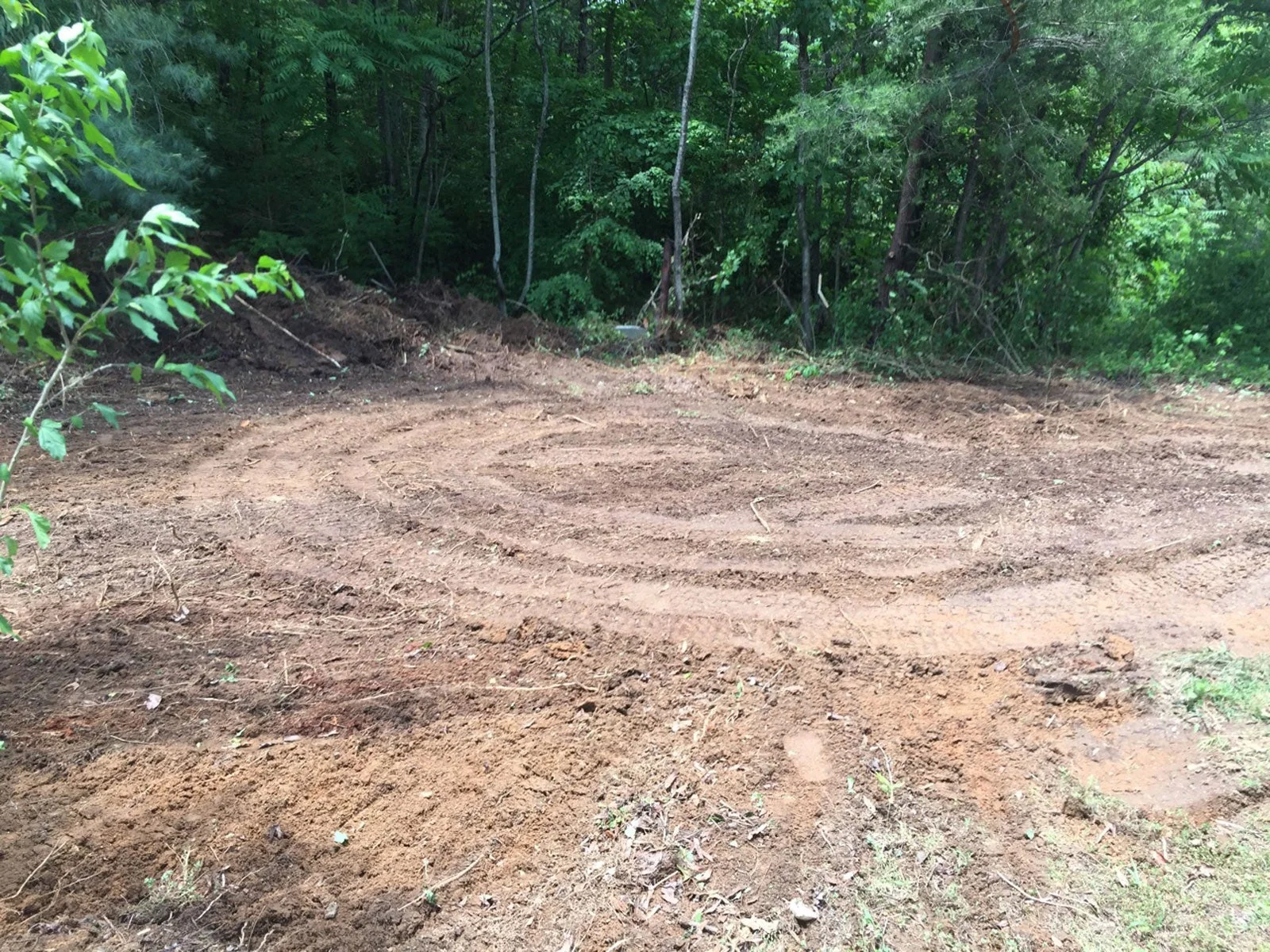
A knoll off Amos Ridge Road and a shelf cut below a Wolf Laurel drive look nothing alike, but the same five moves happen on every pad: strip topsoil, cut the high side, place and compact structural fill in lifts, set pad elevation and drainage fall, then cap with compacted stone. Mars Hill sits in Madison County's mountain-and-valley country, where the county seat at Marshall sits down in the French Broad valley and the buildable ground is mostly the benches and shelves above it. That terrain means most pads start with more cut than fill. It changes the order slightly — you cut first, then decide fill depth based on what the cut reveals. On a shelf lot, the excavator often opens the cut and the operator reads the exposed material before anyone commits to a fill depth.
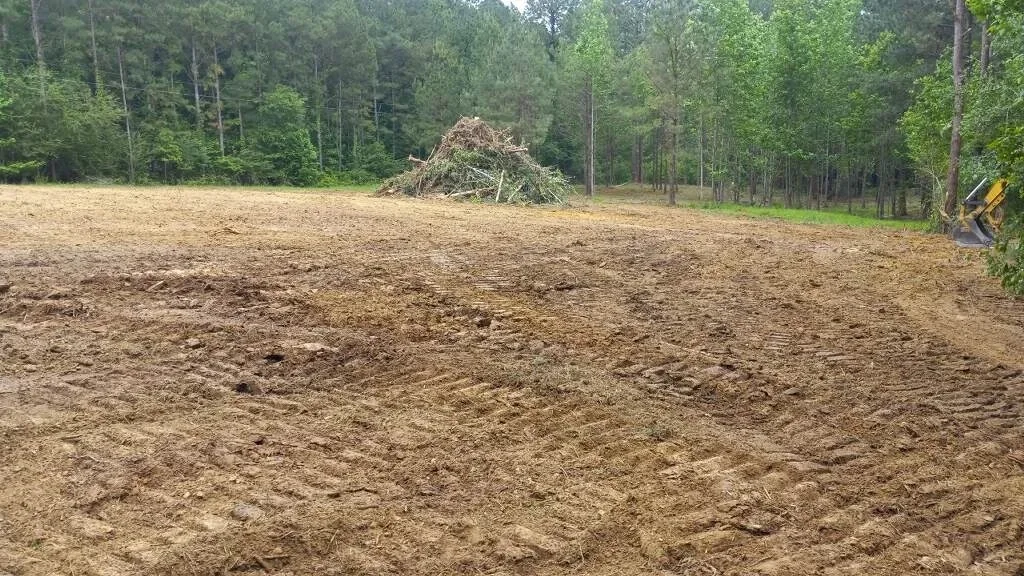
Timeline: a straightforward pad and gravel drive runs three to eight working days once the machine is on site. Add a week on rock. Add another if the driveway crosses a drainage swale or the road cut needs shoulder work. The site prep and building pads guide walks through the full scope; the short version is that Mars Hill jobs move on equipment availability and weather, not enthusiasm. A crew working a shelf above the French Broad has one narrow window between a wet spring and a dry fall, and the schedule usually fills that window before it opens.
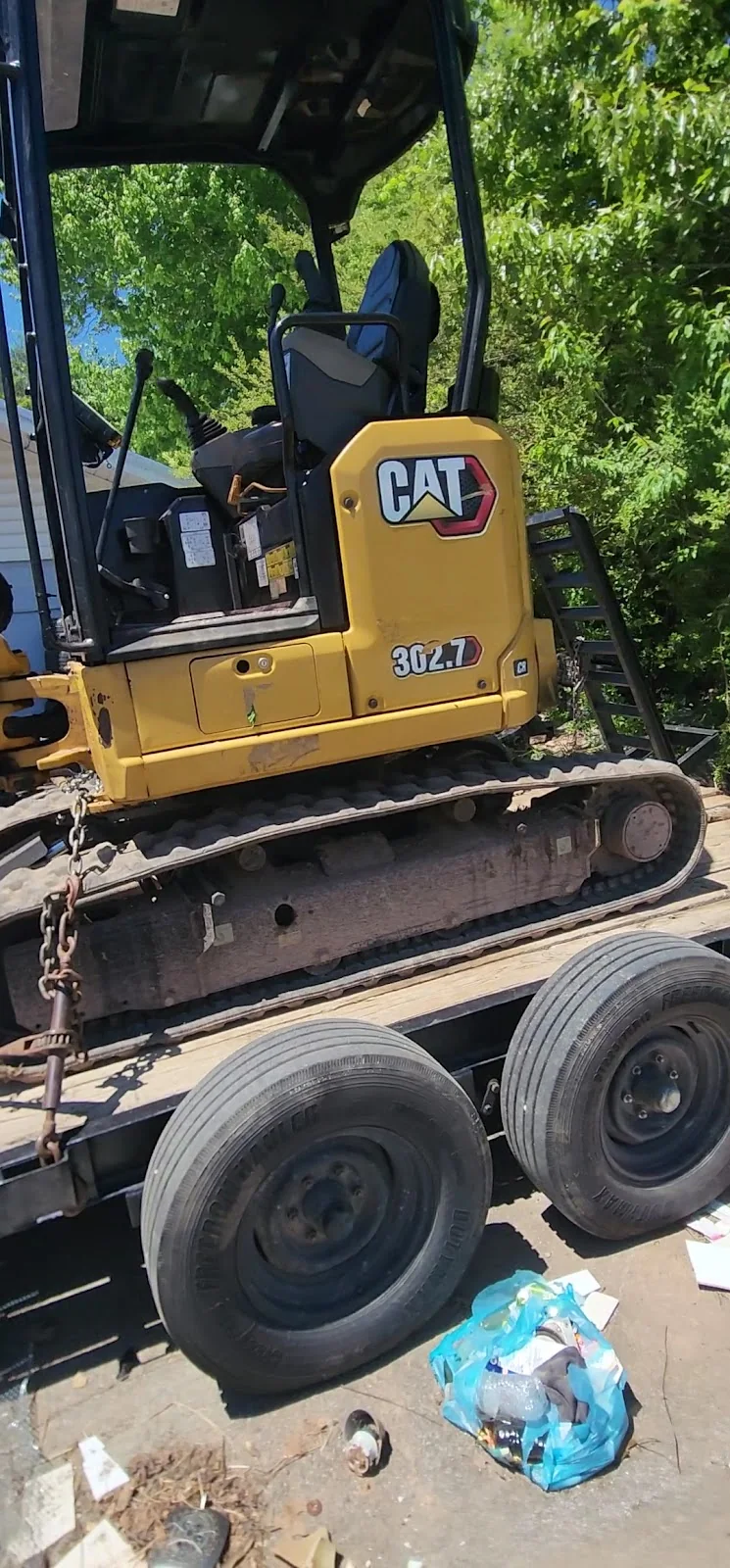
What actually happens on day one is not digging. It is layout: the operator walks the lot with the builder or owner, stakes the pad corners and the driveway centerline, and confirms where the cut will daylight. On a Mars Hill shelf, the daylight line — where the cut slope meets original grade — is the single most important stake on the property, because it tells you how much of the uphill bank you are about to move and how much borrow dirt you will need to import. Get that stake wrong and the whole sequence reorders itself mid-job.
Day two through four is usually the cut and the haul. Excess dirt off a Mars Hill shelf has nowhere on-site to go, so trucks run it out. That haul is a separate rhythm from the digging and it is why a job that looks like three days of machine work takes five. By the time the cut is at grade, the fill side is already being built in lifts, and the two phases overlap more than a homeowner expects. The crew is not doing one thing at a time; it is cutting, hauling, and filling in the same week.
Cut, fill, and why the county's slopes drive the number
Madison County's buildable ground is mostly the shelves and benches between steeper grades. A pad on that shelf is cut-and-fill dirt: material pushed from the uphill side to raise the downhill edge. That fill is where pads fail. It has to go in controlled lifts, roughly 8-12 inches loose, compacted each pass with moisture control. A crew that dumps fill and pushes it downhill leaves you a pad that drops two inches under the first slab pour. Structural fill that supports a footing is a code matter, not a preference — see the NC Office of State Fire Marshal code enforcement materials for how grading and fill relate to foundation requirements.
The Madison County grading cost table breaks the line items: clearing, cut/fill, drainage, gravel, and haul-off. Mars Hill jobs typically carry more haul-off than flatland ones because excess dirt has nowhere on-site to go on a shelf pad. On a lot that backs into a steep bank above the French Broad, every cubic yard you cut has to leave the property, and the truck count is what turns a modest-looking pad into a five-figure line item.
The material itself varies block to block in this county. Some Mars Hill lots cut into weathered saprolite that breaks down to a workable clay-sand mix. Others hit hard rock at two feet. An operator who has worked Madison County ground can usually read the outcrops on the uphill bank and predict roughly where the cut will get hard, which is why the local crew matters more than the machine brand on a shelf job.
Phase-by-phase price picture for Mars Hill
Numbers below are regional working ranges, not bids. Treat a quote at the low end of any row as a signal to ask what is excluded — borrow dirt volume, compaction method, and drainage are the usual answers.
| Scope | Typical Mars Hill range | Notes |
|---|---|---|
| Light clearing, small driveway, single pad | $4,500–$9,500 | Gentle grade, minimal rock, few truckloads of stone |
| Driveway, pad, drainage, gravel cap | $9,500–$26,000 | The common Mars Hill package on a shelf lot |
| Heavy cut, retaining or engineered fill | $26,000–$60,000+ | Steep approach, structural fill, drainage work, engineering |
| Rock excavation | Billed by the hour or day | Ask for the rate in writing before the machine arrives |
Compaction pass counts, borrow-dirt source, and whether the gravel is 57 stone or crusher run change the bottom line more than machine brand. Read the Mars Hill grading contractors page before you compare bids — two quotes priced against two different scopes are not comparable numbers. A bid that quotes the pad only and leaves the driveway separate will look cheaper than one that bundles both, and the homeowner is the one who discovers the gap when the truck cannot reach the pad.
The two line items that most often get left off a Mars Hill quote are drainage and gravel depth. Drainage on a shelf pad means a swale along the uphill cut, a proper outlet, and often a culvert where the drive meets the county road. Gravel depth means the compacted cap thickness, not the loose pile. Ask for both in writing. A pad quoted at $12,000 with no drainage is not the same job as a pad quoted at $15,000 with a swale and a culvert, even though the first number looks better on paper.
Water, weather, and the mountain-specific timing traps
Federal disaster history matters here: 21 declared events touch this county across 1978-2026, and the pattern is storms and flooding. On a Mars Hill pad, that means the drainage you build in week one decides how the pad performs in year three. Gutters that dump at the uphill edge, a swale that empties onto the driveway, or a fill slope with no outlet will undo good compaction. The National Weather Service forecast is a working tool, not a formality — an open cut taking three inches of rain over a weekend becomes a repair, not a delay. On the steep ground above the French Broad, that repair usually means re-cutting the daylight line and re-compacting the fill that slumped, and it can cost a week.
Two scheduling habits worth having: don't strip topsoil right before a forecasted storm, and don't pour footings on a pad that has not had a few days to drain. Both sound obvious and both get skipped when the machine is already on site. Priorities under EPA stormwater rules govern sediment and runoff on larger disturbed sites, which is why silt fence and stabilized entrances appear on quality bids. On a Mars Hill slope, a stabilized construction entrance is not paperwork; it is what keeps your driveway from turning into a mud channel that the county has to clean.
The mountain-specific trap is the spring wet season. Ground that cut clean in October will not cut clean in March, because the saprolite holds water and the trucks start rutting the access before they reach the pad. A crew that knows Madison County schedules the heavy cut for late summer or fall and saves the gravel cap for a dry window. If your builder wants to break ground in February on a shelf lot, ask how the access road will hold up, because that is where the schedule usually breaks first.
Choosing and scheduling the crew
General contracting licensing thresholds through the NC Licensing Board for General Contractors apply once project value crosses the statutory line, and site work plus a structure often crosses it together. Ask the grading outfit whether the job routes through a licensed GC and who owns the compaction documentation. On a Mars Hill shelf pad, the paper trail — fill lifts, density, drainage plan — is the difference between a pad and a problem.
Sequence the schedule around the equipment, not the calendar: book the excavator window early in the season, plan a weather buffer before footing excavation, and lock the gravel delivery date once the pad is within a day of finished grade. On most Mars Hill jobs, the longest wait is not the digging. It is the gap between a stripped pad and the follow-on trades, and that gap is where pads get rained on. An uncovered pad on a shelf lot is a bathtub waiting for the first hard rain, and a crew that leaves it open through a storm hands the homeowner a repair bill.
One practical local habit: get the grading outfit and the foundation contractor talking before the cut starts, not after. The footing depth, the pad elevation, and the driveway grade all interact on a slope lot, and a two-foot elevation change made late in the cut can move the whole house footprint. On Madison County ground, that conversation is cheap early and expensive late.