Read the yard you have before paying for a new one
Most wet-yard calls along the Swannanoa valley floor end with the same discovery: there is already drainage here, and it is either clogged, under-sized, or aimed the wrong direction. A driveway cut into the upslope, a pad poured years ago without a fall line, a buried footer drain that has silted shut — those existing features decided where water goes. Selling a homeowner a brand-new French drain before the old path is understood usually means paying twice.
So the first honest step is a walk of the property: where the high side is, where the low side is, where the water still stands hours after a hard rain. Swannanoa sits where the Swannanoa River and the North Fork bring mountain runoff down into gentler valley ground, and lots in this town carry both — steep backsides feeding flatter front yards. That combination is why one-size drainage plans fail here. The fix almost always starts by repairing or re-aiming what already exists.
Consider the driveway cut. A lot of Swannanoa homes were built with a gravel or asphalt drive pushed into the grade to reach a carport or a walk-out basement door. That cut acts as a ditch whether anyone intended it to or not, and when the culvert under it clogs with leaves and mountain silt, water sheets across the pad instead of under the drive. The homeowner sees a wet garage and assumes the yard needs a new drain. The real job is often pulling the culvert, re-setting the invert, and adding a small catch basin at the low corner of the drive.
Another common one: an old perimeter footer drain installed when the house was built. It worked for years. Then a deck footing, a heat pump pad, or a landscape berm was added and either crushed the pipe or changed the surface flow feeding it. Locating that line with a probe or a camera and rebuilding the crushed section is a fraction of what a brand-new system costs, and it keeps the discharge point where the original builder put it — usually somewhere that already has a legal outlet.
The Swannanoa price picture
Numbers hold across the county: residential drainage work typically falls between $3,500 and $12,000, a single French drain run lands at $3,000 to $9,000, and whole-yard regrading starts at $15,000 and climbs from there. The Buncombe County grading cost breakdown carries the working table for scope-by-scope ranges. In Swannanoa specifically, two conditions push a job toward the upper half of the band: legacy drain lines that have to be located and rebuilt rather than replaced, and yards where the downslope discharge point is restricted, which forces longer runs and more trenching.
There is a third local factor worth naming. Swannanoa has a lot of older housing stock mixed with newer infill, and that mix shows up in the dirt. A pre-war bungalow may sit on a shallow, hand-dug foundation drain that was never documented. A 1990s ranch on the same road may have a perforated line with a fabric sock that has long since rotted. Neither is visible from the surface, and the second one often looks fine until you cut into it. Locating before quoting is not a sales tactic here; it is the only way to give a number that holds.
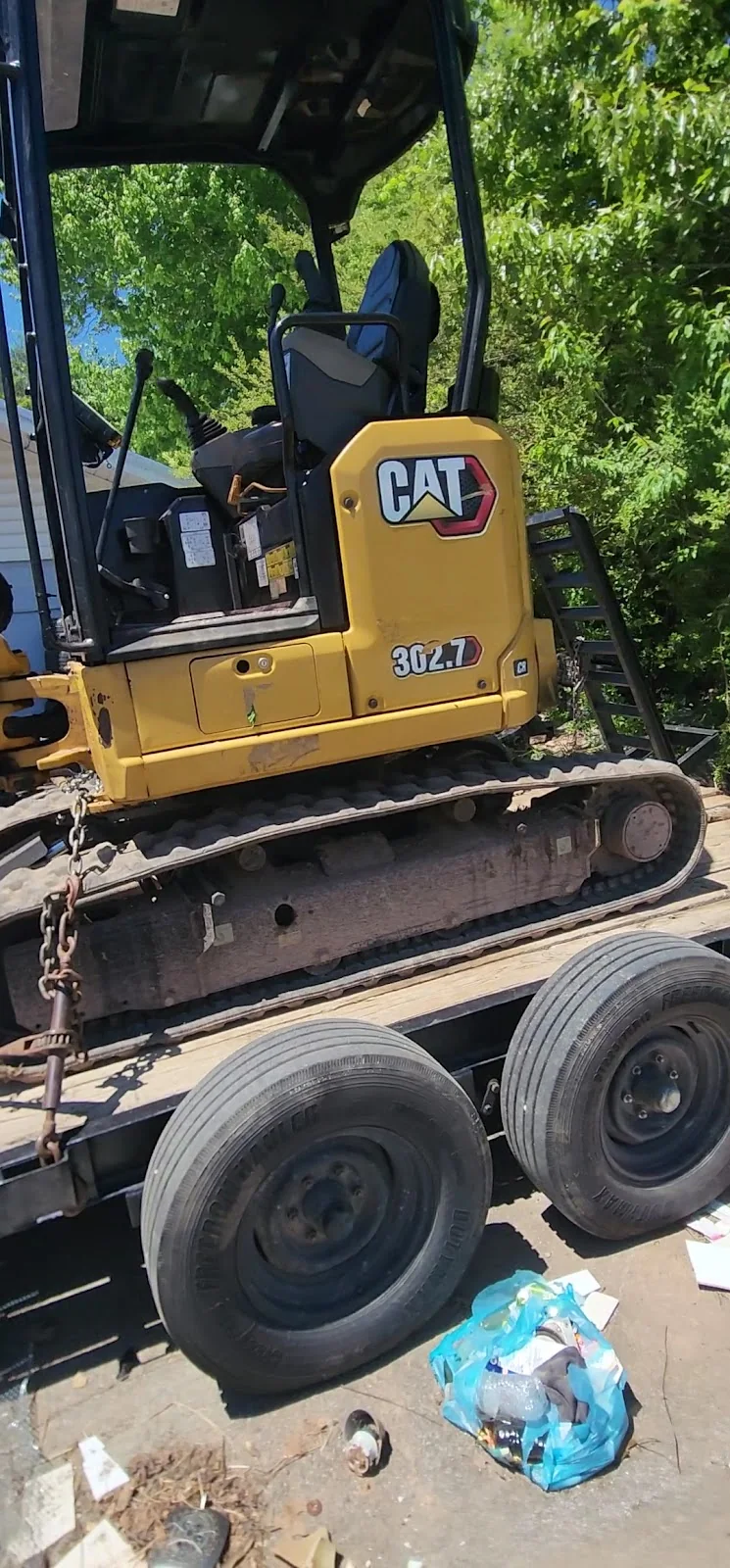
Access matters too. Narrow valley roads, steep shared driveways, and lots where the only machine route is between a retaining wall and a septic field all change how a job is staged. Hand work where a mini-excavator cannot reach is slower and priced accordingly, but it is still almost always cheaper than tearing out hardscape to open a machine path.
What a real scope covers
| Scope | Typical range |
|---|---|
| Rehab existing drain (clean, re-aim, repair discharge) | $3,500 – $6,000 |
| Single French drain run with gravel and pipe | $3,000 – $9,000 |
| Multiple runs, catch basins, channel drains | $6,000 – $12,000 |
| Regrading and swale work, whole yard | $15,000 and up |
A proper scope names the discharge point before it names the pipe. Water has to leave the property or be collected somewhere that can take it — a daylighted outlet, a dry well sized to the roof and yard area draining to it, or a storm connection where one legally exists. Trenching without a stated outlet is how yards end up with expensive gravel that still floods. Where a job touches groundwater or creek-adjacent work, the drainage and erosion control guide covers what a responsible plan has to address.
In practice, a Swannanoa scope usually has four moving parts. First, interception: where does the water enter the problem area, and can it be caught before it gets there? Second, conveyance: what carries it across the yard, and at what fall? Third, storage or discharge: a dry well in a tight lot, a daylight outlet on a lot with any grade, or a storm tie-in where the town system allows one. Fourth, surface finish: re-seeding, sod, or gravel restoration so the fix does not leave a scar that erodes into the next problem.
Be wary of any estimate that lists pipe and gravel but no outlet, or that quotes a footer drain without confirming the foundation drain tile is actually the source. On Swannanoa's older lots, the two are easy to confuse, and fixing the wrong one just moves the puddle ten feet.
Water history shapes what you build
The federal record is part of the design brief here: 19 declared events touch this county across 1973-2026, and the Swannanoa valley has seen storm and flood water arrive fast and high. That history does not call for guessing at a worst-case storm — it calls for siting discharge points and sizing collection honestly for the ground you own. The National Weather Service outlooks for the mountain valleys are the practical reference for how much rain a system should be expected to move.
What that means on the ground is simpler than it sounds. A drain that discharges onto a neighbor's slope is not solved; it is relocated, and in a valley where the water table already sits high after a wet spring, there is nowhere for it to soak away quickly. Systems here need a real outlet, not a gravel pit pretending to be one. And because the valley floor drains slowly, a dry well has to be sized for the soil you actually have, not the soil a chart assumes.
Roof water is the other half of the conversation. Gutters that dump at the foundation are a large share of the wet-crawlspace and wet-basement complaints in this town. Downspout extensions, splash blocks that actually stay put, and tying roof water into the same outlet as the yard drain often solve most of the problem for a fraction of a full regrade.
Hiring on this kind of work
Two checks matter most in Swannanoa. First, licensing thresholds: grading and drainage work that crosses into structural earthmoving can trigger NC general contractor licensing, and any work connecting to household plumbing or storm systems may fall under the state plumbing and heating board. Ask which rules the job touches. Second, ask for the discharge plan in writing, with a fall line and an outlet. A contractor who cannot draw where the water ends up has not finished the design. For more on how local crews scope this work, see grading contractors in Swannanoa.
A third check is worth adding: ask what happens to the dirt. A regrade moves a lot of soil, and on a tight valley lot there may not be room to lose it on site. Hauling spoils off-site is a real cost, and a quote that ignores it tends to grow once the pile is in the driveway. Ask where the excess goes and who pays for the haul.
Finally, ask for the warranty in plain words. A drain that fails in the first heavy season is usually a workmanship or sizing issue, not bad luck, and a contractor who stands behind the outlet and the fall line will say so before you sign. Get the scope, the outlet, and the term in writing, and keep a copy with the property records — the next owner will thank you.
Season and scheduling in the valley
Swannanoa's wet seasons drive the calendar more than most homeowners expect. Late winter and early spring bring saturated ground that makes trenching messy and inspection difficult, and a yard that reads dry in February can be standing water by March. That is why the best time to plan a drainage fix is often the dry stretch in late summer or fall, when the fall lines are visible and the soil can be worked. Scheduling into the wet season is possible, but expect longer site time and more silt control.
Cold snaps matter too. Pipe laid in frozen ground can be mis-set, and gravel placed over mud will not compact the way it should. A crew that watches the forecast and stages the work around it is doing you a favor, even if it costs a few days.