Why Barnardsville lots clear differently than Asheville lots
Drive up Barnardsville Highway past the school and the lots change character fast. Instead of the tight in-town parcels you see closer to Weaverville or West Asheville, you get long narrow strips following a creek bottom, hillside benches cut decades ago for pasture, and gravel-drive tracts where the only flat ground is the driveway itself. That shape drives everything about a clearing job: where the machine can sit, where the spoils can go, and whether a truck can even turn around at the top.
The other local reality is what's growing on it. A lot of Barnardsville acreage is old farm edge that has been quietly reverting to woods for thirty or forty years. That means dense stem counts, honeysuckle and kudzu mats, and stumps that are still sound instead of punky. Clearing that is a different job than knocking down a handful of volunteer pines, and it prices differently too.
What the terrain does to a clearing scope
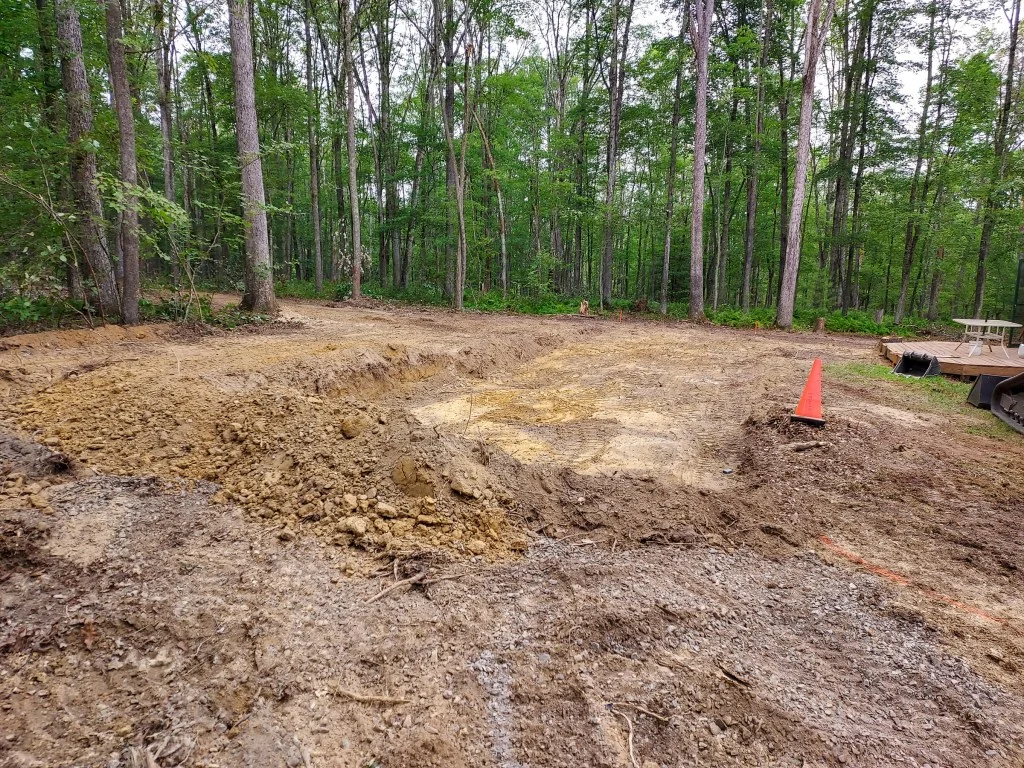
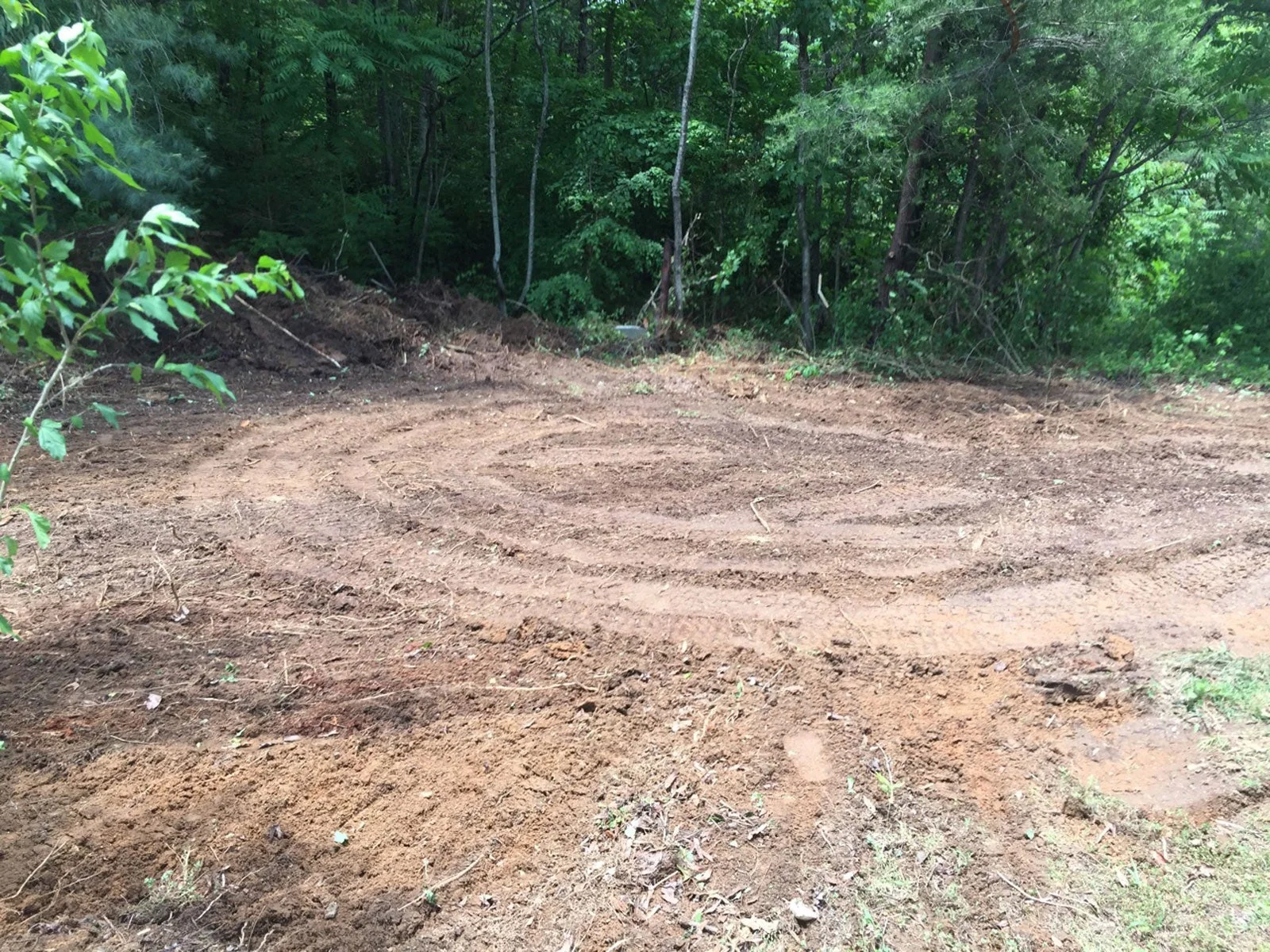
In flatter parts of Buncombe County, a crew can often work a lot in one direction and push everything to a single burn or grind pile. On a Barnardsville hillside, you're usually working in two or three directions, pulling material downhill in controlled runs, and building a bench or a landing just to have a safe place to process it. That's why slope percentage shows up as a line item rather than a footnote.
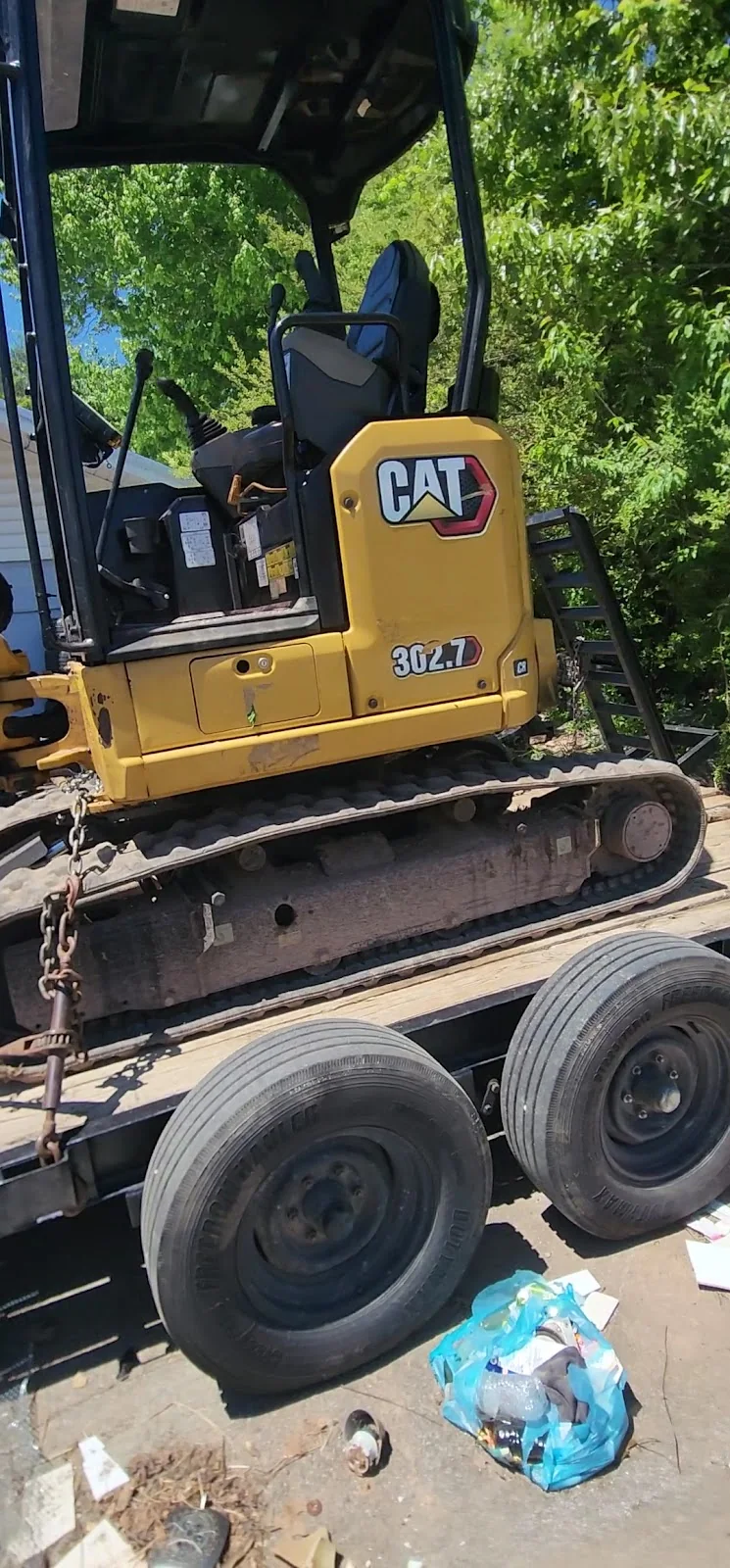
Access is the second cost driver. A gravel drive that a pickup handles fine can be marginal for a track machine or a loaded dump truck, and widening or armoring that entrance is real work. If your lot sits at the end of a steep, narrow, unmaintained road, say so on the first call — it changes which equipment shows up and what the day costs. The Barnardsville grading contractors we route work to generally price access improvement separately so you can see it.
One more local factor: rock. This side of the county has plenty of shallow bedrock and float rock, which means some stumps come out clean and some turn into an afternoon of chipping around a boulder. Honest scopes list a rock contingency rather than pretending the ground is uniform.
Ballpark pricing for clearing around Barnardsville
Ranges below are typical for this part of Buncombe County and cover machine work, operator time, and standard debris handling. They are not quotes — stump diameter, slope, and dump fees move the number. For how clearing sits alongside the earthwork that usually follows it, see the county-wide grading cost breakdown.
| Scope | Typical range | What moves it |
|---|---|---|
| Brush and sapling clearing, under 1 acre | $1,200-$3,000 | Stem density, whether stumps stay |
| Selective clearing, 1-3 acres, stumps ground | $3,000-$7,500 | Tree size, grinding depth, haul-off |
| Full clearing with grubbing, 1-3 acres | $6,000-$14,000 | Root balls, rock, spoils placement |
| Steep-slope clearing (over roughly 20% grade) | adds 25-60% to the base scope | Equipment class, bench building, safety |
| Driveway corridor clearing and grubbing | $2.50-$6 per linear foot | Width, grade, culvert needs |
| Debris haul-off (versus on-site processing) | $400-$1,200 per load | Distance to receiving facility, volume |
Two things that reliably surprise people: stump disposal and topsoil. Grinding a stump leaves the chips and the hole; if you want that material gone and the hole backfilled with clean fill, that's additional work. And if you plan to plant or seed afterward, stripping and stockpiling topsoil has to be planned before the machines start, not after.
Burning, grinding, or hauling: how debris gets handled here
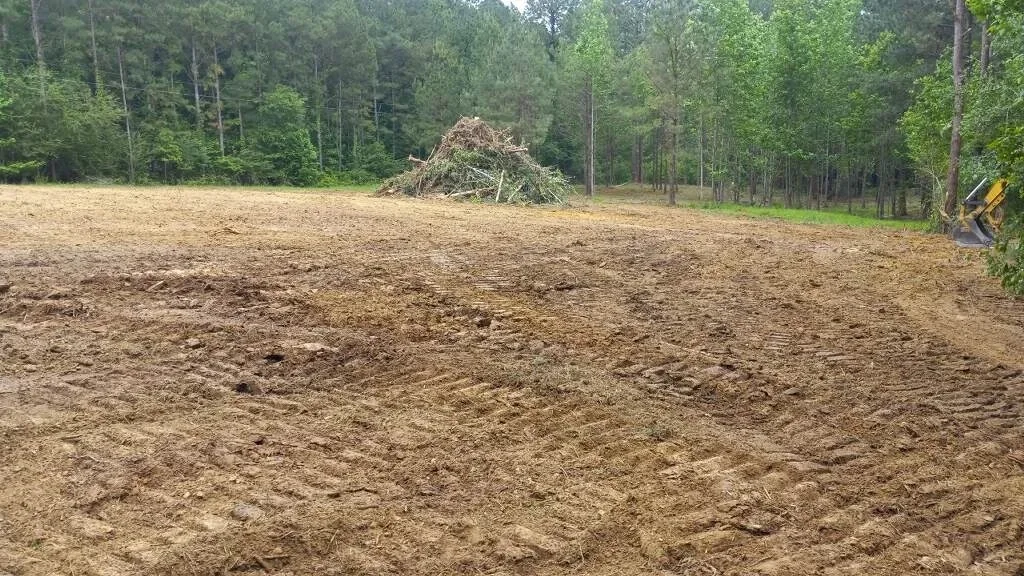
Barnardsville sits in unincorporated Buncombe County, and open burning of land-clearing debris is regulated — it's generally limited to vegetative material, requires attention to bans and wind conditions, and is never allowed for stumps pushed with dirt still attached. Before you plan on a burn pile, check current restrictions and the forecast through the National Weather Service, and confirm the burn rules that apply to your parcel. Many crews now grind and spread instead, which avoids the smoke complaint risk entirely.
If you're clearing near a creek or steep drop, erosion control is the next obligation. Disturbed ground on a slope sheds water fast, and North Carolina treats sediment as a regulated pollutant. Silt fence, a stabilized entrance, and a seeding plan aren't upsells on a hillside job; they're what keeps the work legal. The EPA maintains the stormwater and sediment guidance that most local requirements trace back to.
Screening crews and staying on the right side of licensing
Clearing itself is often done by excavation and grading outfits, and North Carolina draws a line where earthwork starts to look like construction. If your project involves building a road, a pad, or anything that will carry a structure, the general contracting threshold at the NC Licensing Board for General Contractors can apply, and it's fair to ask a bidder how they handle that. A crew that can explain the threshold clearly is usually a crew that documents its work.
Ask three things before you sign: what happens to the stumps, where the spoils go, and who repairs the drive if a loaded truck chews it up. Get those answers in writing. If you're still at the stage of comparing approaches rather than bids, the land clearing overview walks through the difference between selective thinning and full grubbing so you can match the scope to what you actually want to do with the land.