What actually happens on a Mars Hill clearing job, in order
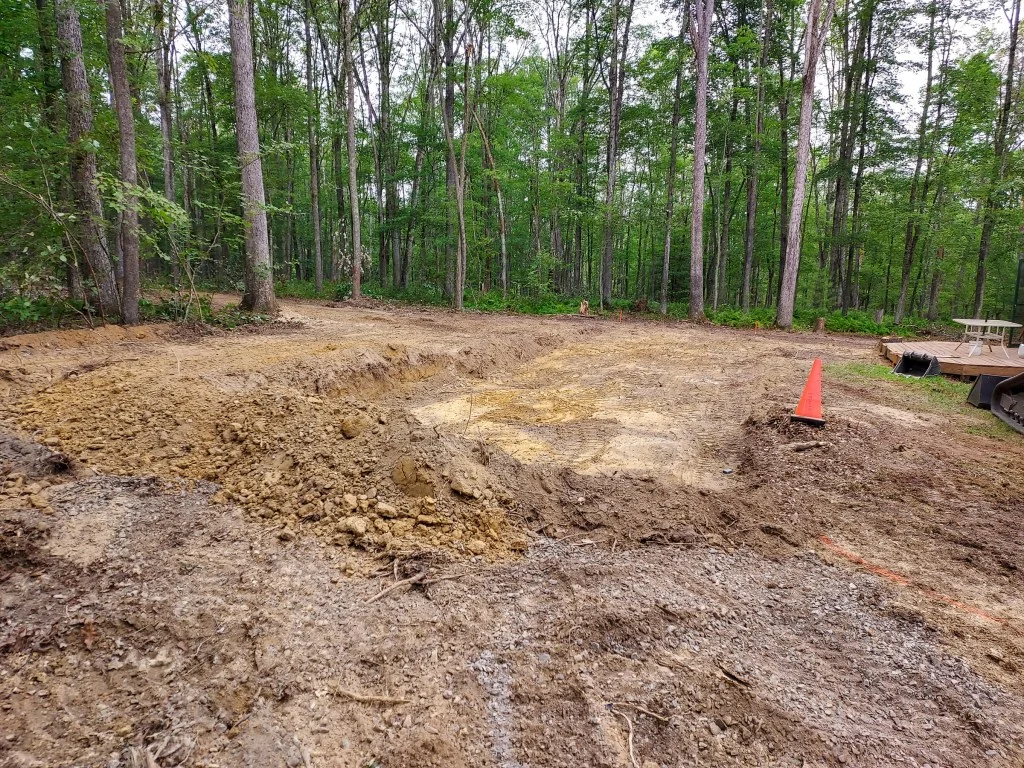
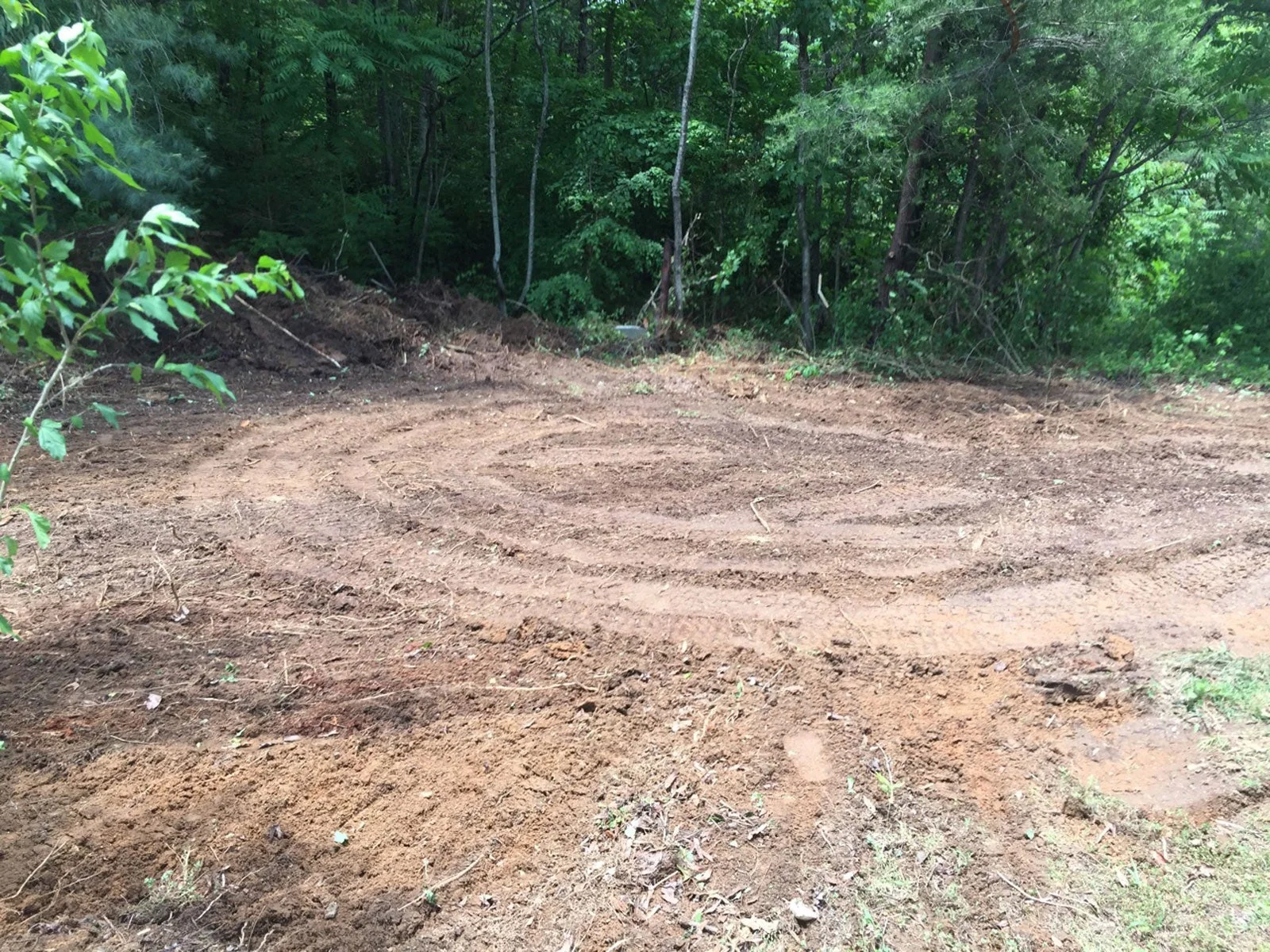
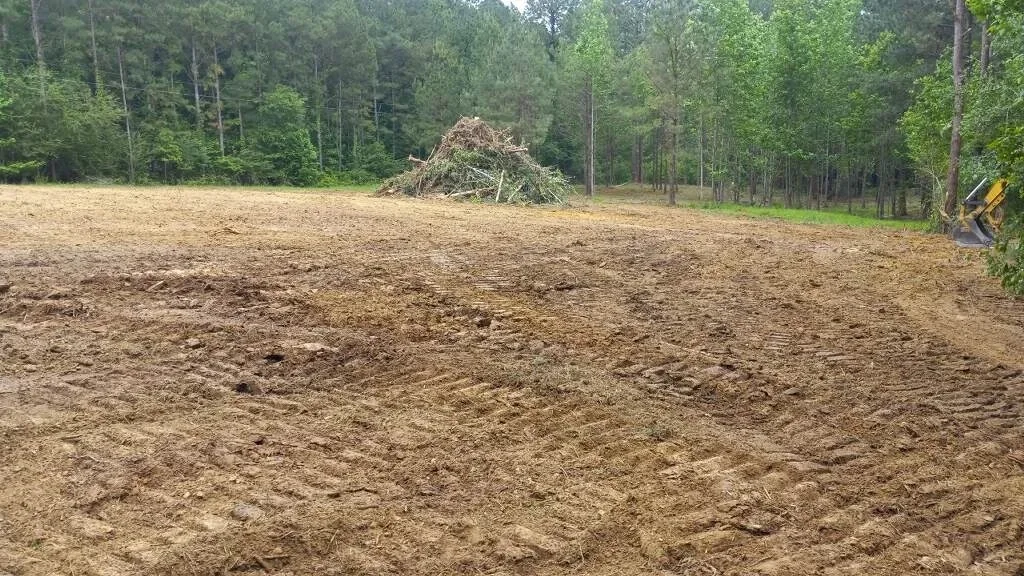
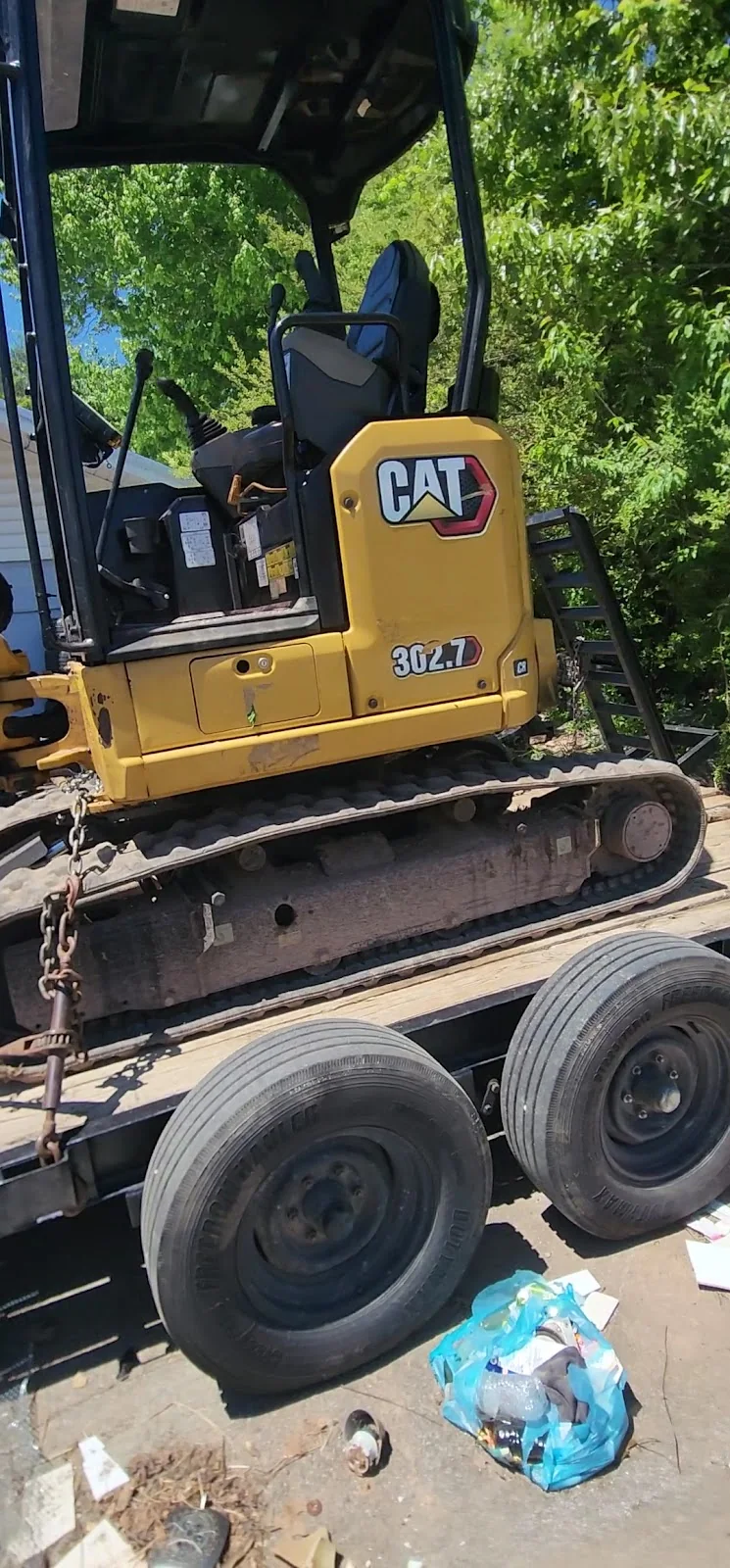
On the north side of Madison County, clearing work follows a sequence dictated by terrain, not by the calendar. A crew arrives and walks the parcel with the access question first: can equipment reach the work zone without tearing up the neighbor's driveway or crossing a creek culvert the county installed? In Mars Hill's hollers, this single answer reshapes the whole job. From there the order is consistent: mark and protect what stays (a sugar maple by the wellhead, a power easement edge), cut brush and saplings with a forestry mulcher or hand crew, push and stack merchantable timber if the landowner wants it saved, chip or burn the slash, then root-rake and rough-grade the pad, and finish with silt fence, straw matting, or a rocked construction entrance before the first rain.
Typical residential jobs run five to fifteen working days. A small house site — a quarter to a half acre — often finishes in three to five days if access is clean. A five-acre pasture conversion takes longer, and the single biggest time thief on Mars Hill parcels is not the cutting; it's the grading and stabilization that has to happen before the ground is left alone.
Reading a Mars Hill parcel before quoting it
Madison County land tells you what it will cost before the crew fires a machine. Ridge-and-valley ground means most Mars Hill lots have an uphill side and a downhill side, and the uphill side is where the spring seeps run. Those seeps turn a dry-weather clearing job into a mud job, and mud changes the equipment, the number of truckloads leaving the site, and the stabilization line item at the end. Land that has been logged within the last decade is a different job again — cutover ground holds stumps and slash the previous operator left, and root-raking those is real work, not cleanup.
Ask two questions before signing anything: where does water enter this parcel, and where does it leave? The NC Building Code Council and NCDOI Engineering Division treat erosion control as a regulated requirement on disturbed ground for good reason — Madison County's rainfall will find any unarmored slope you leave behind, and the repair costs more than the control measure would have. That's why the honest quote separates "clearing" from "grading and stabilization" instead of blending them into one number.
Scope and price ranges for Mars Hill clearing work
Numbers below are working ranges for Madison County terrain, not flat rates. Slope, haul distance, and whether debris stays on-site or leaves all move the number.
| Scope | What it covers | Typical range |
|---|---|---|
| Brush and small-tree clearing, hand crew | Under 1 acre, light growth, debris chipped on-site | $2,200–$4,500 |
| Forestry mulching | Saplings and brush ground to mulch, no stump removal | $1,800–$6,000 |
| House pad clearing + rough grade | Quarter to half acre, stumps out, pad shaped, entrance rocked | $6,000–$14,000 |
| Full-site clearing with haul-off | 1–3 acres, timber removed, slash hauled, erosion control installed | $9,000–$28,000+ |
| Stump grinding only (add-on) | Per stump, access dependent | $150–$500 each |
Forestry mulching and full clearing price differently because the mulch stays on-site — no trucking, but no stump removal either. If the pad needs to pass a footing inspection, stumps have to go, and that's a different line item. See the Madison County grading cost breakdown for how site work and clearing split on a real budget.
Erosion control, hauling, and the timeline nobody quotes
Two items stretch timelines on Mars Hill jobs more than cutting ever does. The first is erosion control sequencing: the state requires disturbed ground to be stabilized, and the practical effect is that a crew can't just clear and walk away — silt fence, matting, or seeded cover has to go in before weather arrives, which adds a half day to two days at the back end. The second is hauling distance. Mars Hill sits a real drive from the nearest large disposal and mulch outlets, so every load of slash or stumps that leaves the property eats crew hours. Jobs quoted by the acre without a hauling clause are the ones that stall.
The federal disaster record is relevant here: 21 declared events have touched this county (1978-2026), overwhelmingly storm and flood family. That history shows up as saturated ground after heavy rain, and saturated ground is when tracked equipment tears up a finished pad, when silt fences overwhelm, and when a two-week job becomes four. Scheduling Mars Hill clearing for a dry window isn't superstition — it's a cost-control measure. Check the National Weather Service outlook before locking a start date, and ask your crew how they handle a mid-job rain event.
How to pick a clearing crew for this county
North Carolina regulates contracting by project value, and clearing-plus-grading work often crosses that threshold once site work, hauling, and driveway construction are combined. Verify standing through the NC Licensing Board for General Contractors before work starts, and ask directly whether the crew carries the insurance and the erosion-control responsibility or pushes both to the landowner. That second question matters most in Madison County, where a slope left bare through one storm season can trigger a repair bill larger than the clearing itself.
Also ask for the crew's sequencing plan in writing: cut, pile, remove, grade, stabilize. A clearing outfit that can't describe the order is going to improvise on your property. If your job includes any buried water line to a homesite or an outbuilding, the plumbing side has its own contractor rules through the NC State Board of Examiners of Plumbing, Heating and Fire Sprinkler Contractors, and coordinating that early saves trenching twice. When you're ready to compare bids, the Mars Hill grading contractors directory and the general land clearing services overview cover what a complete scope should include.