The one-acre line decides half the paperwork here
Drive out toward Edneyville or up Kanuga and the lots tell you what the owner is about to learn: Henderson County builds on slopes, and slopes shed water fast. That is why the first question a good excavator asks is not about machinery — it is how many acres of ground the job will disturb. Disturb under the state threshold and you set silt fence and move on. Disturb more, and a state erosion and sedimentation control permit joins the plan set, with a certified plan, inspection schedule, and a paper trail that follows the job. On a graded hillside, that permit is often what separates a three-week dig from a six-week one, and it is priced as a line item rather than folded into the hourly rate.
That one-acre line lands differently depending on where in the county you are standing. A tight in-town parcel off Main Street or near the hospital rarely trips it, because the whole lot may be a quarter acre and the disturbance is a footing and a driveway apron. Head north toward Fletcher or south toward Flat Rock and the parcels widen out, and a new home with a long driveway cut, a detached shop, and a septic field can push disturbed ground past the threshold even though the house footprint itself is modest. The permit does not care about the size of the building. It cares about how much bare dirt you leave exposed at one time, and whether there is a plan to keep it from running downhill into a stream or a neighbor's driveway.
What that permit actually adds is not one fee but a sequence. A certified plan has to be drawn and approved before the first bucket moves. Silt fence, inlet protection, and a stabilized construction entrance go in before the cut, not after. The site has to be inspected on a schedule, and if rain hits an unstabilized slope, the fix is on the owner's dime. Excavators who work this county regularly build all of that into the line item instead of discovering it mid-job, which is why an honest hillside quote here often reads longer than the flat-lot quote two valleys over. The erosion-control questions themselves start at the state level, and for the environmental compliance side the EPA's guidance at epa.gov is the sensible starting point.
What Henderson County ground does to a bid
Hendersonville is the county seat of Henderson County, and the terrain around it is not flat piedmont. Ridgeline lots, cut-and-fill building pads, and older in-town parcels with mature trees all change what a machine can reach and what has to be hauled. Two jobs with the same dimensions can price differently because one has a clay hardpan layer, another hit weathered rock, and a third has a driveway too steep for the loaded truck. Reputable crews walk the site or at least take a good look at survey and photos before quoting, because the honest quote here starts with access.
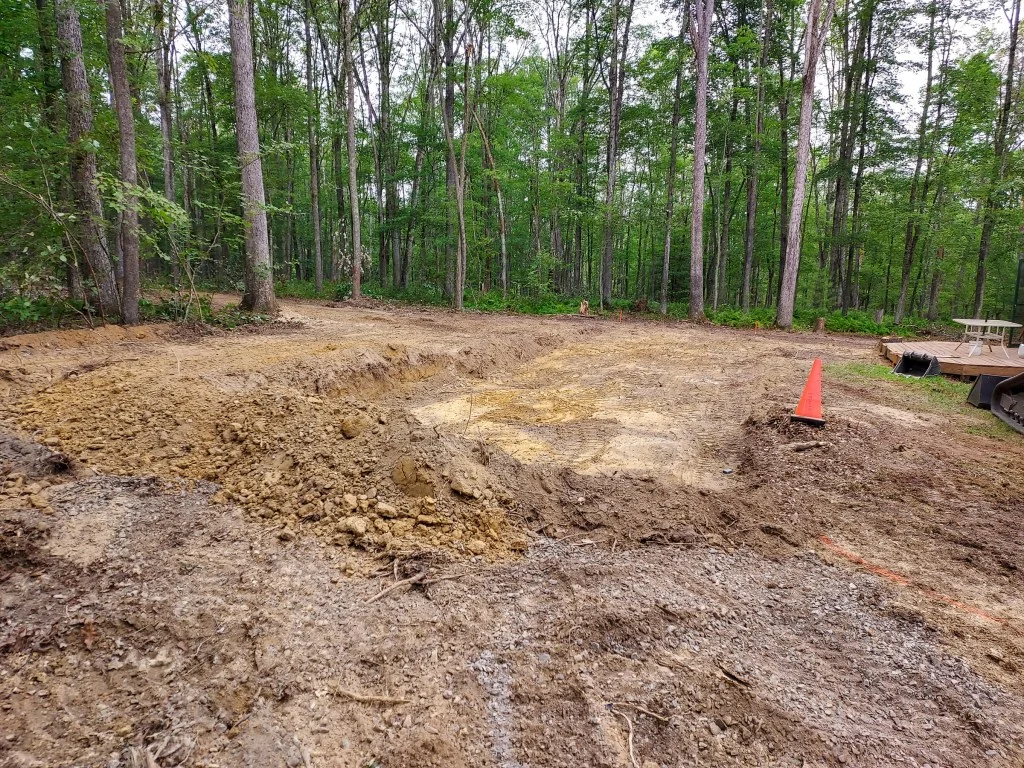
Clay is the quiet cost driver in this county. The red clay that shows up across much of Henderson County drains poorly and holds water, which means a footing trench can turn into a muddy mess after a single afternoon storm, and a building pad cut into clay needs proper compaction and drainage or the slab will fight the soil for years. Weathered rock is the other surprise: not the solid ledge that needs blasting, but the fractured, soft-looking rock that still stops a bucket cold and slows a cut from an afternoon into a week. Neither shows up on a plat map. Both show up on the invoice when a crew quotes blind.
Trenching deserves its own mention. Utility runs and drainage lines on a slope need bedding, fall, and a plan for groundwater — and any work near buried lines or fuel tanks has to respect state and federal rules, with the EPA's guidance at epa.gov the starting point for environmental compliance questions. Fall matters more here than on flat ground: a drain line that runs downhill with too little slope will pond, and one with too much will scour. Old in-town lots add their own wrinkle, because an unmarked line from a previous owner can turn a half-day trench into a repair job.
Scope vs. price, without the guesswork
These are working residential ranges for the Hendersonville area. A steep drive, rock, or a permit requirement narrows the estimate toward the top of each band; open flat ground lands near the bottom.
| Scope of work | Typical range |
|---|---|
| Single footing dig or short utility trench | $1,800–$3,000 |
| Small building pad, detached garage or shop | $2,500–$4,500 |
| Driveway cut with minor grading | $3,500–$6,000 |
| Full site excavation, new home on flat-ish lot | $6,000–$11,000 |
| Full site excavation, hillside with haul-off | $11,000–$15,000 |
| Erosion-control permit administration (when required) | Quoted as a separate line item |
For a finer-grained picture of dirt-moving alone, the Henderson County grading cost breakdown splits out grading, drainage, and seed-and-straw line items. Read that page alongside this one and the two most common line-item surprises on a local bid become obvious: haul-off, which is priced per load and climbs fast when a hillside cut produces more spoil than the lot can absorb, and temporary stabilization, which is small on paper until a late-season storm turns a bare slope into a repair.
Ask any bidder to separate those two out explicitly. A quote that lumps haul-off into a single site-work number is hard to compare against the next one, and it hides the single biggest variable on a sloped parcel. The same goes for permit administration: if it is not a line item, it is either free (unlikely) or absorbed somewhere you cannot see.
Verifying the crew before the first bucket moves
North Carolina draws a licensing threshold around larger projects, and the rules live at the NC Licensing Board for General Contractors. Ask any excavator how they handle the line between site work and a licensed general contract, and ask for proof of insurance naming the property owner. A second practical check: whether the crew can speak to code-referenced site requirements. Local inspections here lean on the model codes published by the International Code Council, and a crew that knows those sections cold tends to pass inspections without drama. On a residential dig the code questions that actually come up are mundane — footing depth below grade, bearing soil, drainage away from the structure — but a crew that has to look them up mid-inspection is a crew that will slow your schedule.
References matter more here than in a flat market, because terrain is the whole job. Ask for a job on a slope like yours, not just any job. A crew that has only worked flat pads in the valley may be excellent and still misjudge a Kanuga-area cut, simply because the haul-off math and the stabilization sequence are different animals.
Storm timing matters too. Henderson County has seen 16 federal disaster declarations across 1978-2026, mostly flood and storm events, and freshly disturbed ground is the most vulnerable ground there is. A competent bid accounts for stabilization before the season turns; the National Weather Service outlook at weather.gov is worth watching before signing off on a late-season dig. If the schedule slips into the wet months, the stabilization line item is not optional — it is the difference between a finished pad and a repair bill.
Matching the machine to the parcel
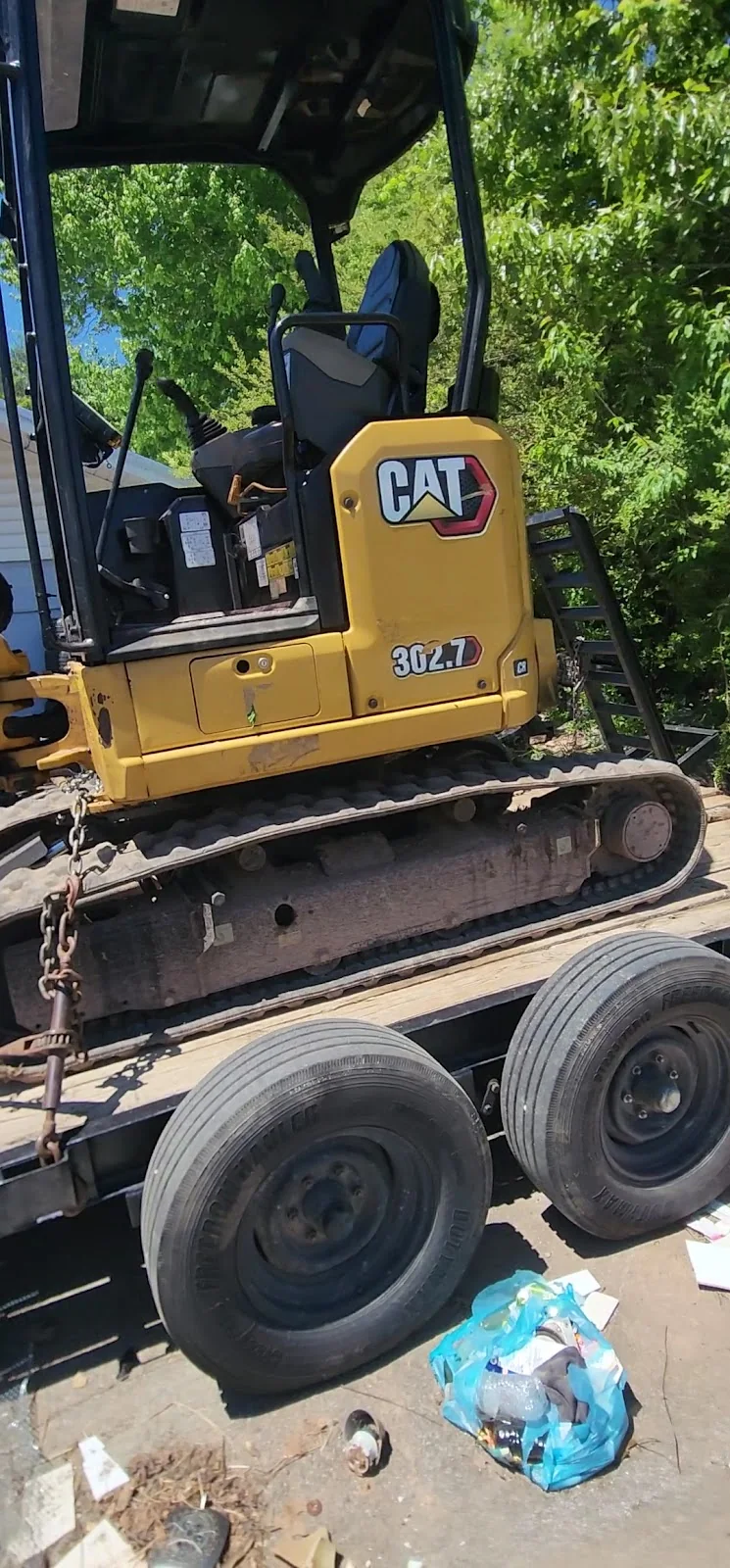
A long, narrow in-town lot off Main Street may take a compact excavator and a small dump trailer; a ridge lot near Flat Rock may need a full-size hoe, a dozer for the cut, and several truckloads of haul-off. Which machine shows up is the visible part of the estimate, and it is why an over-the-phone flat number on a hillside job tends to grow. If you are comparing crews, the excavation contractor overview walks through what separates a complete scope from a thin one. When you want eyes on the actual parcel, the local grading contractors in Hendersonville page covers drainage, pad prep, and finish grading for the same address.
Access is the part most owners underestimate. Can a loaded dump truck turn around at the top of the drive, or does it have to back down a hundred feet of single-lane gravel? Is there room to stockpile spoil on site, or does every bucket leave by truck? On the tighter in-town lots the answer is usually no to both, and that is a real cost. On the wider out-of-town parcels the answer is often yes, and the same cut can price thousands lower for that reason alone. A crew that asks those questions before quoting is doing the work; a crew that quotes from the driveway without walking the cut is guessing.
Sequencing is the last piece. On a sloped parcel the order of operations — clear, cut, haul, stabilize, then trench — is not interchangeable, because trenching into an unstabilized slope invites collapse and rework. Ask any bidder to walk you through the sequence in plain language. The answer tells you more about the crew than the number at the bottom of the page.