The acre that decides your permit path
Around Asheville, the first question on a foundation dig is not depth or rebar — it is acreage. North Carolina's erosion and sedimentation rules draw a hard line at one acre of disturbed ground: stay under it and you file a small local plan; cross it and you are into a state-approved erosion control plan with engineered measures, regular inspections, and a paper trail that has to exist before equipment shows up. On the steep, wooded lots that define Buncombe County, that threshold arrives fast — a house pad, a driveway cut, and a septic bench can clear an acre on a parcel that never looks that big from the road.
The practical effect is that two neighbors on the same ridge can face very different dig budgets. One has a clean under-one-acre plan; the other is paying for professional plan design, silt fence and ditch checks engineered to spec, and inspection schedules tied to rainfall. This is also why the crew you hire matters less than the sequence you hire them in — the excavation contractor and the plan designer should be talking before the first tree is felled. Disturb first and retrofit later is the most reliable way to turn a $6,000 dig into a five-figure problem.
Reading mountain ground before you price it
Asheville sits in a bowl of ridges, and the ground under a given lot is a coin flip between residual clay, decomposed rock, and the kind of weathered saprolite that looks like soil until a bucket hits it. The Valley and Ridge and Blue Ridge geology here means foundation digs routinely encounter rock shelves at unpredictable depths — sometimes three feet, sometimes fifteen, on adjoining lots. That single variable drives the biggest line-item swings in any bid: a dig that stays in clay is a day of machine time; a dig that hits rock is hammering, hauling, or redesigning the footing elevation on the fly.
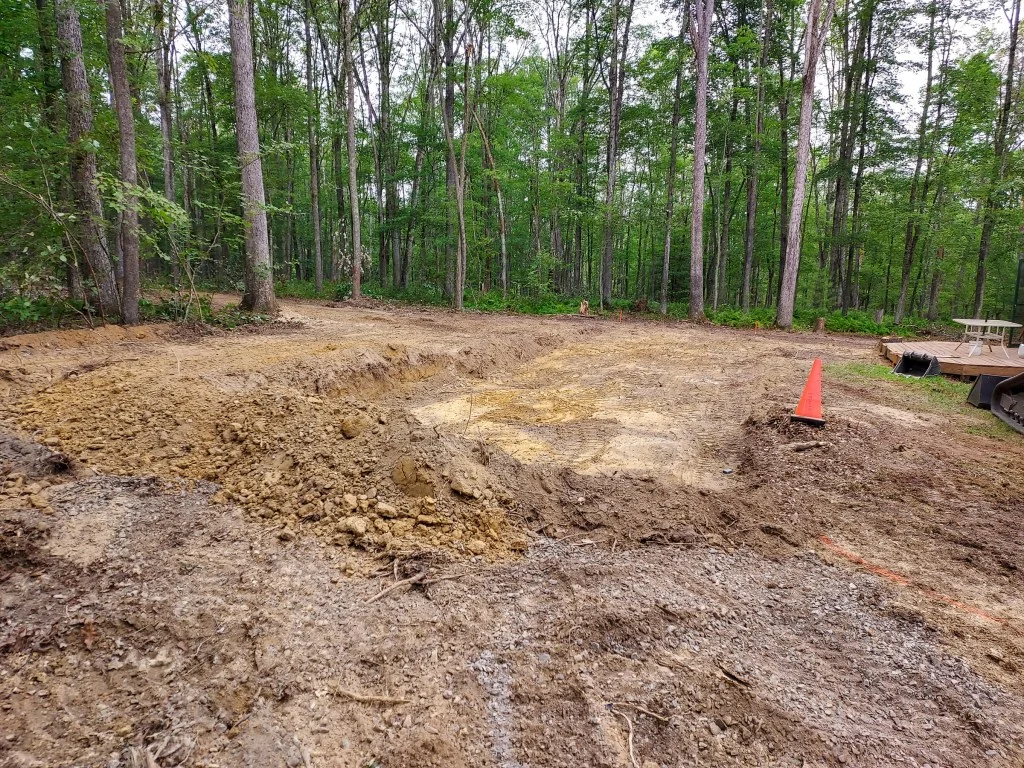
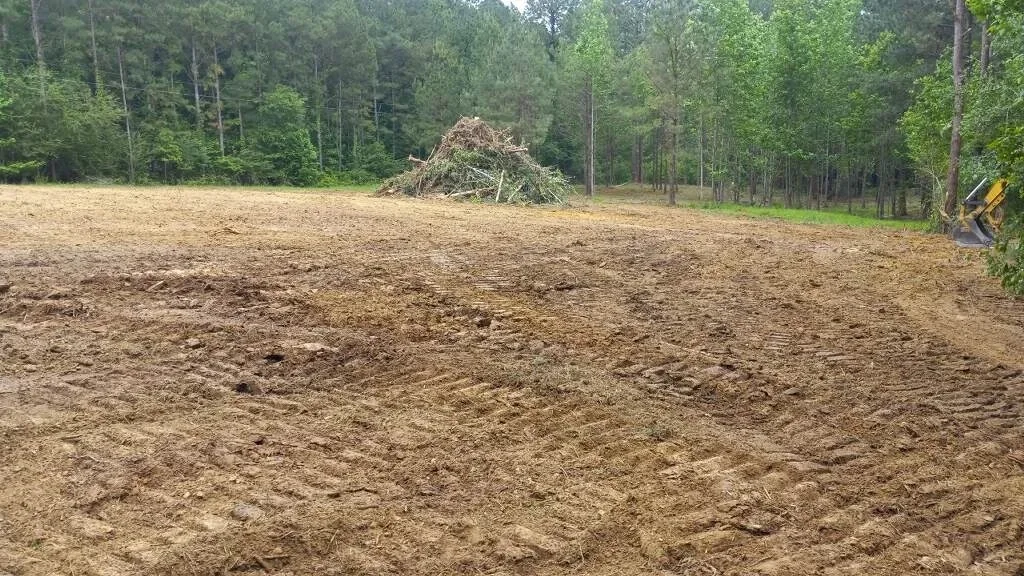
Fill is the other local wildcard. Plenty of Buncombe County housing sits on graded pads from an earlier era, and old fill behaves nothing like undisturbed ground — it moves, it holds water, and it can fail a bearing test that the original builder never ran. A responsible excavator probes and test-pits before quoting, not after. Where the house pad is being built from scratch rather than carved into a slope, the sequence overlaps with site prep and building pads, and the two should be planned as one operation instead of two change orders.
What a foundation dig actually includes
A complete foundation excavation scope is more than a hole. It is layout to the survey, topsoil stripping and stockpiling, the cut itself, footing trenches or a monolithic slab base, spoils management, and drainage that sends water away from the structure rather than into the backfill. On a basement or walk-out, add dewatering and a perimeter drain, because western North Carolina's rainfall is not a minor design consideration — the region's federal disaster record (19 declarations spanning 1973-2026) is largely a story about saturated ground and what it does to slopes and structures.
Compaction and backfill are where cheap jobs quietly fail. Loose backfill around a foundation wicks water, settles, and shows up two winters later as cracked slabs and sticking doors. Ask how backfill will be placed and compacted, and whether spoils leave the site or get shaped into the grade. Spoils that stay on a tight mountain lot have to go somewhere useful; spoils that leave mean trucking, and trucking on narrow ridge roads is slow and priced accordingly.
What it costs here, by scope
Regional bands for Buncombe County, installed and hauled, look roughly like this. Terrain, rock, access width, and haul distance move these more than square footage does, which is why any honest quote is a range tied to a site visit rather than a number given over the phone.
| Scope | Typical range | What moves it |
|---|---|---|
| Crawl space dig, easy access | $3,500–$7,000 | Depth, spoils removal |
| Full basement dig, sloped lot | $8,000–$18,000 | Rock, dewatering, retaining |
| Footing trenches only | $2,500–$6,000 | Length, soil type |
| Rock hammering (add-on) | $2,000–$9,000 | Volume and hardness |
| Spoils haul-off (per load) | $350–$700 | Distance, road access |
| State erosion plan + measures | $1,200–$4,500 | Disturbed acreage |
Rock is the line that most often blows a budget, and it is the hardest to predict. A site walk that includes test pits is worth every dollar it costs. For a fuller breakdown of line items, the foundation excavation cost page walks through the same scope in more detail. Statewide, anyone contracting for a project above the threshold set by the North Carolina Licensing Board for General Contractors needs to be licensed, and it is fair to verify that before signing.
Water, code, and the things inspectors check
Every foundation dig in this county eventually answers to the building code, and the provisions that matter most are the ones about drainage, footing bearing, and site grading. The NC Building Code Council and NCDOI Engineering Division publish the standards inspectors work from; the International Code Council publishes the model codes those are based on. A dig that cannot pass a footing inspection is a dig that gets redone, so the excavation and the footing should be designed together, not in sequence.
Water is the recurring theme. Mountain lots shed runoff fast, and a foundation cut into a slope collects it unless the grading plan addresses it. Erosion control measures, ditch checks, and stabilized construction entrances are not decorative — they are what keeps your site from sending mud onto a neighbor's driveway or into a creek, and state and federal rules on that are enforced. Where septic or well work intersects the dig, contractors licensed through the NC State Board of Examiners of Plumbing, Heating and Fire Sprinkler Contractors and the county health department get involved, and the schedule has to account for them.