How a Fletcher gravel drive gets built, step by step, over three to five days
Here is how the work typically unfolds on a Fletcher property, and roughly how long each stage takes.
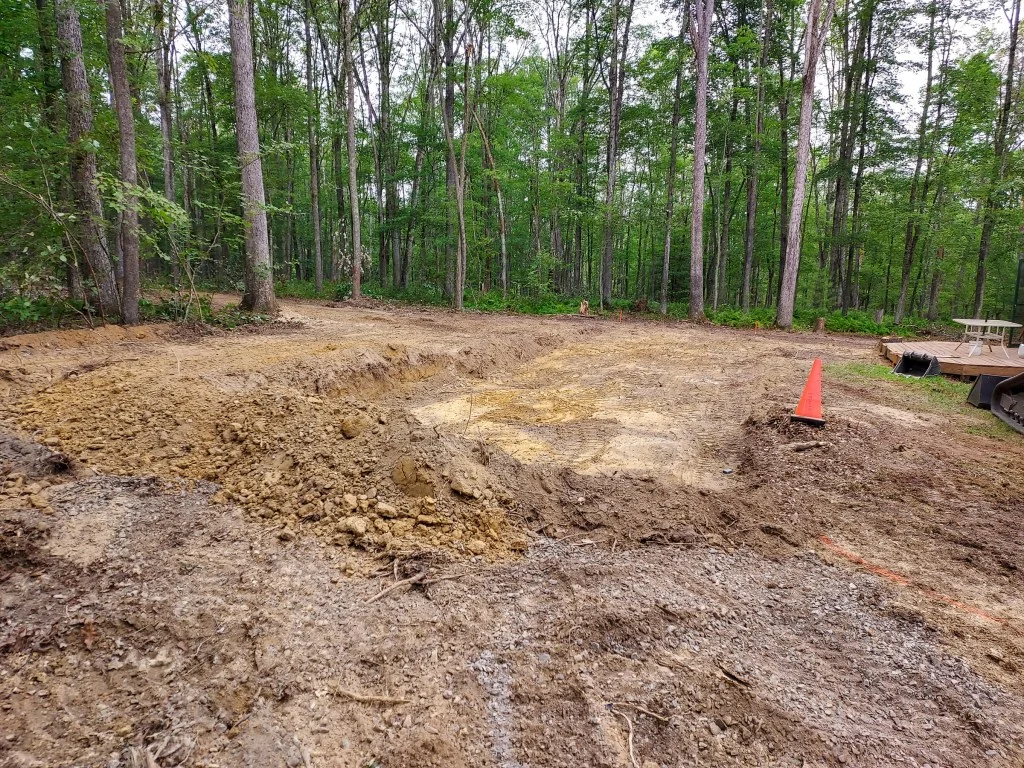
Day one — layout and stripping. The crew marks centerline and edges, then strips topsoil and root mass from the footprint. On a lot off Howard Gap or a graded pad near the airport industrial corridor, this can mean pulling up several inches of clay-heavy organic material that would otherwise pump and rut under load. Topsoil comes off first because everything after it depends on a stable base.
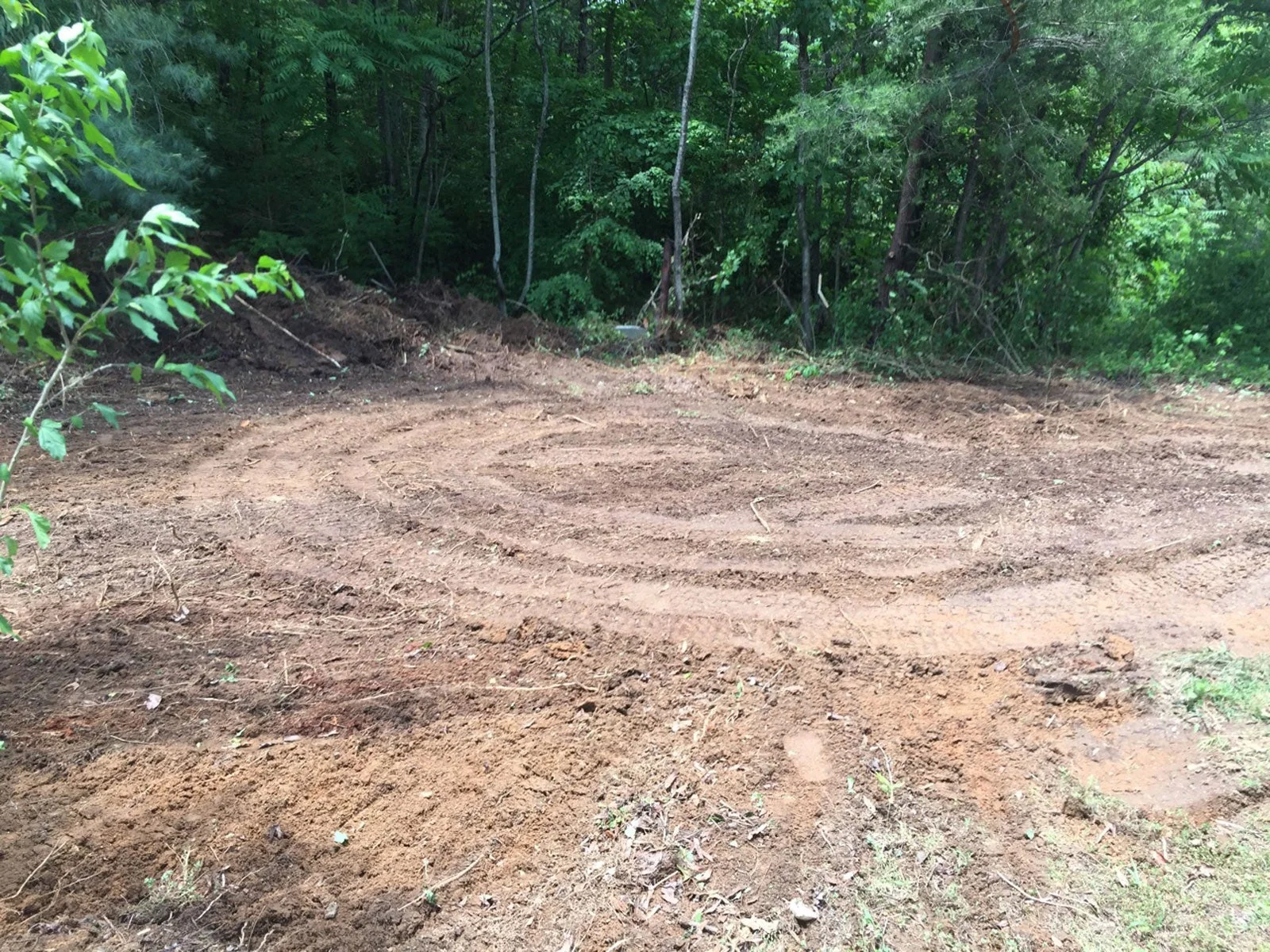
Day two — grading to drainage. The subgrade gets shaped to a crown or cross-slope so water leaves the surface instead of soaking in. This is the stage where a Fletcher drive lives or dies: grading for gravel drives is mostly a water-management exercise, and a drive that sheds runoff correctly costs a fraction of one that has to be rebuilt in three years.
Day three — sub-base and separation fabric. If the soil is clay, a geotextile goes down before anything else so the crushed stone doesn't sink into the subgrade. Then a compacted base course of crushed stone, worked in lifts, not dumped in one layer.
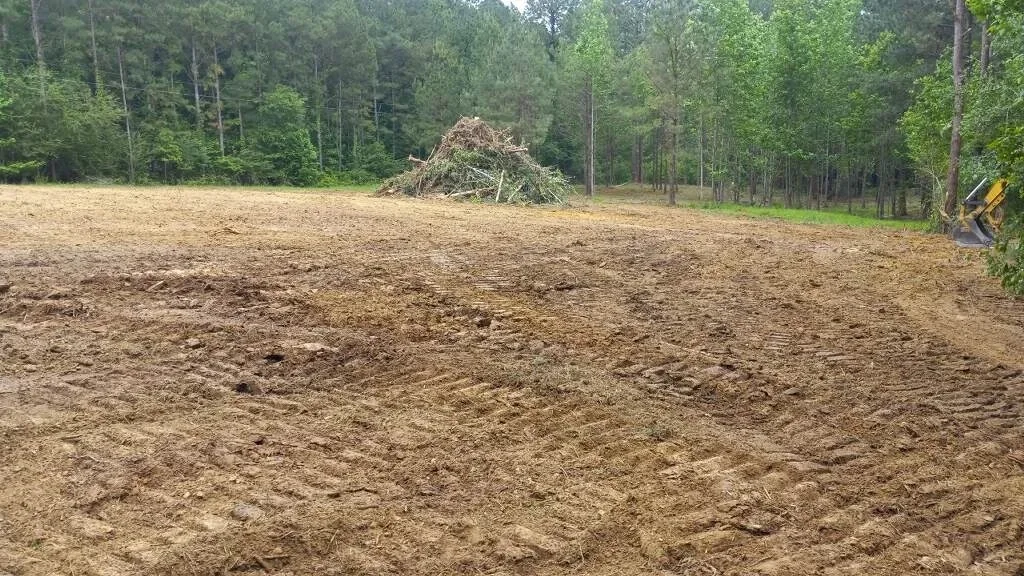
Days four and five — surface stone and finish. The top course goes down, gets graded to the same plane, and is compacted in two directions. Culverts, aprons, and turnout edges are dressed last. A straightforward residential drive finishes in three to five working days; a long mountain approach with culvert work stretches further.
A few acres outside Fletcher proper, along the gaps that climb the Blue Ridge escarpment, deep cuts and thick native clay can double day-two grading work. The mountain approach on a steep lot is often gated by how fast a machine can safely move dirt uphill, not by stone volume.
What drives the price on a Henderson County driveway
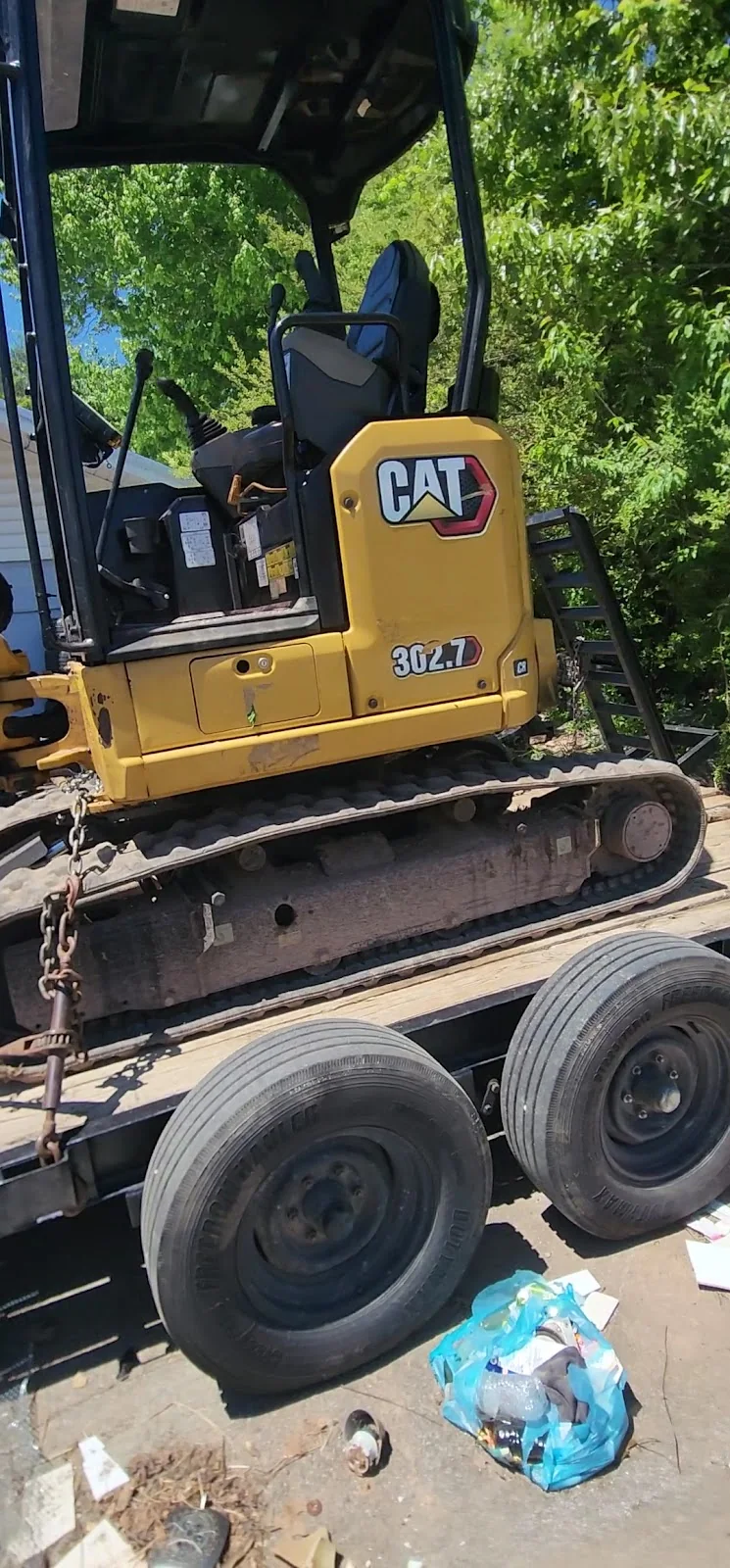
Fletcher sits on ground that varies fast. Flat lots near the French Broad valley floor take a shallow base and modest stone; lots climbing toward the Blue Ridge foothills need deeper stone, culverts, and drainage control. Width, length, turnarounds, and how much stripping is required all move the number. So does access: a track can't reach every part of every lot, and handwork shows up in the labor line. A short spur from a county road is a very different animal from a 500-plus-foot approach cut into a wooded ridge.
| Scope | Typical range |
|---|---|
| Short, flat residential drive, minimal stripping, basic stone | $1,800–$2,800 |
| Standard Fletcher drive with fabric, base, and surface stone | $2,800–$4,200 |
| Longer drive, culvert, extra drainage control | $4,200–$5,500 |
| Long or steep mountain approach, engineered base and culverts | $8,000–$12,000 |
For surrounding-town comparisons, see the Henderson County cost breakdown. A bid that skips stripping, fabric, or compaction isn't cheaper; it just moves the cost to the future. Grading crews operating out of Hendersonville serve Fletcher daily because the drive grades here are close enough to compare and different enough to matter.
Fletcher's water story decides how the drive is built
16 federal disaster declarations touch this county across 1978-2026, and the pattern is storm and flood. Fletcher gets summer downpours that turn a poorly graded drive into a gully overnight. That history is why the sequence above puts drainage before stone and why culverts and crown show up in almost every real quote here. The National Weather Service rainfall records for the area make the case plainly: this is a place where a driveway has to be designed to move water, not just support a car.
Water on a Fletcher lot does something specific: it follows the old farm terraces and the shaded north-facing ravines that never dried out, so a drive cut across one of those flows has to be culverted underneath rather than allowed to cross the surface. That's a site-by-site judgment, not a rule of thumb, and it's why quotes on the same street can land $800 apart.
Code, licensing, and when a permit enters the picture
Not every gravel drive needs a permit, but anything that changes drainage, crosses a stream, or touches the public right-of-way likely does. Henderson County and Fletcher have their own thresholds, and state rules apply to larger site work. The NC Licensing Board for General Contractors sets the point where a contractor must be licensed, and grading that alters runoff can trigger erosion-control requirements. The EPA publishes guidance on stormwater and sediment that applies to any job moving soil near a waterway. Ask your contractor which approvals apply before work starts; a crew that can't answer that question is a risk on a slope. Local help is listed at grading contractors in Fletcher.
Practically, the points that trip up Fletcher drives are the ones near a creek tributary or sharing an easement with a neighbor. The heavier the machinery and the more dirt moved, the more likely erosion-control measures are expected before the first cut. On the steepest lots, a short retaining wall at the climb above the road is sometimes the cheapest way to hold grade, and it's worth asking about before stone ever arrives.
What the finish looks like when the sequence is respected
A correctly built Fletcher gravel drive stays crowned, sheds water at the edges, and holds its stone instead of migrating into the yard. The surface may need a top-dress every few years, but the base shouldn't need to be rebuilt. If a quote skips fabric, skips compaction, or grades flat, the drive will tell you within two rainy seasons. The job is not the stone; it is the order the work happens in.
Oak and poplar leaves falling onto a gravel drive each fall grind into the surface and soften the crown if they're not blown off before spring rains; it's a small maintenance habit that Fletcher homeowners learn fast. A top-dress and a re-crown pass every few years keeps the drive doing what the grade was designed to do. Done right, the whole job is invisible from the road — the drive just works, season after season.