Where the water lands in Etowah, and where the grade has to send it
Etowah sits in Henderson County's French Broad valley, west of the county seat, with ridges on one side and bottomland on the other. That means almost every lot here is either shedding water from above or receiving it from the property behind — often both. A lot off a road climbing toward the Blue Ridge gets rain arriving as sheet flow from the ridge; a lot down on the flat gets it arriving from its uphill neighbors. Grading that ignores which side you are on fixes a symptom and leaves the cause.
The federal record makes the point plainly: this county shows 16 declared disasters across 1978-2026 of record, overwhelmingly storm and flood family. None of those storms chose where to send water based on property lines. So the first question on any Etowah grade job is not "how steep" but "where does the water come from and where are we going to put it." A grade that pushes runoff onto the neighbor's driveway is a dispute waiting to happen; a grade that ponds against the foundation is a foundation bill waiting to happen.
There is also a seasonal rhythm to respect here. Mountain storms do not deliver rain evenly — a summer cell can drop an inch in an hour on one ridge and leave the next hollow dry. The National Weather Service issues flash-flood guidance for exactly this terrain, and the grade you build has to survive the worst hour, not the average one. That is why Etowah jobs get judged by the outlet, not the slope — a shallow swale with a real discharge point outperforms a steep grade that dumps water into a low spot and calls it drainage.
What the work actually covers on a Henderson County lot
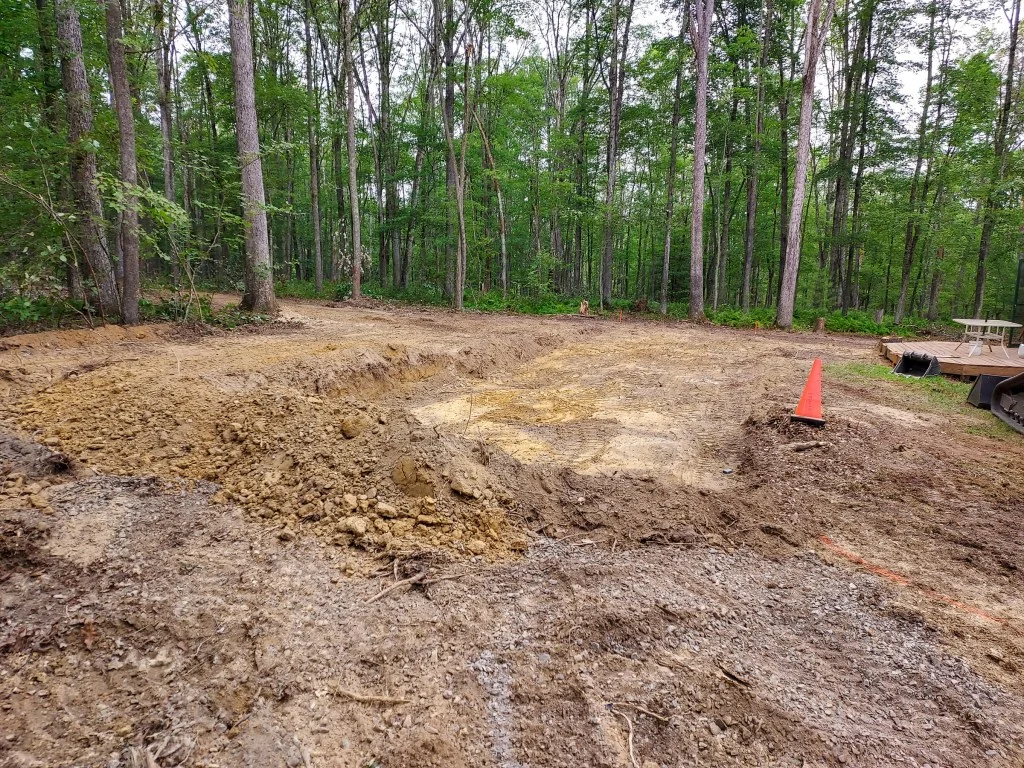
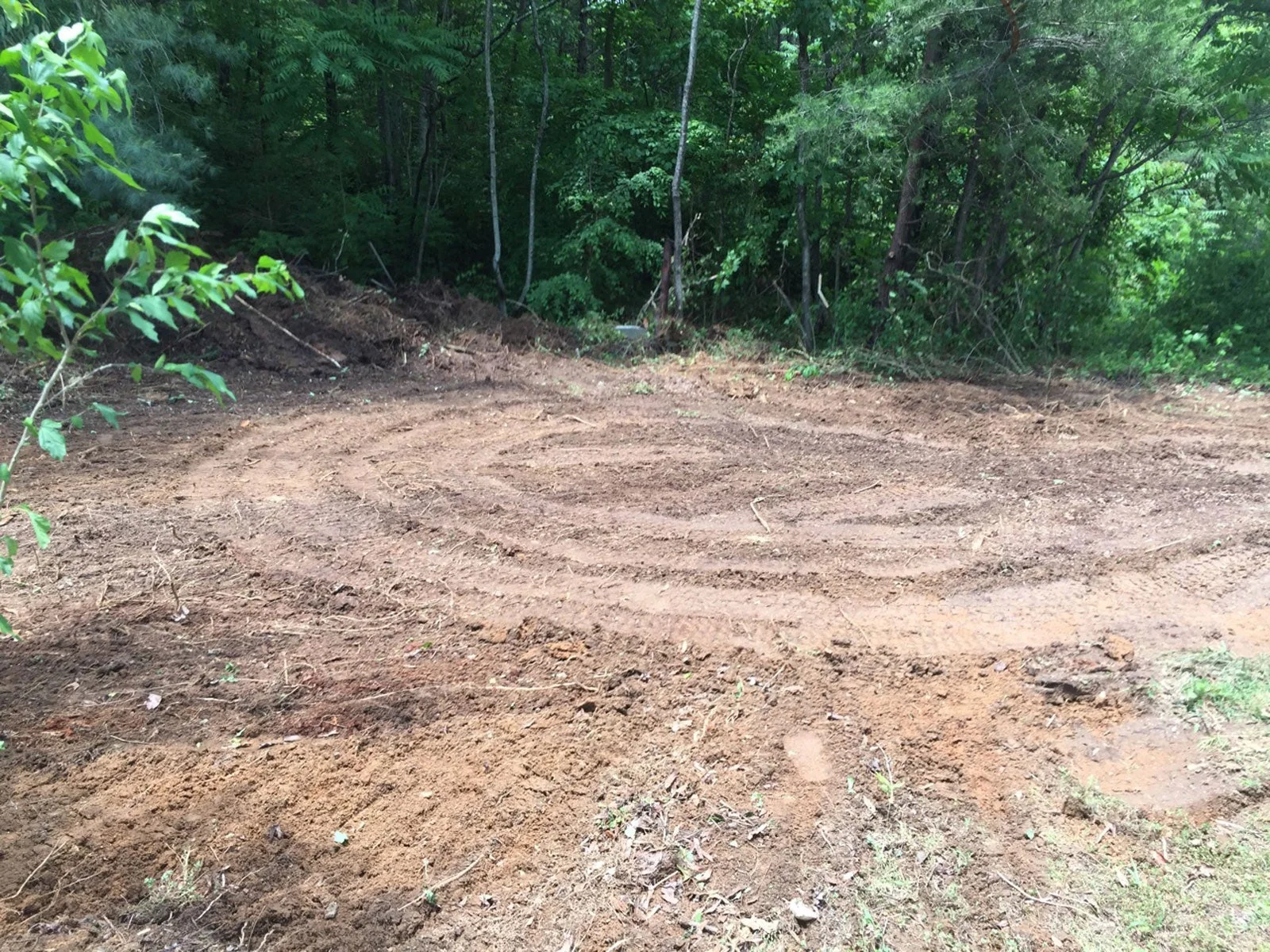
Etowah scopes split into five recurring jobs: house-pad cuts on sloped ground, driveway and turnouts (often the hardest work on the property), drainage swales and culvert crossings, regrading an existing yard that puddles, and foundation-drainage correction on older homes. The county seat is Hendersonville, and the local housing stock runs from older farm-adjacent homes on the valley floor to newer builds cut into the ridges. Both need a plan that sends water to a defined outlet — a swale, a culvert, or a daylighted pipe — not just "away." A grade without a defined outlet is a pond with extra steps.
Rock is the second cost driver. Etowah's slopes carry plenty of it. A cut that looks straightforward on a walk can become slow, expensive work once a machine is in the ground. That's not a reason to avoid the job, it's a reason to get a scope that names rock as a possibility instead of discovering it mid-invoice.
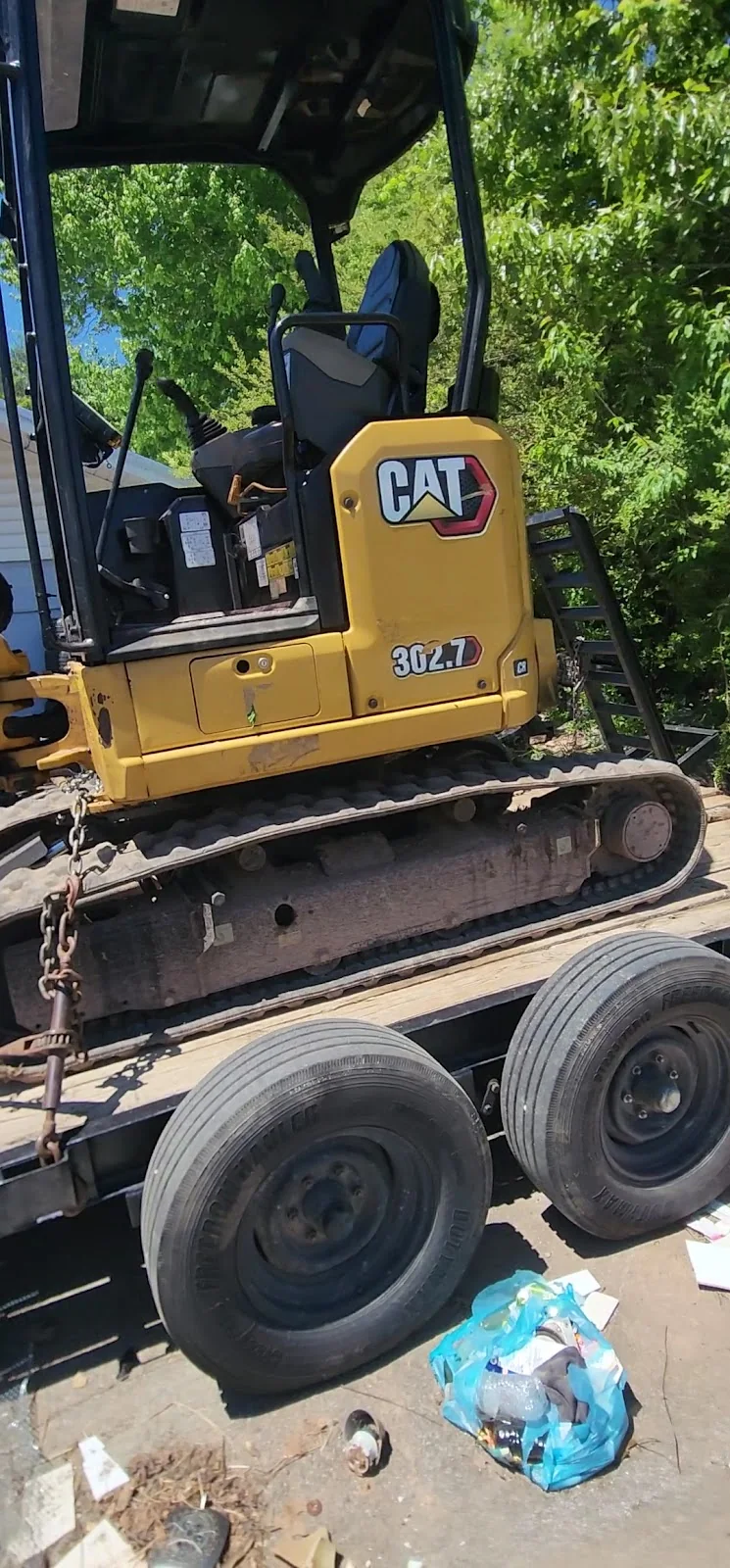
Access is the third quiet factor. Many Etowah lots are reached by narrow, steep, or shared driveways, so the machine that fits may be smaller than the one the job really wants. A bidder who has not walked the access and measured the pinch points is guessing at the time. The full picture of what good site work includes is on the grading and excavation page — worth reading before you compare bids, because the differences between them are usually in the parts you can't see from the road.
Etowah grading price picture
County-level pricing is on the Henderson County cost page; the working table sits below. Treat every number as the middle of a range, not a quote. Slope, access width, how far spoil has to travel, rock, and where the water goes all move the number, and the water question moves it most.
| Scope | Typical range |
|---|---|
| Regrade a yard to fix ponding (defined swale or outlet) | $1,900–$4,200 |
| New house-pad cut and rough grade on sloped ground | $3,500–$9,000 |
| Driveway cut, turnout, or culvert crossing | $2,400–$7,500 |
| Foundation drainage correction (regrade, footing drain outlet) | $2,200–$6,500 |
| Combined pad, driveway, and drainage package | $6,000–$15,000+ |
| Rock encountered mid-cut | Billed per hour or per yard — ask before you dig |
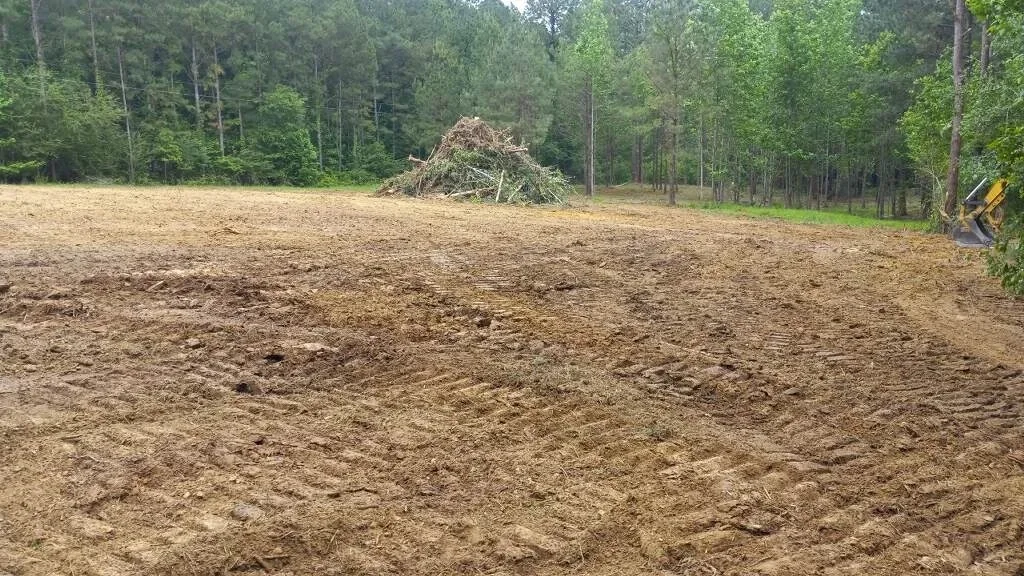
If the property also needs trees pulled before a machine can move, land clearing is usually scheduled first so grading prices on clean ground.
Paperwork, code, and who is allowed to contract the job
Land disturbance carries rules in North Carolina; grading is not a handshake trade. The NC Licensing Board for General Contractors sets the dollar threshold at which a project requires a licensed general contractor, and that threshold applies whether the work is a house pad or a commercial pad. Where the scope includes erosion control or stormwater, the NC Office of State Fire Marshal and local code enforcement govern the standards the grade has to meet, and the International Code Council publishes the model codes those local standards lean on. One practical note: silt fence and stabilized outlets are not optional decorations — a grade that fails an erosion inspection costs more to fix than to do right.
The takeaway for Etowah homeowners is not "get buried in permits." It is that a grading bid with no mention of erosion control, no defined outlet for the water, and no license conversation on a job above the threshold is an incomplete bid, not a bargain.
Turning an estimate into a scope you can hold someone to
Three Etowah questions separate real scopes from sales talk. First: "Where exactly does the water leave my property, and what is the outlet?" A contractor who can point to the swale, the culvert, or the daylighted pipe on a sketch is pricing a system; one who waves downhill is hoping. Second: "How is rock handled if we hit it?" Get the per-hour or per-yard number in writing before the machine arrives. Third: "What does final grade mean for my foundation, my driveway, and the property line?" Slope away from the house, positive drainage on the drive, and no concentrated flow across the lot line are the three tests the finished job has to pass.
Write those answers into the bid itself — outlet location, rock rate, and the final-grading tolerances — so the scope survives the conversation it was born in. A one-page written scope beats a verbal promise every time, and it gives you something to compare against the next estimate.