Getting the machines in and the dirt out
Swannanoa driveways fail on logistics before they fail on stone. The valley floor along US-70 and the river bottoms is flat and forgiving, but the lots climbing toward Bee Tree and the Blue Ridge escarpment are not: narrow entries, overhead lines, soft ground near the Swannanoa River, and switchbacks that a loaded dump truck cannot climb. Every extra machine move, every load of unsuitable dirt that has to leave, and every ton of gravel that has to come in from a quarry adds to the invoice before anyone spreads a yard of stone.
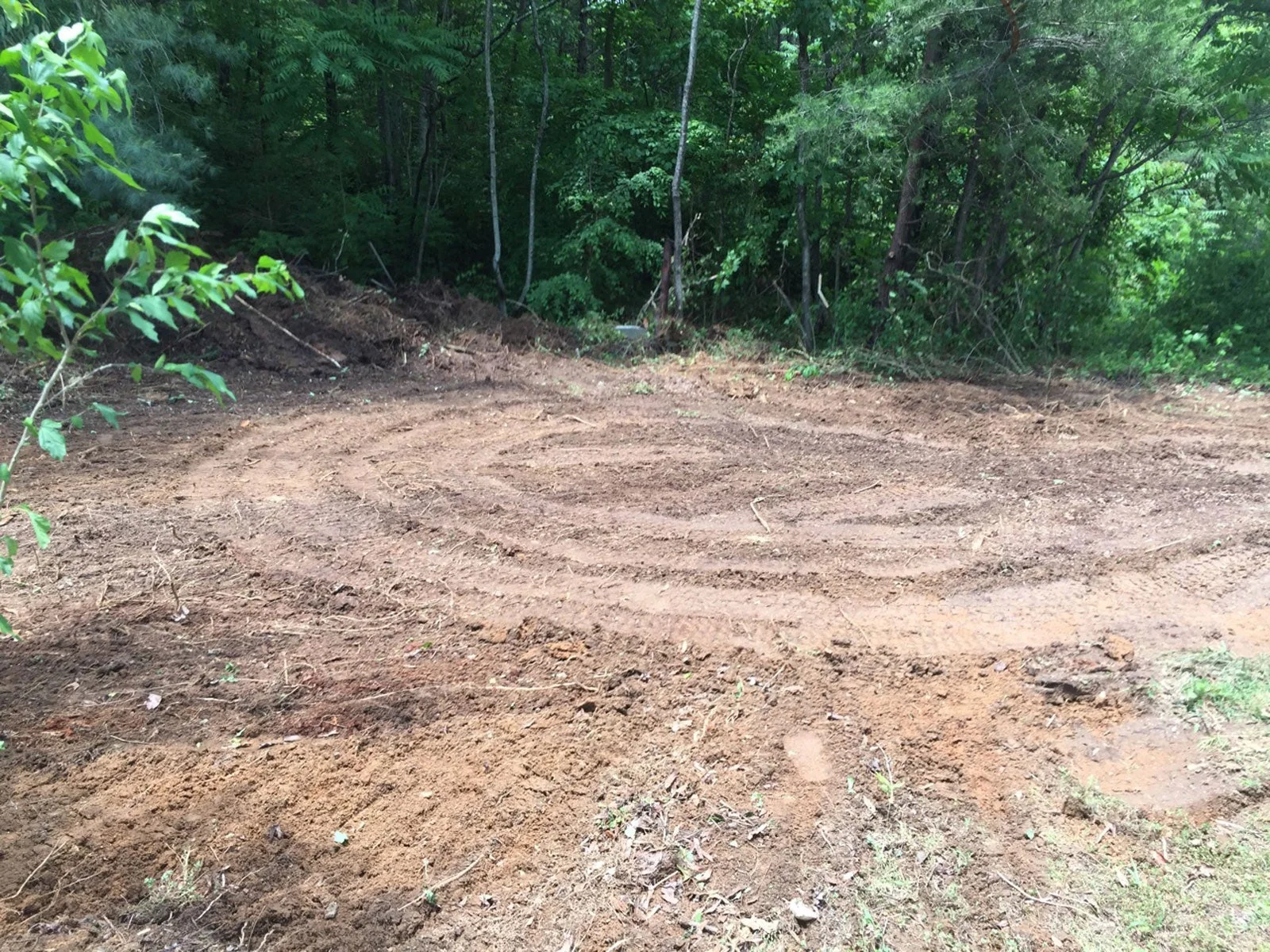
The practical sequence is always the same. A site visit to measure slope and entry width, a cut and compaction pass to build a stable subgrade, a separation fabric on soft or clay-heavy ground, then a base course and a surface course sized to how the drive is actually used. On valley lots the constraint is water; on the hillsides it is grade and access. Tell a contractor which one you have and you will get a better number. The driveway grading and gravel overview walks through the layers before you price anything.
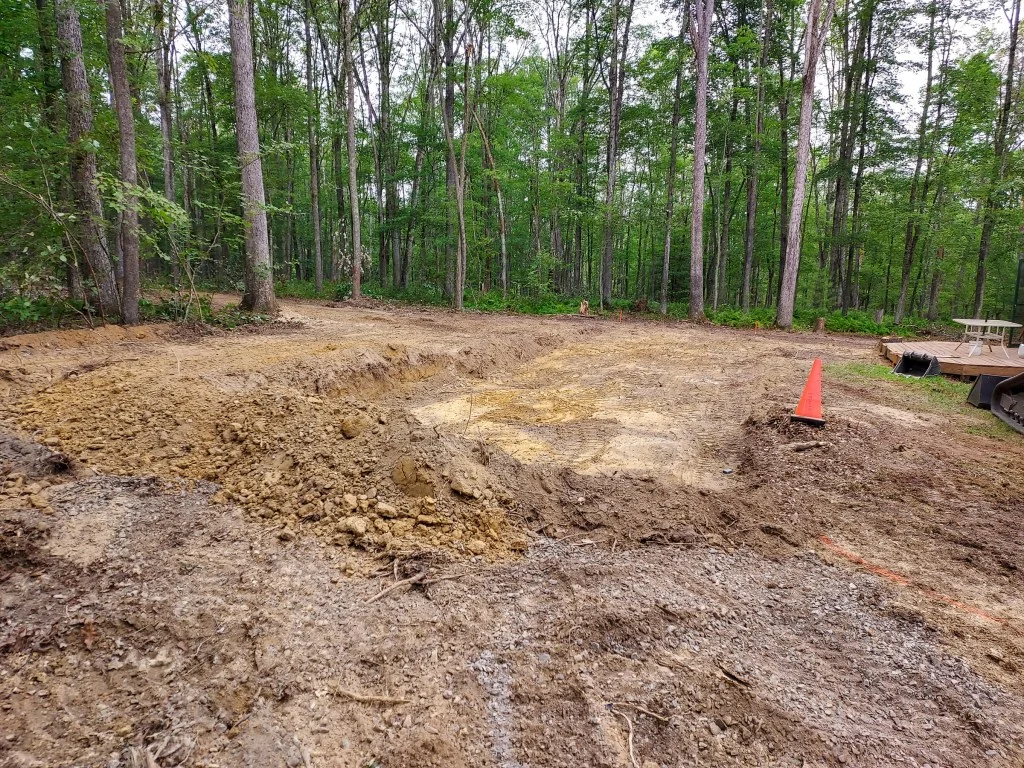
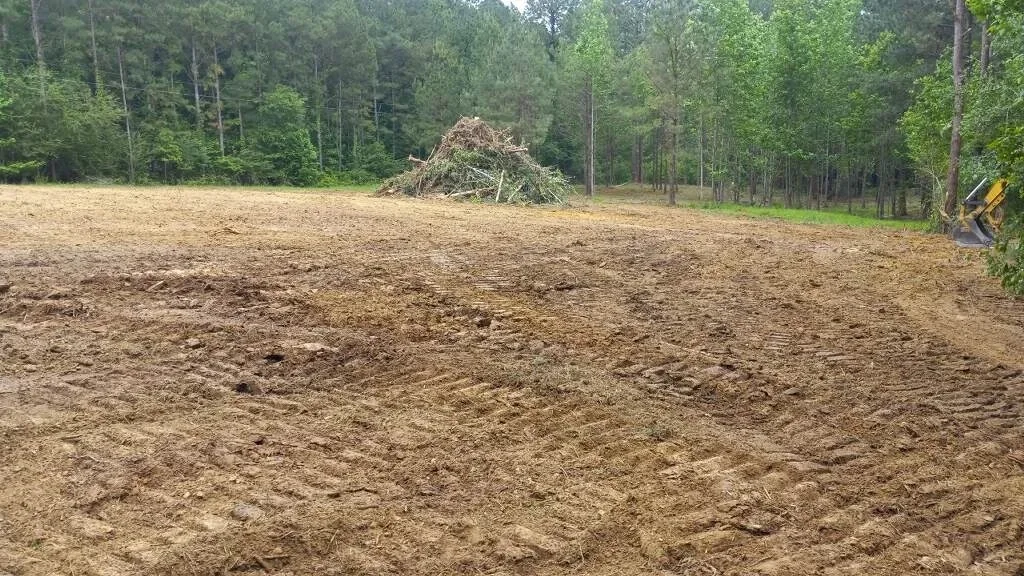
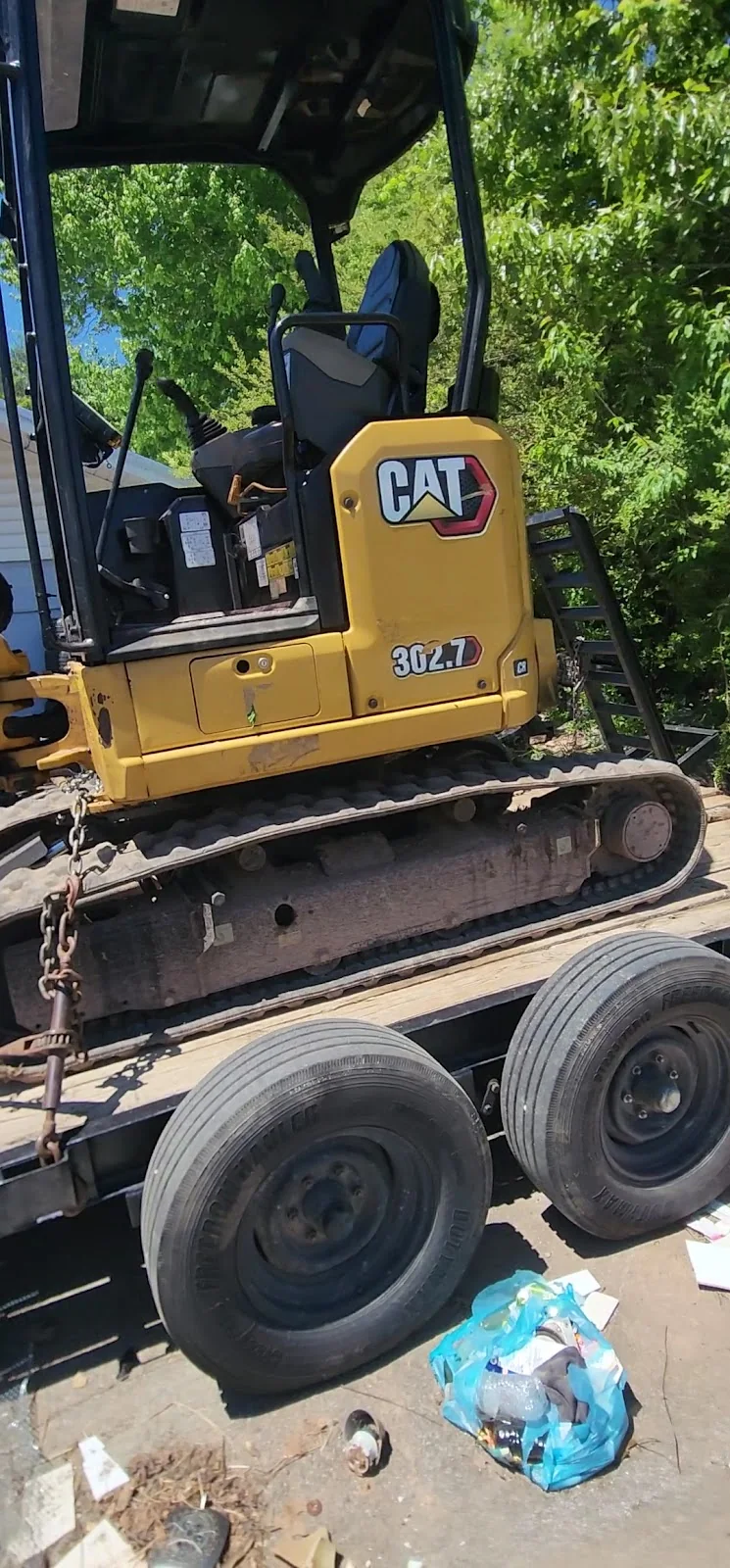
Access is the first thing we measure on any Swannanoa job, because it decides which machines can show up. A lot off a flat stretch of US-70 near Grovemont or Bee Tree Road can take a full-size dump truck and a large excavator. A lot up a one-lane switchback with a low canopy or a hairpin turn cannot, and the work shifts to a mini excavator, a small skid steer, and dump trailers feeding the site load by load. That shift is where the money goes: more hours, more trips, and often a mat or two to keep machines from cutting through wet ground. On the steepest Bee Tree Road and Riceville Road hillsides, a loaded tri-axle simply cannot make the grade at all, so the truck has to stage at the bottom and the machine walks the stone up in smaller lifts. None of that is gravel cost. It is access cost, and it dominates the bid.
What the Swannanoa price picture looks like
Driveway work in this end of the county prices like the county it sits in, so the working numbers live in the Buncombe County grading cost breakdown. The short version for a fresh install is in the table below. Read the rows as scope, not as a quote: a short flat valley pull near the interstate lands near the bottom, and a long, steep, rock-hit drive climbing away from the river lands near the top.
| Scope | Typical installed range |
|---|---|
| Short flat drive, light regrade, single gravel course | $1,800–$2,600 |
| Average residential drive, fabric, base + surface stone | $2,600–$4,000 |
| Longer drive or damp valley ground needing drainage and thicker base | $4,000–$5,500 |
| Long or steep mountain drive with culverts, rock, and access limits | $8,000–$12,000 |
The line items that move you between rows are cut and haul-off, drainage and culvert work, fabric, and trucking. Gravel itself is rarely the biggest cost on a Swannanoa job.
Quarry distance is the quiet multiplier. The nearest crushed stone and Class II base sources for this valley are not sitting next door at the mouth of the Swannanoa; they are a haul away, and the trucking per ton reflects that. That is why two driveways of identical length and width can price forty percent apart here: one sits on a corner where a tandem dump truck can dump directly on grade in two trips, and the other needs the stone staged, shuttled, and placed with a machine that has to climb. Put the two side by side and the gravel is the same gravel. It is the getting it there that is different. A contractor who tracks their own trucking honestly will tell you this up front rather than bury it in a single line.
Water off the valley slopes decides how long it lasts
The federal record explains most of the driveway failures we see here: 19 declared events touch Buncombe County (1973-2026), and they are overwhelmingly storm and flood family. Every one of those events pushed water at drives that were built for a drier assumption. When the uphill side of a Swannanoa driveway has no place for runoff to go, the stone migrates, ruts form, and the base turns to mud. So before anyone quotes you stone, the drainage question has to be answered: where does the water cross the drive, where does it leave, and does the culvert or ditch have the capacity for a real storm. The National Weather Service keeps the local rainfall and flood outlook that makes the case for oversizing drainage rather than matching it to a dry year.
In practice, a Swannanoa drive that climbs toward the escarpment gets runoff from a watershed bigger than the driveway itself. A modest 150-foot hillside drive above a house off Bee Tree Road is receiving rain off the slope above it, and if the culvert is sized to the driveway and not the slope, a two-inch rain event puts water over the road surface and washes out the crown. The fix is not exotic: a properly sloped ditch on the uphill side, a correctly sized culvert under the drive at a low crossing, and a stone or matted energy dissipator on the outlet so water leaves without digging a gully. On the valley floor it is subtler: the water table sits high, and the drive has to be built up on a lifted, compacted crown so it drains rather than soaking. Both cases are about the same thing, moving water off the drive and away from its base.
Hiring crews who work this valley
Three checks specific to this ground. First, ask how they handle unsuitable dirt: hauling it off site is a real cost line, and a bid that omits it is incomplete rather than cheap. Second, ask whether the crew has built on slope before, because a steep Swannanoa drive needs a compacted, benched subgrade and often a geotextile layer, not just a dump-and-spread. Third, know the licensing line: for larger grading and excavation contracts, North Carolina general contractor rules from the NC Licensing Board for General Contractors apply once a job crosses the threshold, and a legitimate outfit will not blink at the question. Local crews who know the valley are listed via the grading contractors serving Swannanoa page.
There is one more check that matters more in this valley than in flatter parts of Buncombe County: whether the crew owns or reliably controls its haul. A contractor who has to broker trucks for every load is at the mercy of a market that is tight in the spring and fall busy seasons, and if the trucker quits mid-job the drive sits half-built with the subgrade exposed. Ask the crew what trucks they run on a Swannanoa job. A straight answer is a good sign. A vague one usually means the schedule is not theirs to keep. On the steepest drives, that is the difference between a two-week job and a six-week one. It is worth one extra question before the first load is placed.
When a new drive makes more sense than another patch
Most Swannanoa driveway calls split two ways: repair what is there, or rebuild it right. Patching ruts and adding a load of surface stone is fine when the base is sound and the water has somewhere to go. A rebuild is the better spend when the base has failed, when the grade keeps pushing water across the surface, or when repeated truckloads of stone disappear into the ground every year. The tell is whether the problem comes back in the same place after every hard rain. If it does, the drive is not short of stone, it is short of drainage and a proper subgrade, and another load of gravel will not fix it.
There is a cost arithmetic that favors the rebuild on the hillside lots. A drive that fails every couple of years and takes a load or two of surface stone each time is spending real money on a recurring patch that never gets the water question answered. Two or three of those cycles priced together, in this valley, approach the cost of a proper rebuild with fabric, drainage, and a compacted base. The rebuild is not cheaper today. It is cheaper over the years a homeowner actually owns the place. On the flat valley lots the advice tips the other way: with sound drainage, a well-built base can serve for a long time with periodic top dressing, and a full rebuild is hard to justify. Match the decision to the drive you actually have, not the one that looks worst in the neighbor's photos.