Where the money actually goes on a Biltmore Forest lot
Biltmore Forest is not Asheville with a nicer ZIP code. It is a 1920s planned village with estate-sized parcels, mature hardwood canopy, and a road grid that curves instead of gridding. That combination changes excavation math in ways a bid written for a flat quarter-acre subdivision lot will not show. The line items that move the number here, in rough order of impact: rock handling, spoils haul-off, tree protection and access, then drainage correction after the dig.
On the pricing side, a straightforward footing or utility trench on a generous lot sits near the low half of the residential band. A full basement or pool shell on a slope with rock pushes toward the top of the range once rock time and truck count are real. The table below is the honest scope-to-range map to hold next to any estimate you receive.
What surprises most homeowners is the sheer variability between two seemingly similar properties within a few hundred feet of each other. A lot off Vanderbilt Road backing up to the Biltmore Estate forest edge may have a completely different soil profile than a parcel near the Country Club of Asheville, even though both sit in the same village. Old-growth root systems, decades of leaf litter and topsoil accumulation, and the grading legacy of 1920s estate construction all influence how a modern machine moves through that ground. An excavator who has worked these streets for years will walk the property and tell you within a few hundred dollars what the job will actually take.
Rock is the variable nobody can quote from the truck
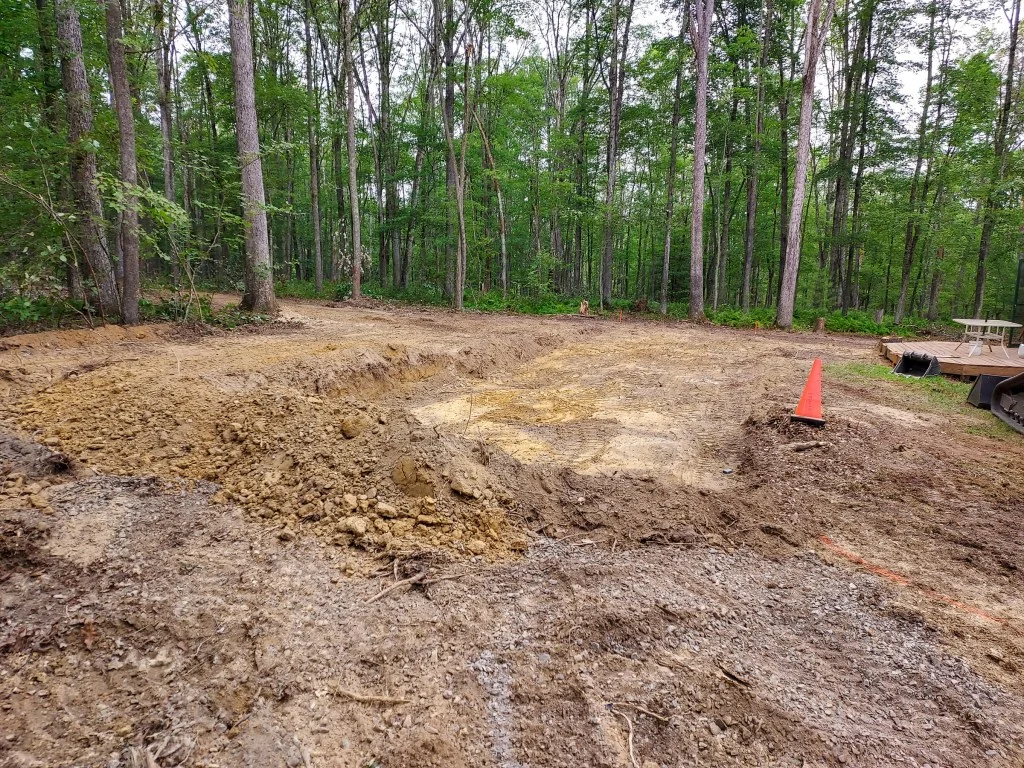
Buncombe County's bedrock sits shallow in pockets across this side of the county, and the village's higher ground is no exception. A machine bucket that cuts clean sand and clay one lot over can hit weathered rock two lots up. When that happens, the crew either hammers or drills and breaks, an hourly operation rather than a yardage rate, and the number climbs quickly. No honest contractor will guarantee a rock figure before digging; a good one will give you a per-hour or per-day rock rate in writing so the change order is predictable. If a bid comes in at half the others with no rock line at all, that gap is the conversation you will have later, standing in a hole.
Residents of this village know the ground can be deceptive. The rolling ridges that give Biltmore Forest its estate character came from the same geology that left saprolite, deeply weathered bedrock that still has enough structure to stop a bucket, just below the clay layer on many slopes. That material does not look like rock when you scrape it, but it will not move at yardage rates when you hit it in volume. Contractors working this area know to probe with a track hoe tooth or a soil auger before they set a production rate for the day.
If the project triggers a state permit threshold, the NC Licensing Board for General Contractors sets the rules on who can contract for it, worth a look before you compare bids at all.
Spoils, haul-off, and why village lots cost more to dig
On a large rural tract, excavated dirt often just moves to another corner of the property. In Biltmore Forest, estate lots are still lots. There may be nowhere acceptable to place a hundred yards of spoil without wrecking a lawn, a garden, or a root zone the owner cares about. That means trucks, and trucks mean hourly haul plus a tipping fee at the receiving site. Haul-off can easily be a quarter to a third of a small job's total.
The receiving site matters too. Spoil from a village dig has to go somewhere permitted in Buncombe County, and the drive from Biltmore Forest to a suitable fill site can add meaningful time to every load. A crew that knows the local disposal landscape, which sites take clay-heavy spoil, which take rock, what the current tipping fees run, will plan the haul more efficiently than a contractor who has to ask around. That local knowledge is part of what you are paying for, and it shows up in the truck count on the estimate.
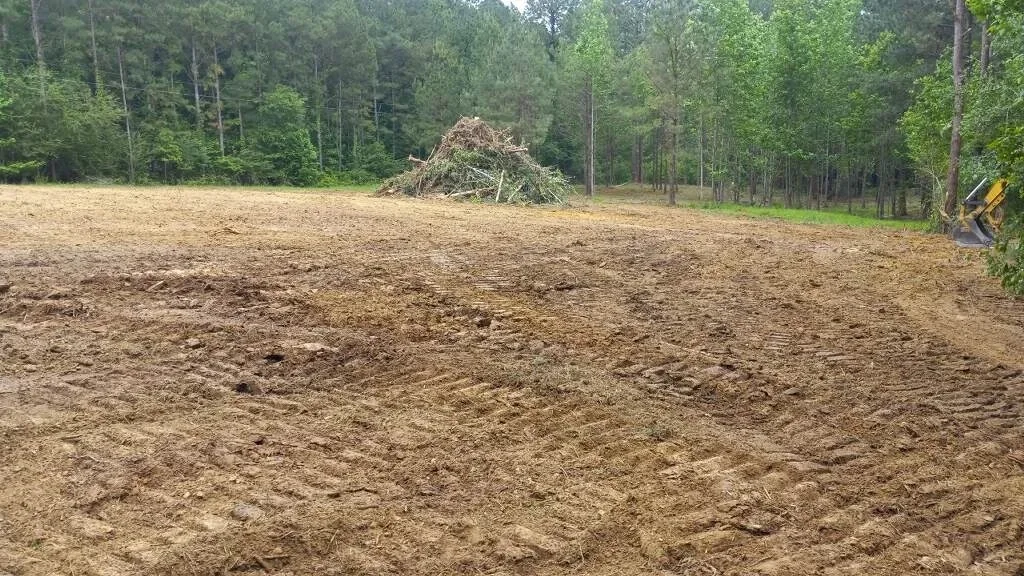
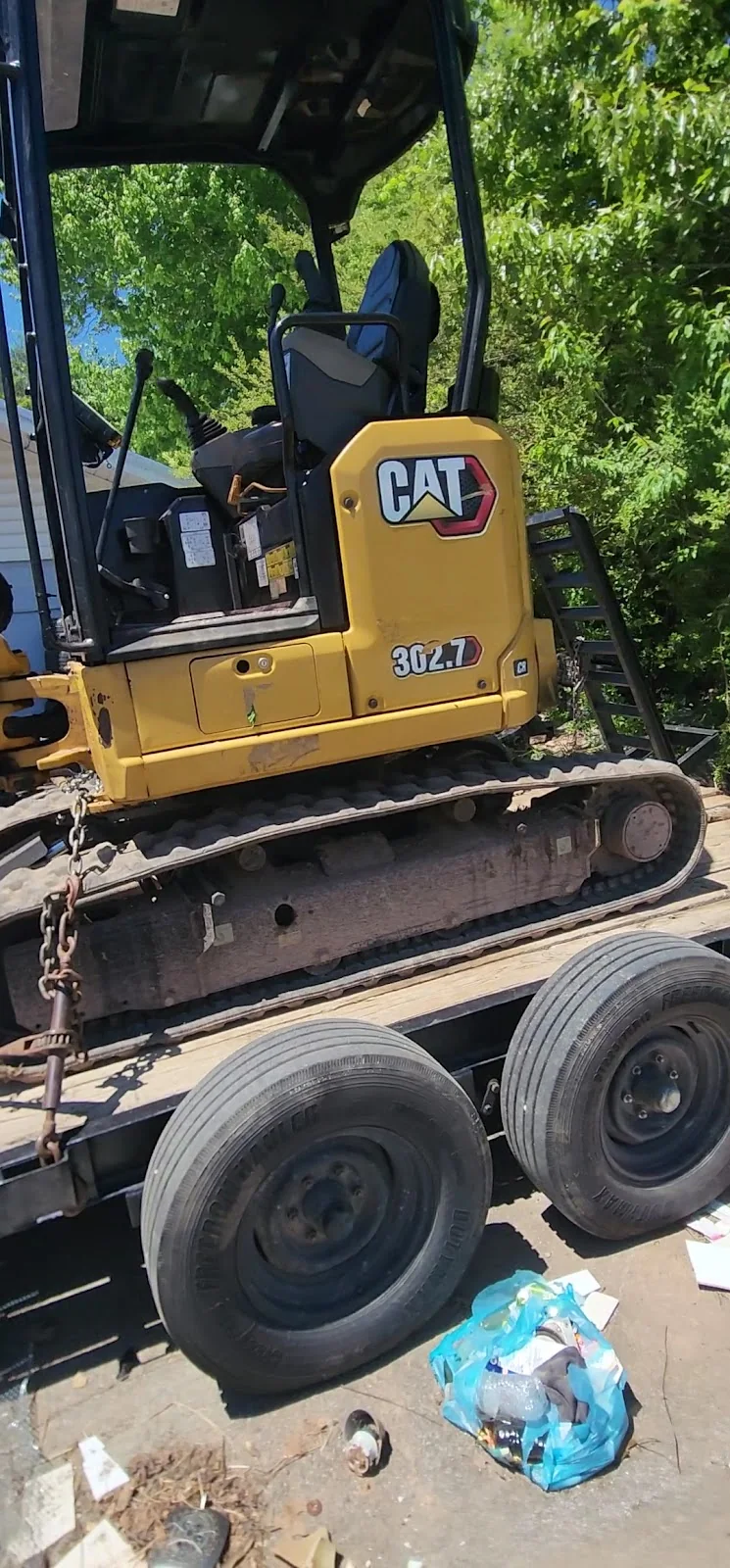
Tree canopy is the second half of the same problem. Low branches over a driveway built for 1920s cars can rule out the largest machines, forcing smaller equipment and more trips. Both conditions are visible on a walkthrough, and both belong in the written scope before you sign. Ask specifically where spoils go and how many truckloads the bid assumes.
The village's tree-protection culture is real. Mature oaks and hollies that have stood since the Olmsted-era planning of this community are not just landscaping; they are part of what makes lots here valuable. An excavator who understands root-zone protection and works carefully around designated trees will charge for that care, and should. A cheaper bid that ignores it may cost you a tree that takes decades to replace. Before any machine arrives, walk the lot with the contractor and mark every tree you want protected, then get that tree list into the written scope.
Water management is part of the dig, not an afterthought
Western North Carolina's storm record is not abstract here: 19 federal disaster declarations have touched this county across 1973-2026, and the pattern skews flood and storm. Any excavation that changes how water crosses a slope needs to leave the site draining better than it found it, or the first heavy system will find the new low spot. The NC code enforcement side of that requirement runs through the NC Office of State Fire Marshal for permitted work, and the International Code Council publishes the model provisions local amendments build on.
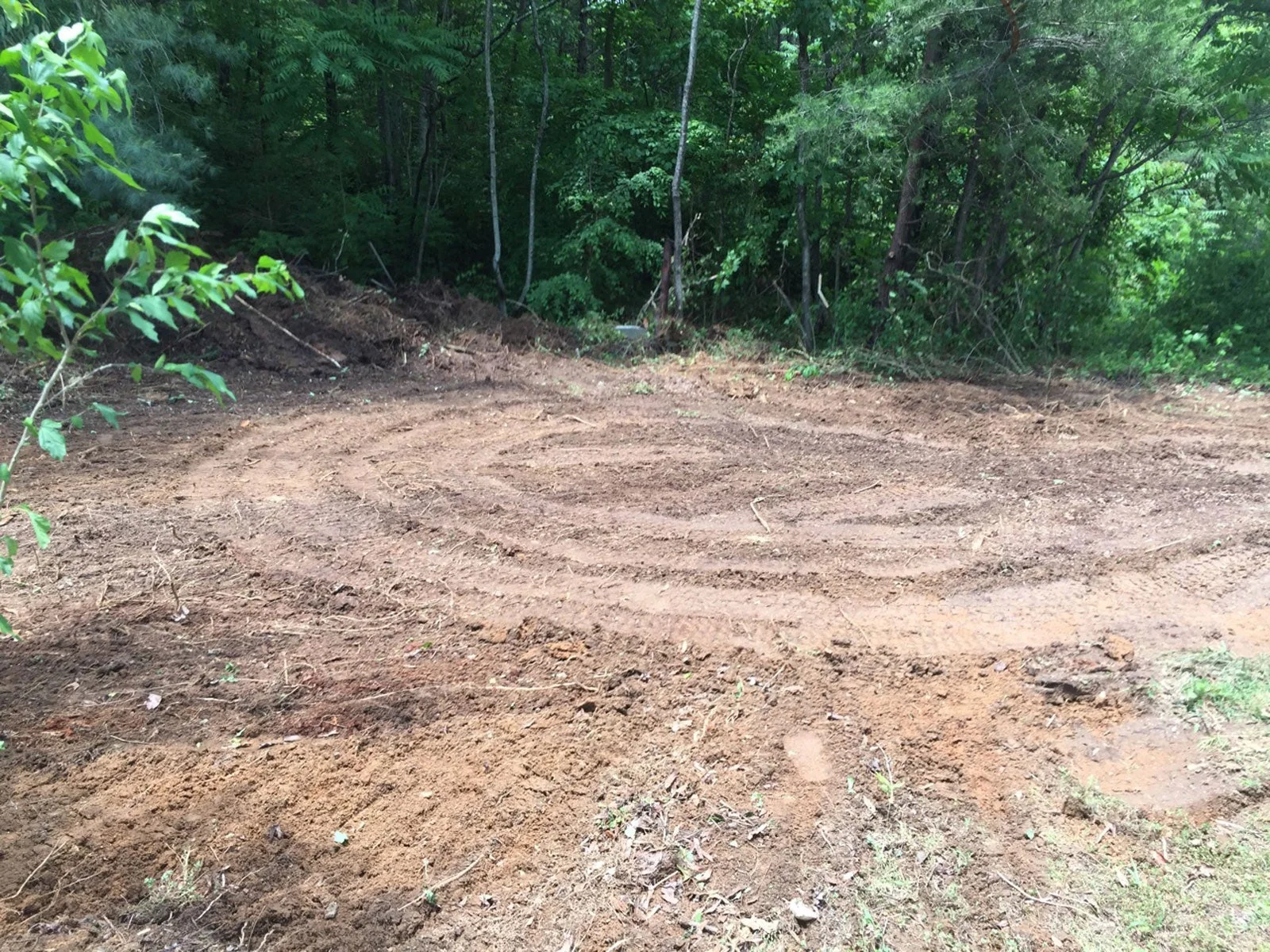
Biltmore Forest sits at the headwaters of several small streams that feed into the French Broad River watershed, and the village's elevation means runoff from your site can affect downhill neighbors quickly. That makes grading and drainage plan review more than a formality here. An excavation that unintentionally redirects stormwater toward a neighboring foundation is a problem you will be dealing with long after the machines leave.
Practically: grading, swales, and where the uphill neighbor's runoff lands should appear as line items, not as a verbal promise. Our Biltmore Forest grading page covers the drainage-first side in more detail, and the Buncombe County grading cost table breaks out those line items by scope. If you are earlier in the process and just weighing whether to hire out the work at all, start with the excavation contractor overview.
Scope-versus-price map for a typical village job
Ranges below are working bands, not quotes, and they sit inside the site-wide residential band of $1,800 to $15,000. Rock, haul distance, and access move them. Use the table to sanity-check any bid and to spot the line items a cheap estimate quietly omitted.
| Scope | Typical range | What moves it |
|---|---|---|
| Single dig: footing, trench or small pad | $1,800–$4,500 | Rock, hand-dig near trees, restoration |
| Utility trenching, short runs | $2,500–$5,500 | Rock, hand-dig near trees, restoration |
| Footing / foundation excavation | $4,500–$9,000 | Spoils haul-off, slope, dewatering |
| Basement or crawl dig-out | $7,000–$13,000 | Rock hammering, shoring, truck count |
| Pool shell excavation | $6,000–$12,000 | Rock, access width, spoil placement |
| Site regrade / drainage correction | $4,000–$11,000 | Volume moved, swales, retaining needs |
| Driveway cut and prep | $5,000–$15,000 | Length, grade change, undercut soil |
Read the table as a conversation starter, not a bid. The gap between the low and high end of any row is almost always rock or haul. If your contractor can explain which end of the range you are likely on and why, that is a good sign. If they shrug, get another number.