Read the water before you buy dirt in Etowah
Most low yards in Etowah were not built low by accident. Something upstream sends water across them — a driveway crowned the wrong way, a pad poured a few inches above the surrounding grade, a gutter that dumps at the foundation, or a neighbor up the slope on the Henderson County side of the ridge. Leveling the yard without correcting that source is a seasonal job: it looks fixed in July and ponded again by February.
So the first visit here is not a dirt estimate. It is a walk of the driveway, the pad, the downspouts, and the low corner of the lot, with a level and a hose if we need one. Only then does a regrade scope make sense. If the water problem is a driveway or a footer drain, that is a different crew and a different budget, and a straight conversation about it saves you the cost of doing this twice.
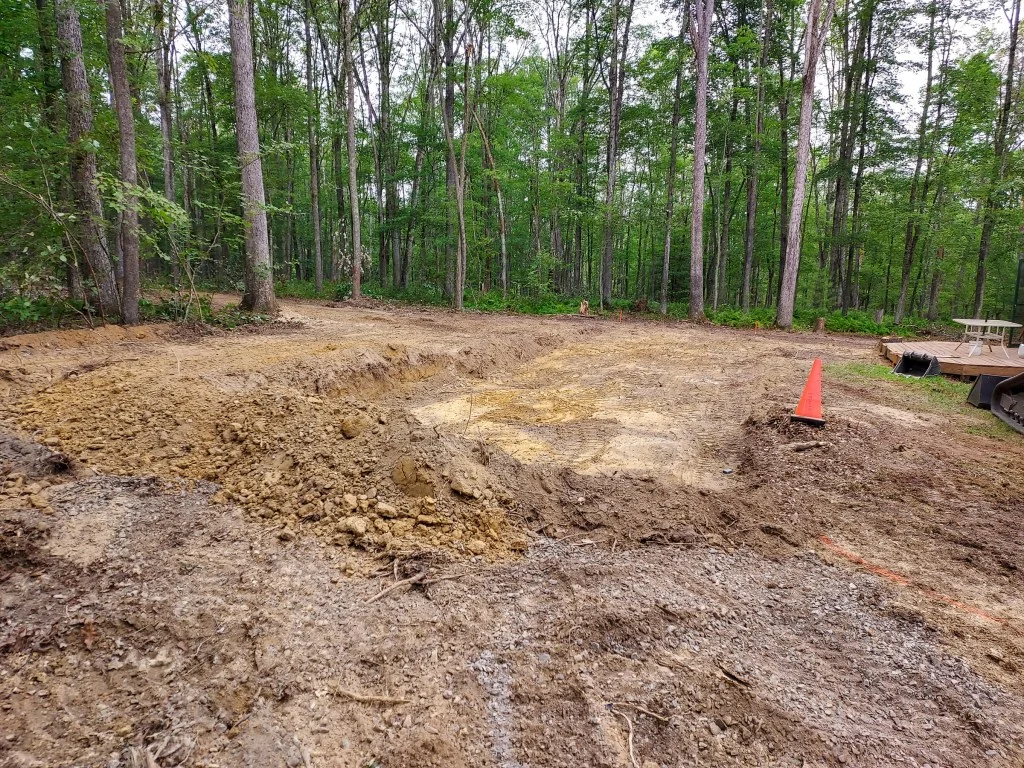
It helps to think about Etowah in terms of its road pattern. The older lots cluster along the river bottoms and the railroad-grade stretches, where the original houses sat close to the road and the yard sloped gently toward a ditch. Newer development pushed up the side slopes, where a pad is cut into a hillside and the uphill side is now a small cliff of exposed clay. Those two situations fail differently. The river-bottom yard ponds because the outlet ditch has silted in and nobody has cleaned it. The hillside yard ponds because the cut bank sheds water straight onto the flat pad and the pad has nowhere to send it. A contractor who has only worked flat subdivisions will misread both.
What Etowah's ground actually does
Etowah sits in Henderson County's rolling Piedmont-to-mountain transition, and the soil tells you quickly whether a yard will hold a grade. Much of the area is clay-heavy with shallow rock, and clay does not drain — it sheds. That is good news for a regrade that carries water away from the house and bad news for any plan that assumes water will soak in where it lands.
Housing here ranges from older farmhouse lots with mature trees and root-bound grade, to newer subdivisions graded tight against the property line, to small acreage tracts where the yard edge is a natural swale. Root-bound clay near an older home often needs the grade lifted and a drainage path cut, not just smoothed. Tight subdivision lots usually need the water moved to a designated low point rather than spread evenly, because there is nowhere else for it to go.
The mountain transition matters for weather as much as soil. Henderson County sits where Gulf moisture meets the Blue Ridge, and the National Weather Service records show this corridor catching heavy short-duration rain events that flatland crews underestimate. A grade that sheds a two-inch rain may not shed a four-inch one, and the difference shows up as a washout at the low corner rather than a gentle puddle. FEMA has logged 16 federal disaster declarations affecting this county over a 1978-2026 record span, and a large share of those trace back to flooding and stormwater — which is exactly the water a regrade is supposed to manage. That history is the honest reason to over-build the outlet slightly rather than undersize it.
Rock is the other local variable. Shallow bedrock in the hillside cuts means a drainage trench sometimes becomes a chisel job, and a bid that assumed easy digging will either come back for more money or cut the run short. Ask up front how the contractor handles rock, because in Etowah it is a when, not an if.
Scope vs. price, in real terms
Price tracks three things: how much dirt moves, how far it has to travel, and whether drainage has to be built into the new grade. The table below reflects typical Henderson County work — see the full Henderson County grading cost breakdown for the line-item detail.
| Scope | Typical range | What drives it |
|---|---|---|
| Spot leveling, small area, no drainage change | $1,800–$2,800 | Square footage, access for equipment, haul-off |
| Full-yard regrade to shed water away from the house | $2,500–$6,000 | Yard size, slope, how much fill is imported |
| Regrade plus swale, French drain, or dry creek | $5,000–$9,500 | Length of drainage run, outlet, rock and pipe |
Anything quoted below that first row is usually a wheelbarrow-and-rake job, which is fine for a flower bed and not for a yard that ponds.
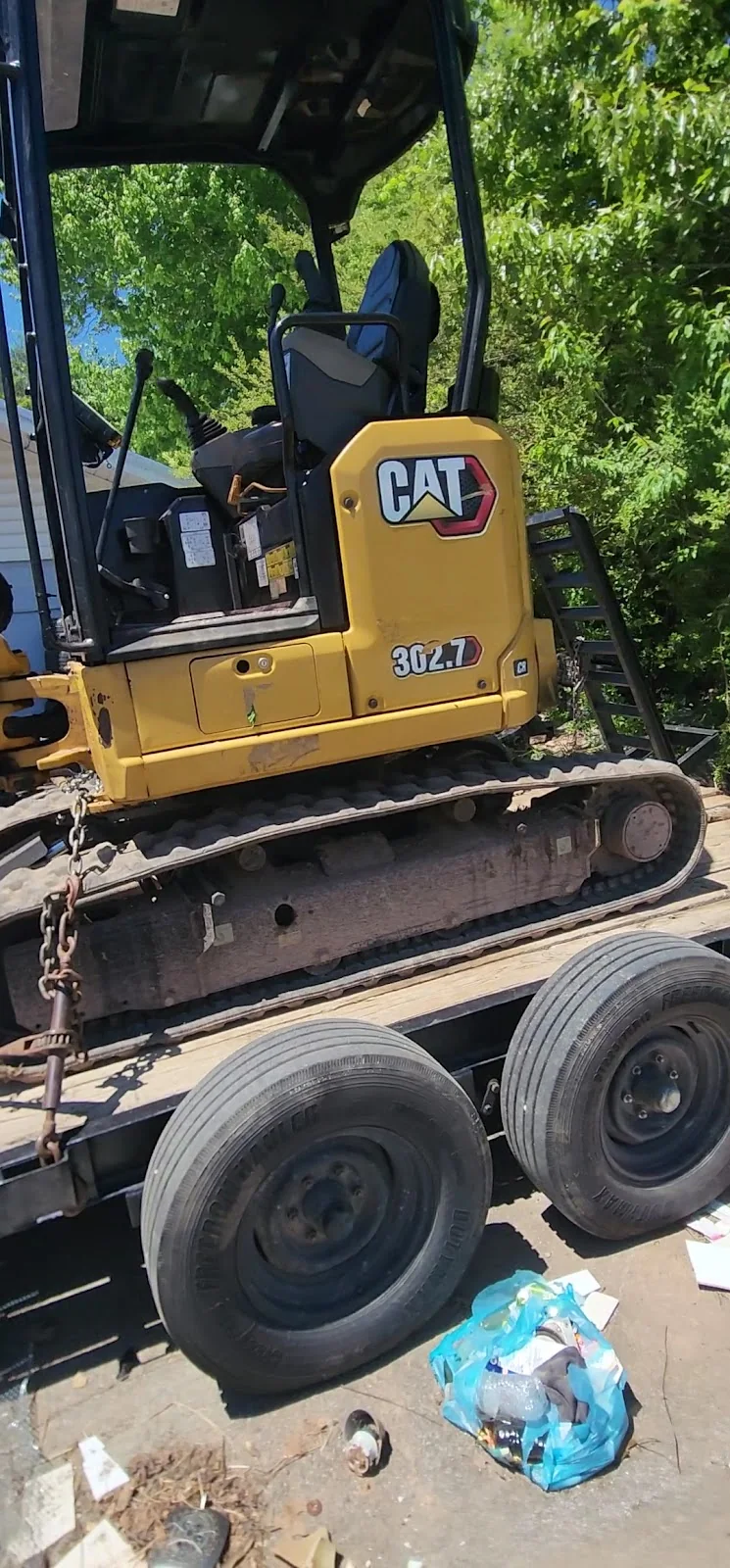
Access is the quiet cost driver on Etowah lots. A machine small enough to fit through a side gate moves less dirt per hour than a full-size skid steer, and if the only way into the backyard is a narrow path between a fence and a mature oak, the labor hours climb even though the yard is small. Haul-off is the other one: fill dirt in this part of Henderson County is not free, and neither is dumping spoiled topsoil. When a bid looks low, it is usually because one of those two costs was left out on purpose.
The permit and licensing question, answered plainly
Yard leveling and regrading on a residential lot generally does not require a building permit in North Carolina, but that changes the moment the work touches a retaining wall over a certain height, a drainage connection to a storm system, or anything that alters a recorded drainage easement. If your lot has an easement running along the low side, moving dirt across it is a real problem and a real cost. Ask before you dig.
Contractor licensing is the other honest threshold. The NC Licensing Board for General Contractors sets the dollar figure at which a grading or excavation job must be run by a licensed general contractor, and a legitimate crew will tell you which side of that line your project falls on. If the scope includes running a drain line or tying into plumbing, the NC State Board of Examiners of Plumbing, Heating and Fire Sprinkler Contractors governs who can legally do that piece. For anything that redirects stormwater toward a protected area or wetland, the EPA and state rules on discharge apply, and a good local contractor will know when to stop and ask.
One more local wrinkle: Etowah and the rest of unincorporated Henderson County fall under county land-use rules rather than a city code, and the county has its own set of slope and stormwater provisions for hillside disturbance. The practical effect is that a large cut on a steep lot can draw scrutiny that a small spot-level would not. If a contractor tells you permits are never needed here, that is a signal they have not worked the steeper lots on the ridge.
Reading a bid before you sign one
A useful Etowah yard leveling bid says four things: how much cut, how much fill, where the fill comes from, and where the water ends up. A bid that says "level yard" and a number tells you nothing about whether the low spot returns next spring. Ask the contractor to walk the water path with you and point to the outlet. If they cannot, the grade is a guess.
Ask also whether the crew handles drainage as part of the regrade or leaves it to someone else. Splitting the work between two contractors is how a yard ends up graded correctly and still wet. Our own yard leveling service guide lays out what a complete scope includes, and the Etowah grading contractor list is where to start if you want to compare bids. A grader who has worked clay and slope in this county will talk about outlet and fall before they talk about cubic yards.
Two questions worth asking on any Etowah estimate. First, how is the new grade protected while the grass comes back? Bare clay on a slope will rill in the first hard rain, and a contractor who plans for straw matting or a temporary cover is thinking past the last day of the job. Second, what happens to the soil that gets removed? On a cut-into-the-hill lot there may be more spoil than the yard can absorb, and disposal is a line item somebody has to own. A bid that quietly leaves it on your driveway is not a bargain.