What actually drives the price on a Marshall lot
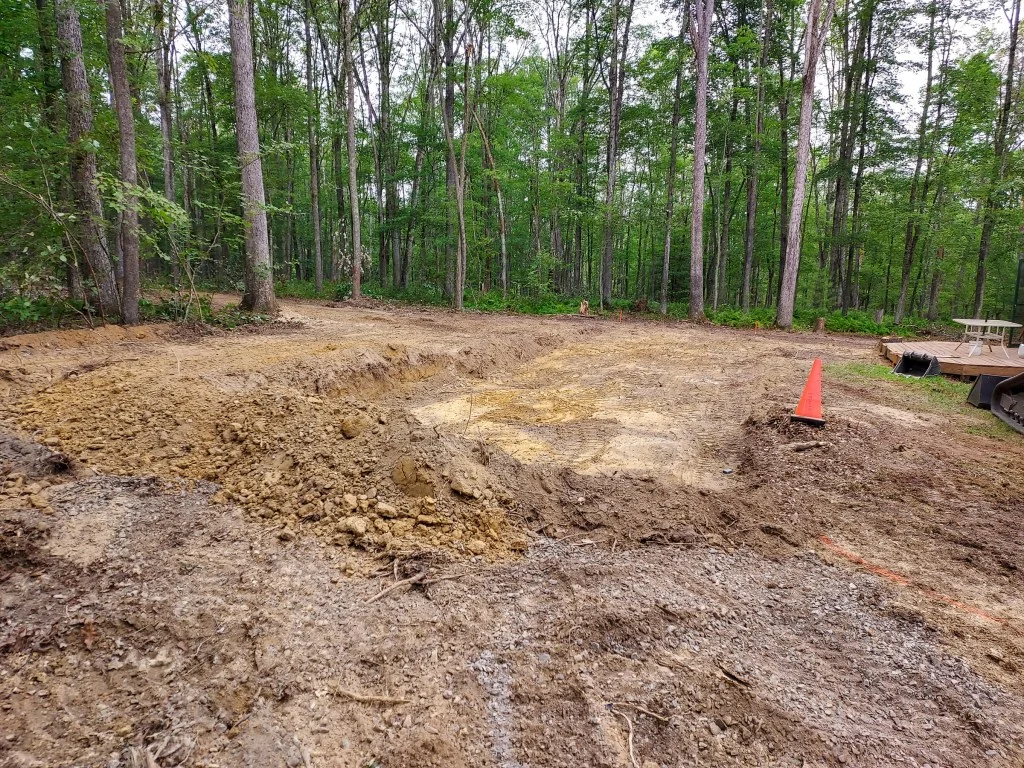
Almost every yard in and around Marshall is on a grade. The town sits in the French Broad River valley, rimmed by slopes that climb fast once you leave the flat strip along Bridge Street and the old depot blocks. That geography is the whole cost story: a backyard that drops six feet from the house to the fence line doesn't need 'leveling' so much as a design decision about how many terraces to build and where the water goes after a storm.
The line items that move the number are consistent. First, cubic yards of cut and fill. Second, access — whether a machine can reach the low corner or everything gets wheeled in by hand. Third, drainage, because a newly level yard changes where water ponds and code and common sense both require it to leave the property. Fourth, hard structures: a block retaining wall at $40–$90 per face foot installed, versus a simple graded slope that costs nothing but real estate. Most quotes that come in high are high because of walls and drainage, not dirt.
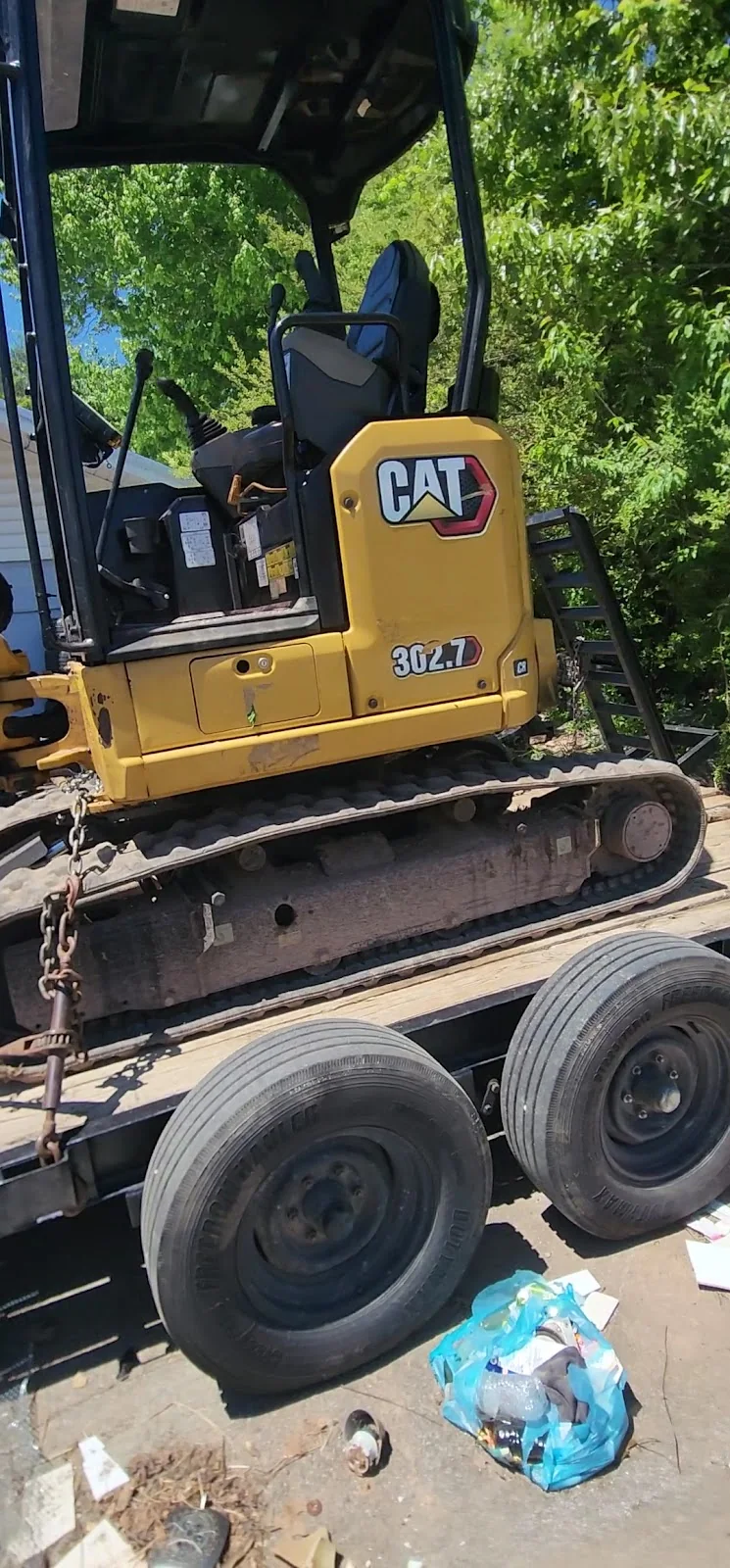
Zoom in on the lots this actually plays out on and the pattern gets sharper. The narrow parcels off Blannahassett Island Road often have a side-yard pinch of eight or nine feet between the house and the property line, which rules out a full-size skid steer and pushes the work toward a compact machine or a wheelbarrow crew. Lots on the ridge side above town frequently already have a scraped, compacted pad from the original build, so the top two inches are rock-hard and the first hour of any regrade is breaking crust, not moving soil. And the older in-town lots near the courthouse block tend to have mature root systems and buried downspout tile that nobody mapped, so a careful operator probes before the bucket goes in. None of those details show up in a national cost calculator, but they all show up in a Marshall quote.
Soil type matters here too. Madison County yards swing between heavy red clay that holds water and drains slowly, and thinner mountain soil with more rock and organic content. Clay yards need more subgrade prep and often want amended topsoil trucked in; rockier yards can eat a machine's time on tooth wear but sometimes yield usable fill on site, which trims the haul-off line. A bidder who walks the yard with a shovel and a probe will price this honestly; one who eyeballs it from the truck often won't.
The scope-to-cost table for Madison County yards
The ranges below reflect typical Marshall-area pricing for the work described. Match your yard to the closest row, then read down for what changes.
| Scope | Typical range | What moves it |
|---|---|---|
| Spot leveling and topsoil (small town lot, hand work) | $1,800–$2,800 | Cubic yards moved, wheelbarrow vs. machine access |
| Full backyard regrade with drainage correction | $2,500–$4,500 | Swale length, downspout extensions, soil haul-off |
| Sloped lot terracing (one or two benches) | $3,500–$6,000 | Wall face feet, machine reach, retaining method |
| Hillside cut with block retaining wall | $5,500–$9,500 | Wall height, engineering letter if over four feet, drainage behind wall |
See the full Madison County grading cost breakdown for line-item detail on hauling, drainage, and wall pricing.
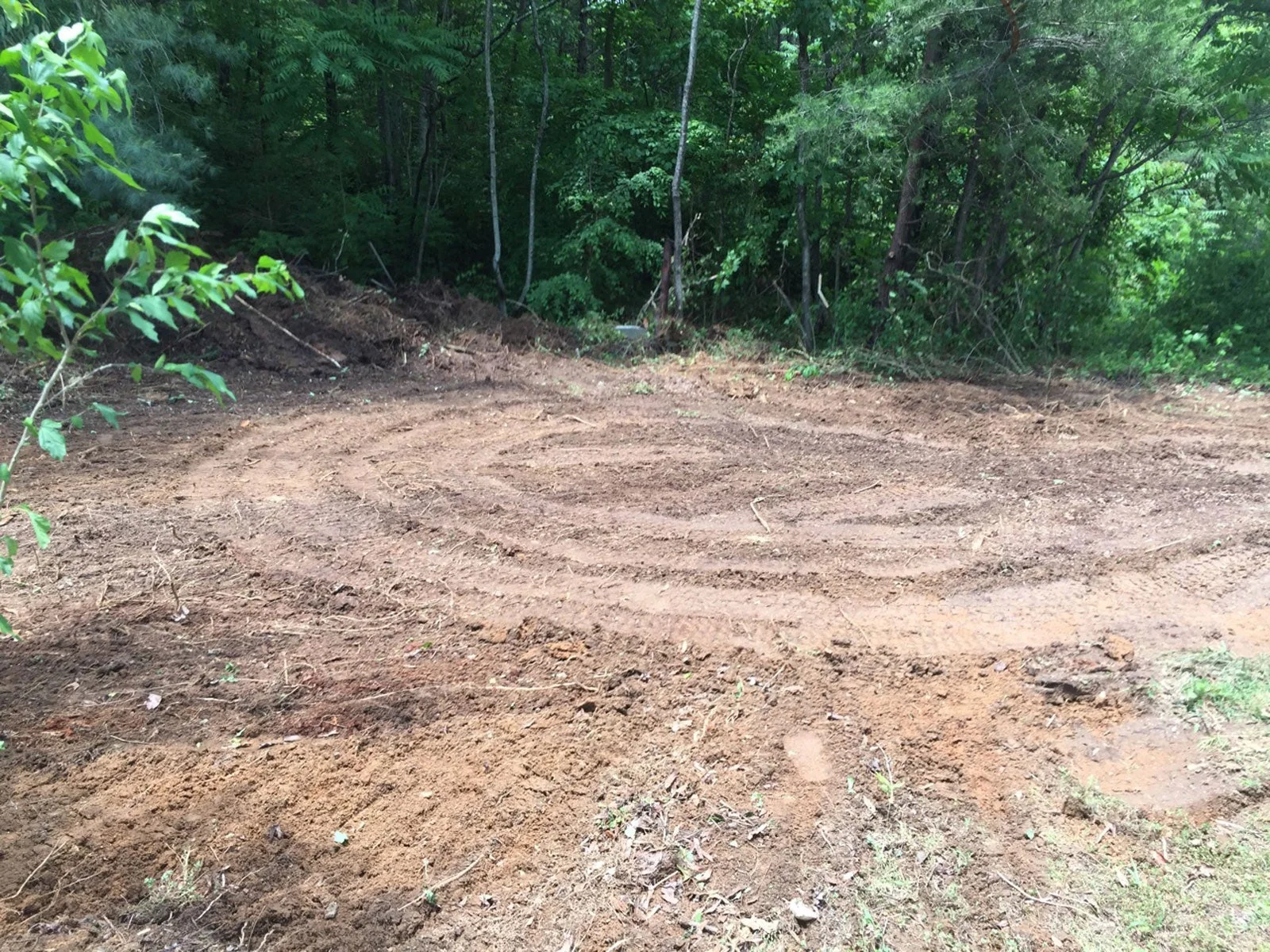
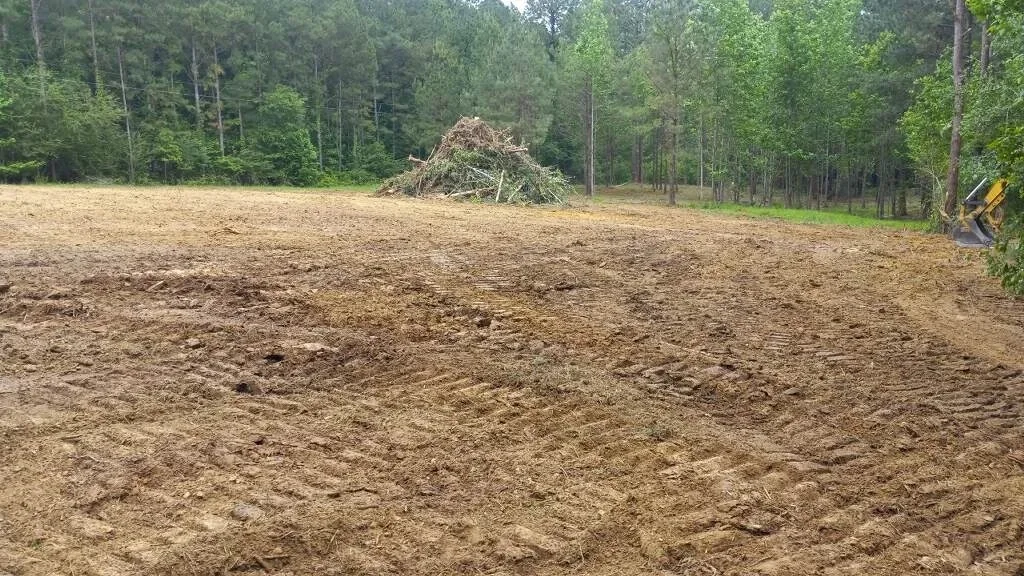
Two real-world shapes of job sit at opposite ends of that table. At the low end, a flat-ish half-acre off the old railroad grade behind the depot blocks might only need a few loads of screened topsoil spread and raked over an uneven patch — a one-day, sometimes two-person job with no wall and no haul-off. At the high end, a lot on the ridge where the backyard drops hard toward a creek branch typically needs a cut bench, a retaining wall to hold the new grade, a French drain behind the wall, and a rock-lined conveyance to get water to a defined discharge point. That's the same $1,800–$9,500 band, just read from the top shelf. Most Marshall jobs land in the middle: a slope that needs one terrace, a drainage fix, and a few truckloads of fill, which is exactly why $2,500–$6,000 describes the typical invoice.
Storm water is the reason most people call
Madison County has seen 21 federal disaster declarations spanning 1978-2026, overwhelmingly flood and storm events tied to the French Broad and its tributaries. That history shows up in yards: a slope that was fine for two decades suddenly gullies after one hard summer, or a low corner that used to drain to the alley now ponds because the neighbor regraded first.
When a yard gets regraded, the drainage plan has to be part of the same scope. The National Weather Service tracks the rainfall events that drive these calls, and the fix is almost always the same: get water off the slope before it reaches the foundation. That means grading to a defined low point, not just 'making it flat.'
The specific failure mode is worth naming because it repeats across Marshall. A downhill neighbor adds a driveway or a building pad and changes where storm flow crosses the property line, so water that used to sheet across a slope now concentrates in one channel and cuts a gully overnight. Or an uphill lot gets cleared and the bare slope sheds faster, overwhelming a swale that was sized for a wooded watershed. Homeowners call after the second or third storm, when the rut is deep enough to twist an ankle and the crawl space has started taking on water. The grading fix is not simply 'level it out' — it's re-establishing a graded path from the high side of the yard to a legal discharge point, often with a shallow vegetated swale, sometimes with a buried pipe and a pop-up emitter, and always with attention to where that discharge lands relative to the neighbor's property.
Cool-season grasses and the region's rainfall pattern matter too. Western North Carolina gets most of its moisture in winter and early spring, so a fall regrade that leaves bare soil exposed through a wet winter can erode before new seed knits. Timing the work and stabilizing with mulch or a cover crop is part of a responsible scope, not an upsell. If your yard is already moving water toward the house, the yard leveling guide walks through how to read the slope before anyone quotes you a number.
Who can legally do the work, and when it matters
Simple regrading and topsoil work doesn't require a general contractor license in North Carolina. But once a job crosses into structural retaining walls, site drainage tied to a permit, or anything the county reviews as a grading permit, the rules change. The NC Licensing Board for General Contractors sets the threshold, and any contractor bidding a job in that range should be able to tell you which side of it you're on.
Walls over four feet in many Madison County situations trigger engineering review, and the drainage behind them is a code matter, not a nicety. Ask for the plan in writing. A contractor who can't produce one is selling dirt moving, not grading.
The environmental side deserves a sentence too, because Madison County yards sit in the French Broad watershed and work near a stream or a mapped floodplain can pull in state and county review. The EPA maintains the stormwater and erosion guidance that underpins most local sediment rules, and any contractor working near a drainageway in the county should know how to keep disturbed soil out of the creek. That's not paperwork for its own sake. Sediment is the single biggest pollutant loading into the French Broad from construction-grade disturbance, and a yard regrade that dumps a winter's worth of clay into a tributary is both a legal risk and a neighbor problem. Ask how spoil is contained and how bare ground gets stabilized, and if the answer is vague, keep calling.
Picking a crew in a small county
Madison County has a limited pool of grading outfits, and word travels. Two questions worth asking before you sign: how many yards in the Marshall area have you regraded in the last year, and who handles the drainage design. The Marshall grading contractor guide covers what a proper site visit includes and the questions that separate a grading crew from a dirt hauler.
Also confirm where spoil goes. Haul-off is a real line item here because there aren't many convenient fill sites close to town, and a quoted price that assumes 'we'll just push it downhill' isn't a price — it's a problem you'll inherit.
Practical vetting in a county this size looks different from a metro market. You probably know someone who used the same excavator operator for a septic line, a driveway culvert, or a barn pad, and that referral is worth more than any online rating. Ask to see a yard the crew finished a year or two ago, and look at how the grade has held: is there a rut where water concentrates, has the wall settled or bowed, is the mulch gone and the seed thin? A finished yard that still drains correctly after two wet winters is the only proof that matters. Also ask about insurance and how the crew protects the house, the fence, and any trees you want kept — a tracked machine on a wet Marshall slope will rut a lawn badly if the operator doesn't plan mats and a travel route, and repairing that damage is not part of a fair grading bid.
Finally, get the scope in writing with the same specificity you'd expect for a roof. How many cubic yards of fill, where it comes from, where spoil goes, swale or pipe dimensions, wall height and face material, seed and straw rates, and a clean-up standard. Bids that describe the job at that level are easier to compare and much easier to hold a crew to, and in a small county where the same names come up again and again, a contractor who documents the scope is usually the one whose phone keeps ringing.