What Fairview ground does to an excavation bid
Fairview is a mountain-edge community southeast of Asheville, and the ground under its lots is rarely uniform. A hillside parcel off a ridge road might show red clay down to eight feet; the next lot over can turn to saprolite and shot rock at three. Add the older cut-and-fill pads scattered through the valley floor, where somebody pushed dirt decades ago and built on it, and you have the three conditions that decide what a foundation dig actually costs here.
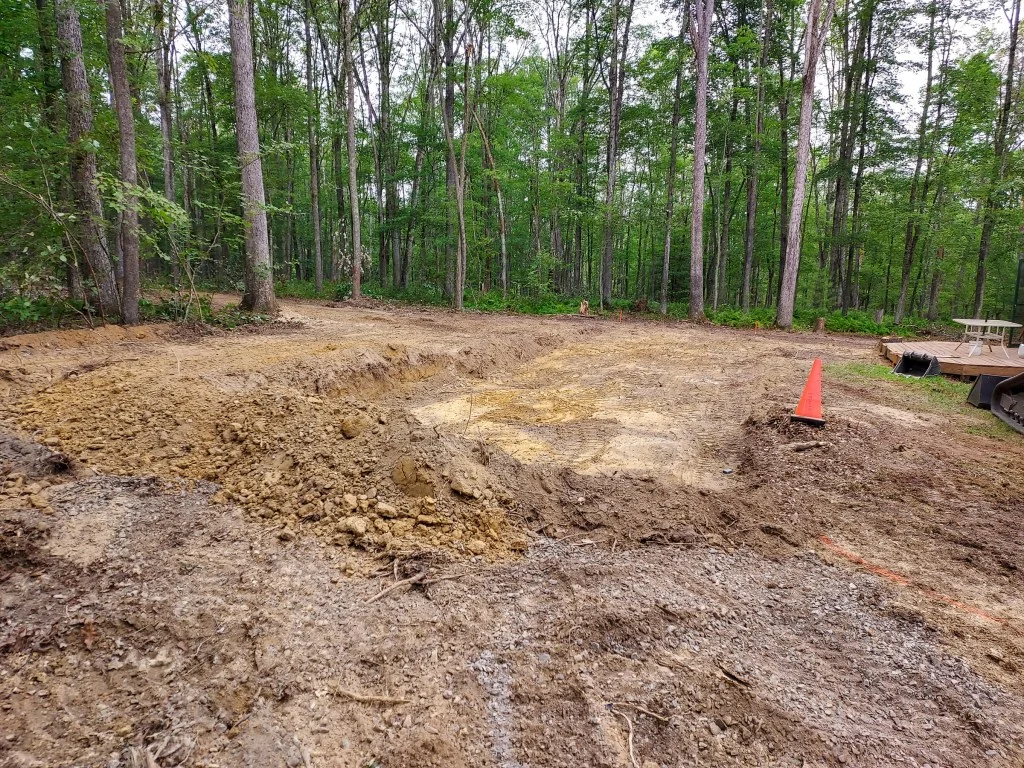
Clay digs clean but has to leave the site or be spread and compacted, and it holds water against freshly poured concrete. Rock stops a bucket, means hammering or a breaker, and slows the whole job. Old fill is the worst of the three: it may not be compacted enough to bear a footing, which moves the job from dig-and-pour to over-excavation and replacement. A quote that treats Fairview like flat farmland is not a quote — it's a guess.
Clay has a second cost that surprises people: volume. Red clay from a basement cut bulks up when it's disturbed, so a hole that measures a few hundred cubic yards in place can turn into more truckloads than the homeowner pictured. Some of that spoil can be spread and compacted on-site as fill or as a building pad for a future shop, but only if there's a place to put it and the grade plan allows it. On steep Fairview parcels, there often isn't, so hauling is the shortcut to the top of the price band.
Saprolite is the local wildcard. It's weathered bedrock, softer than shot rock and harder than clay, and it sits in that awkward middle where a bucket sometimes cuts it and sometimes doesn't. When saprolite runs to the finished subgrade, footing trenches can still be dug with a digging bucket. When it gives way to true rock a foot below the cut, the hammer comes out and the day changes.
Scope-to-price: what each tier of work usually runs
The table below is the working range for excavations in this part of Buncombe County. It narrows or pushes toward the top of the site-wide band depending on rock, haul distance and how tight the machine access is. See the full Buncombe County grading cost breakdown for related line items like clearing and final grade.
| Scope of excavation work | Typical range |
|---|---|
| Footing trenches only — shallow strip footings, easy access, clean soil | $1,200 – $4,500 |
| Crawl-space or stem-wall excavation, clay soil, moderate access | $4,000 – $9,000 |
| Full basement or deep foundation dig, rock present | $9,000 – $18,000 |
| Over-excavation and engineered fill replacement on old fill pads | Priced at the top of the band |
The single biggest line-item swing is rock. A shallow footing job that turns to hammering can move from the low thousands into the deep-dirt tier even though the hole is the same size.
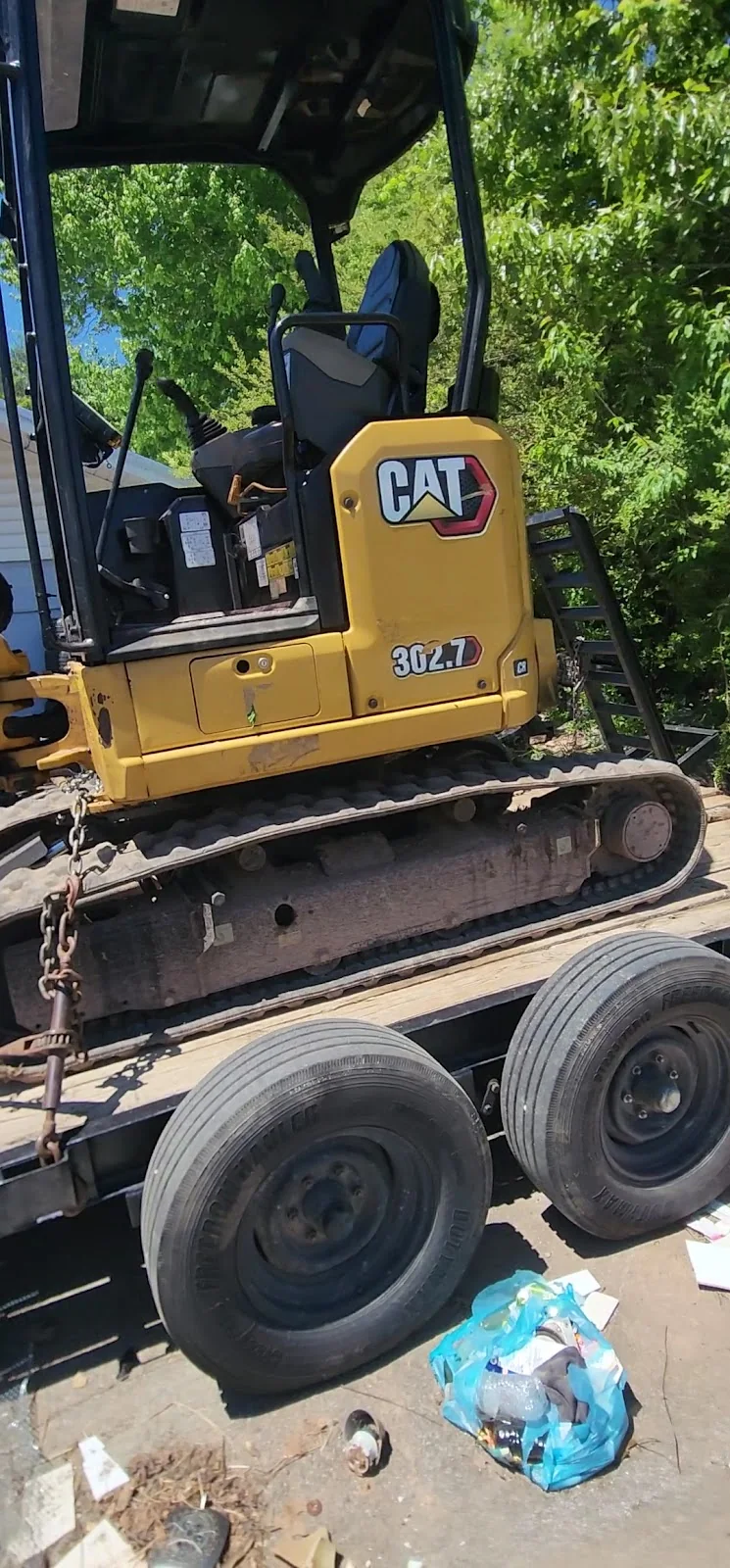
Access is the second swing and it's easy to underestimate on this side of the county. A wide, graveled approach lets a full-size track hoe work efficiently, but lots served by a long gravel drive, a switchback, or a low tree canopy may only admit a compact machine. Smaller iron means more hours for the same hole, and it also means the spoil pile has to be moved twice — once to a staging spot the truck can reach, and once to the truck itself.
Haul distance is the quiet third variable. Spoil that can be spread on-site or dumped a mile away prices differently from spoil that has to cross the county to a permitted disposal site. Any quote worth comparing should say where the dirt is going, not just how much of it there is.
Water, storms and the reasons Fairview digs get redone
Buncombe County's federal disaster record is dominated by storm and flood events — 19 declarations across 1973-2026. Fairview sits uphill of most of that flooding, but the mechanism is the same: water finds the cut. An open excavation at the base of a slope is a collection point, and if the cut sits open through a wet week, the footing subgrade softens and the dig has to go deeper or be replaced. The National Weather Service outlook is worth checking before scheduling a pour, because a one-week delay at the wrong moment costs more than the excavation itself.
Two habits prevent most of that: positive drainage away from the cut from day one, and not leaving trenches open longer than the concrete schedule requires. If the plans call for a basement, the same water question is answered by damp-proofing and drainage, not by hoping the slope holds. Old fill pads are the other reason a dig gets redone — bearing capacity on uncompacted fill is a real design input, and the fix is a deeper cut, not a lighter one.
Fairview's position matters here in a way it doesn't in the flatter parts of the county. Lots that sit below a long, unbroken hillside take runoff from ground that isn't theirs, and during a heavy rain the water arrives fast and cold. A cut that's protected against a gentle sprinkle can still be overtopped by uphill sheet flow. That's why temporary diversion — a swale, a berm, a silt sock placed before the first afternoon thunderstorm rather than after — shows up in good bids and is missing from cheap ones.
Winter adds its own wrinkle. Freeze-thaw cycles on an open subgrade can loosen clay that was firm the day it was cut, so a dig that sits through a cold snap may need re-compaction before footings go in. It's another reason the cheapest schedule isn't always the least expensive one.
Who can legally take the job
North Carolina draws a licensing line based on project value, and foundation excavation routinely crosses it once a job includes the structure above the hole. The NC Licensing Board for General Contractors publishes the current thresholds and the license classes; the practical test is whether your excavation contractor is working under their own license or under a general contractor's. Both arrangements are fine — an unlicensed operator running a structural job alone is not.
Related trades matter too. If the project involves under-slab plumbing or drainage tied into a septic system, the plumber needs to be licensed through the NC State Board of Examiners of Plumbing, Heating and Fire Sprinkler Contractors. Ask for those credentials before the machine shows up, because swapping contractors after a failed inspection is the expensive version of due diligence. The general excavation scope and what a proper site visit covers are laid out in our foundation excavation guide.
Buncombe County's permitting runs through the county rather than a city hall for most Fairview addresses, and footing and foundation inspections are staged — you can't pour until the subgrade and forms have been seen. That sequencing is the excavator's problem to plan for, not yours, but it's worth asking how they handle inspection timing. A crew that builds slack into the schedule for an inspector visit is a crew that has done this before in this county.
Anything touching streams or drainage ways on the property can also bring in state and federal rules, and the EPA is a reasonable starting point for understanding why disturbed ground near water is treated so carefully. On a sloped Fairview lot, keeping sediment out of the ditch at the bottom of the hill is a real regulatory question, not just a courtesy to the neighbor.
Getting a real number from a Fairview contractor
Fairview's crews are mostly small operations working a radius that includes Asheville, Black Mountain and the eastern Buncombe valley. That means schedule and machine access matter as much as price: a track hoe that can reach a cut on a ridge lot may not be able to get to a tight valley parcel, and the cost of bringing in a smaller machine is a real line item, not an upsell.
The site visit should confirm four things in writing — soil conditions and any rock encountered, how spoil is handled (hauled, spread, or stockpiled), the drainage plan for the open cut, and whether the price is for the hole or for the hole plus backfill and grade. The Fairview grading contractors page covers the parallel work of final grade and drainage once the foundation is in. A quote that addresses all four in writing is the one worth comparing against the others.
It also helps to say up front what the hole is for. A garage slab, a crawl-space stem wall, and a full walk-out basement demand different depths, different backfill, and different waterproofing coordination, and an excavator who knows the plan can price the actual hole rather than a generic one. Bring the site plan and the foundation drawing to the walk-through if you have them.
Finally, ask what happens if rock shows up mid-dig. The honest answer describes a rate or a change-order process; the wrong answer is a shrug. Rock isn't a failure of the quote — it's a known risk in this soil, and how a contractor handles that risk tells you more about the working relationship than the number on the front page.