How a leveling job actually runs, start to finish
Most Maggie Valley yards sit on a pitch, not a plane. That single fact drives the whole sequence of a leveling job, because you can't cut the high side without knowing where the water will go once you do. So the crew walks the lot first, marks the high and low points, and finds the drain or ditch that will receive runoff. That walk is the job's spine. On a lot tucked off a switchback road above the valley floor, the walk may take longer than the cut, because the operator needs to see how the driveway, the house pad, and the downhill neighbor's property all interact before a single bucket hits dirt.
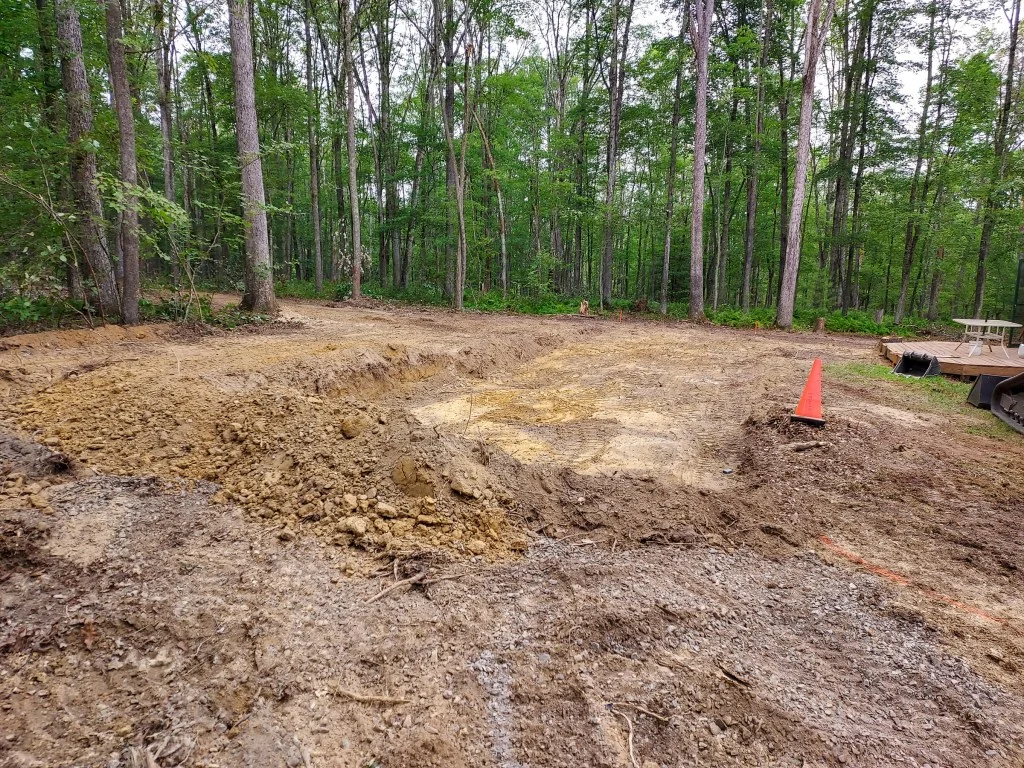
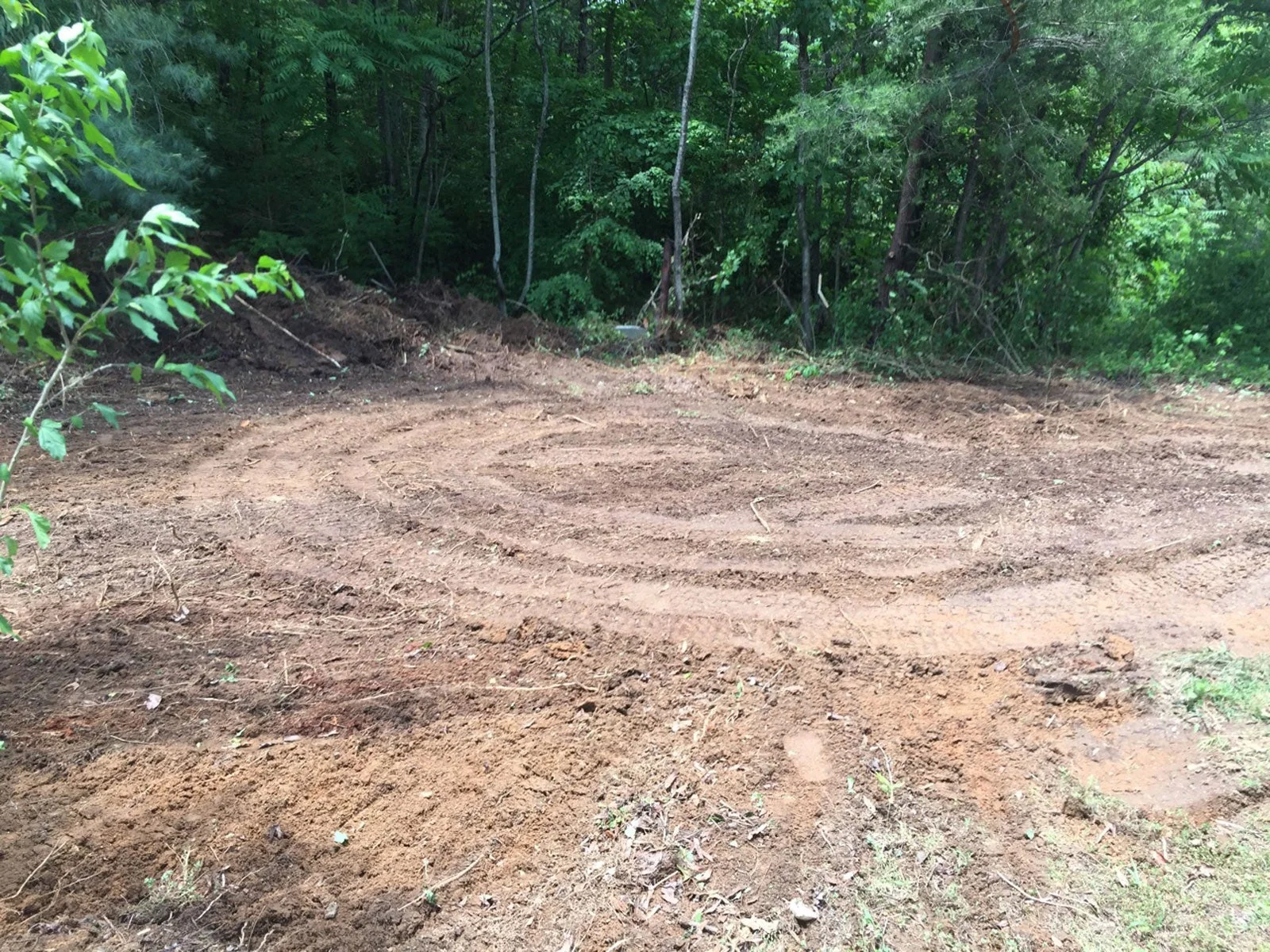
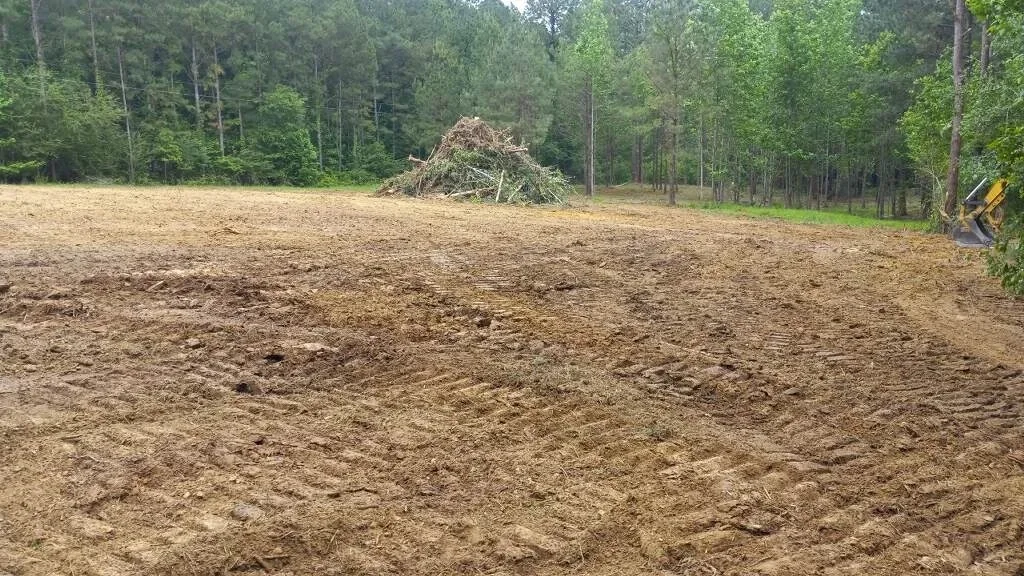
From there the order is consistent: strip and set aside any sod worth saving, cut the high side down in passes, move that material to the low side, compact it in lifts, then shape a fall of roughly two percent away from the house. If the plan calls for grading toward a swale or a dry creek bed, that gets cut before final grade, not after. Most single-yard jobs in the valley run two to four days. Lots with serious access limits, big retaining needs, or a lot of hand work stretch to a week.
What you get at the end is a surface that drains by design instead of by luck. If you want the broader service picture before you book, the yard leveling overview lays out what the work includes.
Reading the site before the machine moves
Haywood County yards are as varied as the terrain between Waynesville and the Maggie Valley floor. A lot in town might be a gentle side yard behind a bungalow, easy to regrade in a day. A lot up on a ridge shoulder might drop twenty feet from the road to the house, with the house pad already cut into the slope. Those two jobs are the same square footage and completely different projects. The first thing a crew does after the walk is decide what stays and what goes: which trees are worth saving, where the spoils pile can sit without blocking the driveway, and whether the cut material is good enough to reuse as fill or needs to be hauled out of the valley.
That decision point is where a lot of budgets move. If the soil is rocky or full of clay, it may not compact well enough to build a stable grade on, and clean fill has to be brought in. If there's no room to stockpile, the cut material goes straight into a truck and out, and the trucking hours show up on the invoice. A crew that asks about your driveway width, your turn radius, and your neighbor's property line before quoting is doing the right homework. Those are the questions that keep a job from stalling on day two.
What drives the number on a mountain lot
Haywood County pricing tracks the site, not the square footage. Two yards the same size can land at opposite ends of the band because one is a gentle side yard in town and the other drops twenty feet off the shoulder of a ridge with no room to turn a machine. Here's the working table:
| Scope | Typical range |
|---|---|
| Small flat lot touch-up, hand work and sod | $1,800–$2,800 |
| Single residential yard regrade with machine access | $2,500–$6,000 |
| Steep lot with cut, fill, and drainage correction | $5,500–$9,500 |
| Retaining wall or swale added to a regrade | Priced inside the scope above, up to the top of the band |
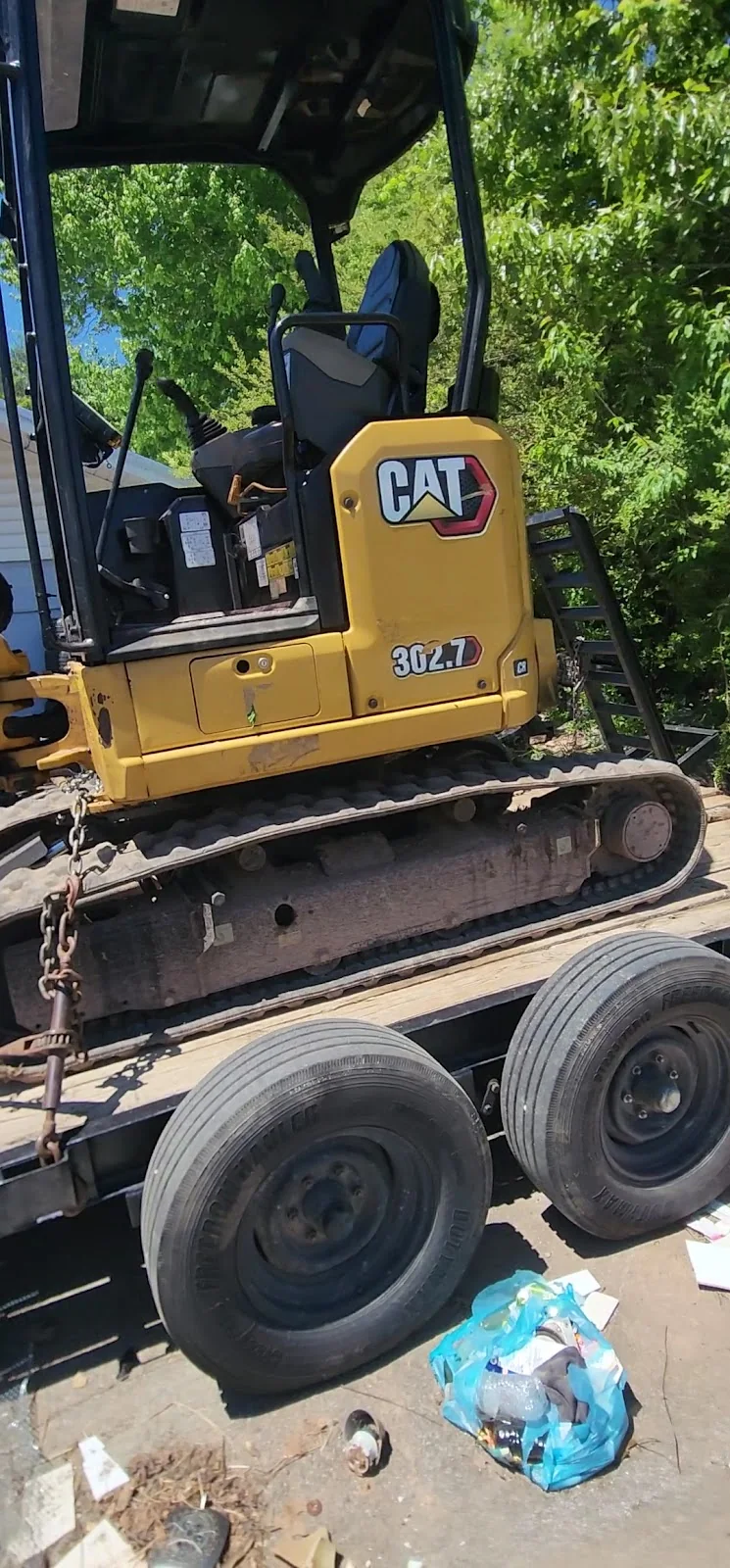
Access and haul-off are the two silent cost movers. If a machine can't reach the yard, everything is wheelbarrow and shovel, and the hours climb. If the cut material can't stay on site, you're paying to truck it out of the valley. The full Haywood County grading cost breakdown has the line items behind these numbers.
Two other local factors show up over and over. First, rock. The southern mountains are full of it, and a cut that looks like an afternoon's work can turn into hours of breaking and hauling if the bucket hits a shelf. Second, springs. A wet spot on a slope often means groundwater is moving under the surface, and no amount of surface grading will fix that unless the water is intercepted and routed. Both get discovered mid-job, and both are reasons to leave a little room in the budget rather than pricing to the penny.
Water is half the job here
Federal records show 19 declared disaster events touching this county across 1973-2026, and the pattern is overwhelmingly storm and flood. In a valley town ringed by steep watershed, that history isn't abstract. Every hard rain brings water off the slopes above town, and a yard that was graded flat years ago becomes a pond at the foundation, a soggy side yard that never dries, or a driveway that washes out.
That's why a leveling job that ignores drainage is money spent twice. The National Weather Service outlook for the southern mountains, available at weather.gov, is a reminder that this is a wet place that occasionally gets very wet. The right sequence is always grade first, then route the water, then finish the surface. The EPA has plain-language guidance on controlling runoff at home if you want to understand where your water is going before anyone cuts your yard.
A practical note for Maggie Valley lots: the water that causes trouble often starts uphill of your property line. If a neighbor's driveway or a forested slope above you sheds onto your yard, grading your own surface without addressing that inflow just moves the puddle around. Sometimes the fix is a swale cut along the uphill edge to intercept sheet flow before it reaches the house pad. Sometimes it's a French drain or a dry creek bed that carries water to a safe discharge point. The grade and the drainage plan have to be designed together, which is why the first day on site is often more measuring and marking than dirt moving.
Permits, contractors, and what to check
A simple regrade that doesn't change drainage patterns or add a wall usually doesn't cross the permit threshold. Add a retaining wall over a certain height, or alter where stormwater leaves your property, and the rules change. The NC Licensing Board for General Contractors sets the job-value threshold where a licensed general contractor is required, and it's worth knowing before you sign anything.
On site, three questions separate a real grading crew from a hauling outfit. Ask where the water goes when they're done. Ask how they'll compact the fill. Ask what they do if they hit rock or a spring while cutting — both happen around Maggie Valley, and both change the schedule and the price. A crew that can answer those without pausing is the one you want. You can compare local options through the Maggie Valley grading contractors page.
One more local reality: because so many lots here are sloped and tightly packed, the crew's ability to work without damaging a neighbor's yard, driveway, or retaining wall matters. Ask how they'll protect adjacent property and where the machine will enter and exit. A good crew will have a plan for that before the first pass, not after the first complaint.