Read the crossing you already own before you buy a new one
Montreat is a small incorporated town tucked against the Blue Ridge just east of Black Mountain, and its roads sit in the steep, tight valleys of Buncombe County. Driveways here climb, switchback, and cross creek runs and swales that carry real storm flow off the surrounding ridges. When a driveway washes out, the first instinct is to order a bigger pipe. That is usually the wrong first move.
What actually fails on Montreat crossings: a pipe undersized for the watershed above it, an inlet buried under leaf litter and gravel, an outlet that discharges straight into a downhill neighbor's yard, or no headwall at all so the pipe ends float in loose soil. Reading the existing crossing — pipe diameter, slope, inlet condition, where the water actually goes when it leaves the pipe — tells you whether you need a replacement, a re-set, or just a cleaned and armored inlet. Skipping that step is how homeowners pay twice.
Walk your own crossing after the next hard rain and watch where the water goes. In Montreat, the giveaway is often a plume of soil fanning out below the pipe outlet or a fresh gravel bar on the driveway above the inlet. That pattern says the pipe is passing water but the outlet is eroding, which is a cheap fix compared to a new crossing. If instead you find the inlet buried to the crown under pine needles and road grit, the pipe may be perfectly sized and simply blinded. The most common Montreat failure I see is not the pipe at all — it is the inlet never being cleaned after leaf drop, and the water finding a path around the pipe instead of through it.
Look too at what the road above you is doing. Montreat's town streets and the private drives feeding off them shed water onto downhill property. If the road department armored a ditch or changed a shoulder uphill of your crossing, the flow reaching your pipe changed too, and no pipe replacement will fix a problem that starts above your property line. Note where the water enters your land before you call anyone.
What drives the price on a mountain crossing
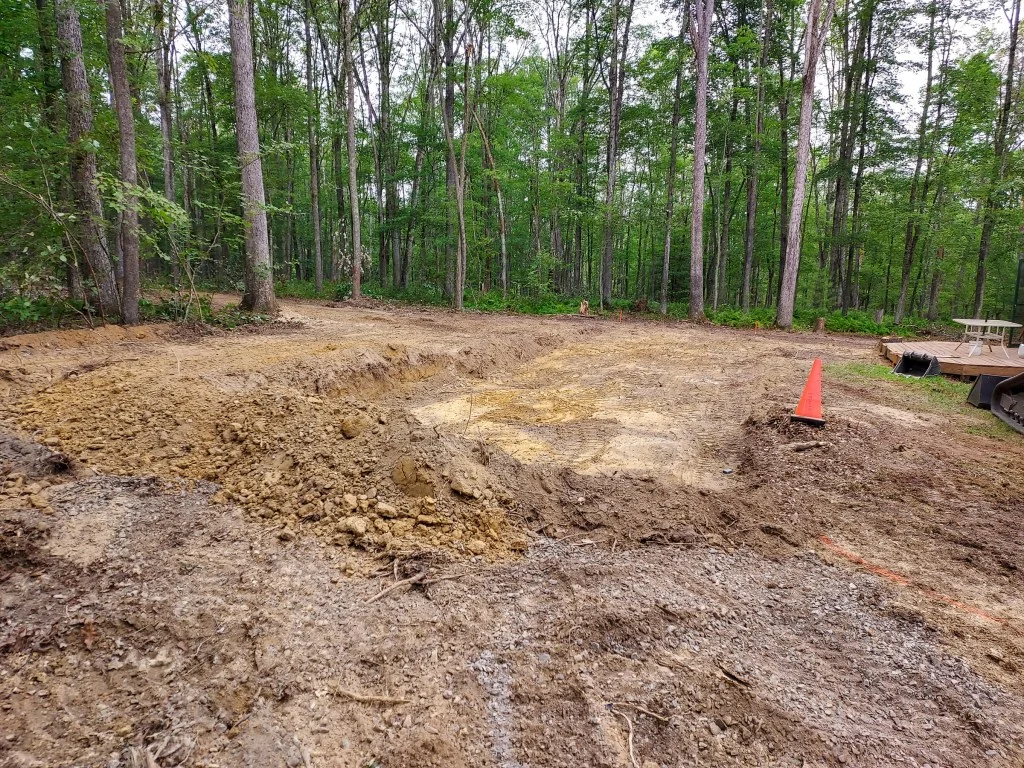
Three variables set the number: pipe size and material, trench length and depth, and how much rock the excavator hits. Montreat's ground is shallow-soil over bedrock in a lot of places, which means trenching can turn into rock-breaking quickly. That is the line item flatland quotes never include, and it is why any bid that does not walk the site first should be treated as a guess rather than a price. Our Buncombe County grading cost breakdown shows how those line items stack up county-wide.
Pipe material matters more here than most homeowners expect. Corrugated HDPE is cheaper and easier to handle on a tight mountain drive, but it deforms under heavy fill and is unforgiving if bedding is sloppy. Smooth-wall HDPE and concrete pipe cost more up front and hold shape better under the deep cover some Montreat crossings need. On a steep drive, the pipe's slope has to stay consistent from inlet to outlet or the low spot becomes a sediment trap that plugs within a season.
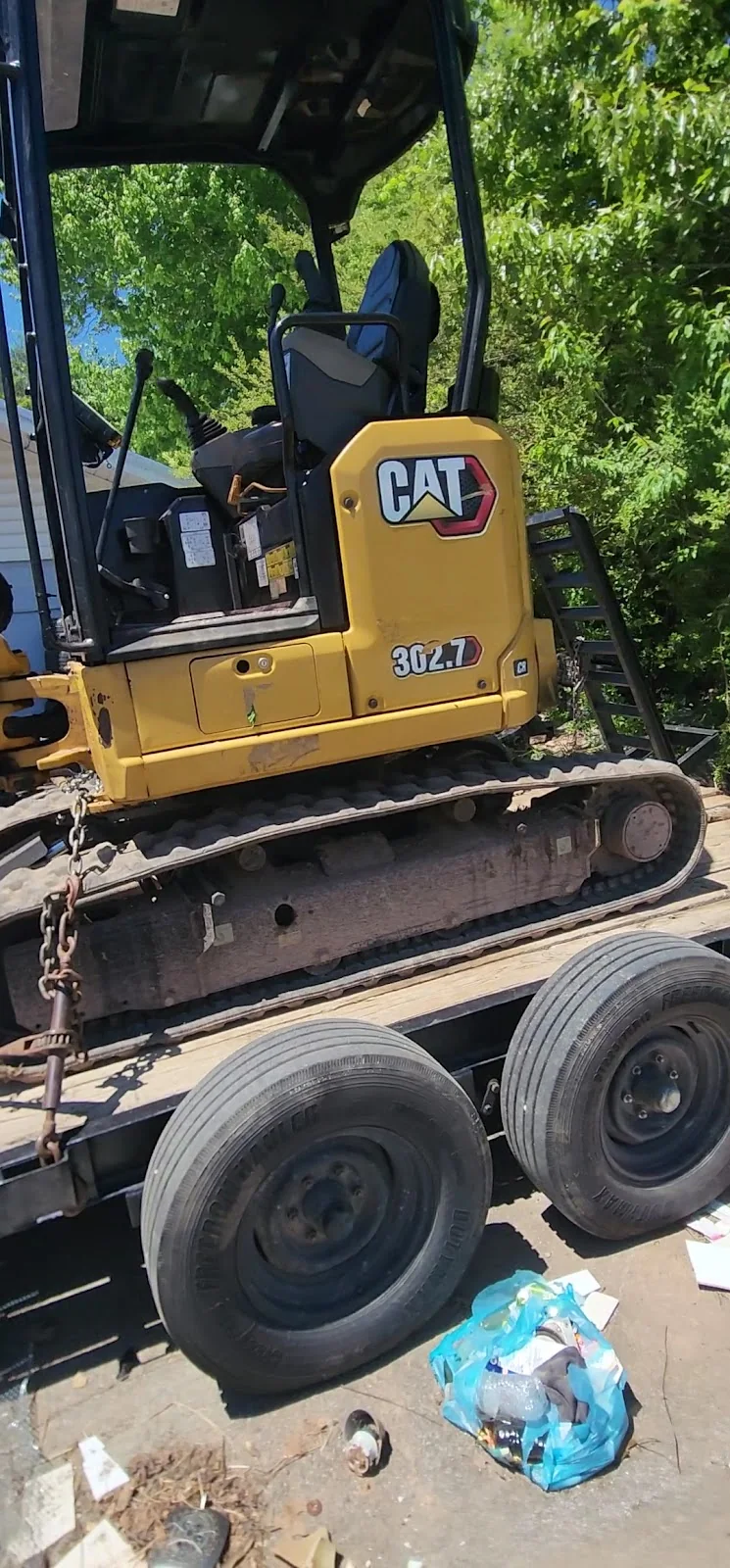
Access is a real cost driver on these ridges. If the excavator cannot reach the crossing without tracking across finished driveway or a neighbor's property, you are paying for matting, hand work, or a smaller machine doing what a bigger one should. Headwalls and riprap at the outlet add material and labor but are usually the difference between a crossing that lasts and one that undercuts. Bedrock close to the surface can also force a shallower pipe with less cover, which changes what you can drive over it.
Storm water, code, and why sizing is not a guess
This corner of Buncombe County has a long record of federally declared storm and flood events — 19 declarations spanning 1973-2026 — and most of them pushed water at driveways and crossings that were sized for a drier assumption. Montreat's narrow valley floors concentrate that runoff. Undersized pipe is the single most common cause of repeat washouts, and it is also the cheapest thing to get right the first time.
What does sizing actually look like? It starts with the drainage area above the crossing — the acreage of slope, roof, and pavement that sheds toward your driveway — and the storm intensity for this part of the mountains. The National Weather Service's precipitation data is where that intensity comes from. Then the pipe is chosen so it passes the design storm without the inlet submerging the driveway. A rule of thumb like "one inch per acre" is not a sizing method, and it is how dozens of Montreat crossings end up undersized for a valley that funnels water off both ridgelines.
Work that disturbs stream banks or floodplain can trigger state and federal permitting, and the U.S. Environmental Protection Agency's wetlands and waterways guidance is the place to start if your crossing sits in or near a mapped stream. On the construction side, North Carolina's residential code treats site drainage and foundation water management as real requirements, not suggestions — the NC Office of State Fire Marshal's code enforcement division is the reference for what inspectors look for. If your culvert job is part of a larger regrade or driveway rebuild, our culvert and driveway pipe guide walks through pipe material and sizing choices.
Do not overlook the outlet. A pipe that discharges onto bare soil at the bottom of a Montreat slope will cut a gully faster than the inlet ever plugs. Armoring the outlet with riprap, a splash pad, or a level spreader is what converts the pipe's energy into something the ground below can absorb. If the outlet spills toward a neighbor's foundation or a septic drainfield, that is a design problem, not a maintenance problem, and it is the kind of thing the code reference above exists to prevent.
Choosing a crew that reads ground, not just pipe
Not every excavation outfit that works flatland subdivisions is set up for Montreat's grades and rock. Ask three things before you sign anything: whether the crew has worked driveways on comparable slope, how they determine pipe size (a proper answer involves the drainage area above the crossing, not a rule of thumb), and whether the bid carries an explicit rock-excavation allowance or hides it as a change order waiting to happen.
Two more questions separate the outfits that do this work well. First, ask what they plan to do with the spoil — on a tight Montreat lot there may be nowhere to push dirt, and hauling it off is a cost that needs to be in the bid. Second, ask how they will protect the pipe bedding and cover. A pipe laid on rock without bedding fails; a pipe buried under too little cover crushes under a loaded truck. Both are avoidable and both are visible only during the dig, which is why an honest contractor will tell you what they will do rather than let you find out later.
When the job crosses the threshold where North Carolina requires a licensed general contractor, the NC Licensing Board for General Contractors is where to verify standing. Our Montreat grading contractor page covers the rest of what to check on a site like this, and if the fix is really a broader grading and drainage problem, that is the page to start from.