Access, haul distance, and the dirt nobody sees
Drive most of Henderson County and the problem with grading is obvious before anyone quotes a number: the lots worth building on are often the ones hardest to reach. From the long private driveways climbing out of Edneyville and Bat Cave to the cut-in lots above Flat Rock where a track hoe can barely turn around, the machines that do the work are expensive to move and slow to operate when they are hemmed in by trees, power lines, and a 20-percent grade. Around Dana and up the Green River corridor, switchbacked gravel drives add another layer — a loaded dump truck has to back down some of those runs, which turns a ten-minute cycle into a twenty-minute cycle and shows up in the hourly line.
Then there is the dirt. Henderson County is not sitting on an endless supply of cheap fill. When a job needs gravel, it typically comes from off-site aggregate pits, and the further that haul, the more it shows up in the price. A flat lot two miles from a quarry bids differently than a steep lot 25 minutes from one, even if the square footage is identical. That is the honest reason two neighbors can get quotes that seem far apart — the work is not the same work. On a lot near Etowah with easy truck turnaround, a tandem axle can cycle fast; on a tight wooded parcel off Howard Gap Road, the same yard of stone takes twice the road time.
| Scope of work | Typical Henderson range | What drives it |
|---|---|---|
| Finish grading on a flat lot | $2,100 – $3,800 | square footage, topsoil depth, ease of truck access |
| Rough site grading, easy access | $3,500 – $6,500 | cut volume, spoil removal, compaction specs |
| Steep-lot cut and fill | $6,000 – $14,000 | grade percentage, retaining needs, machine size |
| Gravel driveway install, long run | $4,000 – $12,000+ | length, base depth, haul distance from source |
| Full site prep, new build, difficult access | $12,000 – $30,000+ | engineering, drainage tie-in, off-site spoil haul |
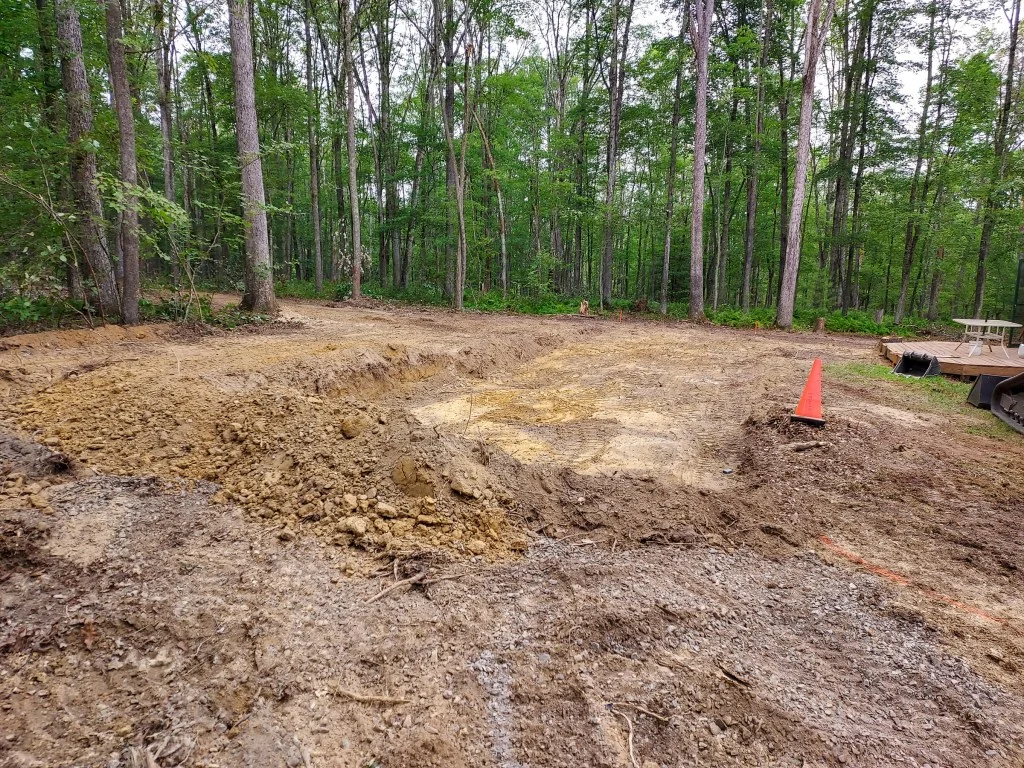
Those are working ranges, not quotes. A grading number that comes before anyone has walked the grade and measured the haul is a number the contractor will change later. It also helps to know what kind of dirt you are sitting on before the first bucket drops. Much of this county is clay-heavy residual soil over weathered rock, and clay does not compact the same way clean structural fill does. If a cut exposes soft clay, that material often cannot stay under a foundation or driveway base — it has to come out and be replaced, which adds a load-out and a stone import the original bid never saw.
The other quiet cost on mountain lots is rock. Blasting or hoe-ram work is not something a contractor can price from the road; you learn what is down there when you start cutting. A bid that assumes all dirt and no rock is optimistic, and if the contractor will not talk about how rock is handled, that is a question to ask before signing. Ask whether the quote treats rock excavation as included, hourly, or as a change order — those three answers produce very different final invoices on a Henderson County hillside.
What the terrain does to a grading estimate
Henderson County sits in the same Blue Ridge storm corridor that dumps on Buncombe, and the federal record backs it up: 16 federally declared disaster events touch this county (1978-2026), most of them storm and flood family. For grading work that means two things. First, uphill runoff on a cut-in lot is not hypothetical; it is a design requirement. A site graded without thinking about where the storm water goes will hold water against a foundation or wash out a driveway within a season or two. Second, the soils that were stable when a lot was raw can shift after a saturated spring, which is why good grading in this county includes a drainage plan, not just a flat pad. The National Weather Service's flood and hydrology resources are worth a look if you want to understand why the French Broad and its tributaries behave the way they do here (1978-2026 span of storm history, and the pattern has not changed).
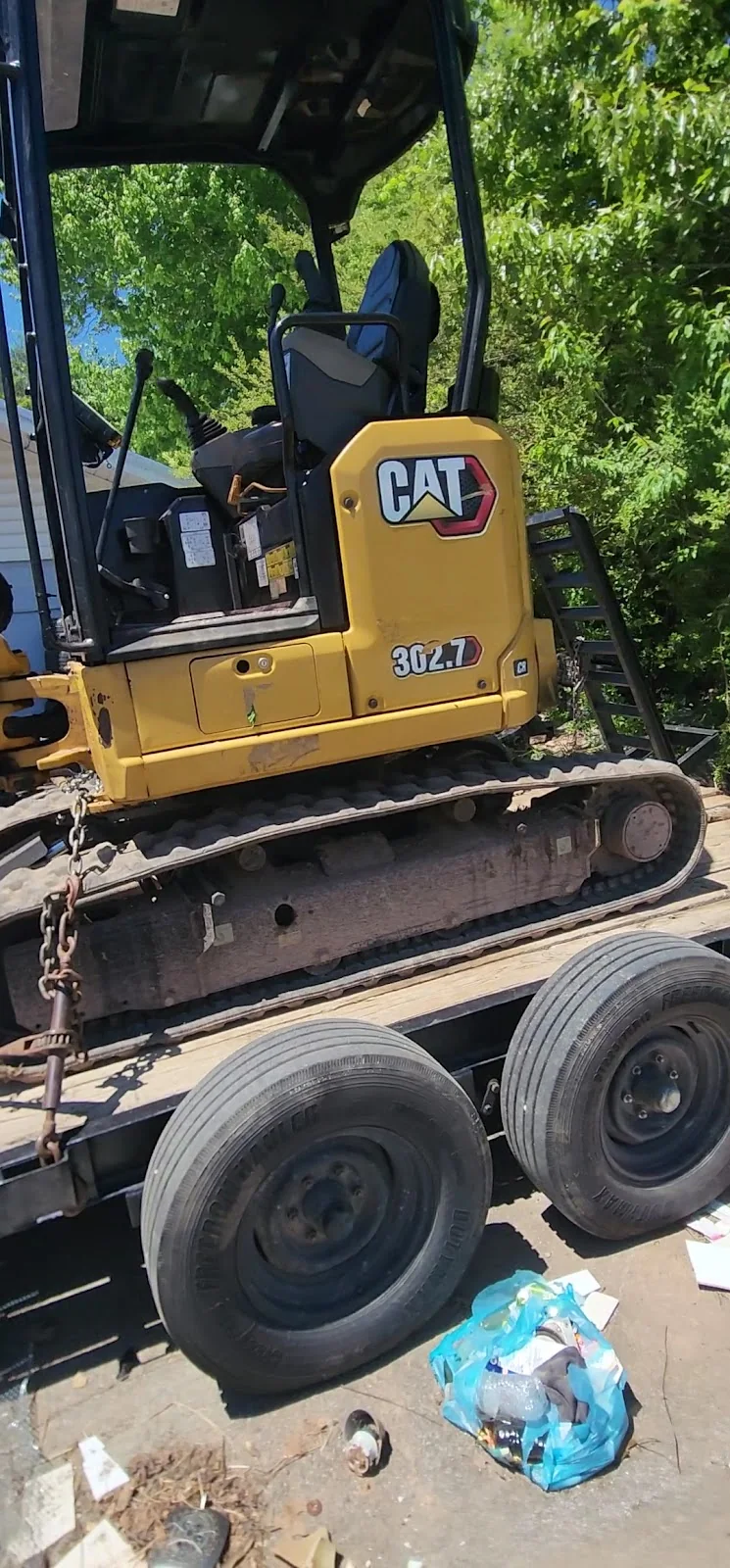
Steep lots also change the machine math. A large excavator may be cheaper per hour to run than a compact machine, but if it cannot fit up the driveway, it does not matter. Contractors here routinely price small-machine work at a premium because small machines are the only equipment that gets to the site. That premium is real, and it is not padding. If you are comparing bids and one is dramatically lower, ask what size machine the low bidder plans to run and whether they have actually seen the access.
The elevation changes across the county matter too, and they are not uniform. A lot in the broad, relatively gentle valley floor around Hendersonville behaves nothing like a parcel perched on the shoulder of Bearwallow Mountain or a graded bench above Saluda. On the valley floor you can often grade with a single dozer and a skid steer. On the mountain side, you are working in stages — cut the upper bench, pull the material down, build the lower pad — because there is no flat place to park a machine and no place to stockpile spoil while you work. That staged approach is slower by design, and slow machine time is what you are paying for.
Drainage in this county also has to account for the fact that you are often grading the top of a watershed. Water that leaves your cut-in lot goes downhill to a neighbor, a creek, or a road, and how it gets there is your responsibility. Culverts sized too small, swales that dump onto a property line, and driveways crowned the wrong way are the common failure points, and they tend to fail during the same kind of rain events that show up in the FEMA record. A grading plan that includes where the water exits the site is worth more than a plan that only gets the pad flat.
Permits, erosion control, and what triggers review
Grading in North Carolina is not a free-for-all. Disturbance above the state's threshold generally triggers an erosion and sedimentation plan, and in Henderson County that review runs alongside local land-disturbance permitting. The NC Building Code Council / NCDOI sets the statewide framework inspectors work from, and grading tied to a new structure usually has to satisfy both the site plan and the building permit conditions. Our NC grading permit rules guide walks through when a project crosses into review. It is also worth reading the International Code Council's framing of site and grading provisions, since much of the state code traces back to that base (ICC).
For larger site work, contractors fall under the state's licensing threshold rules (NC Licensing Board for General Contractors) — the dollar threshold at which a general contracting license is required. If a bidder on a big site-prep job waves off permits and erosion plans as paperwork, that is a signal about how the rest of the job will go. Erosion control failures are one of the more common ways a grading project gets shut down mid-stream here, and the fix is always more expensive than doing it right the first time. A silt fence that was supposed to be installed before the first cut is a lot cheaper than a stop-work order and a re-grade.
If the project also touches plumbing, septic, or a well — which most new home sites in the rural parts of the county do — there can be a separate licensing layer, since the state's plumbing and heating board sets its own contractor rules (NC State Board of Examiners of Plumbing, Heating and Fire Sprinkler Contractors). Grading itself rarely requires that license, but a site plan that ignores where the septic field and well go will get torn up later when those trades arrive. Getting all of it on one drawing before mobilization is the cheap way to do it. For environmental considerations around wetlands, streams, and storm water, the EPA's site resources are a reasonable starting point (EPA), and for anything involving federally backed financing, HUD's property standards apply as well (HUD).
How to compare grading bids without getting burned
Three moves protect your money on a Henderson County grading job:
- Get the haul story in writing. Ask where spoil goes and where gravel comes from, and have it listed as a line item. If a bidder will not commit to that, the number is not real.
- Price by the yard and the hour, not just the job. Cut and fill volumes change once digging starts; unit pricing keeps change orders honest.
- Confirm access assumptions. If your bid assumes a machine that cannot physically reach the pad, the quote is fiction. Walk the access with the bidder.
Wondering how your specific project pencils out? The regional grading cost guide covers the wider range, and our grading and excavation services page explains what a full site-prep scope actually includes. If your job includes a new driveway and drainage as well as the pad, tell the bidder up front — bundling the work usually beats three separate mobilizations.
One more comparison tip: pay attention to what the bid says about compaction testing. On a structural pad or a driveway base, compaction is not something you can eyeball, and a contractor who plans to test lifts and document them is usually the one who expects the job to last. It also matters who pulls the permit and who owns the erosion control during construction — sometimes it is the GC, sometimes the grading sub, and if nobody is clearly on the hook, that is a problem waiting to surface at the first rain.