Where the money actually goes on a Flat Rock driveway
Most Flat Rock driveways climb. The village sits on the wooded southeast shoulder of Henderson County, and a typical lot off Greenville Highway or Highland Lake Road either rises to the house or drops away from it. That single fact decides your repair bill, because on a grade, every line item you pay for is really a water-management line item.
A driveway bid here breaks into four movers: how much material has to be brought back (fresh stone and fines), how far it has to be moved (long drives price by the load and the haul), how the water leaves (ditch, culvert, or engineered drainage), and how much hand shaping the slope demands (a 4% grade compacts in one pass; a 12% grade may need a track machine and a re-cut crown). Cracked concrete or asphalt is a separate trade and a separate scope. For a straight gravel regrade, most lots land at the low end; for a washed-out cut on a steep ridge drive, the top of the range is the honest number.
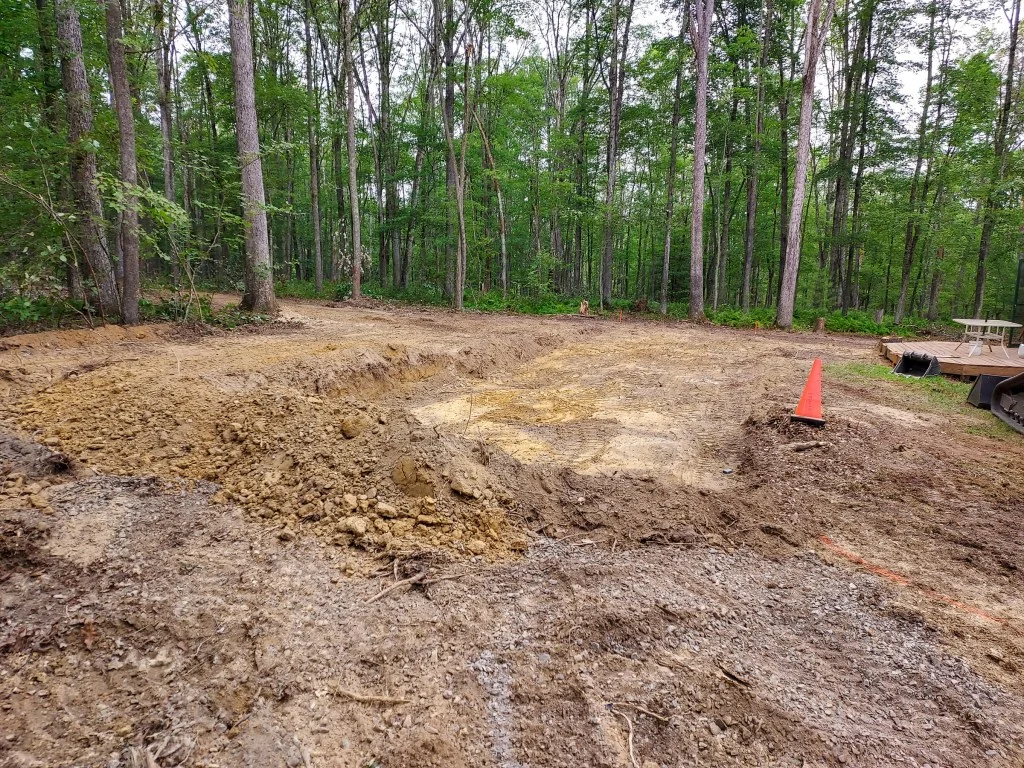
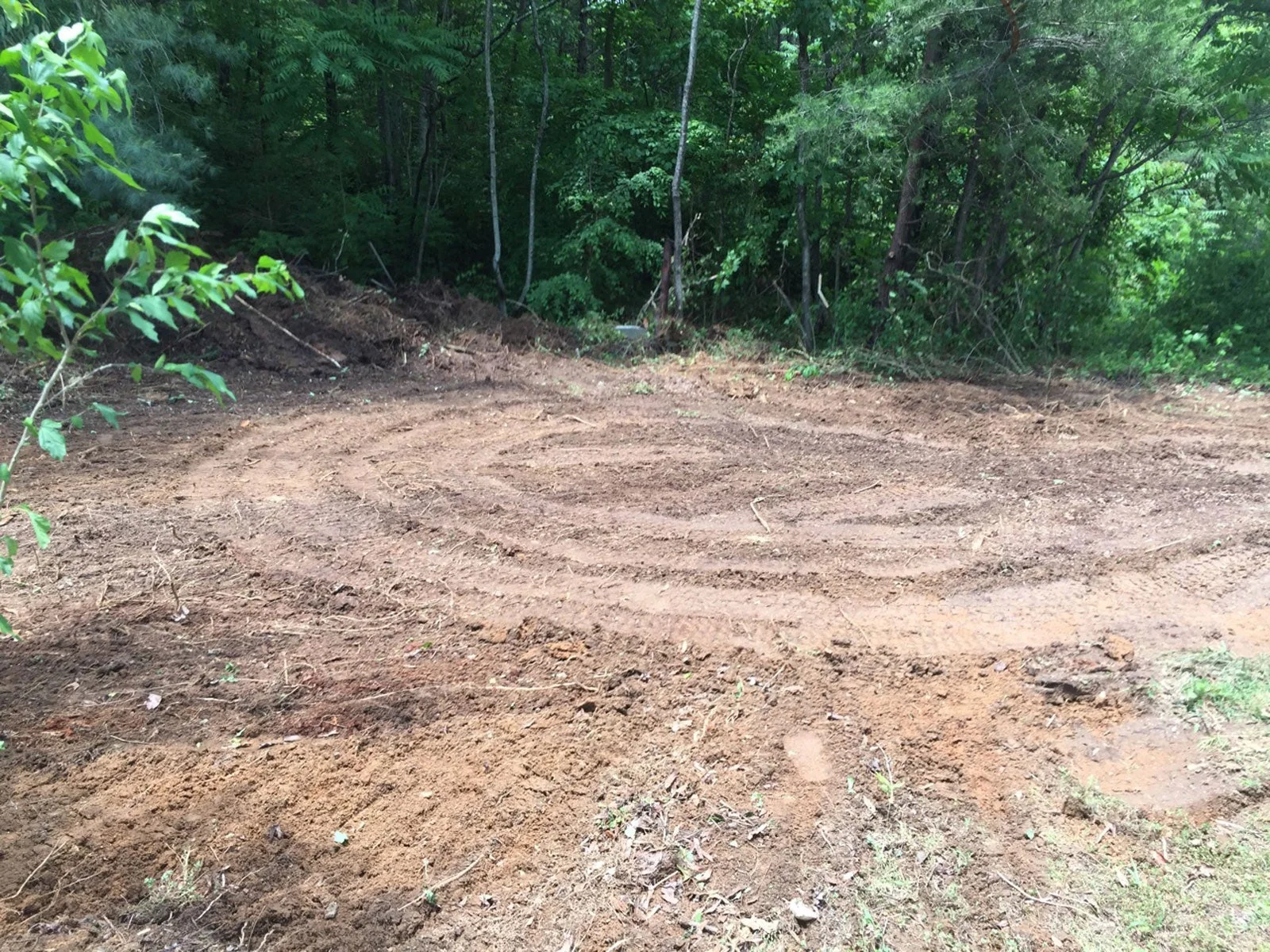
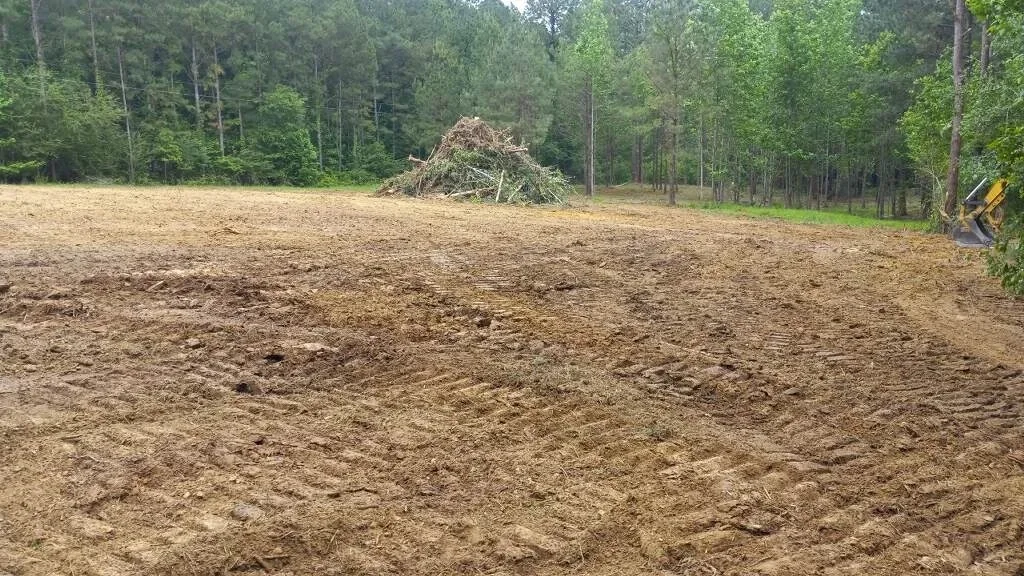
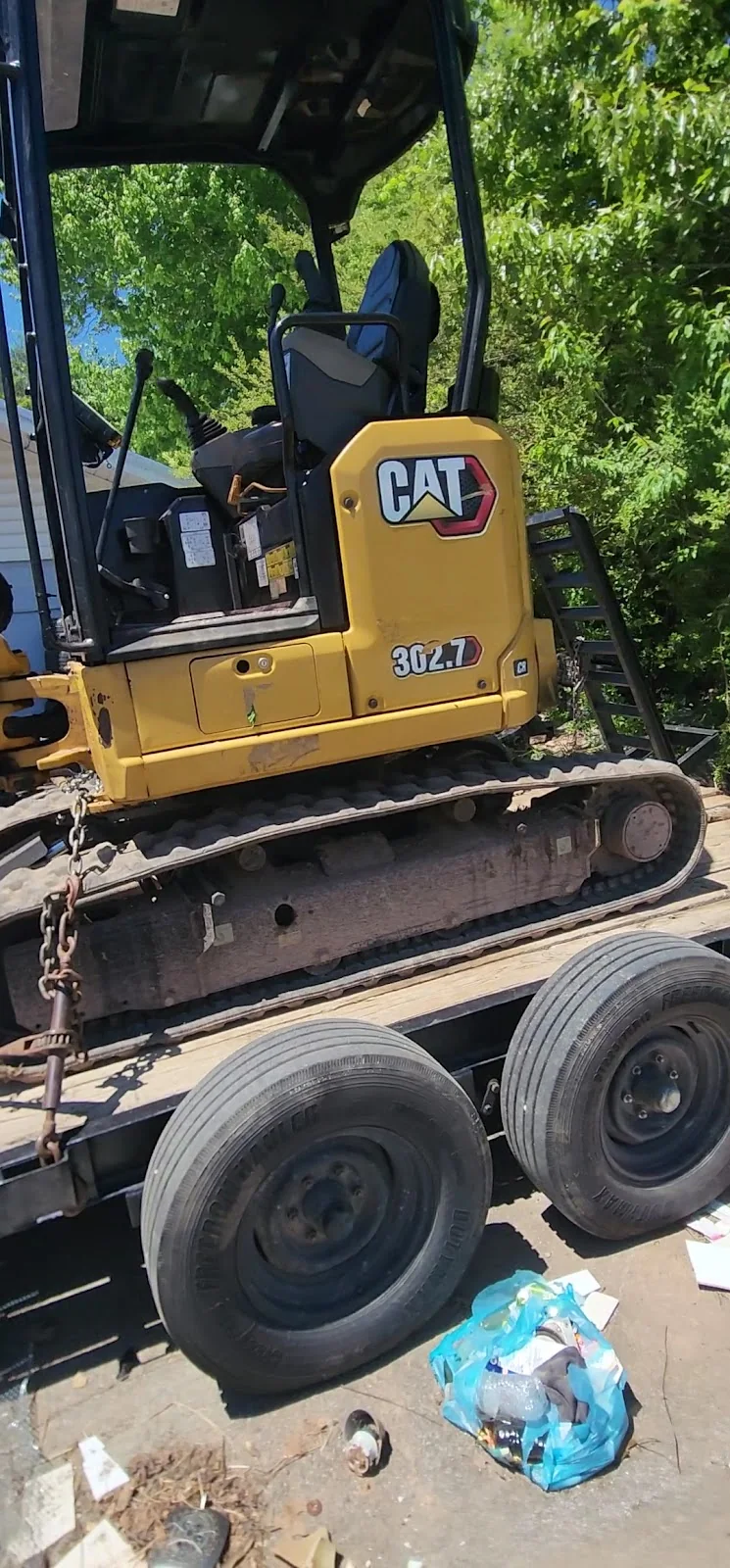
What surprises Flat Rock homeowners is how little of the invoice is actually gravel. On a rutted 200-foot drive, the stone is often the smallest line. Machine time, haul distance, and the cut-and-fill shaping of the crown are what stretch a $400 repair toward $1,200. The village's older lots were laid out for horses and wagons, not for loaded tandem-axle dump trucks, so access alone can add an hour of careful maneuvering before any material moves. On the wooded parcels above the village, a drive that tunnels under a canopy stays damp weeks longer than an open one, and that moisture is why the same storm cuts one neighbor's drive and leaves another untouched.
Driveway repair in Flat Rock NC also has a seasonal rhythm. The ground here is clay-heavy, and clay holds water. A repair done in a wet February can look fine and then rut out by April, because the subgrade never firmed up enough to compact. That is not a workmanship failure as much as a timing failure, and it is worth asking any bidder what they plan to do if they hit saturated ground mid-job.
The Flat Rock price picture, line by line
Henderson County pricing tracks the terrain — the Henderson County grading cost breakdown has the working table. The short version sits below. Treat any quote that shows one lump figure with no material, haul, or drainage lines as incomplete rather than cheap, because on a slope those lines are the job.
| Scope | Typical range | What drives it |
|---|---|---|
| Regrade existing gravel drive (no new stone beyond topping) | $350–$1,200 | Drive length, how badly it's rutted, machine access |
| Washout repair — regrade plus fresh stone | $400–$1,500 | Gravel volume lost, haul distance, compaction passes |
| Washout repair with ditching and culvert | $800–$2,800 | Culvert size and length, ditch run, outlet protection |
| Steep-grade repair with engineered drainage | $2,500–$6,500 | Grade percentage, drainage design, retaining or check structures |
Two Flat Rock adjustments worth knowing: drives that disappear into the woods before reaching the house carry extra haul and machine time, and any job that needs a pipe under the drive to pass the uphill neighbor's runoff will sit in the third row, not the second.
There is also the question of where the stone comes from. Crushed granite and washed stone hauled up from the valley adds to the delivered cost, and a long, narrow drive that a full-size dump truck cannot reach means the material gets shuttled in smaller loads or with a track buggy. None of that changes the range above, but it explains why two bids on the same drive can differ by several hundred dollars — one is pricing the haul honestly and the other is not. Ask each bidder how many loads they figure and where the stone is coming from; a vague answer on a steep Flat Rock drive is a bid you will revisit.
Why the county's storm record keeps this trade busy
Henderson County has seen 16 declared federal disasters across 1978-2026, and the dominant family is storm and flood. Flat Rock's position matters in that record: runoff arriving from higher ground above the village has to cross residential drives on its way down, and a gravel drive is the first thing that gives way when it does. The National Weather Service's outlooks at weather.gov are the practical early-warning tool here — a forecast of repeated heavy cells over the Blue Ridge escarpment is your cue to walk the drive and check the ditch and the culvert inlet before the next round.
The repair logic is the same one the state code applies to site drainage: get the water off the surface and to a defined outlet. A regrade that doesn't answer where the water goes will be a regrade again next spring.
The local detail that matters is the escarpment itself. Flat Rock sits where the Blue Ridge drops toward the Piedmont, so the rain shadow works against you: storms stack up against the ridge and dump in a short window rather than spreading out. In a matter of an hour a dry ditch becomes a torrent, and any culvert inlet that has been covered by leaf litter or a washed-in pile of gravel will send water straight down the drive instead. Clearing that inlet before a forecast storm is the single cheapest driveway maintenance task there is. It also matters that the steeper the drive, the more the water accelerates, and above a certain velocity the stone simply moves. That is why steep drives need check dams, water bars, or a grade break, not just more gravel on top.
Matching the fix to what your drive is made of
Flat Rock has three common driveway builds, and they don't repair the same way. Crushed-stone drives are the easiest and cheapest to bring back, because the surface is the repair. Paved drives over a failing base need the base addressed first, or the patch telegraphs through within a season. And the long, steep, unpaved access drives on the wooded lots above the village usually need the most aggressive water control, because grade plus length multiplies velocity. If your drive is at that point, it's worth reading the driveway grading and gravel guide before you take bids, so you can tell a drainage plan from a dump-truck-and-hope plan.
There is a fourth build worth naming: the shared drive. A number of Flat Rock properties sit off a private easement road that several homes use, and the repair math changes there. One washed-out culvert can strand a half-dozen households, and the cost is usually split by a written agreement or, more often, by a handshake that gets tested in a bad spring. If you are on a shared drive, sort out who pays for what before the work starts, and consider having the bidder write the scope so a single section of the drive can be repaired without redoing the whole run.
One more thing about paved drives on a slope: if the pavement is cracking along a seam and the base looks sound, a patch may hold. If the whole slab is moving after rain, the water is getting under it and the fix is drainage first, pavement second. Repaving a drained-failed base is money spent twice.
Choosing a crew without overpaying for the wrong scope
Two checks save money on this specific job. First, ask what the quote does about the water above the driveway. If the answer is nothing, the price is low for a reason. Second, ask whether the job crosses the threshold that brings in the NC Licensing Board for General Contractors — grading and drainage work can trip licensing rules depending on scope and value, so a legitimate crew knows where that line sits and will say so. When you're ready to compare real numbers, the Flat Rock grading contractors page is the place to start, and it's worth asking each bidder for a reference on a drive with similar grade and length to yours.
Environmental rules also enter the conversation when a repair changes how water leaves the property, because sediment leaving a driveway and reaching a stream or ditch is a regulated concern. The U.S. Environmental Protection Agency publishes stormwater guidance that explains the reasoning, and a good local crew will build silt control into a drainage job almost by habit. On a steep drive, that means straw wattles or a check structure at the outlet rather than letting a channel of muddy water run into the woods.
Finally, get the compaction method in writing. A repair that is dumped and spread but never compacted looks level for a month and then ruts along the same lines. Ask how the crew will compact the stone, and how they will shape the crown so water sheets off rather than pooling in the center.