The one-acre line that decides your Candler clearing job
Drive through Candler and the pattern is obvious: small 1960s ranches on flat valley ground near the river bottoms, newer single-family builds pushed up onto graded benches on the ridges, and a steady flow of raw acreage off Smokey Park Highway and the Pisgah Highway corridor being subdivided. Those three job types do not price the same, and the single biggest cost break happens at one acre of disturbed ground.
North Carolina's erosion and sedimentation rules require a state-issued plan and permit once a project disturbs an acre or more. Below that threshold, most residential clearing in Buncombe County moves under a local notice-and-plan arrangement plus the county's own grading review. For a Candler homeowner, that means a half-acre house site can often be cleared, graded, and stabilized on a straightforward timeline, while a two-acre cut for a future build or a small horse pasture trips engineering, a certified plan, and a sequenced install of silt fence, diversion, and a stabilized construction entrance. Budget two to five weeks of permitting on top and expect the erosion line items alone to add a meaningful slice to the total. That line, not the chainsaw, is what separates a $3,000 Candler clearing job from a $12,000 one.
It helps to picture how this plays out on real Candler parcels. A quarter-acre lot on a tight street near Hominy Creek, with a house already on it and a backyard that has not been touched since the 1970s, is almost never a permit job. A 1.4-acre raw tract off a rural road south of town, being cleared to put in a driveway and a house pad, is almost always a permit job, because the driveway cut, the pad, and the clearing all count toward the disturbed acreage. A five-acre horse setup that only clears fence lines and a small barn pad can sometimes stay below the threshold if the disturbed footprint stays under an acre, even though the property is much larger. The rule tracks disturbed ground, not owned ground, and that distinction is where most Candler DIY plans go wrong.
The practical takeaway: measure the area you intend to scrape, grub, or grade — not the acreage on the deed. If that number is flirting with one acre, plan for the permit. If it is comfortably under and no single activity pulls it over, you are in the simpler lane.
Reading the ground before anyone quotes numbers
Candler sits between Asheville and the eastern edge of Buncombe County, and the terrain inside that footprint is genuinely mixed. Valley-bottom lots off Lower Hominy and Hominy Creek carry deep alluvial soil, high water tables, and soft spots that a dozer will find the hard way. Ridge and bench lots carry clay, rock, and cut-and-fill seams where the previous owner moved dirt. Both hold hardwood and pine density that changes machine hours dramatically — a mature white oak stump 36 inches across is a completely different extraction than a thicket of saplings.
Before a quote is real, three questions get answered on site: how much of the material can be pushed into a burn pile or chipped versus hauled off, whether stumps come out whole or get ground below grade, and where the water goes once the topsoil is gone. That last one is not a formality. Federal disaster declarations touch Buncombe County regularly (19 events across 1973-2026, overwhelmingly storm and flood family), and freshly cleared ground is the most erosion-prone surface a property will ever have. The NC Building Code Council and NCDOI Engineering Division treat erosion control and site stabilization as engineered requirements, not optional cleanup.
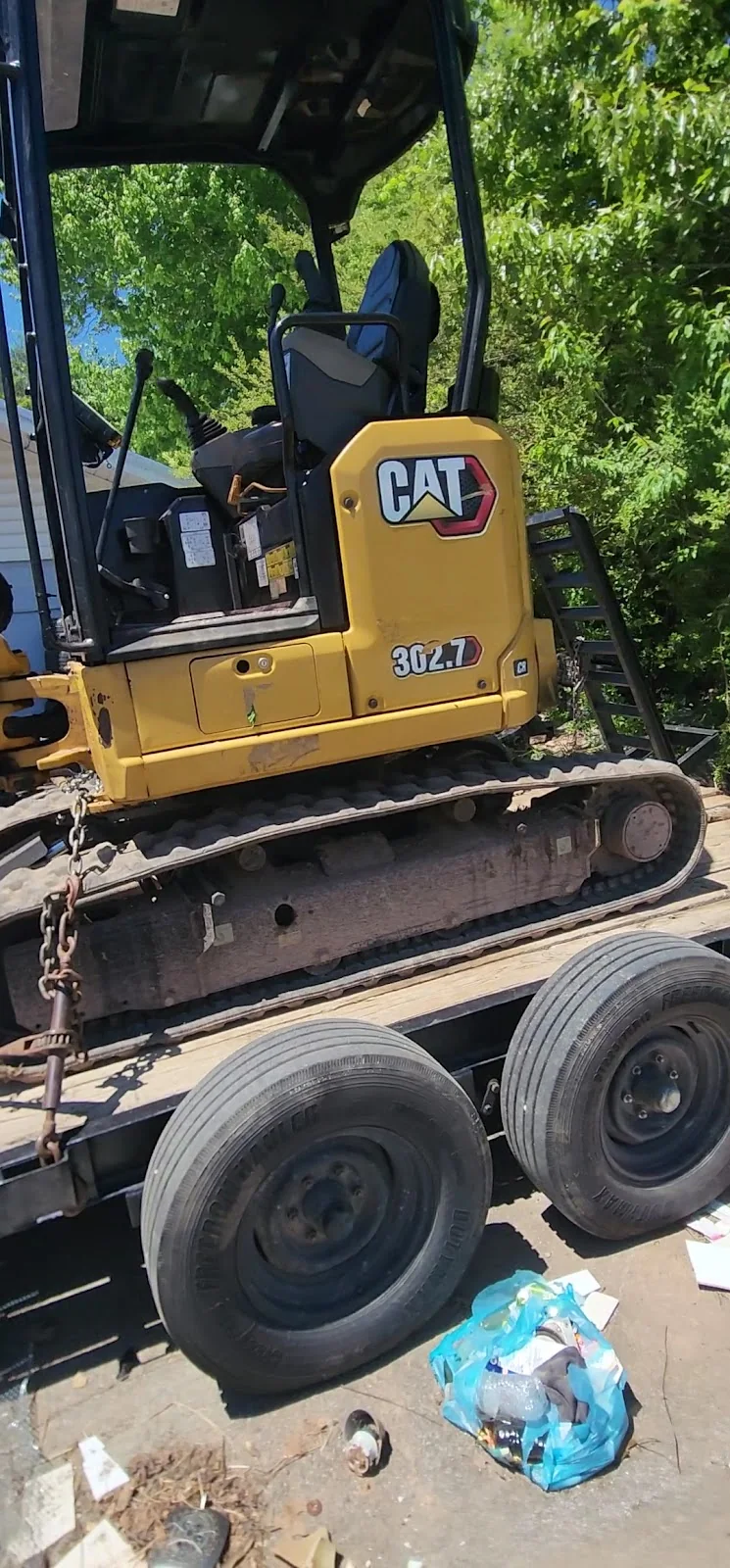
The field visit also settles the question of access, which is where Candler jobs get interesting. Many of the older lots along the valley floor have narrow gravel drives, low tree canopies, and utility lines that limit what equipment can physically reach the back of the property. A full-size dozer may not fit; a compact track loader with a forestry head may be the only realistic machine, and that changes both the schedule and the price. On ridge lots, the concern flips: the driveway grade may be too steep for a loaded dump truck once the ground is wet, so hauling has to happen early in the job or wait for a dry window. None of this shows up in a phone quote, and all of it shows up in the invoice if the contractor did not walk the site.
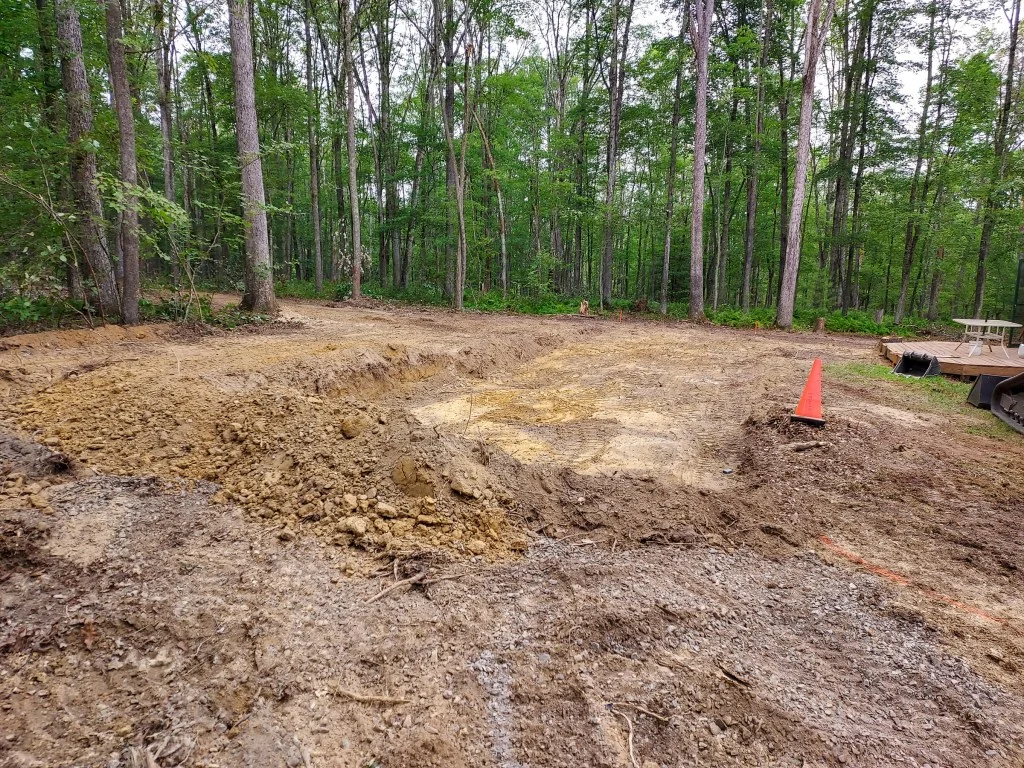
Soil color and vegetation are honest signals, too. Dark, mucky ground near the creek bottoms means soft subgrade and possible undercutting. Heavy stands of mountain laurel and rhododendron usually mean rocky, well-drained slopes. Patches of bare red clay on a ridge often mark old cut-and-fill from a previous build, and those seams can hide loose fill that has to be recompacted before anything is built on it. A Candler clearing bid that ignores these signals is a bid that will change once the blade hits dirt.
When a general contractor license is required
Clearing itself is not a licensed trade in North Carolina, but the moment a project bundles grading, drainage structures, driveway construction, or a building pad above the state's cost threshold, general contracting rules can apply. The NC Licensing Board for General Contractors sets those thresholds and enforces them, and a legitimate Candler crew will tell you plainly which parts of your scope they hold licenses for and which they subcontract. Ask. On larger subdivision work, you will also see stormwater and sediment rules layered on top, and those plans are often stamped by an engineer the contractor retains.
There is a second licensing layer worth knowing about on any project that touches a home's systems. If clearing leads to a new well pump house, a septic layout, or any plumbing and heating work on the structure, the NC State Board of Examiners of Plumbing, Heating and Fire Sprinkler Contractors governs who can legally perform that work. A clearing contractor who offers to run a water line or set a septic tank as part of the same job is operating outside their lane unless they hold the right license, and the homeowner carries the risk if the work fails inspection.
For most Candler homeowners, the realistic split is this: hire a clearing and grading outfit for the dirt work, and hire licensed trades for anything that connects to the house or its utilities. The Candler grading contractor directory is a good starting point for the dirt side, and it is worth confirming insurance and license status before the first machine shows up. A contractor who hesitates on either question is a contractor to skip.
What Candler clearing actually costs
Ranges below are regional bands for Buncombe County and should be read as typical, not fixed. Every row assumes the contractor supplies equipment, labor, and haul-off unless noted. Full line-item county data lives in the Buncombe County grading cost table.
| Scope | Typical range |
|---|---|
| Brush and sapling clearing, under 1/2 acre, no stumps | $1,800–$3,500 |
| Half-acre residential lot, stumps ground, chips left on site | $3,500–$6,500 |
| 1–2 acre lot, stumps removed and hauled, debris burned or chipped | $6,500–$14,000 |
| Erosion-control plan and install (silt fence, entrance, diversion) triggered by the 1-acre rule | $2,000–$7,500 |
| Rough grading and building pad after clearing | $4,000–$18,000 |
| Gravel driveway cut and base | $3,500–$12,000 |
Two cost movers dominate Candler bids: haul distance and rock. If the nearest acceptable disposal site is a long drive, trucking line items climb fast, and a dozer that hits shallow bedrock on a ridge lot burns hours it did not bid. The land clearing service overview walks through the process end to end.
It is worth reading the table as a set of independent decisions rather than a single package. A homeowner who clears brush but leaves stumps in place and chips everything on site can land at the low end of the residential band and never trigger the permit line. A homeowner who wants a clean, buildable pad with all stumps gone, debris hauled, and a gravel drive cut in is stacking four or five of these rows together, and the total climbs accordingly. The middle of the market in Candler is the half-acre to one-acre residential lot with stumps ground and chips left behind, which is why the $3,500–$6,500 band is where most local quotes land.
Rock is the wild card. Buncombe County has plenty of shallow bedrock on the ridge and bench lots, and a bid that assumes soft ground can double if the machine spends a day chipping at rock instead of pushing dirt. Ask any contractor how they handle unexpected rock, and get the answer — hourly rate, day rate, or a firm cap — in writing before the work starts.
Sequencing the job so the ground stays put
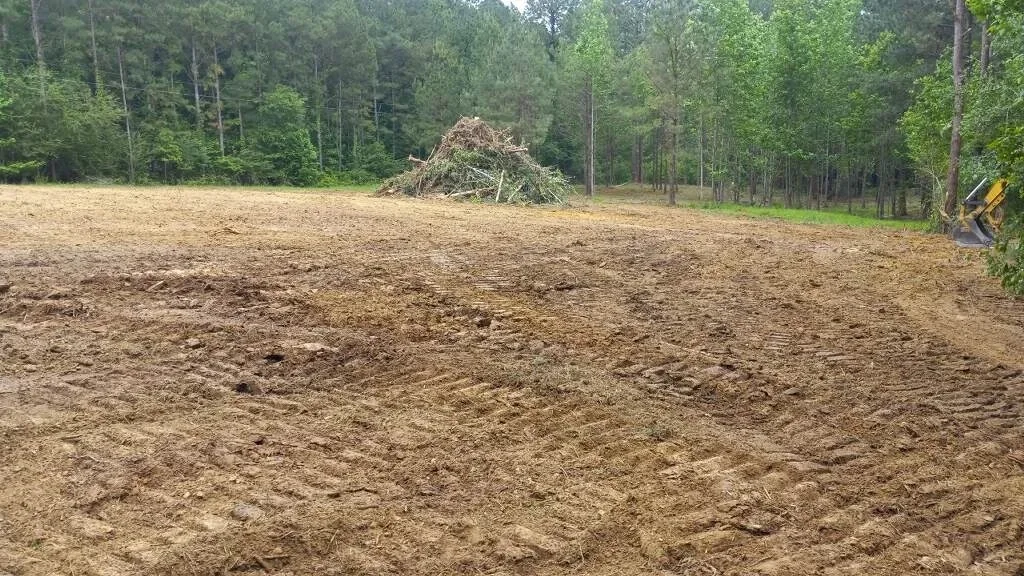
The crews that do this well in Buncombe County work in a fixed order: mark the limits of disturbance, install erosion control before any clearing begins, clear and grub, then grade and stabilize the exposed soil in the same window. Left too long, bare Candler clay sheds water in the first heavy rain and takes topsoil, seed, and your driveway gravel with it.
National Weather Service guidance for the southern Appalachians (weather.gov) is a useful reminder that mountain rainfall here arrives in high-intensity bursts, not steady drizzle, which is exactly the pattern that punishes unstabilized ground. Ask your contractor what the stabilization timeline is and get it in the scope. Local crews serving the town are listed in our Candler grading contractor directory when you are ready to get real bids.
The EPA maintains construction stormwater guidance that lays out what a compliant site should look like at every stage, and it is a fair yardstick for judging a contractor's work. At minimum, expect silt fence installed on the downhill side before clearing, a stabilized construction entrance so trucks do not track mud onto the road, and seed or matting applied to bare ground as soon as final grades are set. A crew that clears first and talks about erosion control later is a crew that will leave you fixing a washout.
Season matters in Candler. Clearing in late fall or winter, when vegetation is dormant and ground is firm, tends to go faster and cleaner than clearing in a wet spring. But the stabilization clock does not stop for the calendar; ground exposed in November still needs cover before winter rains, and ground exposed in March needs cover before the spring storms. Whatever the season, the plan should say who stabilizes, with what, and by when.