What actually moves the number on a Waynesville lot
Drive any road out of downtown Waynesville and the lot you're quoted on is rarely flat. A parcel off Ratcliffe Cove or up toward Dellwood carries the same acreage as one on a valley floor near the Richland Creek bottoms, and a completely different clearing bill. The four line items that separate a $1,200 job from an $8,000 one here are stem count and diameter, slope, stump handling, and debris haul distance.
| Scope on a typical Waynesville lot | Typical range |
|---|---|
| Light clearing — brush, saplings, mow-and-cut, no stumps | $750–$1,800 |
| Mixed hardwood stems to 12", chip and leave on site | $1,500–$3,000 |
| Clearing plus stump grinding and rough grading | $2,500–$6,000 |
| Steep or heavily wooded acreage, haul-off and driveway cut | $5,000–$8,000 |
| Unusual jobs — extreme grade, big-diameter timber, long access | $10,000+ |
Slope is the quiet multiplier. A machine that works comfortably on a 15 percent grade near Hazelwood slows to a crawl on the 35 percent pitches common above town, and slow machine time is the line that grows fastest. Ask any bid to state the average grade it priced, not just the acreage.
Reading your own lot before anyone bids it
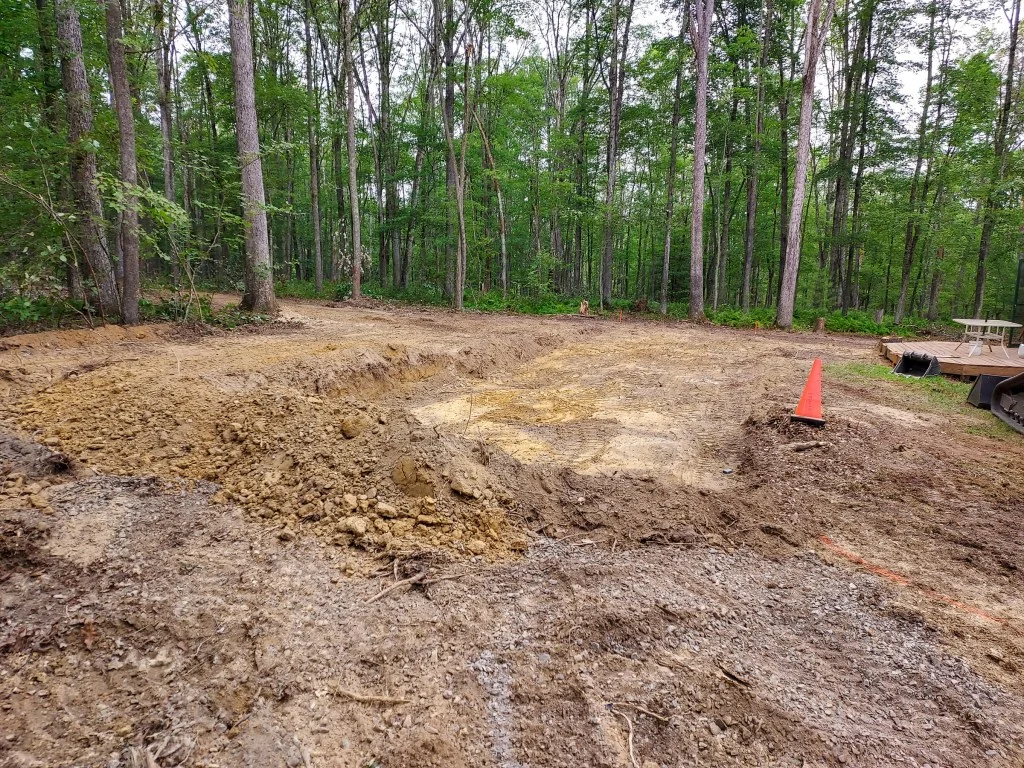
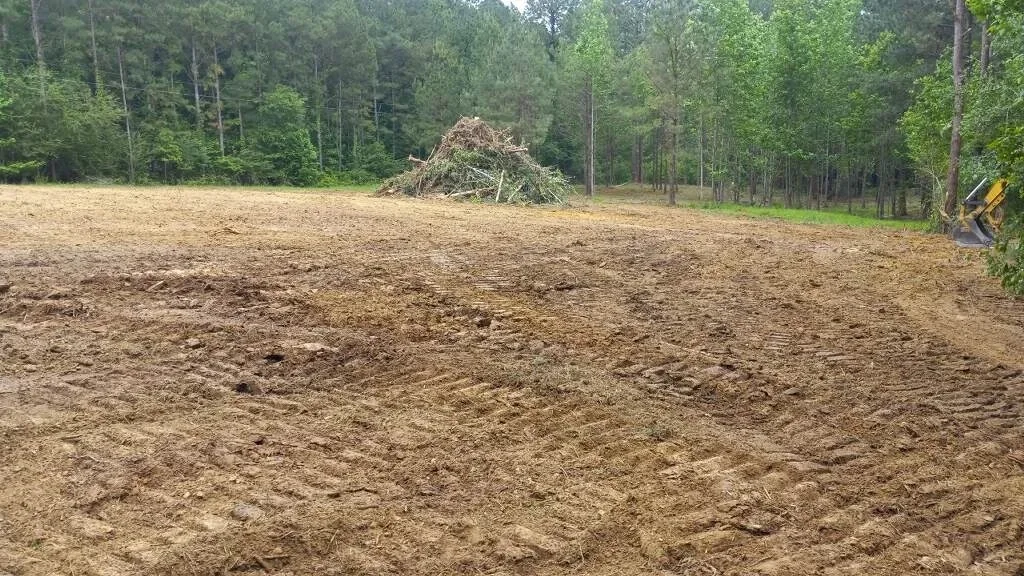
Haywood County ground is a mix of gentle valley floor along the Pigeon River corridor and steep hardwood coves climbing toward the Blue Ridge. That distinction decides almost everything. Valley-floor lots near Waynesville's edges clear fast and cheap because the machine never fights gravity and the debris has somewhere to go. Cove lots above town change the math: root systems on a slope hold soil that wants to leave, and clearing one opens a drainage question you now own.
That's why the honest version of this page is not "clearing costs X per acre." A wooded half-acre on the valley floor and a wooded half-acre on a 30-degree pitch are different projects. Walk your lot and note three things: how many stems are over 12 inches at the base, roughly what percentage of the ground is sloped, and where a machine can physically enter. Those three answers predict most of your quote before a contractor arrives.
Stumps, dirt, and the disposal charge nobody mentions first
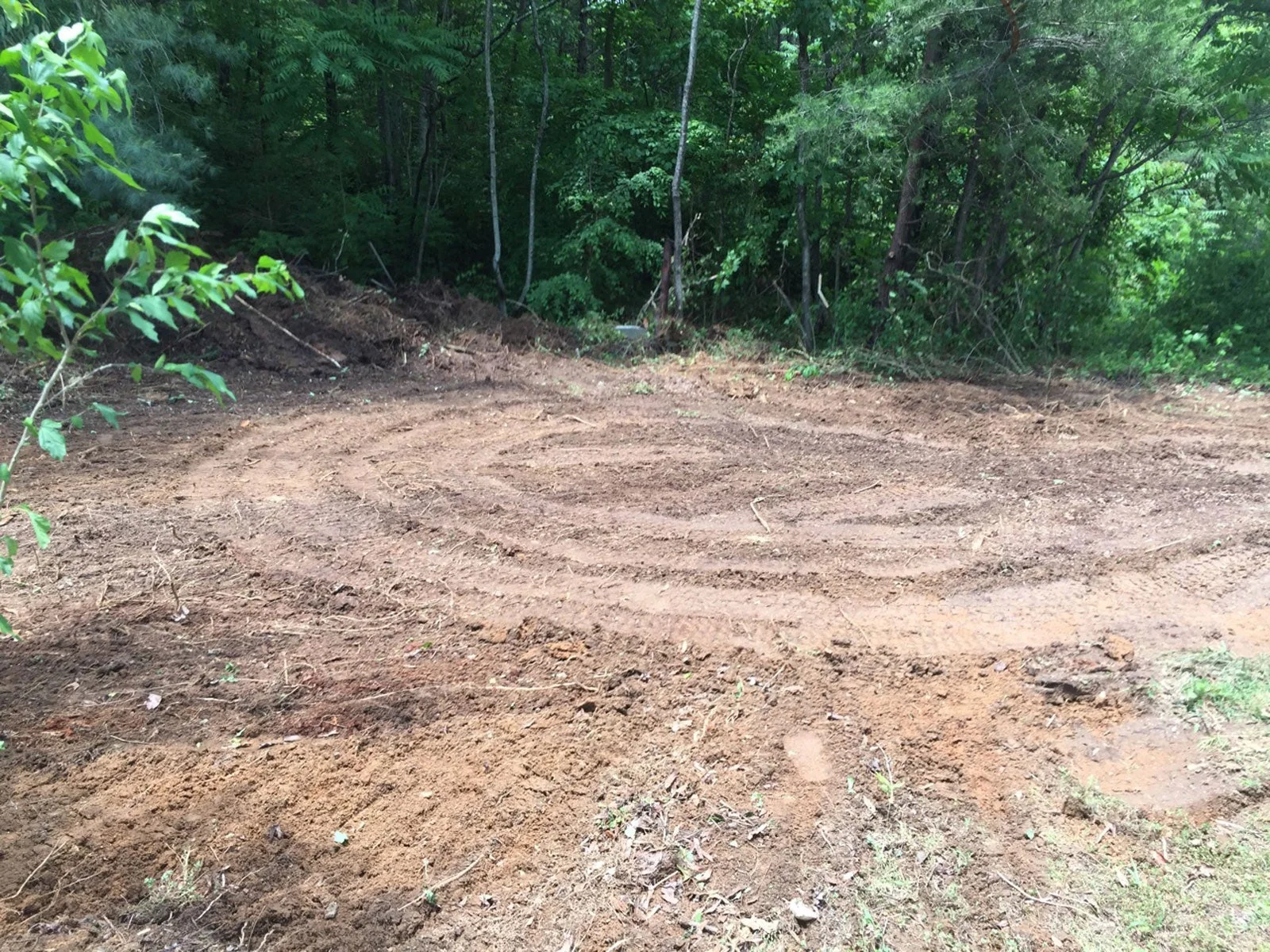
Clearing brush is one job; making ground buildable is another, and the gap between them is stumps and spoil. Leaving stumps costs nothing up front and costs you later when they rot, sink, and hollow out a lawn or a driveway base. Grinding stumps removes the visible wood but leaves the root ball and grindings in place — fine for a pasture, wrong under a foundation or a gravel drive.
Then there's the dirt. Grading a sloped Waynesville lot produces cut on the high side and fill on the low side, and if those don't balance, you're paying to truck spoil off site or import fill. That haul is priced by the load and by the distance to a legal disposal site, and it's the line that turns a $3,000 clearing into a $7,000 site-prep package. For how that side of the project is priced separately, the Haywood County grading cost breakdown lays out the cut, fill, and drainage line items.
Erosion rules and where a contractor's license starts to matter
Disturbing ground in the mountains is regulated for a reason: bare soil on a slope leaves with the next hard rain, and that runoff carries sediment into streams the county and state both watch. Any clearing that exposes real acreage should come with a sediment and erosion control plan — silt fence, stabilized entry, and a schedule for getting ground covered again. The EPA publishes the stormwater and erosion-control framework that state and local rules are built on, and it's the honest place to start understanding why a plan costs money.
On the licensing side, the NC Licensing Board for General Contractors sets the threshold at which a project needs a licensed general contractor, and clearing that's tied to a larger build often crosses it. When a job includes grading, drainage, or anything that looks like site work, check the license before the machine shows up.
Sequencing the work so you don't pay twice
The cheapest clearing is the one that matches the site plan. If a house, septic field, or driveway is coming, the clearing layout should follow it — leaving trees where you want them, taking the ones in the footprint, and keeping the grade you'll actually build on. Clear the whole lot flat and then re-grade it for construction and you've paid for the same dirt twice.
This is where a clearing quote and a grading quote should be read together. Waynesville site work is genuinely a single sequence: clear, grub, cut and fill, shape drainage, stabilize. Hiring one crew that owns the whole sequence usually beats two crews pointing at each other when the pad isn't level. Local crews who handle both sides of the job are covered on the Waynesville grading contractors page, and if your project starts from raw ground, the broader land clearing overview walks through the full scope from brush to buildable.
Storm history is why drainage is priced in, not added later
Haywood County's federal disaster record is not abstract here — 19 declared events reach this county across 1973-2026, and the overwhelming majority are flood and storm family. That history is why a serious clearing or grading quote on a Waynesville slope includes drainage rather than treating it as an upgrade. Water that used to be slowed by trees and roots now runs across bare ground, and the place it lands is usually downhill and sometimes someone else's property.
The National Weather Service tracks the rainfall and flood patterns that drive those events, and the practical takeaway for a homeowner is simple: on sloped Haywood County ground, plan and price the water before you clear, not after the first big rain shows you where it goes.