What machine access really costs in Canton
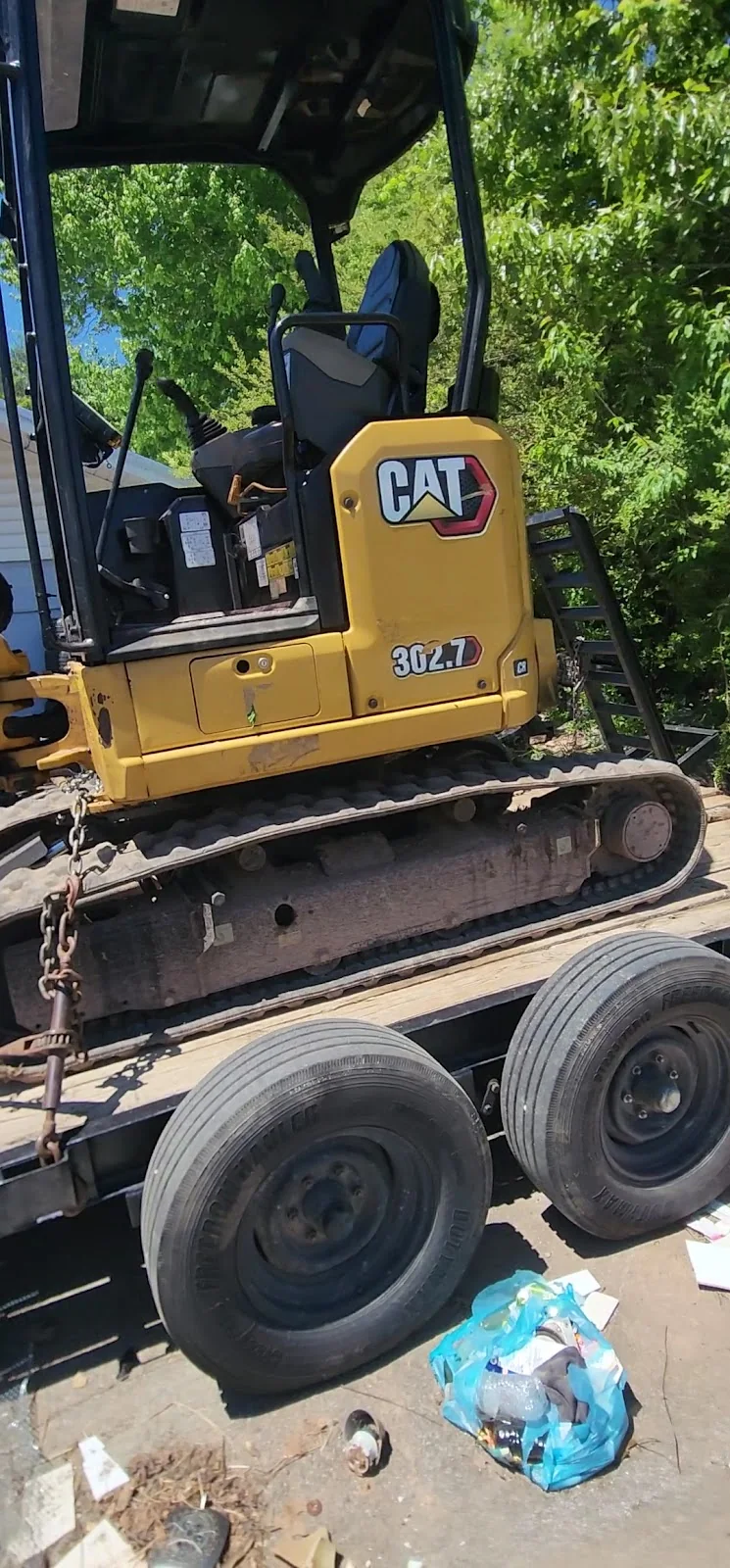
Canton yards were laid out for foot traffic and chicken coops, not for a track loader with a 14-foot turning radius. Off the older streets near the mill side of town, a gate might be 34 inches, the driveway might pinch between a porch and a retaining wall, and the drop to the back lot might be steeper than any mini-ex wants to climb loaded. That geometry is the first line item most phone quotes quietly skip.
Two questions decide the machine plan: can a skid steer reach the low spot without crossing the septic field, and is there room to spin a bucket at the top of the grade? If the answer is no on either, the job shifts to a mini-ex with a narrower bucket, hand work, or a conveyor-style haul-out — all legitimate, all slower, all priced differently. A homeowner gets burned by the low bid that assumed open access across a lot the crew never walked.
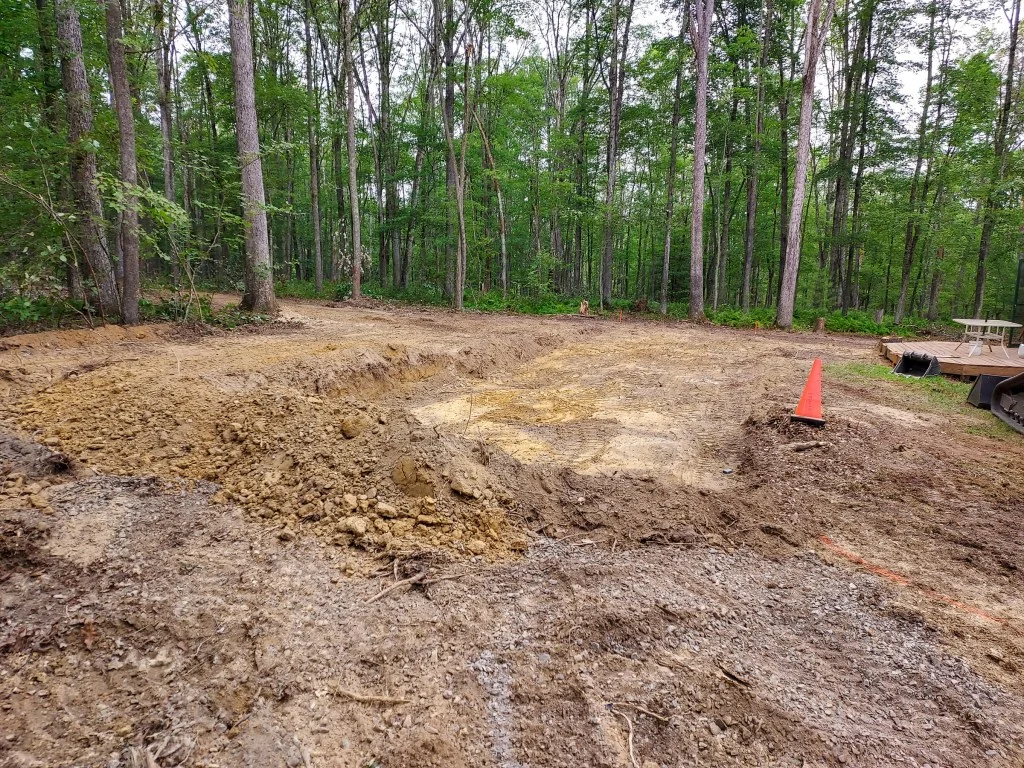
The second half of access is what leaves. A yard that needs 6 inches cut across 2,000 square feet is roughly 38 cubic yards of spoils — more than 3 tri-axle loads if the soil is clean, and it won't be. Canton dirt near the Pigeon River bottoms turns to soup after a rain, which means a dump truck that can legally haul on a saturated subgrade versus one that bellies out at the gate. Ask any contractor how the loads exiting the property get handled before you compare bids. The full working table lives on our Haywood County grading cost breakdown.
The quarry run that sets your gravel money
Haywood County has a real aggregate gap: most commercial crushed stone and screened fill arrives from quarries east of the county line, which means every yard of #57 stone or borrowed fill carries a haul charge before it ever lands in Canton. That single variable is why two contractors who both say "regrade with stone" can be $1,200 apart on the same yard.
What a homeowner can actually check: whether the quote names the material and the source, whether the tonnage is broken out separately from labor, and whether the base depth is specified in inches rather than "a good layer." A yard leveling job that needs 2 inches of compacted #57 across 1,500 square feet is about 12 tons of stone. At Canton's delivered rate that's a real number, and any bid that hides it in a lump sum is either guessing or padding. For anyone comparing bids, the Canton grading contractor notes cover what a complete scope looks like line by line.
Reading the water before you cut anything
Canton sits in the Pigeon River valley, and the federal disaster record explains why drainage is a first-class line item on almost every yard here: 19 declared events touch this county (1973-2026), a heavy share of them flood and storm family. Water that ponds at the low corner of a Canton yard after a summer thunderstorm is the same water that undermines a foundation wall a few winters later.
Before any dirt moves, the regrade has to answer three questions. Where does water enter the lot? Where does it currently exit, or fail to? And what is the fall the surface needs to actually carry it away rather than pooling against the house? The answer to the third is not a feeling — modern residential site work expects roughly a 6-inch drop over the first 10 feet away from the foundation, and the code backing that expectation is worth reading before a contractor tells you the grade is fine. The International Code Council publishes the residential provisions, and the National Weather Service tracks the rainfall totals that keep this county on the map for flash flooding.
Any quote that proposes raising the low spot without addressing where the water comes from is a patch, not a fix. On Canton's clay-heavy soils the water often tracks sideways under the sod and shows up 20 feet from where the grade was cut.
What a leveling scope actually includes
"Level" is not one job — it is a family of jobs with different price shapes. The homeowner who wants a usable flat spot for a shed is buying something quite different from the one whose yard slopes toward the house. Before the first bucket moves, the scope should name each line: what gets stripped, what gets cut, what gets filled, how the fill is compacted, where the spoils go, and how drainage ties in. A quote missing any of those five is a quote that will find extra money somewhere once the machine is on site.
Below is the honest shape of pricing for common Canton yard-leveling scopes. Ranges reflect material and access, not square footage alone — a tight half-acre can outrun an open acre if it needs hand work and haul-off.
| Scope | Typical price range | What moves the number |
|---|---|---|
| Spot leveling, minor low areas, no haul-off | $1,800 – $3,200 | Square footage, whether spoils can stay on site |
| Full regrade of a residential lot with new topsoil | $2,500 – $6,000 | Material tonnage, drainage rework, gate access |
| Regrade with drainage correction and swale | $3,800 – $8,500 | Length of the drainage line, footing for a dry well, stone volume |
| Slope-lot cut-and-fill with engineered drainage | $6,500 – $9,500 | Engineering, wall or terrace work, haul distance |
| Yard prep for a shed, shop, or driveway pad | $2,200 – $5,500 | Base depth, compaction requirement, access to the build site |
State law draws a line on how much of this a crew can take on without a general contractor license — the thresholds are published by the North Carolina Licensing Board for General Contractors, and responsible Canton contractors know where that line sits. It matters most on jobs that touch retaining walls or drainage tied to a foundation, where the scope can quietly cross into structural work.
Sequencing the work so it holds
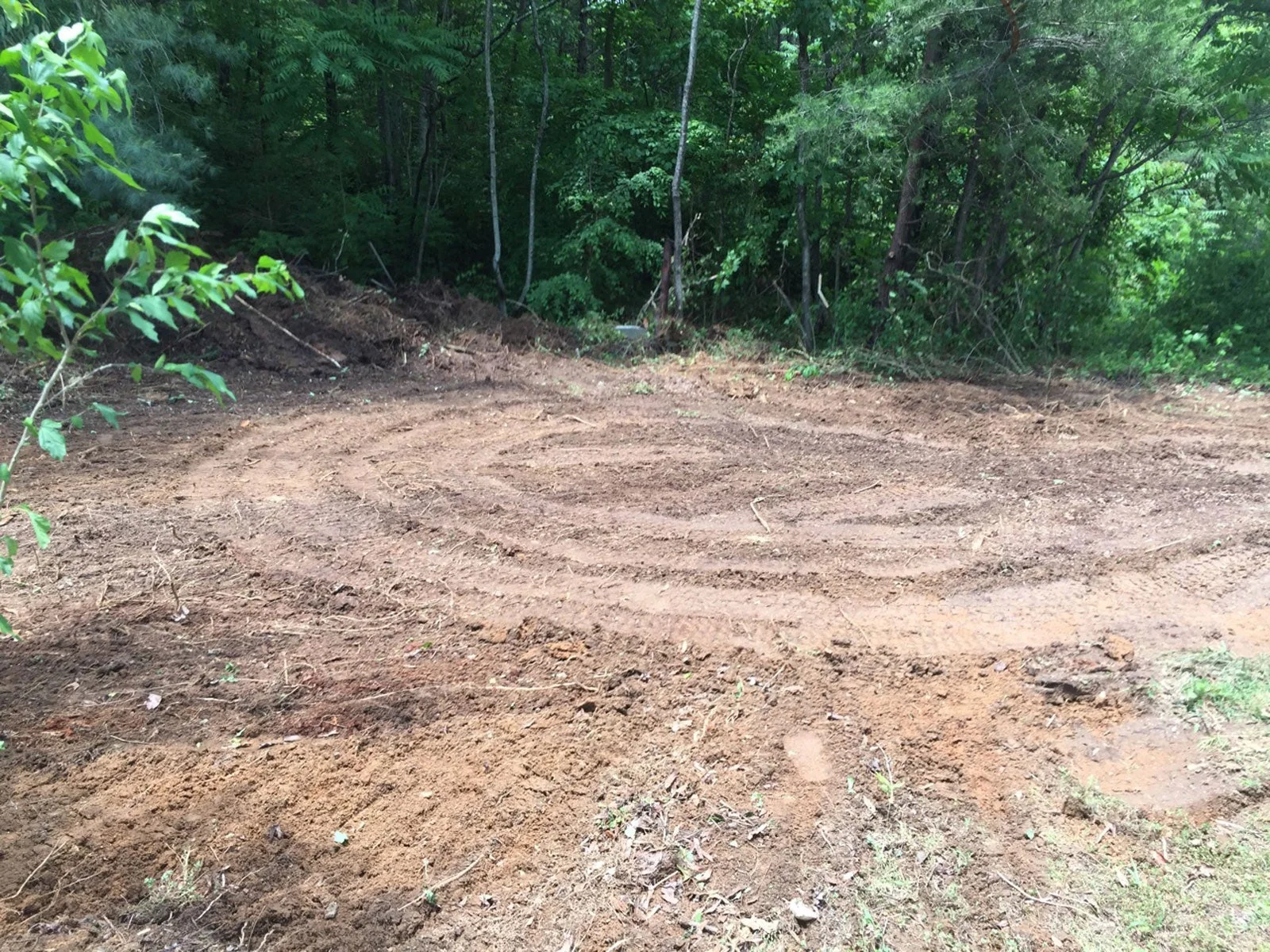
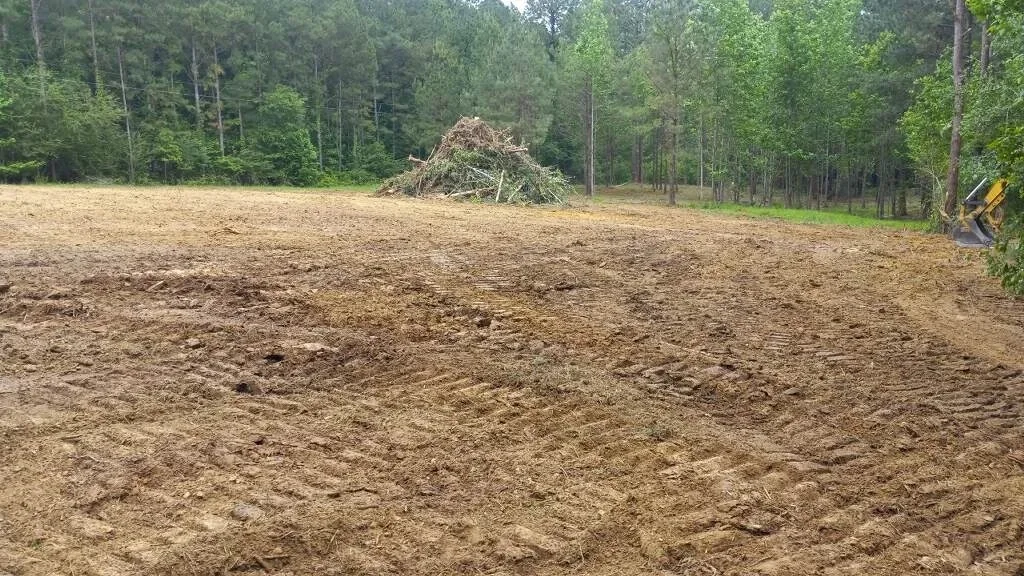
The order of operations on a Canton yard leveling job is not negotiable if the result is going to survive a wet spring. Strip the organics, cut to subgrade, correct drainage, place and compact fill in lifts, cap with topsoil, then establish the surface fall before anything gets seeded. Crews that cut and fill in one pass and lay sod the same week are setting up a settlement call in eight months.
Compaction gets skipped more often than any other step because it is invisible. A utility tamper on 6-inch lifts does real work; a single bucket-and-smooth does not. For any yard that will carry a shed, vehicle traffic, or a future patio, the compaction schedule belongs in the quote in writing. The yard leveling guide walks through what a proper scope sequence looks like from the homeowner's side of the fence.
Timing also matters. Canton soils in late winter and early spring are working consistency that fights every machine — jobs scheduled after the spring dry-out or before the fall rains finish faster and stay in budget. That is not a sales pitch. It is simply what the ground here does.