Why Clyde lots dig differently than the rest of Haywood County
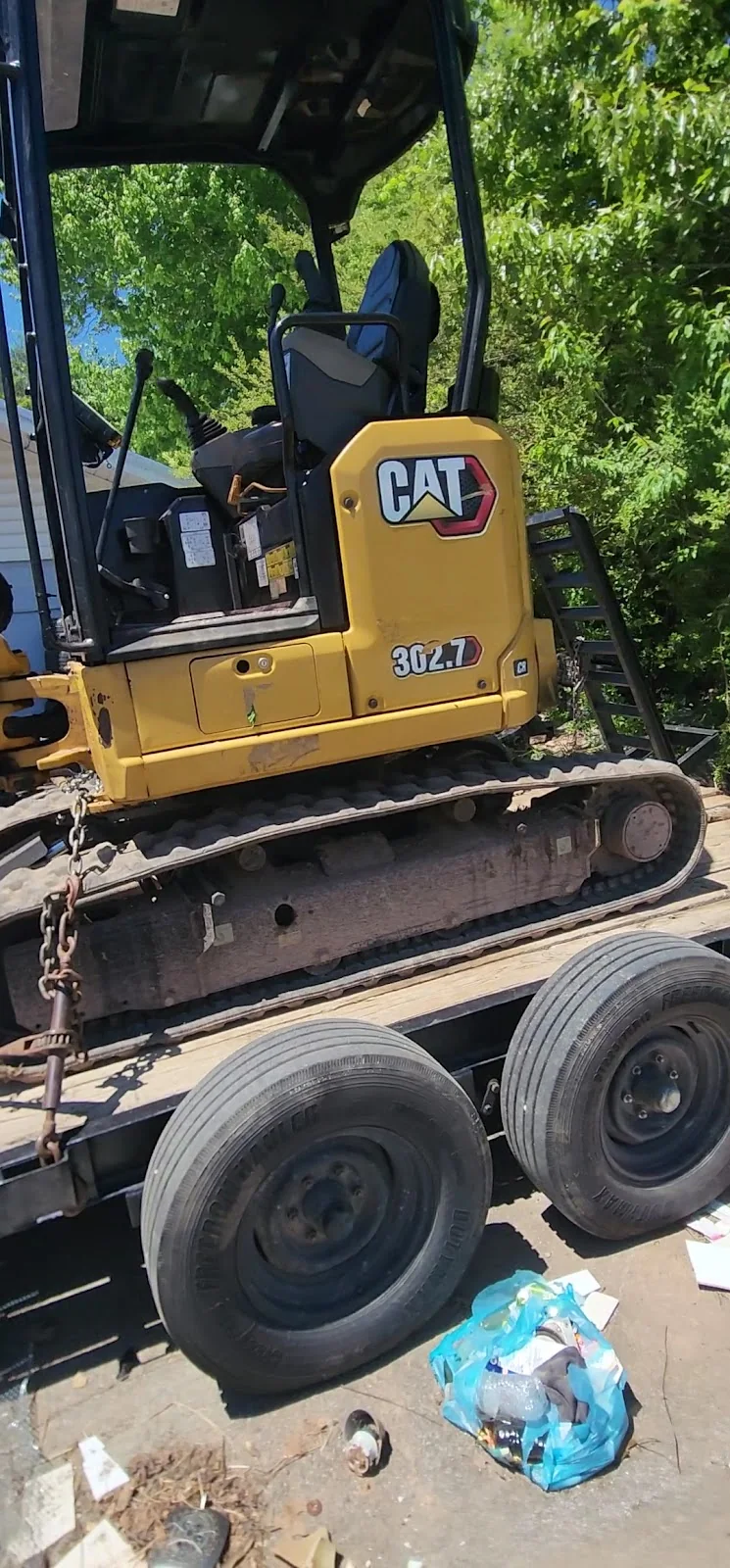
Clyde doesn't spread out the way Waynesville does. Almost every in-town parcel here sits in a valley that pinches between the Pigeon River, the railroad corridor and US 19/23, so residential lots tend to run long and thin rather than wide and square. On a handful of streets off Carolina Avenue and near the old depot, a lot can be deeper than a football field but barely wider than a single car. That shape changes everything about a dig — a machine that fits a wide subdivision pad in Waynesville may not fit between a Clyde carport and the property line, and the spoils have to go somewhere, often off-site, which is a line item flatland quotes never show.
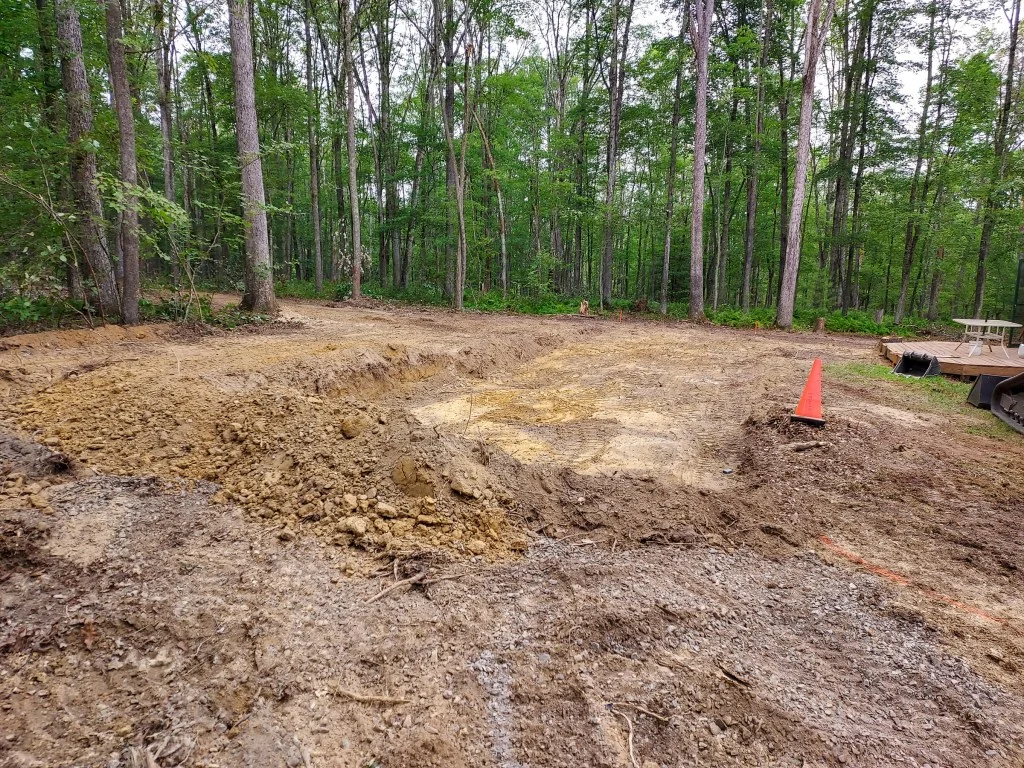
Add the terrain. Even in-town parcels slope toward the river or back into the hillside, so most jobs involve cut on one side and fill on the other. The ground here is a mix of residual clay over weathered bedrock, and it behaves very differently in a wet spring than it does in a dry fall. Creek-adjacent ground also holds water differently; what looks like a simple trench in August can be a dewatering problem in March. None of this makes Clyde work harder than it is — it just makes it specific, and the right contractor prices that specificity up front instead of discovering it on day two.
The scope-to-price picture for local digs
Site-wide residential excavation pricing holds in Clyde, with local factors pushing toward the top of a band rather than rewriting it. The table below shows what the working ranges look like for the jobs we see most often:
| Scope | Typical range | What moves the number |
|---|---|---|
| Footing dig for a small addition or outbuilding | $1,800–$2,800 | Hand-dig near utilities, tight machine access |
| Utility trench runs (water, sewer, power) | $1,800–$3,500 | Length, depth, rock, restoration |
| Small pad or driveway cut | $2,200–$4,500 | Cut depth, spoils removal, slope |
| Full site excavation for a new build | $6,000–$15,000 | Valley grading, haul-off, erosion controls |
The Haywood County grading cost breakdown goes line by line if you want the full picture before you call anyone. A few local quirks push Clyde jobs toward the upper end of a band more often than a flat parcel would. Deep cuts on a hillside lot mean more dirt to move and more haul-off trips down a narrow driveway. Rock encountered near the river terraces can turn a two-hour footing dig into a half-day job with a breaker. And restoration work — reseeding, gravel, silt fence — adds up on a lot where the machine can't turn around without chewing up a lawn.
What usually keeps a Clyde quote inside the band rather than over it is sequencing. A crew that plans the spoils pile before the first bucket drops, stages the machine where it can reach the whole pad without a second setup, and knows which trenches can share a spoil pile will shave hours off the job. That's the difference between a quote that holds and a quote that grows.
Permits, code and the water question
Grading and excavation in Haywood County trigger local permitting once you cross certain thresholds, and the work itself has to answer to the state's residential code. Erosion control matters here more than in drier counties: the Pigeon River watershed is the reason Clyde sees enforcement the way it does. Any contractor worth hiring will know when a land-disturbance permit is required and will build silt fence, inlet protection and stabilization into the quote rather than tacking it on. If a crew starts talking about "we'll worry about that later," that's a sign they haven't worked this watershed before.
The storm record explains why. 19 federally declared disaster events touch this county across 1973-2026, and they skew heavily toward flood and storm damage. That history is the honest reason drainage gets designed into Clyde excavations rather than treated as an afterthought — a swale that works on a dry ridge above Waynesville can fail on a lot that drains toward the river in a tropical downpour. The NC Licensing Board for General Contractors sets the threshold where a project needs a licensed general contractor rather than a smaller operator, and the EPA maintains the stormwater and erosion guidance that shapes how a responsible crew sequences the job. The National Weather Service is the source most local crews watch for the kind of rain events that turn an open trench into a problem overnight.
Matching the contractor to the lot
Clyde has two kinds of excavation jobs, and they call for different crews. In-town work is tight-access: small machines, careful utility locating, restoration that has to leave a neighbor's fence line intact. Picture a lot off Broad Street where the machine has to back in from a single-lane drive and the spoil pile can only go one place. Hillside and river-adjacent work is cut-and-fill: bigger iron, engineered drainage, and a plan for where the dirt goes before the first scoop. A contractor who only does one will either overcharge you for the tight job or under-engineer the sloped one.
Three questions worth asking before anyone moves a bucket. First, how do you handle spoils — on-site or hauled? Second, what does your erosion control look like on a slope that drains to the river? Third, does the schedule account for NC clay and the way it behaves when wet? The answers separate the operators who work here from the ones passing through. When you're ready to compare, the excavation contractor overview covers what a real scope should include, and the Clyde grading page covers the finish-work side of the same job.
One more local note worth getting right: drainage on a Clyde lot is almost always a shared problem. Water that leaves your pad flows toward a neighbor, a creek or the river, and the grading plan needs to respect that. A good contractor will walk the property line with you, look at where the water already runs during a hard rain, and design the swales and daylight points to match the existing pattern instead of fighting it. That conversation costs nothing and prevents the kind of complaint that turns a straightforward dig into a stop-work order.