Read what you already have before you spend
Most excavation calls in Fairview do not start with a hole to dig. They start with something that used to work: a driveway that sheds water into the garage instead of the ditch, a gravel pad settling toward the house, a swale that used to move stormwater and now moves it into the wrong place. Before anyone quotes you a new cut, someone should walk the existing grade, find where the water is actually going, and tell you whether the problem is drainage, compaction, or a base that was never deep enough.
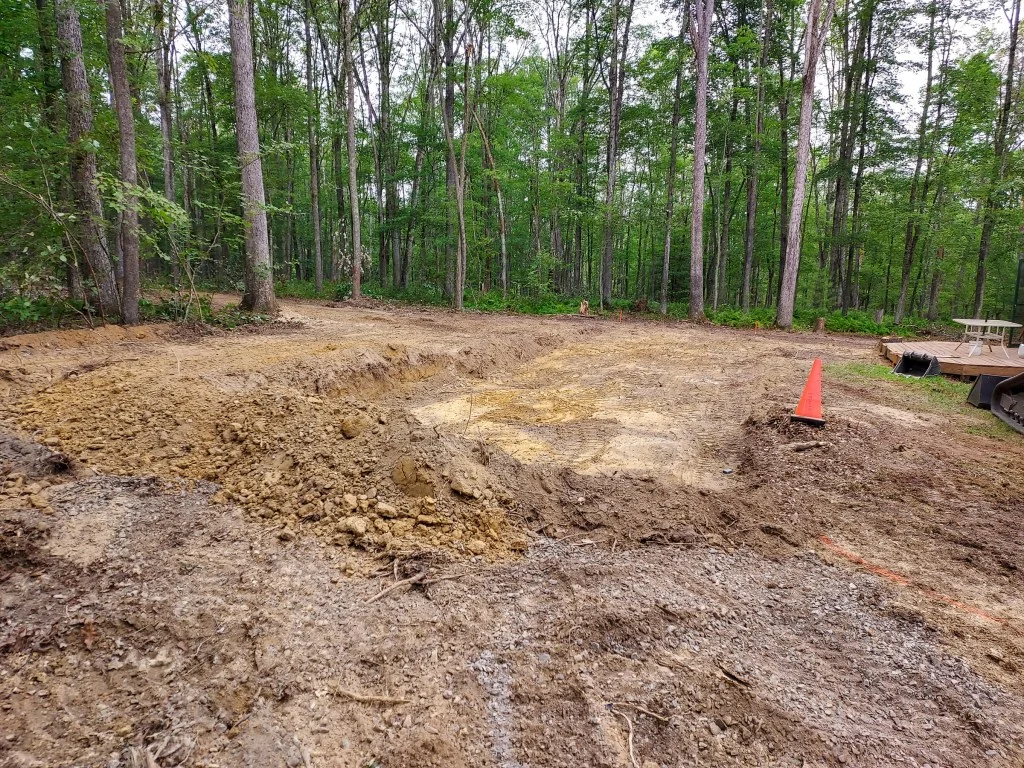
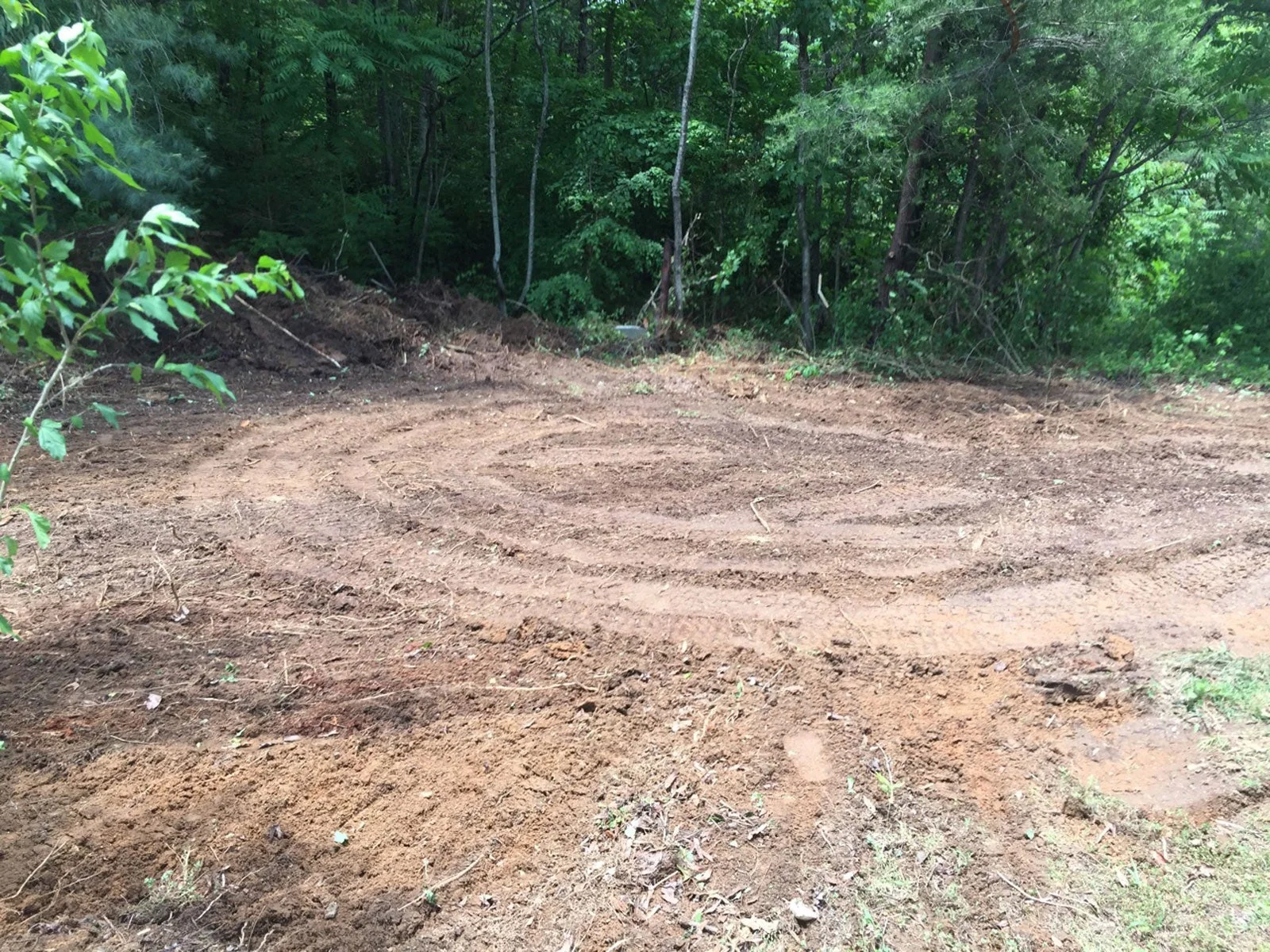
That first visit is cheap relative to the alternative. A pad re-graded and re-packed correctly commonly lands at the low end of the residential band, while tearing out the same pad and reconstructing it from subgrade up pushes toward the top. The Fairview difference is that lots here drain hard and fast off the ridge, so an under-built driveway or pad reveals itself within a season or two, not a decade.
What Fairview ground does that flatland dirt doesn't
Fairview sits southeast of Asheville in Buncombe County, up against the Blue Ridge escarpment. Lots here are cut into slopes, shaded by hardwood canopy, and holding moisture longer than the grade suggests. Two consequences matter for excavation: cut-and-fill benches settled twenty or thirty years ago may not have been compacted to modern standards, and water draining from an uphill neighbor's ground can surface on your lot without visible evidence above it.
The tells worth acting on: a pad that stays soft for days after rain, a driveway edge slumping toward the ditch, gravel disappearing into mud at the low corner, or a retaining wall that has begun to lean after the ground behind it stayed saturated. Those are not cosmetic. They are the ground telling you where the water goes and where the base is failing. Fixing that condition first is what makes the next excavation last.
Fairview price picture
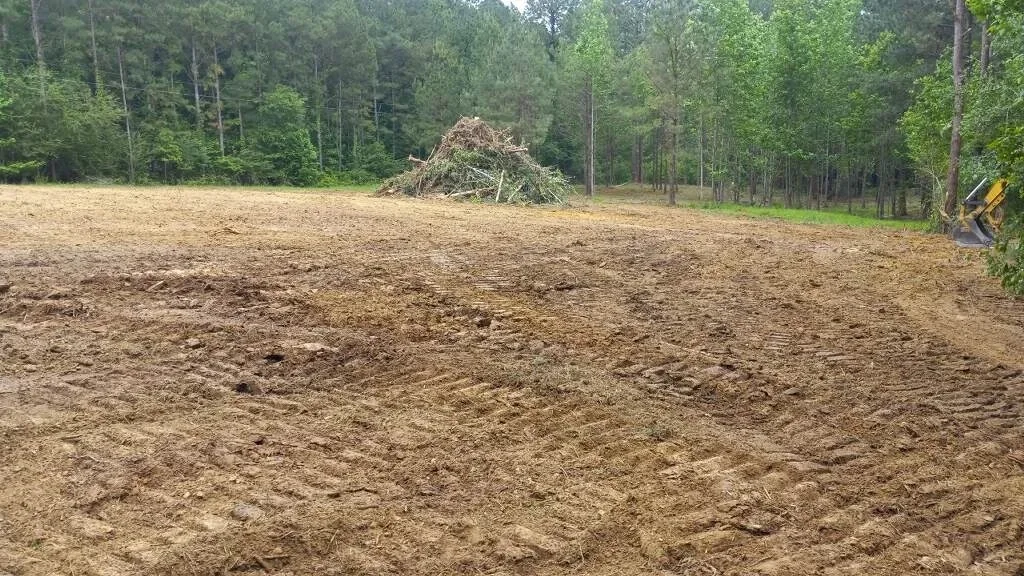
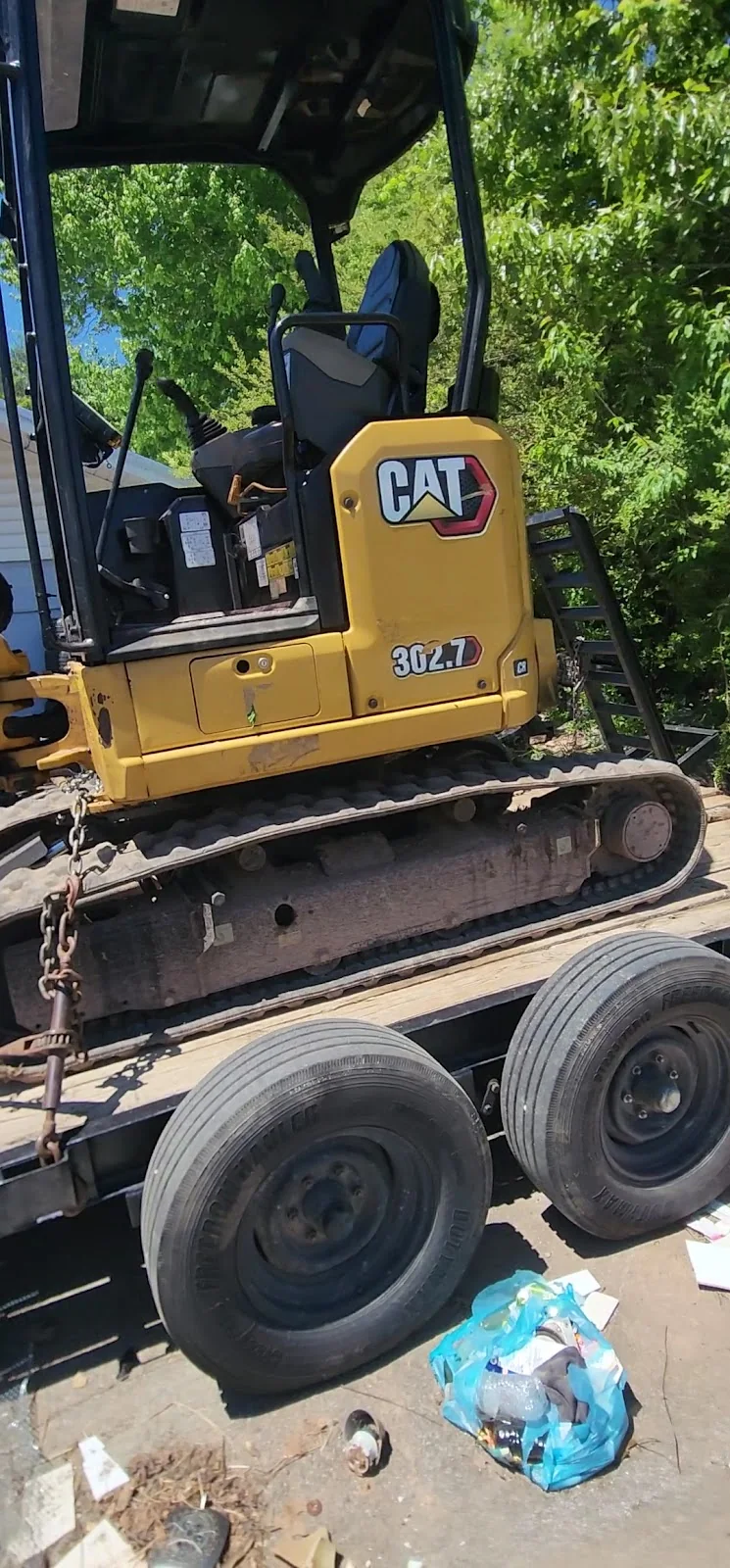
Quotes cluster around scope, not marketing. A single trench or footing is a small job; a full site cut for a new build is a different animal with its own equipment, hauling, and disposal line items. Slope lots above the county average carry more dirt to move and more water to manage, and that shows up in the number honestly, not as an add-on.
| Scope | Typical range | What drives it |
|---|---|---|
| Single footing, short trench, or small pad | $1,800–$4,500 | Access, depth, and how much dirt stays on-site |
| Driveway base repair or re-grade | low end, single dig | Drainage correction and base depth |
| Small building pad on sloped ground | upper half of single-dig band | Cut depth and uphill water control |
| Full site excavation for new construction | $6,000–$15,000 | Cut-and-fill volume, hauling, drainage |
| Steep-lot site work with engineered drainage | top of full-site band | Grading plan, retaining needs, water management |
Numbers move with soil type and how much material has to leave the property. The Buncombe County grading cost breakdown is the working reference for line-item ranges; treat any bid that omits drainage and hauling as incomplete rather than cheap.
Water is the first question, structure the second
The federal disaster record explains a large share of western North Carolina excavation and re-grading calls: 19 declared events touch this county (1973-2026), overwhelmingly storm and flood family. Each of those events pushed water at grades that were built for a drier assumption. In Fairview, where a lot may drain an entire hillside, the drainage question comes before anything else. Where does the uphill runoff go? Are the gutters discharging somewhere that makes sense? Does the driveway crown shed water off both edges or channel it into the house?
The NC Licensing Board for General Contractors sets the threshold where a project shifts from handy work to licensed general contracting, and any excavation tied to a building permit gets reviewed against grading and drainage requirements before a shovel moves. Stormwater control measures and erosion protections during the work are not optional in a county that floods, and the EPA maintains the reference material on construction stormwater that crews are trained against. A Fairview excavation that ignores water is a Fairview excavation you will pay for twice.
Choosing a Fairview crew without getting sold a hole
Three checks that separate the crews that fix ground from the crews that move dirt: ask whether they walk the existing grade before quoting; ask what happens to the dirt they remove (a smart cut balances on-site instead of hauling billable loads off); and ask how the job stays dry through a normal Fairview thunderstorm. The answers tell you whether they read the lot or just the request.
The excavation contractor overview covers what a proper first visit includes, and the Fairview grading page picks up where excavation ends and the finish grade begins. If you are still sorting out scope, the honest sequence is always: find the water, fix the base, then cut. Reversing that order is how Fairview lots end up re-excavated within five years.