The real cost driver here is getting in and getting out
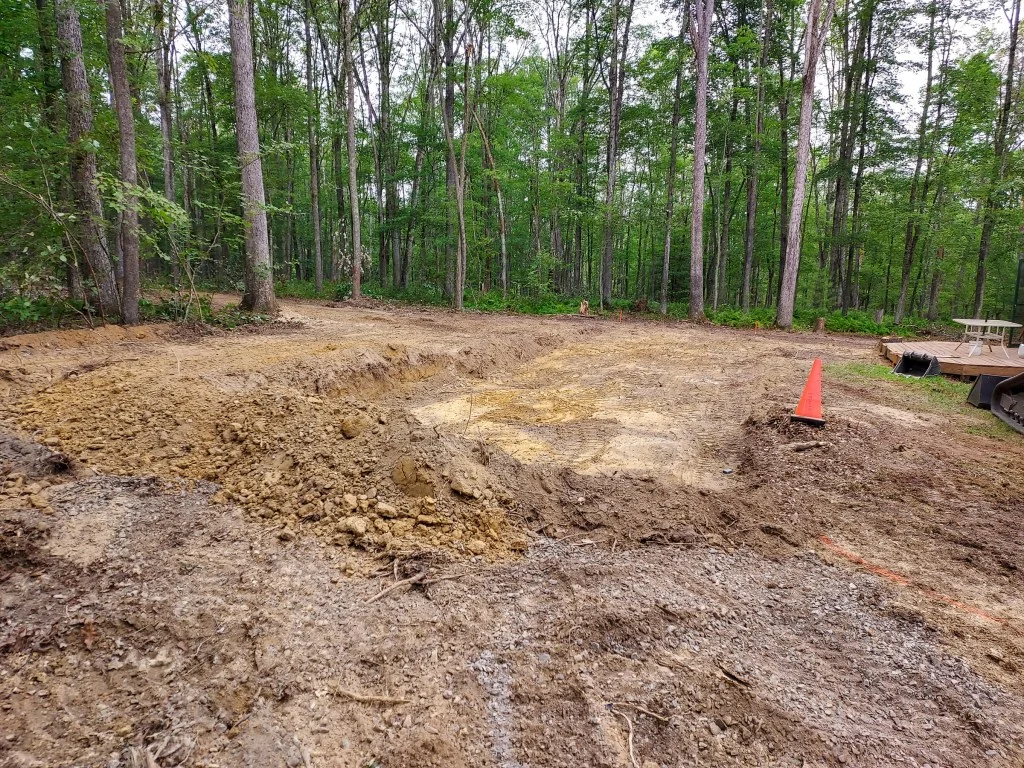
Most excavation quotes in Candler are decided before the digging starts. The lot, not the soil, sets the number: a single-lane gravel drive that switchbacks up to a homesite, a culvert too small for a loaded dump truck, a gate that a full-size excavator cannot clear. When the machine has to be downsized and the spoil has to be hauled out in a small dump trailer instead of a tandem, the same foundation hole costs meaningfully more than it would on a flat lot with curb frontage near the county seat in Asheville.
Drive up almost any of the hollows off Pisgah Highway or Morgan Hill Road and you can see the problem in person. The first quarter mile is often fine, then the grade steepens, the gravel thins out, and the road narrows to one lane with a soft shoulder dropping toward a creek. A tandem dump truck loaded with 12 tons of gravel does not like that combination in July, and it really does not like it in February. Crews who work this side of Buncombe County know which drives will take a tri-axle and which will not, because a truck that gets stuck is a half-day lost and a tow bill nobody budgeted for.
The second half of the equation is where the dirt goes. Excavated spoil rarely stays on site in these hollows. There is nowhere to spread it, and piling it on the downhill side just creates a slide waiting for the next heavy rain. That means trucking it out and, on most jobs, trucking gravel or crushed stone back in for footings, driveways, and drainage. In Buncombe County the aggregate comes from a limited number of quarries, and every load is priced with a haul distance attached. A homesite far up a Candler ridge is simply farther from the scale house than a lot in West Asheville, and that distance shows up as a per-load premium no excavator can wish away.
This is also why two neighbors on the same ridge can get quotes that differ by thousands. One has a wide, graded drive with a turn-around at the top. The other has a steep, narrow track with a hairpin and no place to turn a truck around. Same soil, same square footage, very different job.
What the scope looks like, line by line
Below are working ranges for the pieces of a typical footing and foundation dig in this area. Treat them as a planning tool, not a bid. Access and haul can move a job within the band but never outside it.
| Scope item | Typical range |
|---|---|
| Strip footing excavation only (house or addition) | $1,200–$4,500 |
| Full foundation dig, standard access (footings, stem wall, backfill) | $3,500–$9,000 |
| Full dig with restricted access (small machine, hand work, long carry) | $7,000–$14,000 |
| Deep or walkout basement excavation, engineered walls | $10,000–$18,000 |
| Spoil haul-off and gravel import (per load, distance-dependent) | Quoted per job |
Any quote that omits haul-off and import as separate line items is not cheaper. It is incomplete. Ask where the dirt is going and where the stone is coming from. A legitimate Candler excavator will name the quarry and the disposal site without hesitating, because they know the route and they know what a load actually costs once fuel and time are factored in.
One line item that catches people off guard is the imported stone for the driveway itself. Building a foundation on a steep lot usually means improving the access drive first, sometimes with a load or two of #57 or crusher run just to get the machine and the concrete truck to the hole. That work is real and it is not free, but it is the difference between a project that moves and a project that stalls on day one.
Slope, water, and why the hole has to be right
Candler sits in the folds west of Asheville, and the terrain does not forgive a sloppy hole. Cut into a slope without proper benching and the uphill side sloughs in after a rain. Leave the footing trench open and a summer thunderstorm turns it into a mud canal. The federal disaster record for this county is a fair reminder that water arrives here on its own schedule. The National Weather Service flood and storm guidance is worth reading before scheduling an open dig in the wet season.
Spring is the tricky season. The ground is still saturated from winter, and a three-inch rain can fill a footing trench overnight. Crews who dig here regularly will often push footing work toward late spring or early fall when the soil has had a chance to drain, or they will plan to cover trenches and pump them if the forecast turns. That is not overcaution. It is what the terrain requires.
The code side matters too. Foundation drainage and footing bearing are not optional details. They are the difference between a foundation that lasts and one that settles. The International Code Council publishes the residential provisions that local inspectors work from, and footing depth below frost, drainage plane, and backfill compaction are all inspected items here. In Buncombe County, inspectors also look closely at how the site drains after backfill, because a foundation that sits in a puddle will find a way to complain about it.
Matching the dig to the build
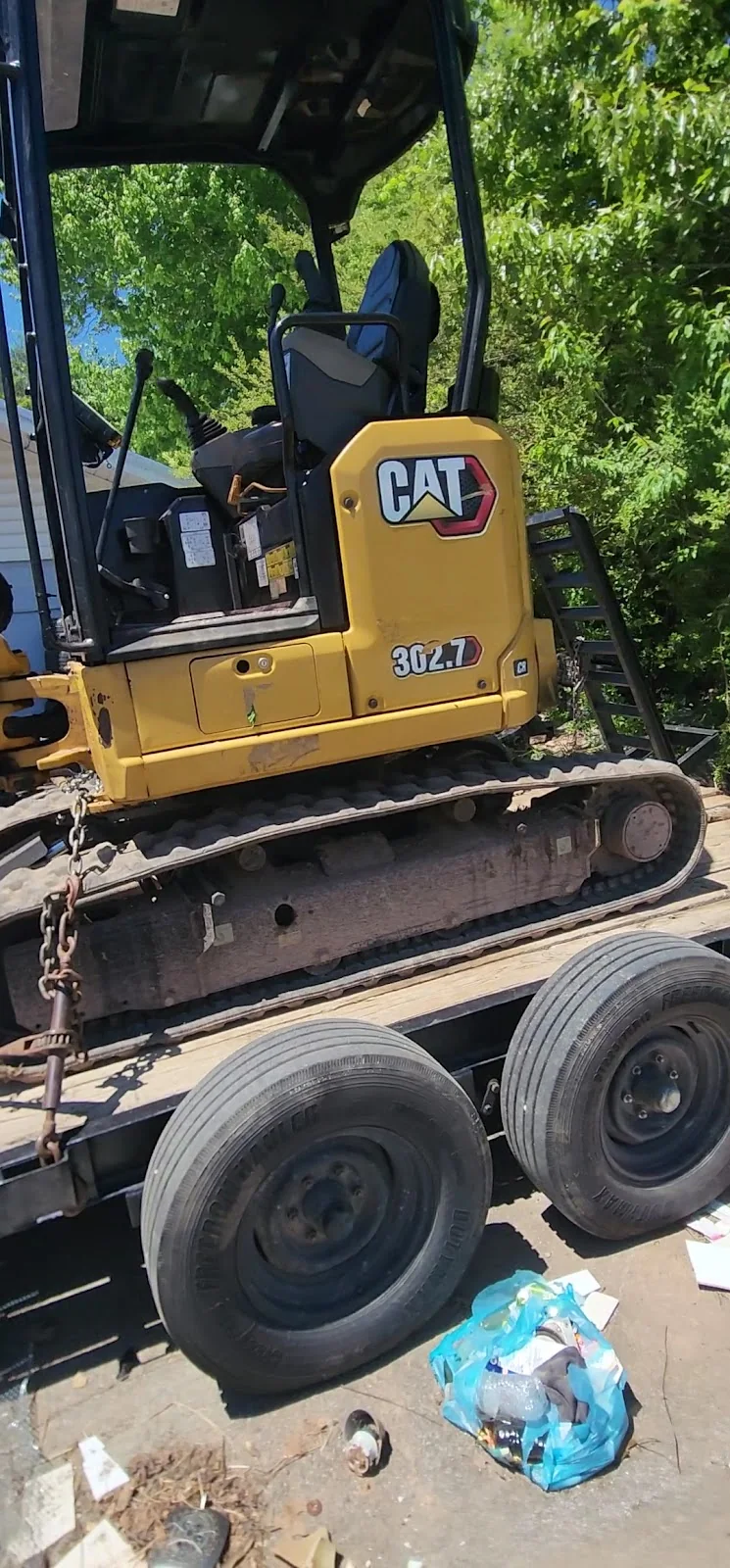
A footing-only dig for a small addition is a very different job from a walkout basement on a Candler hillside, and the equipment list changes accordingly. Compact machines reach places a full-size excavator cannot, but they dig slower and haul less per trip. On steep lots, the sequencing matters: bench, dig, set forms, pour, backfill, restore drainage. It has to be planned before the first cut, because a mistake in order means re-excavating ground you already paid to move.
Walkout basements are common on these slopes, and they add a layer of complexity. The uphill wall often needs engineering, the excavation is deeper, and the spoil volume is much larger. On a tight lot, that means more truckloads out and more stone in. If your project also includes regrading the site after the build, the Buncombe County grading cost breakdown covers that separate scope, and the foundation excavation overview walks through the sequence in more detail.
Whoever runs the machine should be able to explain, in plain terms, how they will handle the spoil, where the stone is coming from, and what happens to the hole if it rains for three days. If those answers are vague, keep calling. On a Candler hillside, the plan for the water is as important as the plan for the dirt.
Choosing a crew in this market
Ask for references on Candler-area hillside lots specifically. A crew that only digs flat subdivision pads will struggle the first time a driveway is too narrow for the trailer. Confirm the contractor's licensing status through the NC Licensing Board for General Contractors, since larger excavation-and-build scopes cross the threshold where a license is required. And get the haul and import costs in writing before the machines show up.
It also helps to ask how long the crew has worked in this particular corner of Buncombe County. Someone who knows the difference between the clay-heavy ground near Hominy Creek and the rockier slopes further up toward the Blue Ridge will sequence the job differently, and that local knowledge shows up in fewer surprises once the digging starts. Local crews who work these hollows regularly are listed through the Candler grading and excavation directory.