What the dirt in Buncombe County does to your pad budget
Start with what the excavator's bucket actually hits. Around Asheville, most residential lots sit on one of three things: expansive red clay that swells when wet and shrinks when dry, weathered rock and saprolite that blasts into a different price category, or undocumented fill left behind by a developer who graded a ridge and walked away. Each one changes the scope, and none of them show up on a Zillow listing.
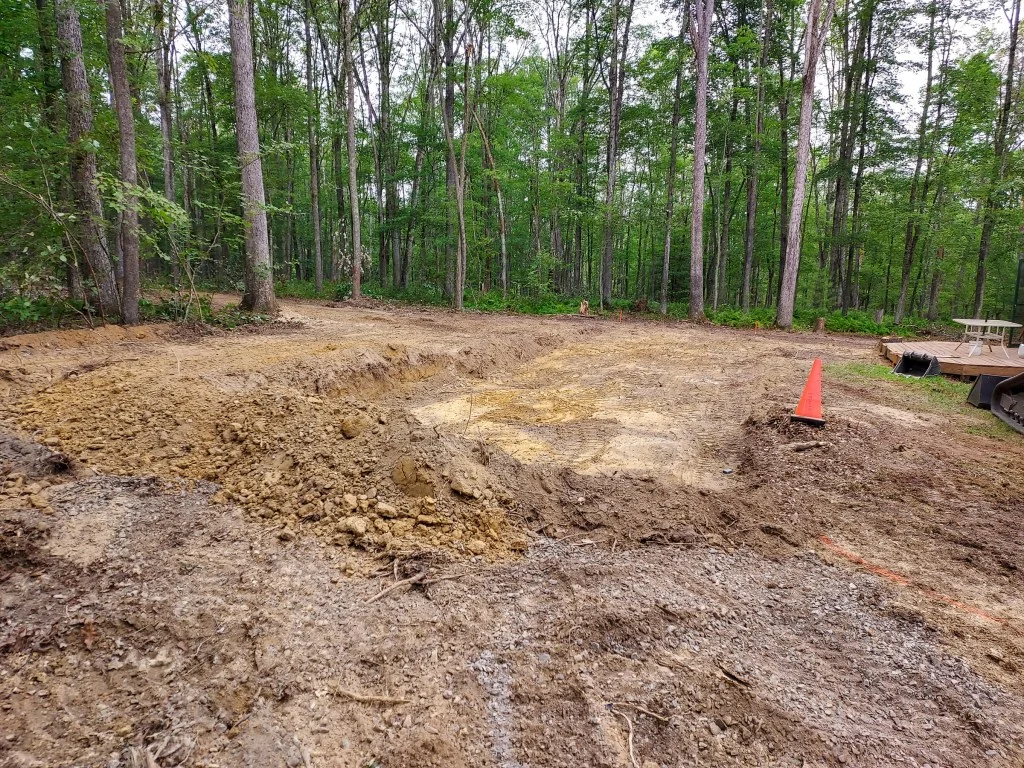
Red clay is the county's default subsoil. It drains poorly, holds water against the pad's downhill edge, and punishes a crew that skips undercutting and compacting in lifts. Rock is the wild card — a lot off a Weaverville ridge can turn a two-day cut into a week of hammering and hauling, and hauling costs money by the truckload. Old fill is the quiet one: it compacts unevenly for years, so a pad placed on it needs more excavation and often a geotextile separation layer before structural fill goes down.
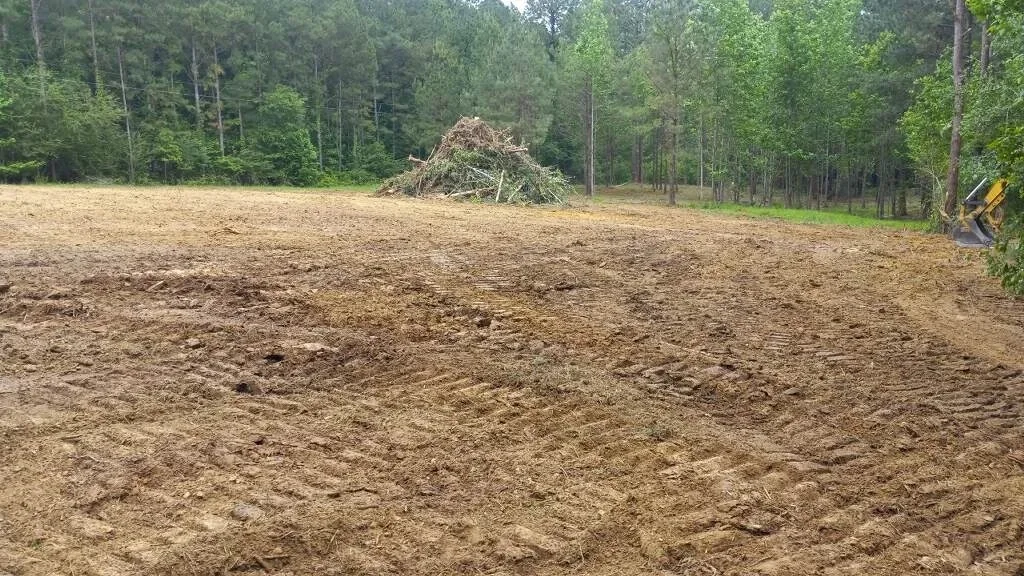
A pad is not just flat dirt. It is compacted structural fill, a positive drainage plane, and a surface that will hold a foundation without settling. On Buncombe slopes, getting that combination right is most of the job.
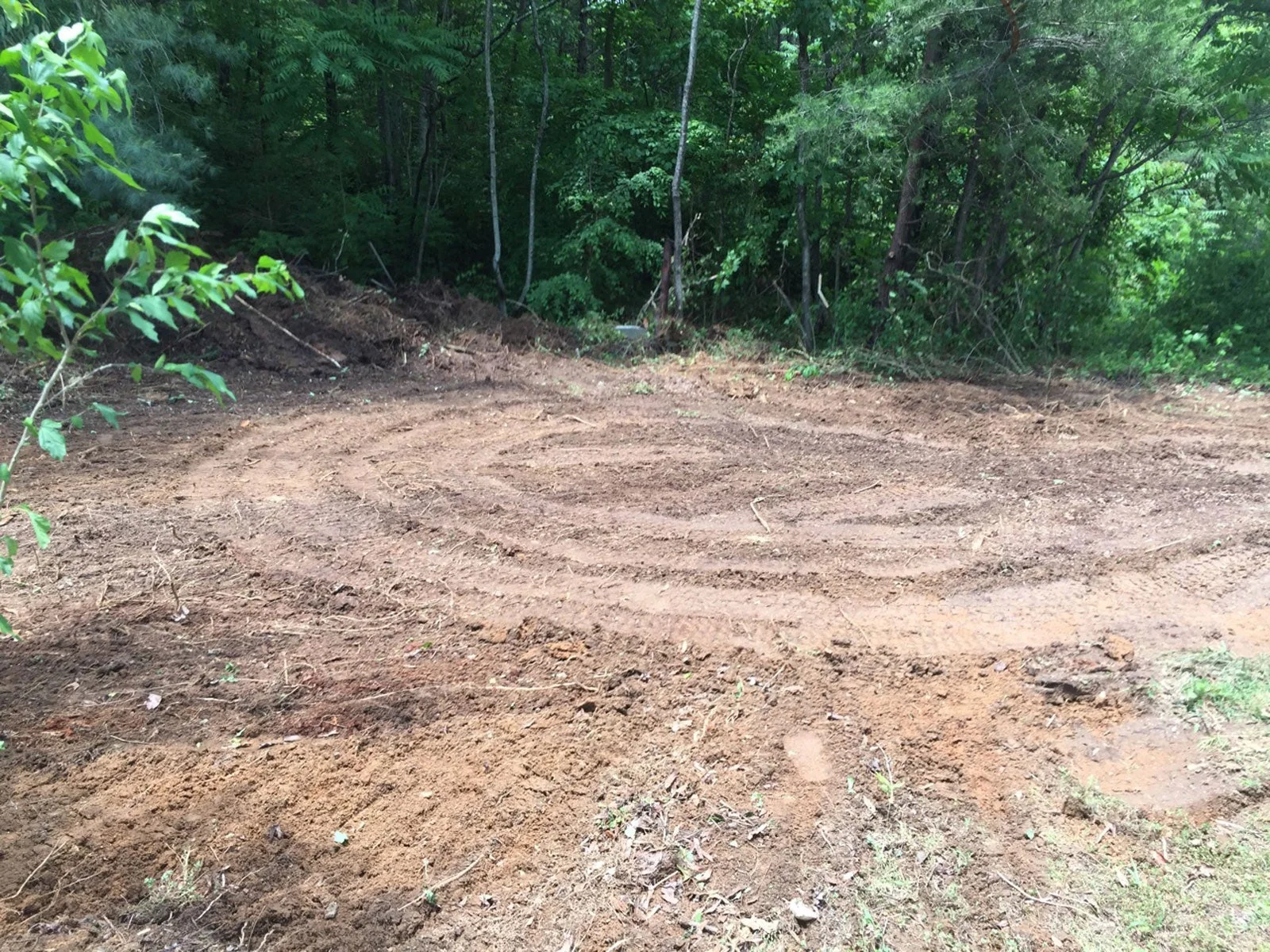
What surprises out-of-state buyers most is how shallow the topsoil runs in the French Broad valley and how fast it gives way to clay on the ridges above. In flatland markets, contractors strip twelve inches of loam and start building. Here, a crew may scrape four inches of organic material and immediately hit sticky red clay that refuses to drain. That clay has to be shaped, crowned, and drained deliberately, or the first wet spring will find every low spot on the pad.
Rock shows up in patterns. Lots near the Blue Ridge escarpment and higher ridges tend to have more shallow bedrock, while bottomland parcels along the river corridors often hold deep alluvium and old fill. Neither is automatically better. Deep alluvium means more fill volume to place and compact. Shallow rock means blasting or hammering, but the pad may need less structural fill once the rock is cut to grade. An honest excavator will tell you which one your lot looks like before the quote, not after the first day of digging.
House pad pricing by scope: what each row actually buys you
The table below reflects working ranges for Buncombe County and the surrounding mountain counties. These are not quotes. A pad price depends on cubic yards of cut, cubic yards of fill, haul distance, and whether rock shows up — and rock always announces itself late.
| Scope of work | Typical NC mountain range | What drives it |
|---|---|---|
| Basic cut-and-fill pad, gentle lot | $6,500 – $11,000 | lot size, cut volume, how close the grade is already |
| Pad with major grading and drainage | $11,000 – $18,000 | slope percentage, swales, underdrains, outlet path |
| Rock excavation add-on | $3,500 – $15,000+ | rock hardness, hammer vs. blast, haul-off tonnage |
| Engineered fill / old-fill correction | $4,000 – $12,000 | depth of unsuitable material, testing, compaction lifts |
| Steep-lot pad with retaining wall | $18,000 – $35,000+ | wall height, engineering, backfill, drainage behind wall |
An Asheville city lot inside the 28801 or 28806 ZIP codes may price differently from a Leicester or Black Mountain parcel, not because the work is different but because access, trucking, and stockpile room change how many days the crew spends on site. Narrow driveways and overhead lines slow everything down.
Access is the line item nobody budgets for. A pad on a wide, straight gravel drive in Candler moves fast. The same pad volume on a hairpin driveway off Town Mountain Road moves at half speed, and the trucking cost per yard climbs with every extra minute of backing. When you compare two bids, compare them against the same access assumptions or you're comparing nothing.
Haul-off is the other invisible number. Mountain lots often can't keep all the spoil on site because there's nowhere to put it without creating a new slope problem. Every yard that leaves the property pays for the truck, the fuel, and the tipping fee at the receiving site. Ask each bidder where the dirt is going. A vague answer usually means a change order later.
Why slope is the line item flatland builders forget
Buncombe County terrain is the reason a house pad cost in NC runs higher here than in the Piedmont. A lot that falls eight feet across the building envelope needs a cut on the uphill side and fill on the downhill side, and that fill has to be benched into the slope so it doesn't slide. Benching is not optional. It's how the pad stays put after a wet winter.
Water is the other half of slope. Uphill runoff has to be intercepted before it reaches the pad, or the fill saturates and the foundation moves. Swales, subsurface drains, and a defined outlet are part of the pad scope on any hillside lot around Asheville, and the federal record backs up why: 19 federally declared disaster events have touched Buncombe County since 1973-2026, most of them storm and flood related. That history is why local inspectors and engineers treat drainage as structural, not cosmetic.
If your lot is genuinely steep, the pad scope overlaps with retaining structures and engineered walls — our steep lot house pad guide walks through what that adds.
The local weather pattern reinforces the point. The National Weather Service (weather.gov) tracks the repeated flood and heavy-rain events that shape how Buncombe County regulates grading and stormwater. Mountain storms drop a lot of water in a short window, and a pad that sheds that water poorly will fail in a way that's expensive and sometimes dangerous. Benching, keying the fill into the slope, and a defined outlet are the three moves that separate a pad that lasts from one that gets repaired.
There's a housing character piece too. Asheville's older neighborhoods sit on small, hand-graded lots, while newer ridge development pushed construction onto steeper ground that earlier generations left alone. That means today's pad bid often carries a slope cost the original county road builders never dealt with. Recycling the cut into the fill on site keeps haul costs down, but only if the material meets fill spec. Red clay often does not without treatment, and that's when a flat-looking job gets complicated.
Permits, code, and who is allowed to do the work
Grading and fill placement that supports a structure is regulated under the North Carolina State Building Code, administered through the NCDOI Engineering Division and the Building Code Council (ncosfm.gov). In practice, that means a building permit covers the pad as part of the foundation scope, and the county inspects fill compaction and drainage before concrete goes down. Skipping the permit on a structural pad is the fastest way to inherit a foundation problem.
Contractor licensing matters too. Grading-only work below the state's threshold can be done by unlicensed operators, but once a project's total cost crosses $40,000 — common on steep-lot pads with walls — the general contractor must hold a license through the North Carolina Licensing Board for General Contractors (nclbgc.org). Ask for the license number and verify it. A contractor who treats that as an insult is telling you something.
On lots with septic or well placement adjacent to the pad, setbacks and disturbance limits come into play. Those are county environmental health rules, and they can shrink the usable building area before you ever talk price.
Environmental review layers on top of the building code in the steeper parts of the county. The U.S. Environmental Protection Agency (epa.gov) sets the framework for stormwater and erosion control that mountain counties enforce during grading, and disturbed acreage on some larger lots triggers a state erosion control plan. A pad that moves more than a small area of ground can't wait until after the permit to plan its silt fence and sediment basin. The fines are real, and so are the delays.
Foundations in this county also sit close to slopes that engineers watch. The International Code Council (iccsafe.org) publishes the model code provisions on foundation setbacks from descending slopes that the state code adopts in spirit. A pad set too close to a steep drop, without the right setback, can force a redesign that costs more than the pad ever did. Bringing an engineer into the site review early is cheaper than solving that problem mid-build.
How to keep a pad bid from drifting
Three habits protect your budget on mountain lots:
- Get a soil look before the quote. A bid written without a test pit or probe is a guess. Red clay, rock, and fill price differently, and the contractor needs to know which one is there.
- Price cut and fill by volume, not by the job. Cubic-yard pricing keeps change orders honest when the bucket finds more rock than the probe did.
- Ask where the water goes. If the bid doesn't name a drainage outlet, the pad scope is incomplete. That's a callback waiting to happen.
To compare the pad against the broader earthwork picture, see how much grading costs, and for the full sequence from clearing to final grade, our site prep and building pads guide maps it out.
Two more habits help on Buncombe lots specifically. First, photograph the site before any equipment arrives, including the driveway and the roadside where trucks will turn. If a dispute over damage or access comes up, photos settle it. Second, ask the contractor to walk the drainage plan with you at the end, pointing out the swale, the underdrain, and where water leaves the property. A pad that drains as designed is worth more than a pad that merely looks level when the crew packs up.