Where the water comes from on a Fletcher lot
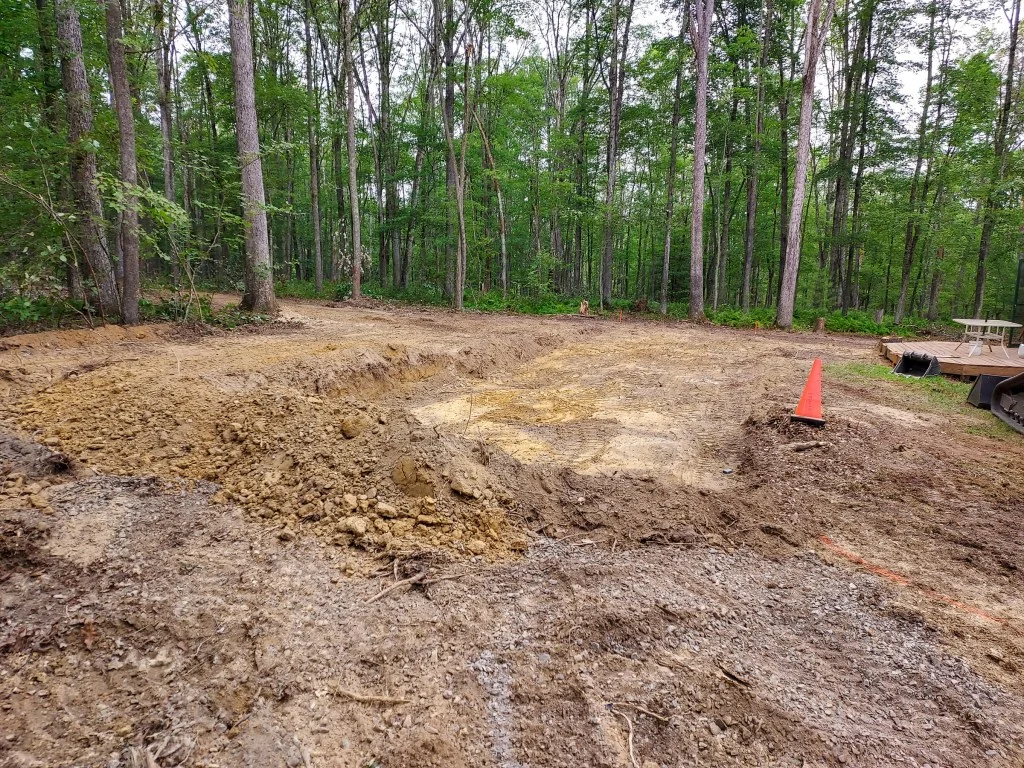
Fletcher sits in Henderson County at the foot of the Blue Ridge, where the terrain shifts from the French Broad valley floor to slopes that climb hard toward however the lot was carved. The dominant grading problem isn't the flat part of the yard. It's what happens when rain lands on the uphill side of the property: on a cut-and-fill lot, that water hits the back slope, sheets toward the house, and finds the lowest point along the foundation. If the grade wasn't built to intercept it, the crawl space or slab edge takes the hit. The fix starts with reading the lot's actual high point and flow path, not guessing from the street.
Drive through Fletcher neighborhoods like the ones off Howard Gap Road or along Cane Creek and you can spot the pattern: homes cut into the ridge on one side, fill pushed out on the other, and a back yard that drains straight toward the structure. The cut side of the lot is where water enters; the fill side is where it wants to leave. A grading plan that doesn't name both points isn't a plan — it's a guess. That's why on a first walk of a Fletcher lot, the most useful tool is a level and a hose, not a skid steer. Run water down the slope, watch where it pools, and you've found the actual problem the grade has to solve.
What grading work costs in this part of the county
Fletcher sits in the same market band as the rest of Henderson County, so use the working table in the county grading cost breakdown for detailed spacing. The range below reflects what standard residential lot work runs here — not steep-lot or rock-excavation jobs, which get their own line items.
| Scope | Typical Range | When it applies |
|---|---|---|
| Regrade around the foundation | $1,200–$2,200 | Grade falls toward the house, water pooling at the slab or crawl edge |
| Swale or diversion ditch installation | $1,500–$3,200 | Uphill neighbor runoff crossing the lot |
| Full building-pad prep | $2,500–$5,500 | New construction or significant cut-and-fill rework |
| Drainage system plus grading | $3,500–$5,500 | Multiple flow paths, French drain or catch basin needed |
| Steep lot with rock or heavy fill | $5,500–$8,000+ | Equipment access limited, rock encountered, engineered fill |
Expect the top of that band only when the job involves rock, a difficult access point, or engineered fill that has to be re-compacted. Any quote that ignores drainage line items is incomplete, not cheap.
Two cost drivers show up again and again on Fletcher jobs. First is access: many lots in the older neighborhoods off Rutledge Road or near the Fletcher community park have narrow driveways, mature trees, and utility lines that make a full-size excavator impractical. A contractor who has to bring in a smaller machine or hand-dig around utilities will charge for the extra time, and that's honest. Second is soil. The valley floor near the French Broad holds clay that drains slowly and stays wet; the ridge lots carry rock, sometimes shallow bedrock that turns a simple regrade into a rock-breaking job. A quote that doesn't ask about either is guessing at your site.
Water first, grade second
Henderson County's storm history is the reason grading calls spike here. The federal record shows 16 declared events touching this county across 1978-2026, overwhelmingly flood and storm family. Each one pushed water at grades that were built for a drier assumption. The practical lesson: before anyone brings in a machine, the question is where the water goes when the ground can't take it. Gutters, downspout extensions, and a grade that pitches away from the structure are cheap. Undoing a saturated crawl space or a cracked slab is not. The National Weather Service maintains local precipitation records worth checking against your drainage plan. Grading and drainage live in the same trade for a reason — see the grading and excavation overview for how the two scopes fit together.
On a Fletcher lot, the sequence that works is intercept first, convey second, release third. Intercept means a swale or berm on the uphill side that catches sheet flow before it reaches the house. Convey means a defined path — a shallow ditch, a buried drain, a downspout extension — that moves water at a controlled slope without eroding the ground it crosses. Release means a stable outlet: a level spreader, a splash block, a storm inlet, or a vegetated area that can take the volume without washing out. Skip any one of those steps and the water finds the weakest point, which is usually the foundation or the neighbor's slope. That's why the fix is rarely just dirt. It's a system, and the grade is the skeleton it hangs on.
When clearing comes before grading
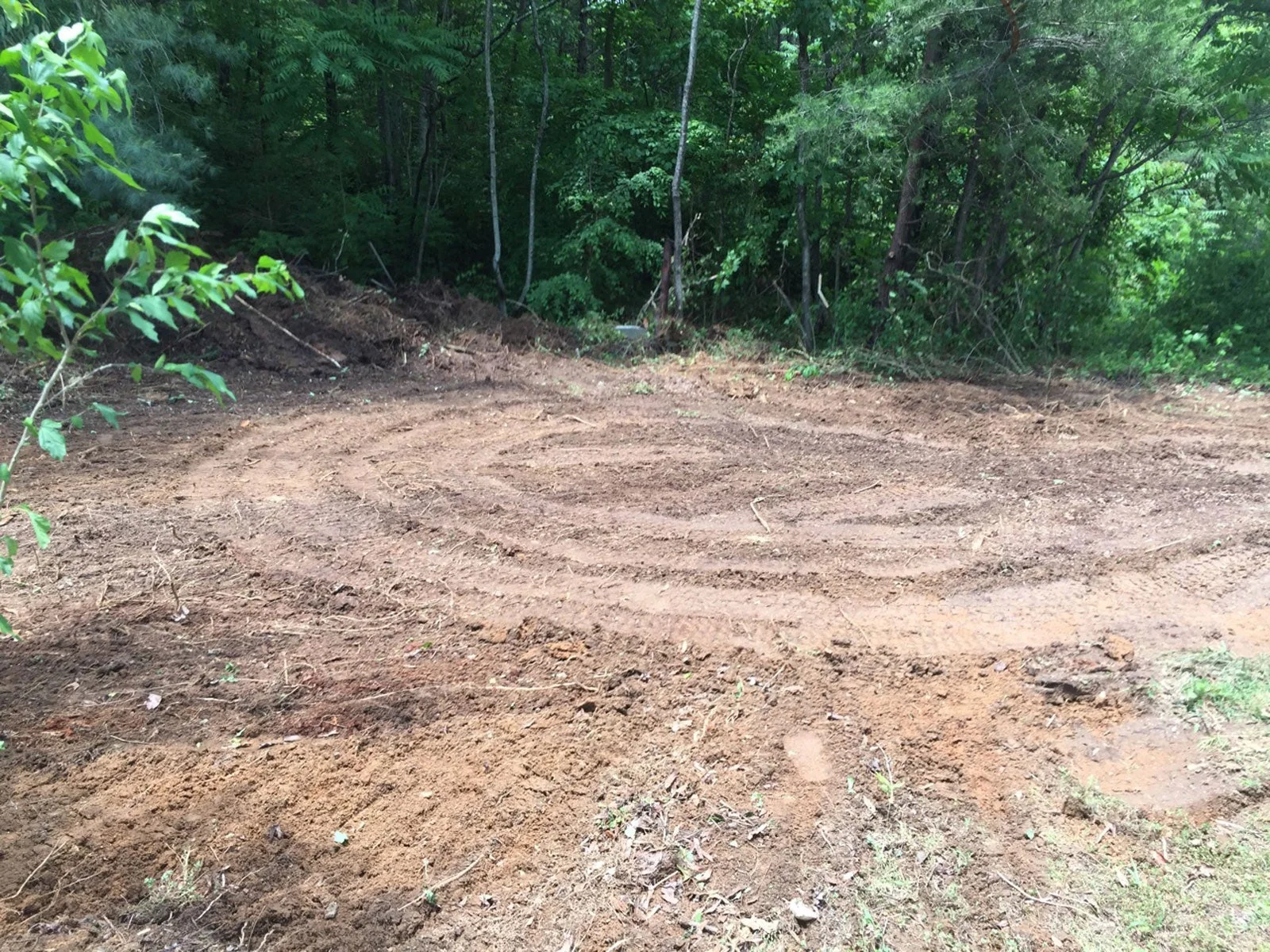
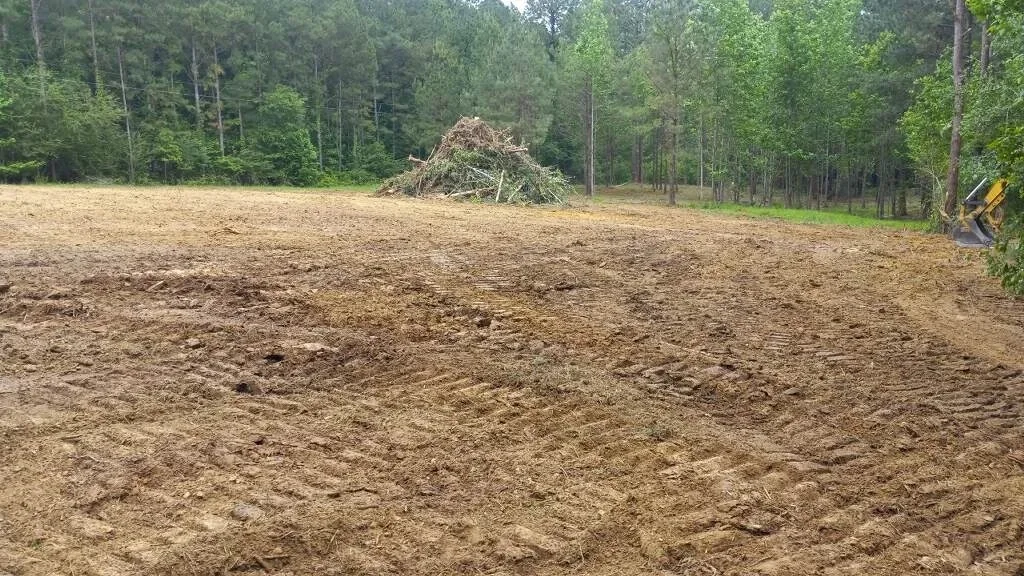
A heavily wooded Fletcher lot often needs to be opened up before grade work can even be read or built. If trees, undergrowth, and root mass are in the way, the sequencing matters: clearing exposes the actual high point and flow path, which determines the grade plan. Doing it in reverse — grading around standing timber — leaves you with low spots that reappear every spring. The land clearing scope for Fletcher covers what that phase includes and how it feeds into the grading plan.
There's a practical reason this order matters on a Fletcher lot. Roots hold soil in place, and when you pull them, you change how water moves across the ground before the grade is even set. Clearing first lets the contractor see the real high point, the real low point, and any seasonal seep that only shows up after a wet spring. On ridge lots near the Fletcher and Mills River line, that seep is often the difference between a simple regrade and a job that needs a French drain or catch basin. Skipping the clearing step doesn't save money — it hides the problem until the first heavy rain exposes it.
What to confirm before you sign
Two checks specific to grading work in this county. First, ask who carries the license on a job that alters drainage or moves significant earth — North Carolina's general contractor licensing thresholds apply once a project crosses dollar and scope limits, and grading work on structural lots frequently does. Second, for anything involving stormwater discharge, erosion control, or a lot that feeds a drainage easement, ask how the crew manages runoff during construction and whether their plan respects the EPA's stormwater guidance for disturbed sites. A grading contractor who can answer both without hedging is the one worth hiring.
One more thing worth asking in Fletcher specifically: where does the water leave the property, and has the contractor looked at what's downhill? On the slopes that drain toward Cane Creek or the French Broad bottoms, releasing water at the wrong point can send it onto a neighbor's lot or into a drainage easement that the county watches. A contractor who walks the downhill side before quoting is doing the job right. The county grading cost breakdown and the grading and excavation overview cover the scopes and ranges in more detail, and both are worth reading before you compare bids.