The one-acre line that decides your permit path
Most excavation work around Mars Hill happens on small mountain parcels where a driveway cut, a house pad, and a septic field together disturb well under an acre. But Madison County also has larger holdings — old farm tracts along the French Broad bottoms, ridge parcels being split for builds — and once a project crosses one acre of disturbed ground, North Carolina's erosion and sedimentation rules change the job. A state-approved erosion control plan, a certified designer, regular self-inspection, and ground cover established before winter all become part of the schedule. That adds cost and calendar time a sub-acre job never sees: typically a few thousand dollars in design and stabilization, plus inspections that can hold up a final grading sign-off. Before you compare bids, ask each excavation contractor where your project falls relative to that line. A bid that ignores it is not cheaper — it is incomplete.
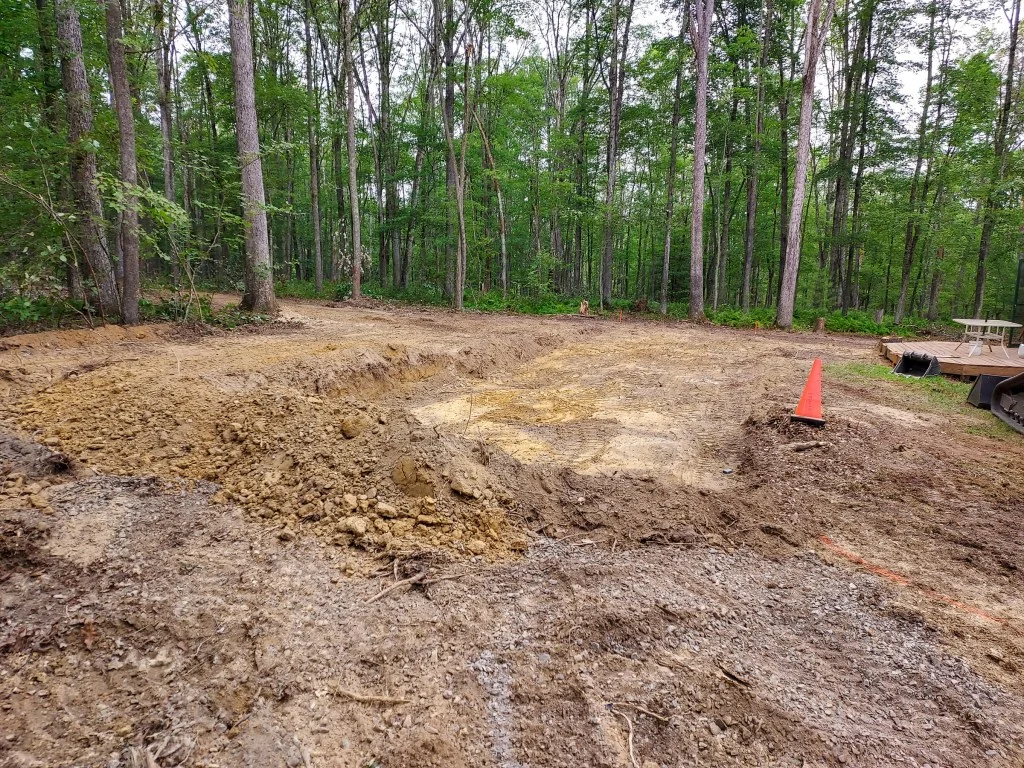
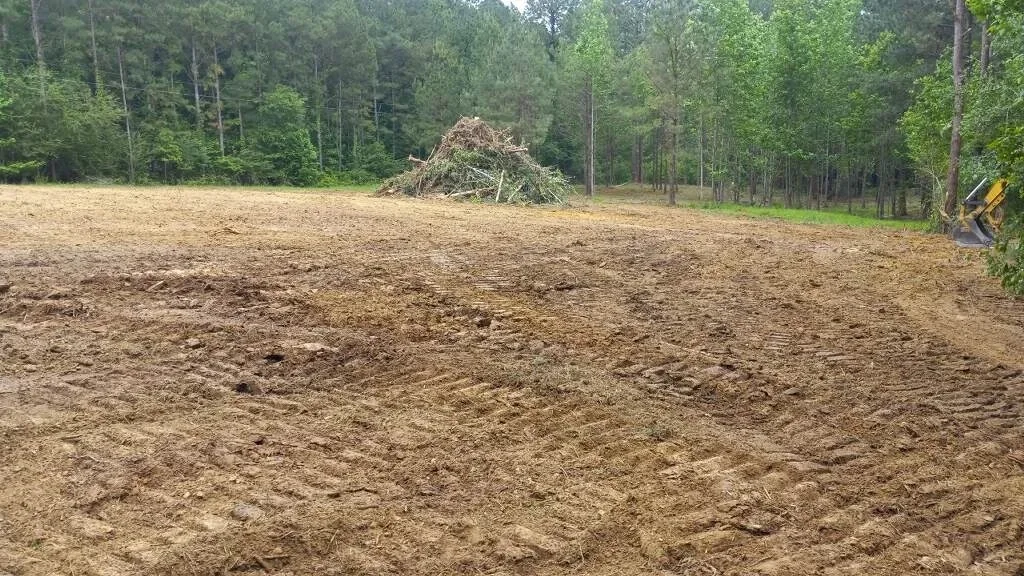
In practice, the one-acre threshold is reached faster than most homeowners expect. A 1,200-foot driveway cut at 12 feet wide already disturbs roughly a third of an acre before the pad is even scratched. Add a house pad, a turn-around, and a septic drainfield and you are often past the line on what still feels like a modest job. That is why the permit question should be asked on day one, not after the dozer shows up. The county seat of Marshall sits low in the river valley where flats are scarce; most buildable land around Mars Hill is ridge, bench, or hollow, and each of those disturbs differently. The state plan has to account for where the water leaves the site, not just where the dirt moves.
It also changes who can design the plan. Erosion-control plans for one acre or more must be prepared by a qualified designer, and the stabilization sequence is tied to the construction schedule — you cannot expose a cut in October and leave it bare through a mountain winter. Contractors who routinely work these tracts build the stabilization line item into the bid from the start. If a quote does not mention it on a larger disturbance, that is a flag, not a discount.
What slopes do to machinery and price
Mars Hill sits in the mountains for a reason. Lots climb, lots drop, and a surprising number do both across a single parcel. Tracked excavators and dozers work these grades routinely, but the cost curve steepens with them: benching a build pad into a 20-degree slope takes more machine hours, more spoil to move, and often a retaining structure at the cut. Spoil disposal matters too — if excavated dirt can't be spread on site, it has to be hauled, and hauling is priced by the load on roads that were not built for tri-axle traffic. Flatland excavation quotes and Mars Hill excavation quotes rarely describe the same job. The Madison County grading cost table shows how the line items break out once slope enters the picture.
Access is the other quiet cost driver here. Many ridge lots are reached by a shared gravel drive with a switchback that a loaded dump truck cannot climb when the surface is soft. In those cases the contractor either stages spoil at a lower landing and re-handles it with a smaller machine, or waits for dry ground — both of which show up in the price. A cut that looks straightforward on a site plan can double in machine hours once the operator is working off a narrow bench with nowhere to stack material.
Rock is the wild card. Weathered saprolite is common across these slopes and moves reasonably well, but ledge and boulder fields turn up on ridge tops with no warning. When that happens, a bid written as a lump sum for "pad excavation" can become an hourly rock charge the homeowner never planned for. That is why the honest local bids separate dirt from rock and say so in writing.
Reading a Mars Hill excavation bid
A complete bid for this terrain names the scope in measurable terms: cubic yards moved, square feet of pad, linear feet of driveway cut, and where the spoil goes. It states whether rock excavation is included or billed hourly, because hitting bedrock is a real possibility on ridge lots and the two pricing methods are not equivalent. It names the erosion-control measures and who inspects them. And on anything structural — retaining walls, foundation-bearing pads — it should reference the engineered drawings. North Carolina's general contractors licensing board sets the dollar threshold at which a project needs a licensed general contractor, and site work that supports a building often crosses it. For the grading side of the same job, see grading contractors in Mars Hill.
Two other items belong on the bid sheet. First, clearing and grubbing: stumps and root balls do not compact, so they either get buried in an approved location or hauled off, and the bid should say which. Second, drainage: a pad cut into a slope sheds water toward whatever is downhill, and the plan has to move that water without washing out a neighbor's drive or overloading a roadside ditch. Neither of those is a luxury on these hills; they are the difference between a pad that holds and one that moves in the next big rain.
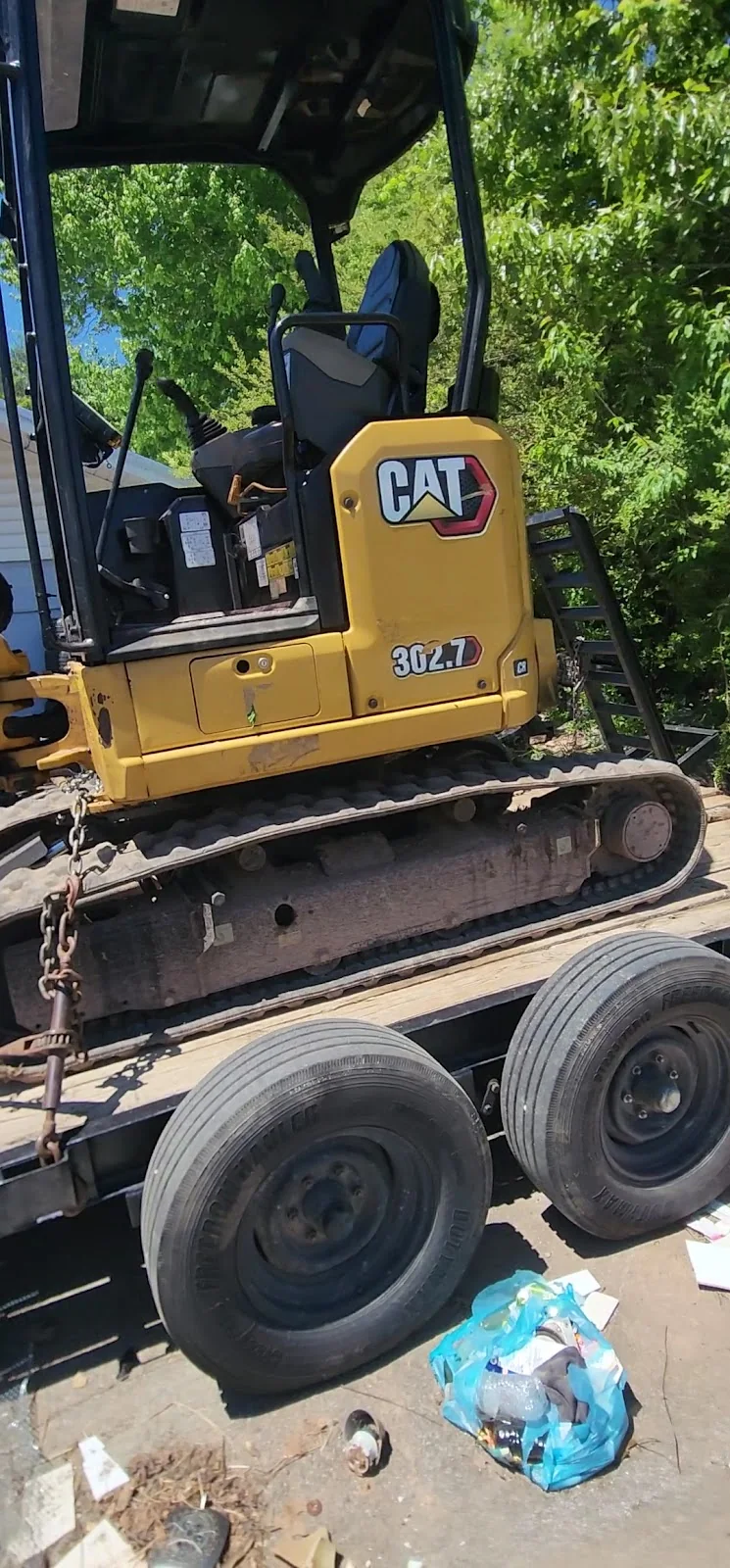
Finally, ask who is doing the work and with what. An owner-operator with a single machine may be the right fit for a footing dig and the wrong fit for a 300-foot driveway with haul-off, simply because of cycle time. Matching machine class to the job is why the same scope can come back with quotes that differ by thousands, and it is worth asking each bidder how they plan to sequence the work.
Rain, soil, and the federal record
Western North Carolina's storm history is not background noise for earthwork — it is the design condition. 21 federal disaster declarations have touched this county across 1978-2026, and the dominant family is storm and flood. For excavation that means: exposed cuts need stabilization fast, sediment barriers have to be installed before the first rain rather than after, and drainage plans must assume a heavy event, not an average one. The National Weather Service flood and precipitation outlooks are worth checking before scheduling a cut. Mountain soils here — weathered saprolite over bedrock, clay-heavy in the bottoms — behave differently wet and dry, and scheduling around that is part of doing the job right.
The clay bottoms are their own problem. Ground that drains well in July can turn into a slick, rutting mess after two days of winter rain, and a machine working in that condition does more damage than good. Contractors who know the area watch the forecast the way a farmer does, and they will push a cut to next week rather than churn a hillside that will not recover. On the ridge side, thin soils over rock mean less material to work with and a higher chance of hitting refusal sooner than a soil boring suggested.
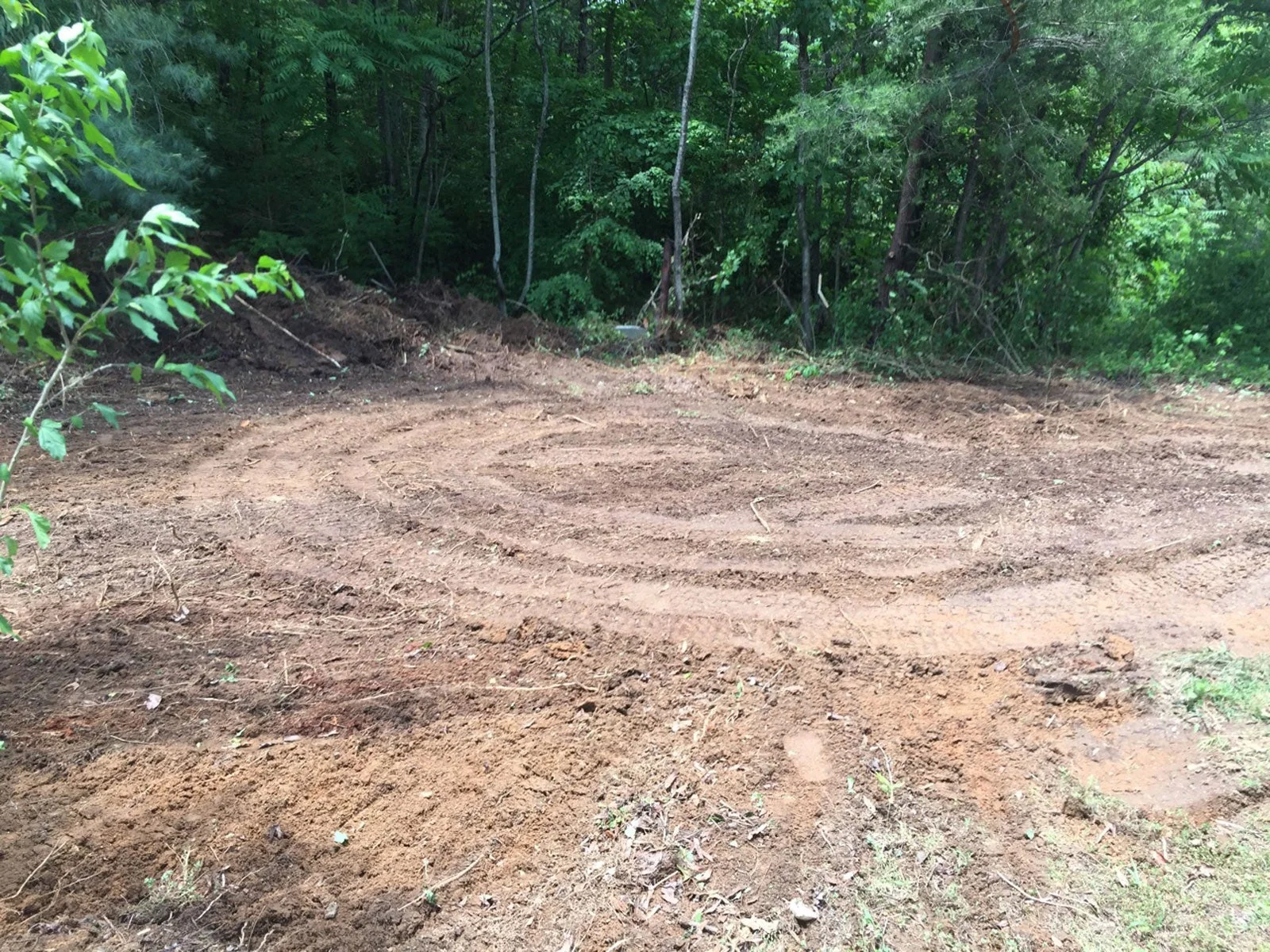
Sediment is the practical concern in all of it. A bare slope sheds mud downhill fast, and that mud ends up in a roadside ditch, a stream, or a neighbor's pond. The state rules exist for that reason, but the local instinct is the same: cover the ground, slow the water, and do not leave a cut exposed going into a wet season.
Scope and cost ranges for local earthwork
The table below reflects realistic regional bands for Mars Hill and Madison County terrain. Treat them as planning ranges, not quotes — access, rock, and haul distance swing these numbers more than anything else.
| Scope of work | Typical range |
|---|---|
| Small driveway cut or repair, good access | $1,800-$4,500 |
| Footing excavation for a house or addition | $2,500-$6,500 |
| Building pad, gentle ground, spoil stays on site | $4,000-$9,000 |
| Steep-slope pad with benching and haul-off | $12,000-$15,000 |
| Erosion-control plan and stabilization, one acre or more | $2,500-$7,000 additional |
| Rock excavation | Usually hourly; varies widely by site |
Environmental rules that touch earthwork — sediment control, stream buffers, and where fill can legally go — trace back to state and federal frameworks, with the EPA as the upstream authority on stormwater and wetlands questions. Code requirements around foundations and site preparation, including the adopted building code that governs footings and grading under structures, sit with the state code-enforcement side; the NC Office of State Fire Marshal publishes the code editions in force. The practical takeaway is that the excavation piece is rarely standalone: it feeds a building permit, a septic permit, or both, and the sequencing between them is where a lot of local delays get made.