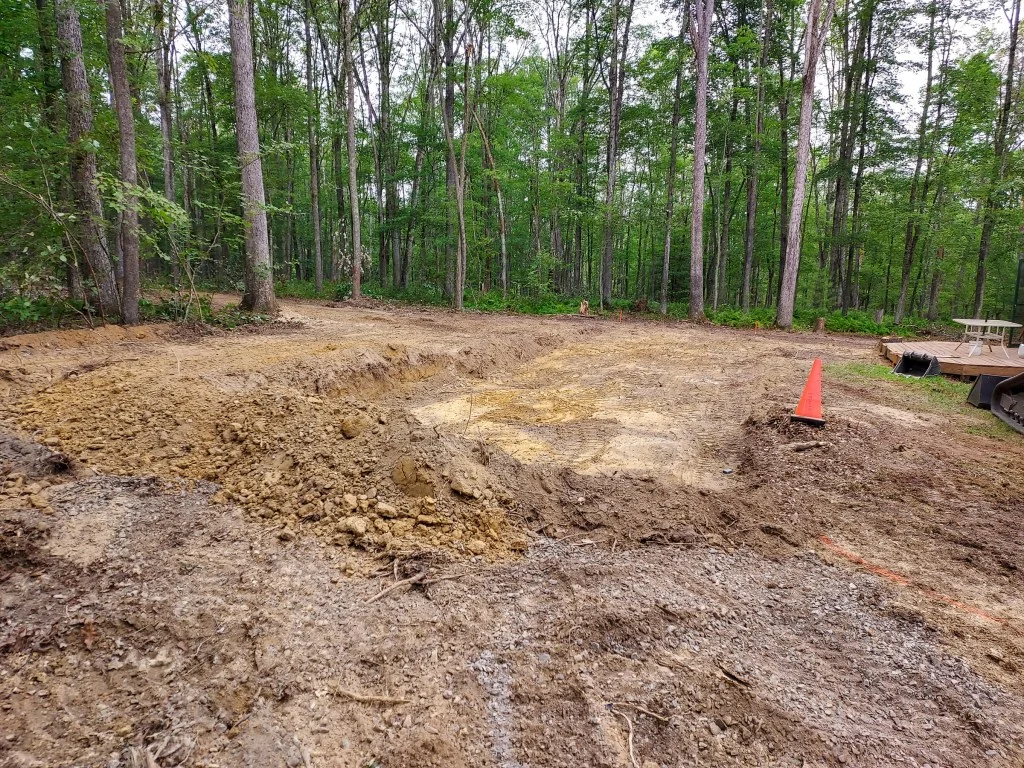
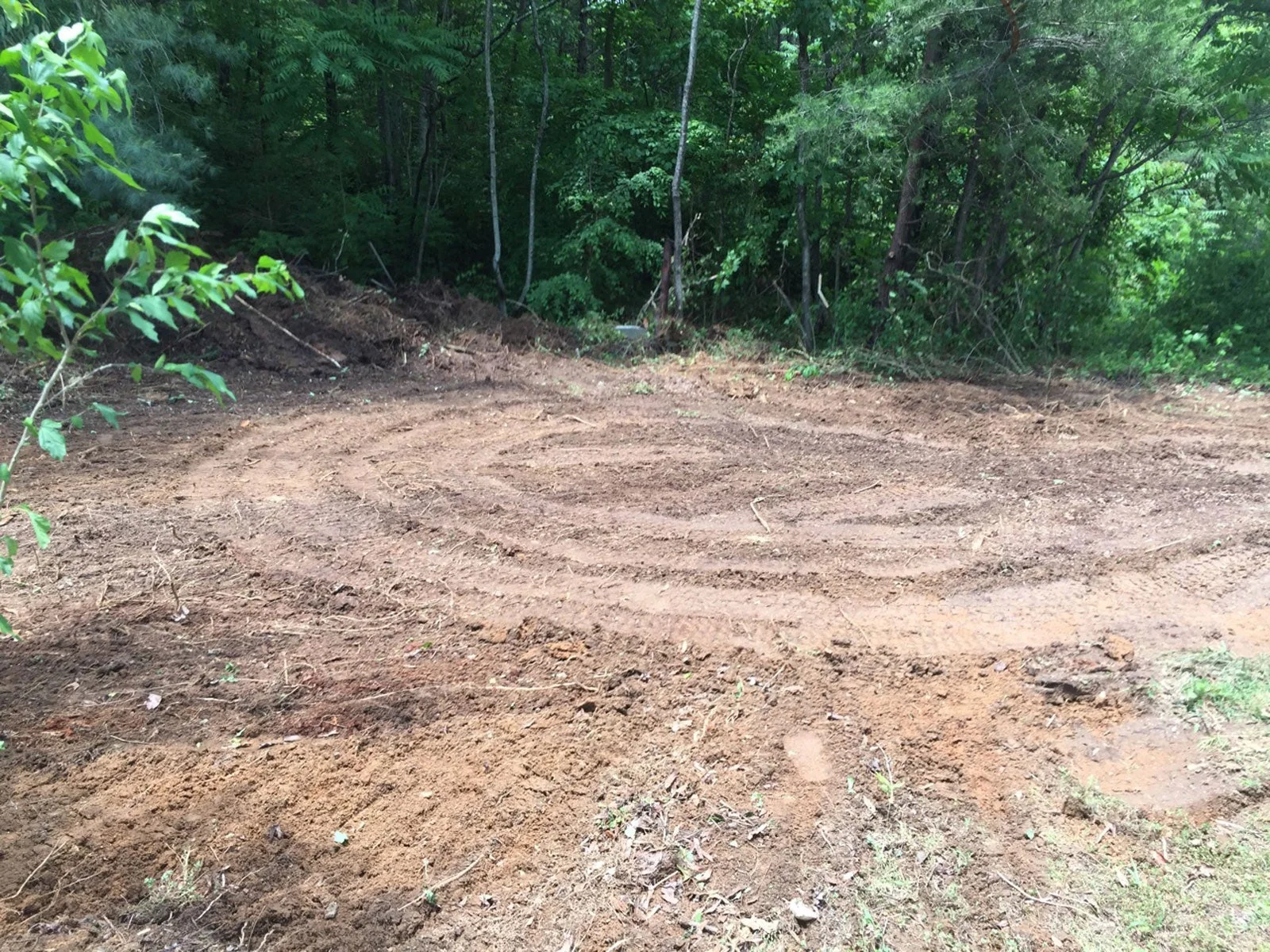
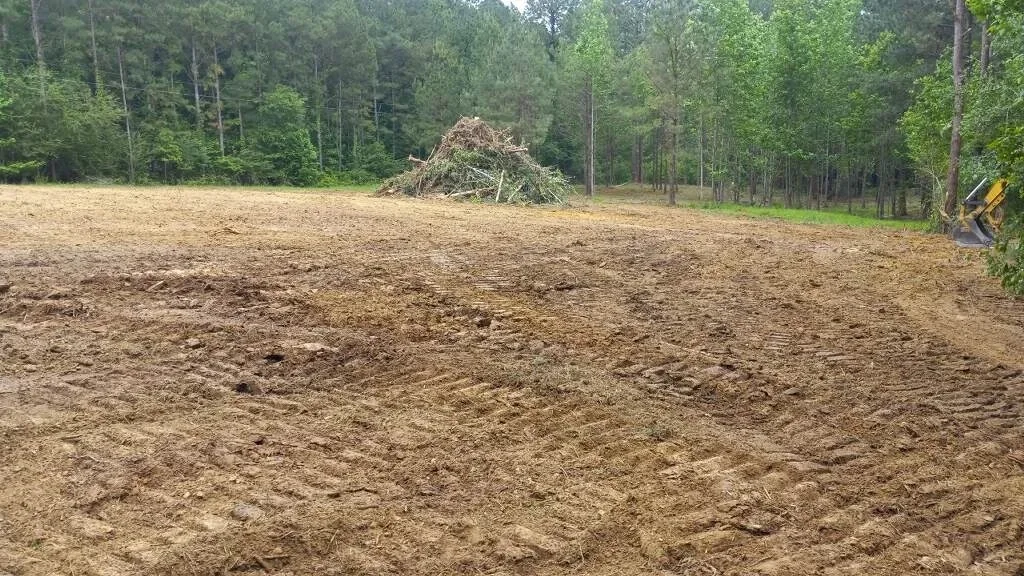
The lot shapes here make every culvert a custom job
Drive the loop around Lake Junaluska and you'll see what makes this town different from Waynesville proper: cottage lots measured in fractions of an acre, driveways that drop 20 feet from the road grade to the house pad, and mature hemlock and white pine roots threading through every ditch line. In a typical Asheville subdivision you can trench a 40-foot pipe run with a mini-excavator and be done by lunch. Here, you're often hand-working around root masses, working within inches of a property line, and building a headwall because the outfall has nowhere to go but down the slope. That's the whole game in this ZIP code: tight access and steep fall.
The house stock shapes it too. Most of the homes ringing the lake went up between the 1920s and the 1970s, when a gravel driveway and an open swale were considered adequate drainage. Sixty years later, that swale is an eroded gully, the gravel's gone, and a winter storm puts the runoff straight into the neighbor's yard. A properly sized culvert with a stable outfall fixes a problem that grading alone can't.
It's worth understanding how the lake itself was built. Lake Junaluska is a man-made impoundment, and the shoreline sits lower than most of the surrounding roads, which means the drainage from every uphill lot has to be moved deliberately. There's no natural fall line that carries water away for free. On the assembly grounds side, where the conference center, walking paths, and older dormitory-style buildings sit close together, a failed culvert under a shared driveway can affect several properties at once. On the private cottage streets, the problem is narrower but sharper: one lot, one pipe, one slope, and a neighbor downhill who notices immediately when it stops working.
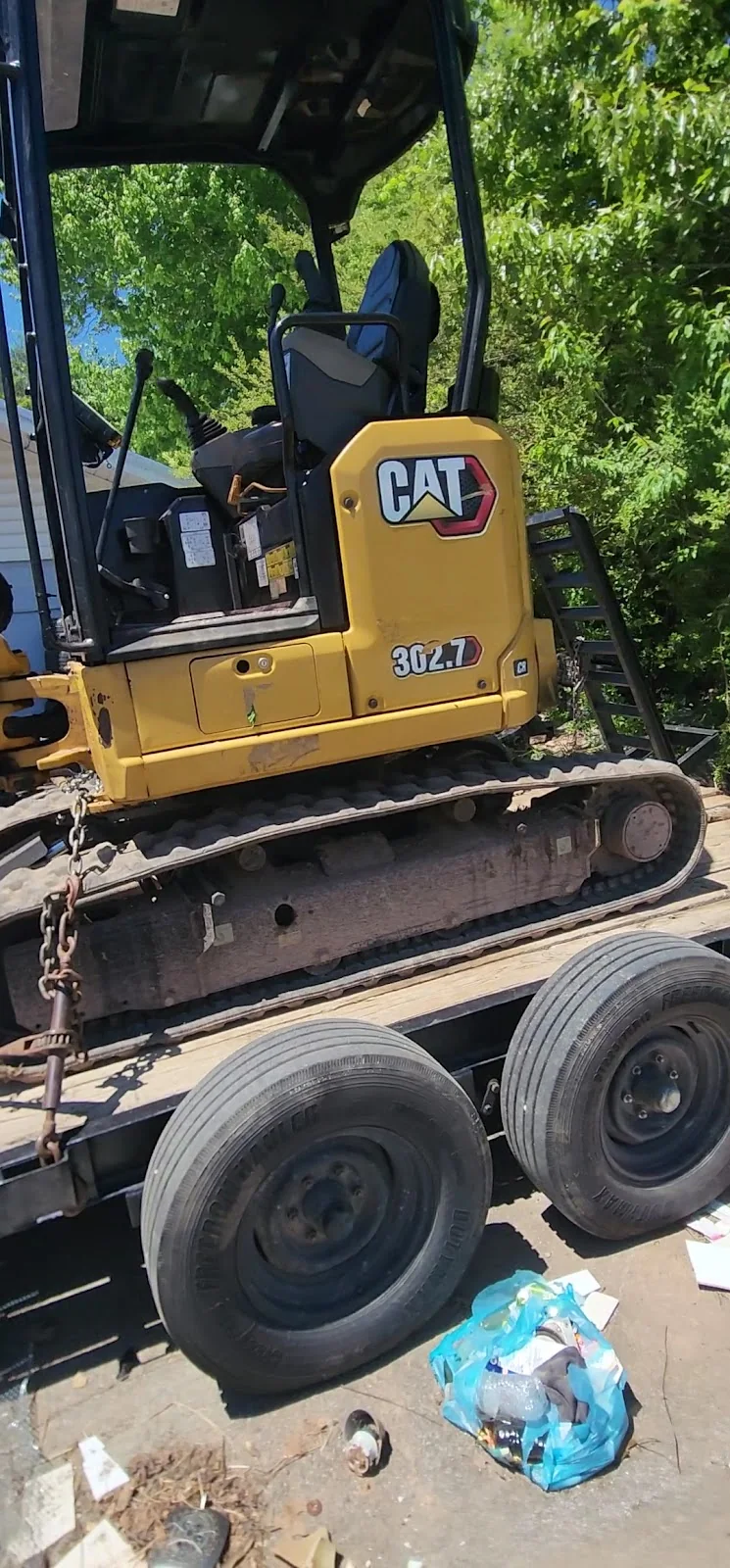
Access is its own constraint. Many of these driveways were cut for a Model A and never widened. A full-size excavator may not fit between the retaining wall and the rhododendron, so crews end up using compact equipment or doing the trench by hand. That labor reality is baked into every quote you'll get on a lakefront lot, and it's why a job that looks simple on paper costs more here than it would on a flat Waynesville street.
What a Lake Junaluska culvert costs, by scope
These are regional working ranges for Haywood County crews, not flat quotes. Access, pipe material, and outfall structure move the number more than the pipe itself does. For the interaction between pipe work and site reshaping, see the full Haywood County grading cost breakdown.
| Scope | Typical Range | What drives it |
|---|---|---|
| Replace short failed pipe, same size | $1,800-$3,200 | Length under 30 ft, easy trench access |
| New driveway culvert, 12-15 in pipe | $2,500-$4,800 | Trench length, rock, ditch grade |
| Steep lot with headwall and riprap apron | $4,500-$7,500 | Grade drop, outfall protection, erosion control |
| Culvert plus regrading the drive approach | $6,000-$12,000+ | How much site reshaping the drainage fix requires |
The bottom line: a small pipe swap on a flat lakefront lot can land under $3,000. A steep assembly-grounds-style drop with a headwall and rock apron will clear $7,000 before you've touched the driveway surface.
Two line items catch homeowners off guard. First, rock. Haywood County soil around the lake runs heavy in clay and weathered mica schist, and a trench that hits rock does not dig at the same rate as one that doesn't. There's no way to know until the bucket is in the ground, which is why reputable crews quote a range or a per-foot rate rather than pretending the ground is uniform. Second, the outfall. A pipe that ends in mid-air on a 25 percent slope will scour a ravine within a season. Adding a riprap apron, a flared end section, or a small energy dissipator is what separates a culvert that lasts from one that gets replaced in three years. That protection is often a few hundred dollars of material and a few hours of machine time, and it's the single best money you'll spend on the job.
If the driveway itself is failing, pipe work alone won't save it. That's when the scope shifts toward full grading contractors in Lake Junaluska, who can rebuild the approach, restore the crown, and tie the new drainage into a surface that actually sheds water.
Storm water is why this matters more than it used to
Haywood County's federal disaster record tells the story: 19 declared events touch this county across 1973-2026, most of them flood and storm family. Lake Junaluska sits at the low end of a watershed that drains off the Junaluska and Cold Mountain ridges, so when a heavy system parks over the county, every undersized culvert on the loop becomes a choke point. The runoff doesn't just pool. It jumps the pipe, cuts the driveway, and heads downhill. The National Weather Service flood outlooks for the French Broad and Pigeon River basins are the practical planning tool for timing any drainage work here.
None of that means a culvert has to be a commercial-grade structure. It means the pipe has to be sized for the actual drainage area above it, not for whatever the last contractor had on the truck.
There's a seasonal rhythm to it too. Late summer thunderstorms rolling off the Balsams can drop intense rain in a short window, and the ground around the lake is often already saturated from a wet spring. That combination is what turns a marginal culvert into a washout. Winter is the other pressure point: freeze-thaw cycles work on the pipe joints and the headwall, and a pipe that was fine in October can be cracked and undermined by February. Homeowners who've been through a washout tend to size up the replacement rather than match the old pipe, and that instinct is usually correct.
The other honest point is that not every water problem is a culvert problem. Sometimes the driveway was built at the wrong grade and no pipe will fix it, because the water never reaches the pipe in the first place. A crew that diagnoses before it quotes will tell you that plainly instead of selling you a trench.
Permits, sizing, and the rules that actually apply
Two regulatory realities shape almost every job here. First, any driveway pipe that ties into a public road ditch or right-of-way needs a driveway permit from the NC Department of Transportation, and the pipe size is set by the drainage area, not by what fits the trench. Second, if the work touches a stream, wetland, or the lake fringe, federal rules under the EPA Section 404 program can apply to fill or excavation in waters. For a simple driveway culvert in upland ground, usually neither is triggered, but the boundary is not obvious on a lake lot.
On the contracting side, the NC Licensing Board for General Contractors sets the threshold where a project needs a licensed general contractor, and grading and utility work can cross it. Local code enforcement under the NC Office of State Fire Marshal handles the stormwater and erosion-control side for permitted site work. The practical test: if the pipe is in the right-of-way or a drainage easement, assume paperwork is coming.
Because Lake Junaluska is an unincorporated community rather than a standalone city with its own permitting department, most of this runs through Haywood County channels, with the state stepping in for anything in the road right-of-way. That layered structure is why it pays to ask a contractor directly who pulls which permit before work starts. A crew that does this regularly in the county already knows the answer on your street. A crew that doesn't will find out the hard way, usually with a stop-work order and a delay you didn't budget for.
Erosion control is the other piece people underestimate. Disturbed ground near any drainage feature needs silt fence, inlet protection, or similar measures until vegetation is reestablished, and on a slope that happens fast or not at all. Skipping it is the fastest route to a citation and to sediment washing into a neighbor's yard or the lake itself.
How to hire this work without getting a ditch that fails
The crews that do this well in Lake Junaluska share three habits. They figure the drainage area before they quote pipe size. They tell you where the water goes after it leaves the pipe and show you the outfall protection on the estimate. And they account for the roots, the slope, and the driveway surface instead of pricing a bare trench and discovering the rest later.
Ask what pipe material they use and why (corrugated HDPE versus concrete or smooth-wall), ask whether the price includes a headwall and riprap, and ask who pulls the driveway permit if the pipe touches the right-of-way. If you also need the approach and shoulder reshaped, our Lake Junaluska grading contractors page covers how that scope works. And for the pipe itself, sizing tables, materials, and lifespan, see the culvert and driveway pipe guide.
Get at least two written scopes and compare what's actually included, not just the bottom number. One bid may exclude the riprap apron; another may assume the driveway rebuild is separate. A third may not include disposal of the spoil, which on a tight lot can mean hauling material offsite because there's nowhere to spread it. Those details are where quotes diverge, and where a cheap bid turns expensive once the work is underway.
Finally, time the work sensibly. Doing a culvert replacement in a dry stretch, before the fall storm season or after the spring thaw, gives the crew clean working conditions and lets the restored ground stabilize before heavy rain tests it. If you're looking at a pipe that's already failing, get it seen sooner rather than waiting for the next system to finish the job.