What actually happens, in order, on an Arden driveway
An Arden driveway job almost never starts with a machine on the gravel. It starts with water. Crews working the slopes off Long Shoals and the wooded lots up toward Avery Creek walk the drive first and find where the water is entering — a cut bank above the drive, a failing culvert under it, a gutter discharging onto it. That walk takes twenty minutes and decides the whole scope, because a driveway that washes out every spring is a drainage problem wearing a gravel costume.
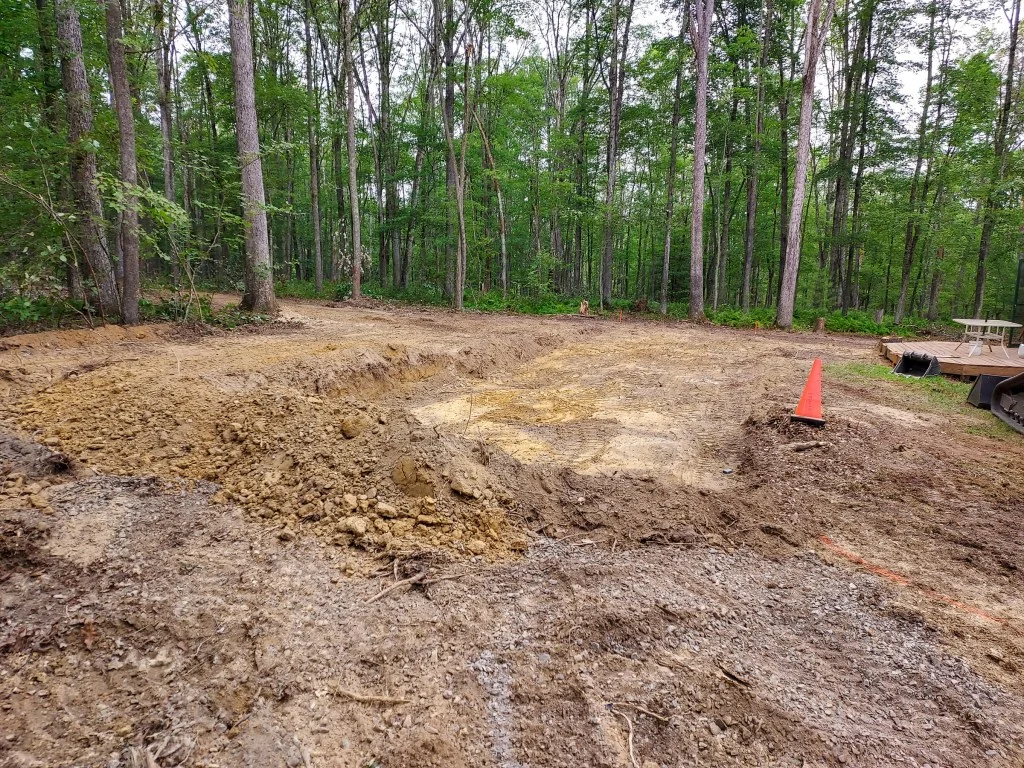
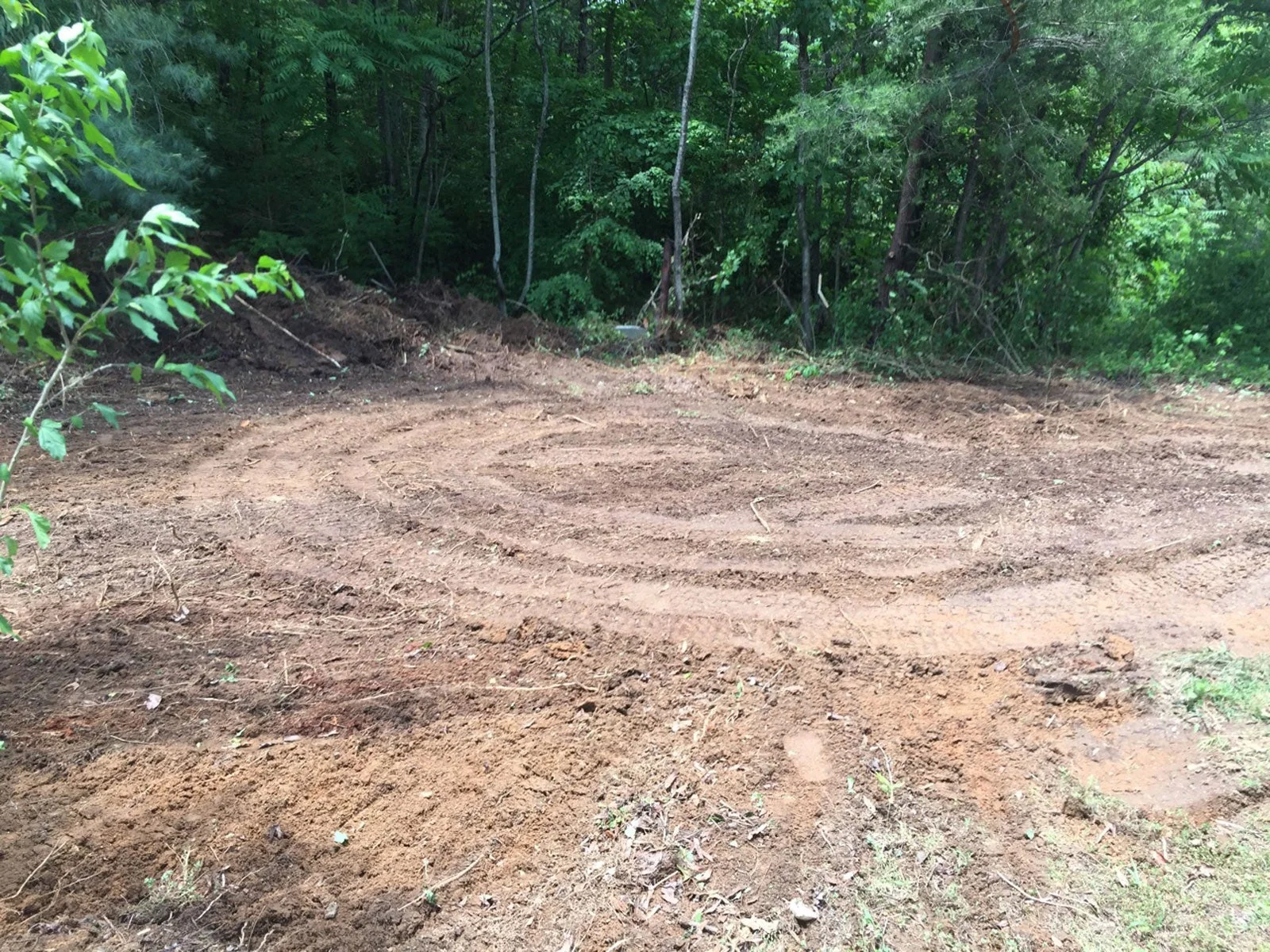
Then the sequence is consistent. Day one: clear the debris fan and any ruts, cut a crown or a cross-slope back into the surface so water sheds instead of pooling, and open or add a ditch on the uphill side. Day two (if there is one): set the culvert, place and compact the stone in lifts, and re-shape the apron where the drive meets the county road. A plain regrade is a single-day job. A washout with a new culvert usually runs two. Engineered drainage on a real grade can stretch to three or four, with the crew waiting on a compacted subgrade before the top layer goes down.
The tells that mean you are past a rake-and-add-stone fix: a channel cut deeper than a few inches into the drive, stone fanned out at the bottom of the slope, a culvert inlet buried or crushed, and water that visibly stands on the drive hours after rain stops.
What a flatland crew misses on an Arden drive is how quickly the sequence has to pivot. On a lot near Averys Creek or the wooded hollows off Glenn Bridge Road, the uphill bank above the drive may be shedding water from a spring seep as well as storm runoff, and the ditch cut on day one has to be sized for both. On the gentler parcels near the airport, the same job is a one-pass regrade with a drag scraper. Same county, same price band, different day.
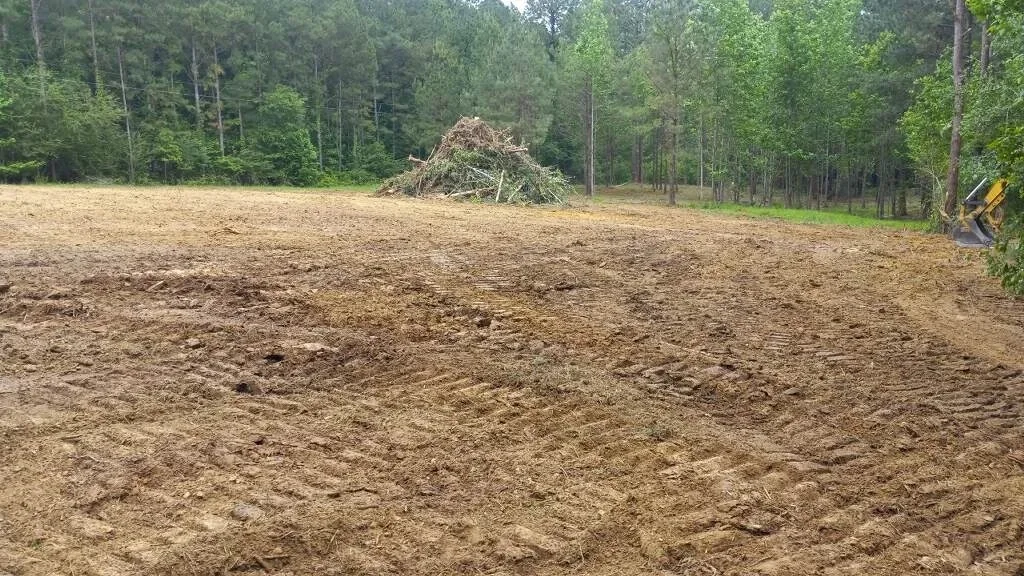
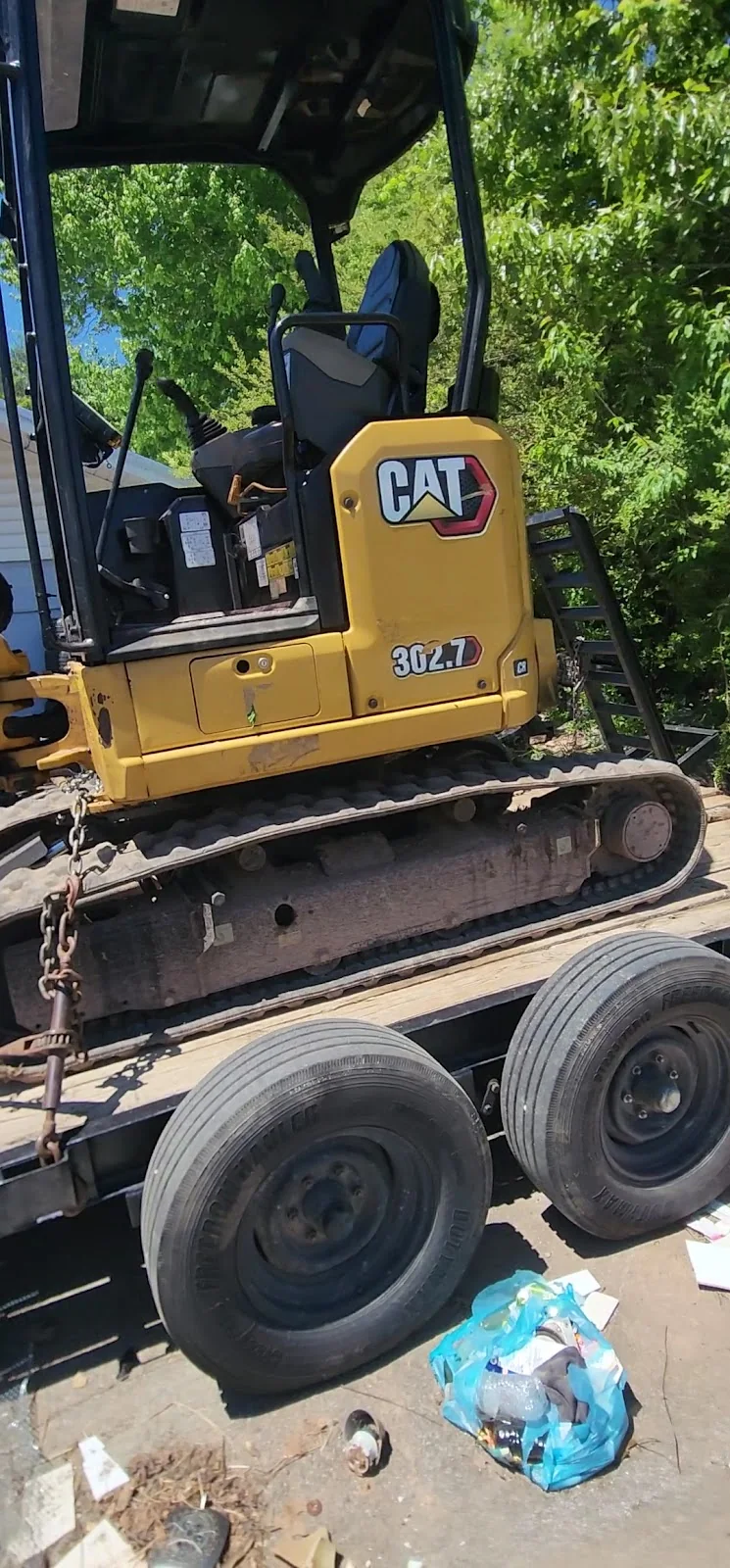
Crew access matters too. Many Arden drives are single-lane gravel with a steep pitch and a tight turn at the county road. That means the machine that shows up is often a compact track loader rather than a full-size motor grader, and the stone gets tailgated in smaller lifts. It is slower on paper, but it is the only way to shape a drive you can barely turn around on.
What each scope costs in Buncombe County terms
Arden sits in Buncombe County, and driveways here price between the flat valley lots near the airport and the steeper wooded parcels climbing toward the Blue Ridge. The working table:
| Scope | Typical range | Time on site |
|---|---|---|
| Regrade existing gravel drive, no new drainage | $350–$1,200 | Half day to one day |
| Washout repair: regrade plus fresh stone | $400–$1,500 | One day |
| Washout with ditching and culvert | $800–$2,800 | One to two days |
| Engineered drainage on a steep grade | $2,500–$6,500 | Two to four days |
The jump from the second row to the third is almost always the culvert, and the jump to the fourth is engineering plus the extra stone a steep drive needs. For the county-wide line items, see the Buncombe County grading cost breakdown.
Stone is the swing line inside every band. A short drive off a paved Arden subdivision street may take one tri-axle load of crusher run; a long wooded drive climbing toward the Blue Ridge ridgeline can take three or four, and that alone moves a single-day regrade toward the top of its range. The grade of the site also decides how much of the work is cut and how much is fill — a lot that drops away from the road needs a different crown height than one that rises away from it.
If you have had the same stretch repaired more than once, it helps to bring photos and a rough timeline to the walk-through. Crews reading a driveway can often tell whether the failure is surface wear or a sediment problem, and the photos speed that call. Two regrades inside the same band cost more than one ditching and culvert job at the top of its band.
Why Arden driveways wash out more than most
The federal disaster record for this county is the honest context here: 19 declared events touch Buncombe County across 1973-2026, overwhelmingly storm and flood family. Every one of those events sent water at driveways built for a drier assumption — and Arden's terrain concentrates it. Lots cut into the slopes south of Asheville shed runoff onto the drive from above and from the road cut below, so a driveway here can take water from two directions a flatland drive never sees.
That is also why the fix order matters. Grading and stone without addressing the uphill source is a repair that repeats itself. The National Weather Service outlooks are worth watching before scheduling, since a fresh regrade wants a few dry days to set before the next system tests it.
Buncombe County's soils run heavy in clay across much of the Arden area, and clay holds water rather than shedding it. That means the ditch on the uphill side is doing more work than it would on sand or loam, and a ditch that is merely scraped rather than cut to grade will silt in by the next wet season. The upstream fix — a defined channel, a splash pad at the culvert inlet, stone lining in the steepest run — is what keeps the repair off the schedule for another year.
It also helps to look at where the drive crosses a drainage swale, which is common on the wooded lots up toward Avery Creek and the lower slopes of the Blue Ridge. A swale that has no culvert becomes a driveway washout, every time. Sizing for those small crossings is one of the first things a crew checks on the walk-through, and it decides whether the day ends with a regrade or with a culvert set in the drive.
Gravel, or something that ends the cycle
Most Arden drives are gravel, and gravel is the right call on a grade if it is built in compacted lifts with a proper crown. The driveway grading and gravel guide covers what a correctly built gravel surface looks like and why a single dumped load of crusher run on a slope fails within a season. If your drive has washed out twice in three years, it is worth pricing the drainage work honestly against the cost of regrading it again — the second number is usually the larger one.
Asphalt and chip-seal driveways are common on the Arden lots closer to Long Shoals Road and the established neighborhoods, and the drainage logic does not change. An asphalt drive with a washed-out edge is usually a base failure, which means the fix is under the surface, not on it. A crew may need to cut back the edge, re-compact the shot-rock base, and re-pave — often a different scope than a gravel washout, and worth confirming before comparing bids.
The middle path some Arden owners take is a stabilized gravel drive: gravel in compacted lifts over a geotextile or a shot-rock base. The stone on top still needs a crown and a ditch, but the fabric or rock layer keeps the subgrade from pumping up into the surface stone after a heavy storm, which is what makes a repaired drive look rutted again a month later. It moves the job toward the top of the gravel band, and it tends to buy back the annual regrade.
Hiring the crew, and what to ask first
Ask any crew how they sequence water versus stone. The answer separates operators who fix driveways from operators who push gravel. Ask for the culvert sizing on any bid that includes one, and ask what happens to the uphill runoff. On larger jobs crossing the state threshold, general contracting rules from the NC Licensing Board for General Contractors apply, so confirm the license status before signing. Local crews who do this work daily are listed in our Arden grading contractor directory.
Three more questions sort bids quickly. Ask who moves the spoils — cut material has to go somewhere, and a low bid that leaves a berm of clay at the drive edge just moves the problem. Ask how the ditch will be graded, since a ditch that drains to a low spot in the yard is a mosquito feature, not drainage. And ask what stone they plan to use, because on Arden's grades a clean crushed stone with angular faces locks in better than a rounded gravel that rolls off a slope.
Timing matters for the pocketbook as much as the calendar. Late summer and early fall are the usual window for regrading work in Buncombe County, when the soil is workable and the storm frequency is lower, and crews can be booked out several weeks ahead of that. Winter work is possible on the flatter Arden lots but can be a wash on the steeper ones if the ground is saturated. If you are looking at a failing drive in spring, the honest move is to get the drainage call now and schedule the stone for a dry window.
Scheduling also depends on what is happening at the house. A drive that is the only way in has to stay open, and a good crew will phase the work so the family can still get out. On a two-day culvert job, that usually means opening the drive at the end of day one and covering the trench, then finishing the surface and the apron on day two.