Red clay, saprolite, and old fill under Montreat lots
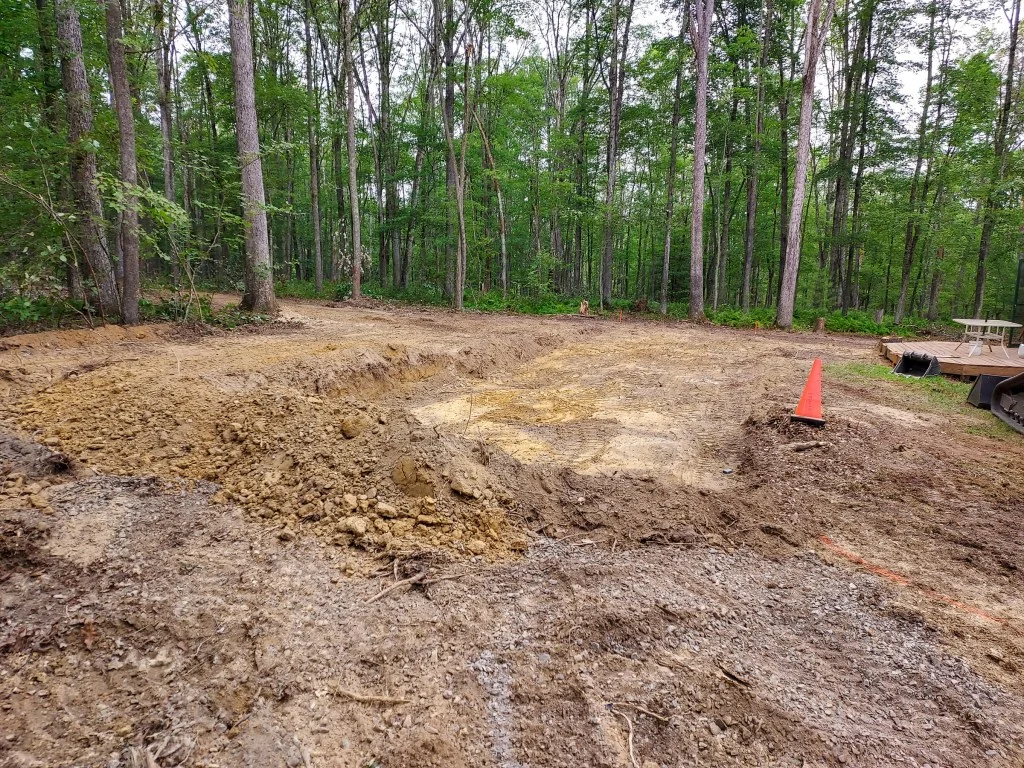
Montreat sits in a steep valley east of Asheville, tucked against the Blue Ridge escarpment in Buncombe County. Lots here are not flat suburban pads. They are cut into grades that run past twenty percent, and what's under the topsoil varies house to house: sticky red clay that holds water and pumps like pudding when wet, weathered saprolite and schist rock that stops a bucket cold, and old fill placed decades ago when a previous owner pushed dirt around to make a driveway or a building pad.
Each of those three materials changes the job differently. Red clay has to be handled at the right moisture or it will not compact, which can mean waiting out a wet week in February. Saprolite rock has to be ripped, pinned, or in some seams blasted, and that decision drives machine hours far more than lot size does. Legacy fill is the quiet one: it has had years to settle unevenly, and grading over it without understanding what is there just moves the problem downhill.
Drive the lanes through Montreat and you can read the ground history in the retaining walls. Some were built with native stone pulled out of the cut; others are timber that has been leaning downhill for thirty years. The ones still straight tell you the original grading was done right. The ones that are not tell you what happens when fill goes in without a compaction plan. That is the context a local crew works in, and it is why a Montreat estimate takes longer to put together than one for a flat lot off the Swannanoa exit.
Walk a Montreat lot in summer and the vegetation signals what is underneath. Rhododendron and mountain laurel root in the shallow organic layer on top of saprolite, so where they cluster thick the rock is usually close. Pine stands over old pasture often mean deeper soil that was graded or formerly farmed. None of that replaces test holes, but it shapes where the machine starts.
What scope costs on this kind of terrain
Numbers below are working ranges for the Asheville region, not a quote, and they sit inside the Buncombe County band. The Buncombe County grading cost breakdown has the full line-item table.
| Scope | Typical range |
|---|---|
| Rough grade and driveway re-cut, existing access | $1,200 – $4,500 |
| Building pad cut and compact, moderate slope | $2,500 – $6,000 |
| Steep-slope pad with rock work and haul-off | $5,500 – $8,000+ |
| Drainage correction and re-grade around existing house | $1,200 – $4,000 |
| Fill removal and replacement with engineered material | $3,000 – $8,000 |
| Erosion control installation and inspection prep | $1,200 – $3,500 |
Rock is the single biggest swing item. A pad that looks simple on paper can move toward the top of the band when the first bucket hits saprolite that has to be ripped or blasted. Any bid that does not carry an explicit rock allowance is a bid that will change.
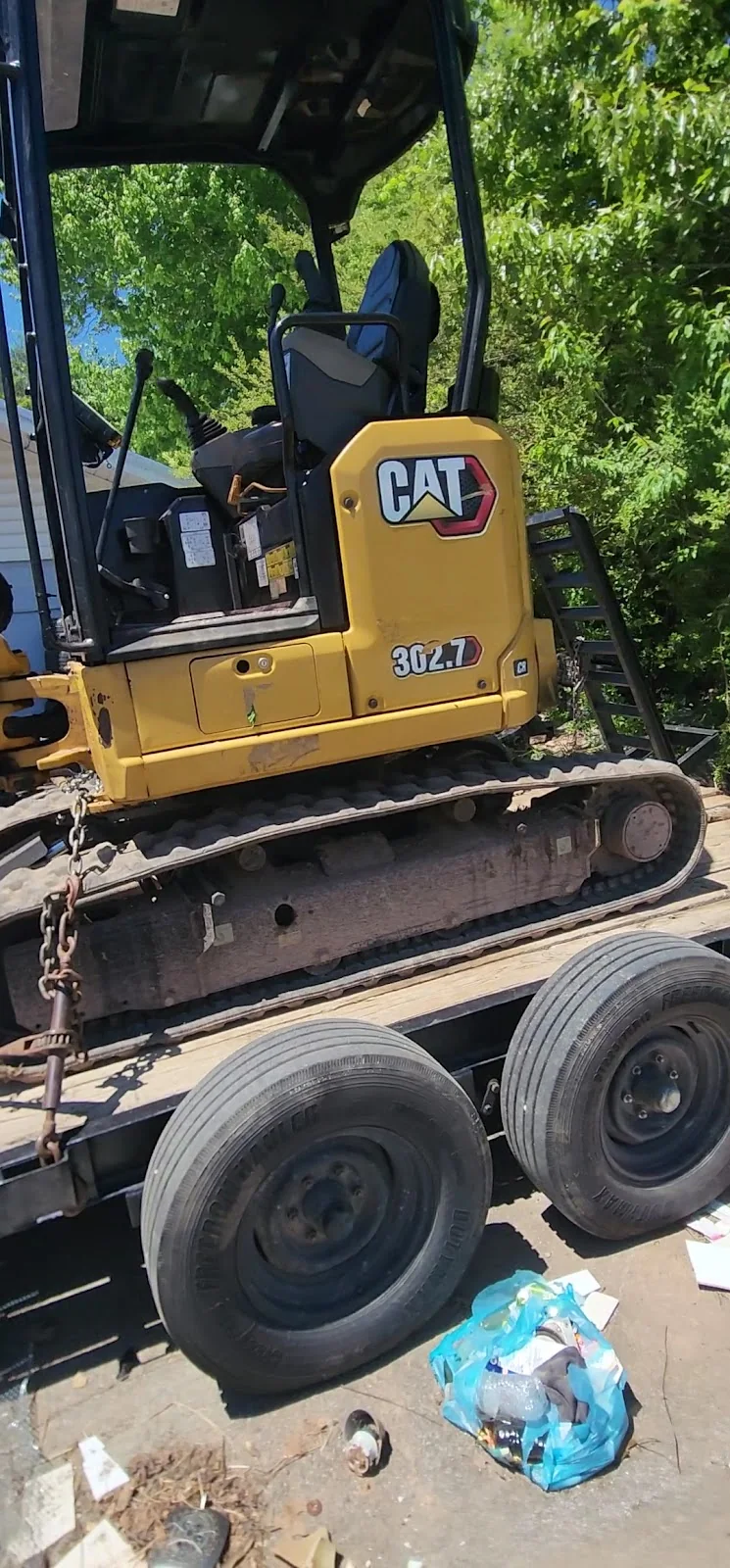
Access is the second swing item people miss. A lot off a narrow Montreat lane with a hairpin at the top may not take a full-size excavator or a loaded dump truck. That means smaller machines, more trips, and sometimes a track-dump system to get spoils off the hill. On a lot like that, haul-off alone can push the total toward the top of the band, not because anyone is overcharging but because the hill dictates the method.
Timing moves the number too. Late fall and winter in this valley bring saturated clay that will not compact no matter how good the operator is. That pushes work into drier windows and can stretch a two-week job across a month. A crew that says so up front is being honest.
Where the water goes on these slopes
Federal disaster history is the honest frame here: 19 declarations touch Buncombe County across 1973-2026 of record, and they are overwhelmingly storm and flood events. On ground this steep, water from an uphill neighbor's lot, a blocked culvert, or a driveway that drains toward the house finds the lowest point fast. Grading that does not account for where water leaves the property is incomplete work.
In practice that means ditch shape, pipe sizing, and daylighting get decided before the machine shows up. The NC Department of Insurance, Office of State Fire Marshal treats site drainage and erosion control as code items, not preferences, and Montreat's terrain makes them the first thing a good contractor discusses.
There is a reason this matters more here than in the flat parts of the county. In a subdivision off Airport Road, a bad grade sends water to the next yard over, and the fix is usually a shallow swale. In Montreat, a bad grade sends water down a thirty-percent slope and it arrives with force. Culverts that worked for a decade can plug with leaf litter and gravel in one storm, and once they plug, water goes over the driveway and takes the driveway with it.
The fix is boring but it works: size the pipe for the whole watershed above the lot, not just the roof, put a trash rack or riser at the inlet so it does not plug, and daylight the outlet onto stable ground instead of over a fill slope. Add rock at the outlet to slow the water before it hits bare dirt. None of that is exotic engineering, but it has to be planned at the grading stage, not added after the first washout. The National Weather Service keeps the rainfall records that make sizing defensible rather than guesswork.
When a Montreat job crosses into licensed contracting
North Carolina draws a line between a grading job and a general contracting project, and Montreat jobs cross it more often than people expect. A full building pad with foundation work, retaining walls above a certain height, or a project value over the statutory threshold all pull in different rules. The North Carolina Licensing Board for General Contractors publishes those thresholds and the license lookup.
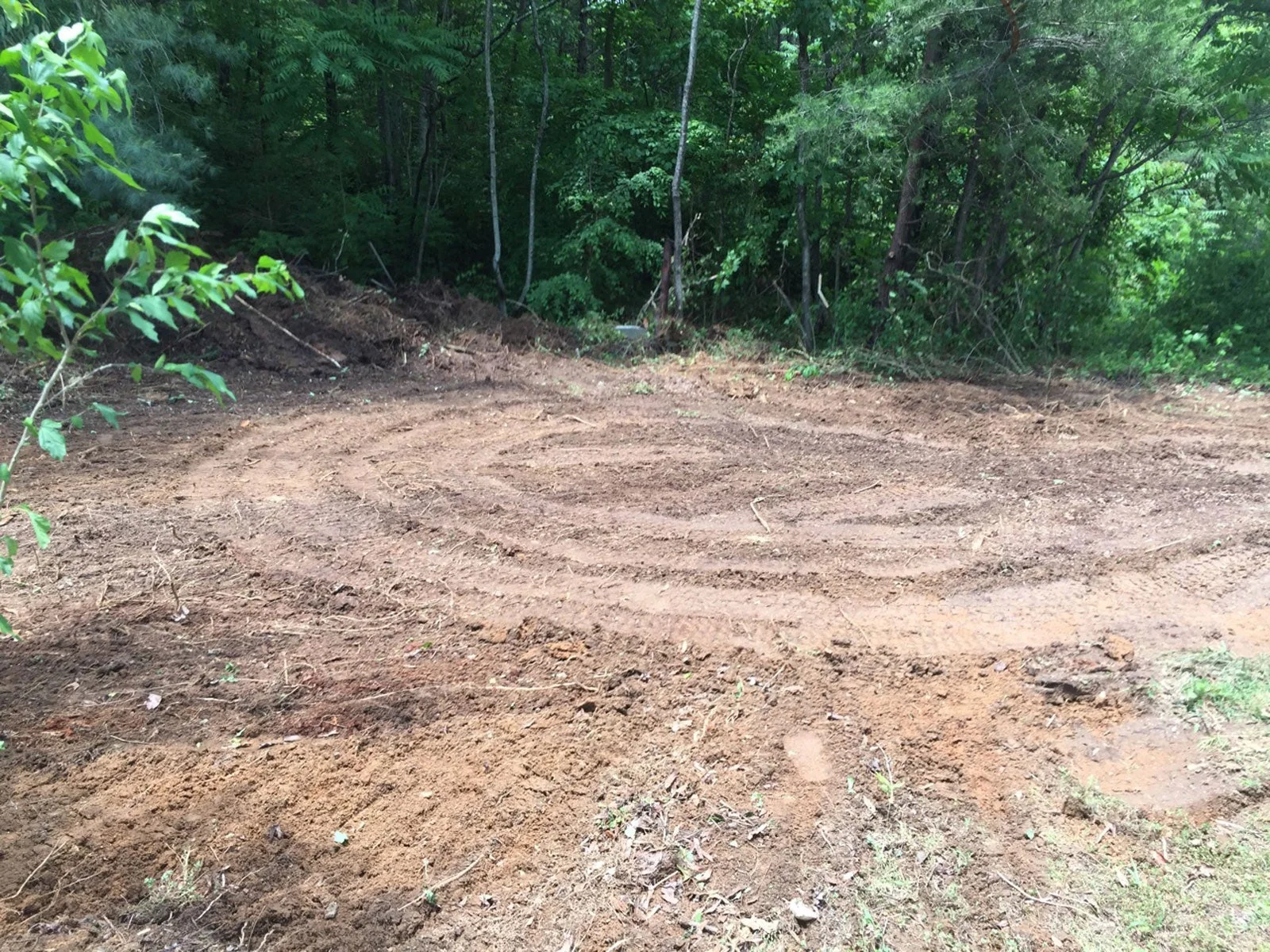
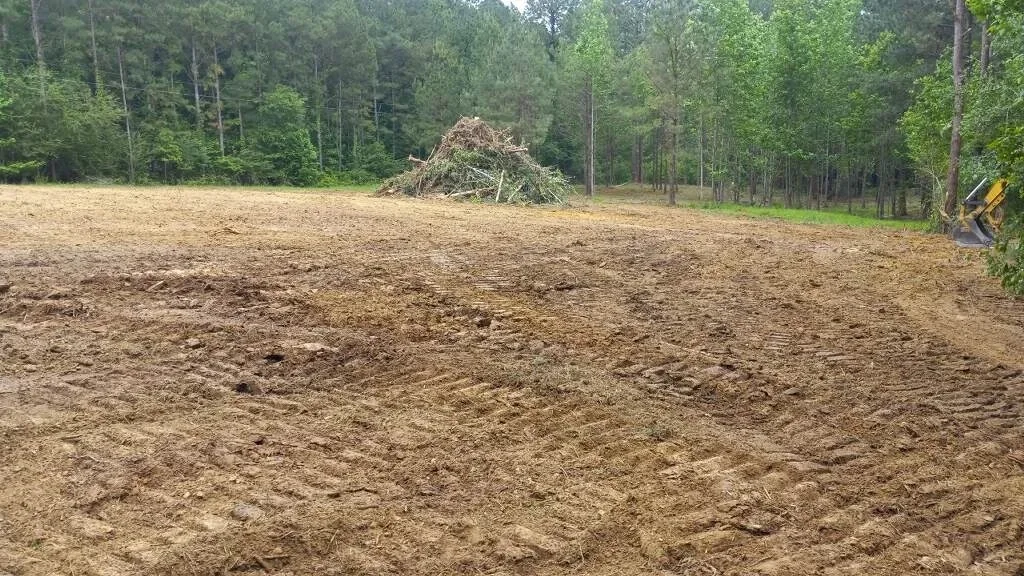
Two other things to check: whether the scope touches plumbing or drain lines from the house, and whether the lot needs a state sediment and erosion control plan before ground is broken. A crew that knows the county review sequence will tell you all of this at the walkthrough. If you are starting from raw land, land clearing in Montreat is usually the first phase and grading follows.
Retaining walls are the case worth calling out for this town. A wall under the state threshold may not need an engineer's stamp, but on a Montreat slope even a short wall holds back real weight, and the difference between a wall that lasts and one that bulges is drainage behind it, not the block itself. Whoever builds it needs to know where the water goes. A grading crew already on site for the pad is often the right trade to tie the wall footing and wall drain into the site plan, because they can see the whole slope at once. Splitting the work between two contractors who never talk is how walls fail.
For a new driveway cut itself, the county and the town both may weigh in, particularly where access meets a public road. Confirm that sequence before scheduling equipment. Moving a machine up a hill twice is money nobody wants to spend.
Reading a grading bid for ground like this
A useful bid on steep ground itemizes four things: machine time, rock handling, haul-off volume, and drainage. If any of those is bundled into one number, ask for it separated. The grading and excavation service overview walks through what each phase covers.
Then ask two questions. First, how will they verify compaction on any fill pad, since a Montreat pad that is not compacted right will move under a foundation. Second, where does the water go when the job is done. The answer separates crews that grade from crews that fix drainage while they grade.
Ask a third question if the lot already has a house: what happens to the trees you want to keep. Root zones on a Montreat slope extend further than people think because the trees anchor against gravity as well as wind, and a machine that tracks too close to a mature oak or hemlock can kill it slowly over two or three seasons. A bid that prices tree protection apart from the grading itself comes from someone who has done this on hills before.
Finally, look at how the bid handles the parts of the job you cannot see. Erosion control is easy to leave off an estimate. But the county inspects it, the rain tests it, and a failed silt fence can stop work at the worst possible time. When you compare two Montreat bids, the one that lists erosion control and stabilization as a line item is usually the one whose final number ends up closest to the original quote.