How a Fairview drainage job actually runs, start to finish
On a Fairview hillside, water doesn't sit — it moves, and it moves toward whatever is downhill. That single fact shapes the whole sequence of a drainage job here. Day one is walk-and-mark: the crew traces where the uphill neighbor's runoff crosses your line, where the driveway apron dumps, and where the low corner of the yard sends water back at the house. Nothing gets dug until that path is drawn.
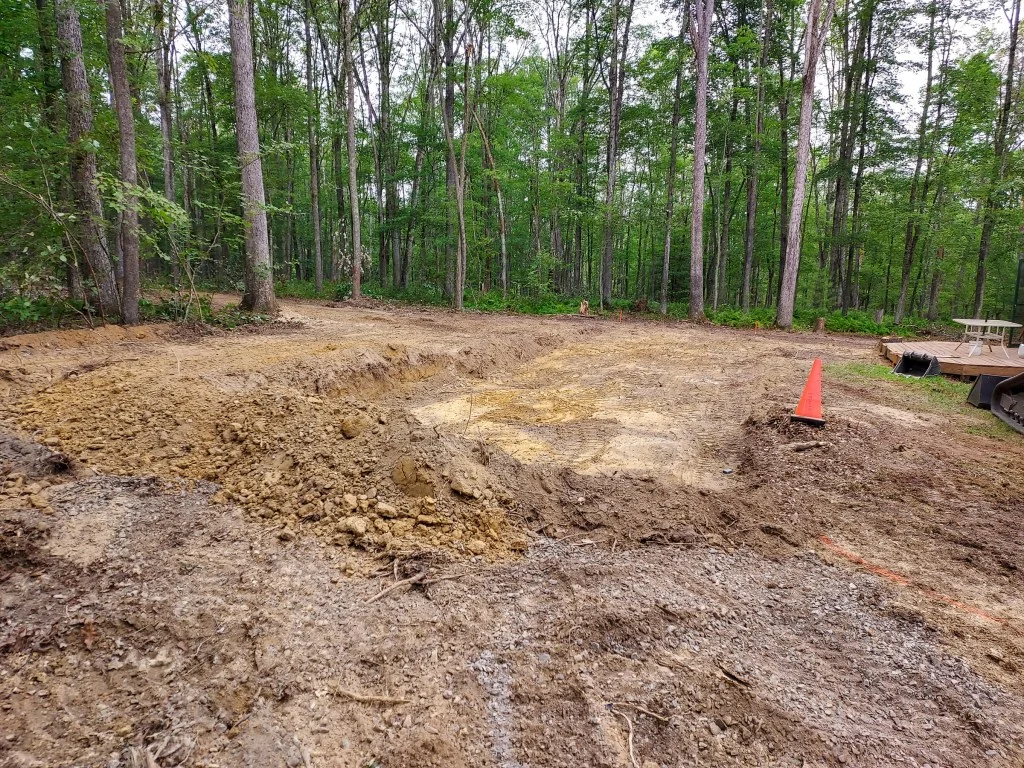
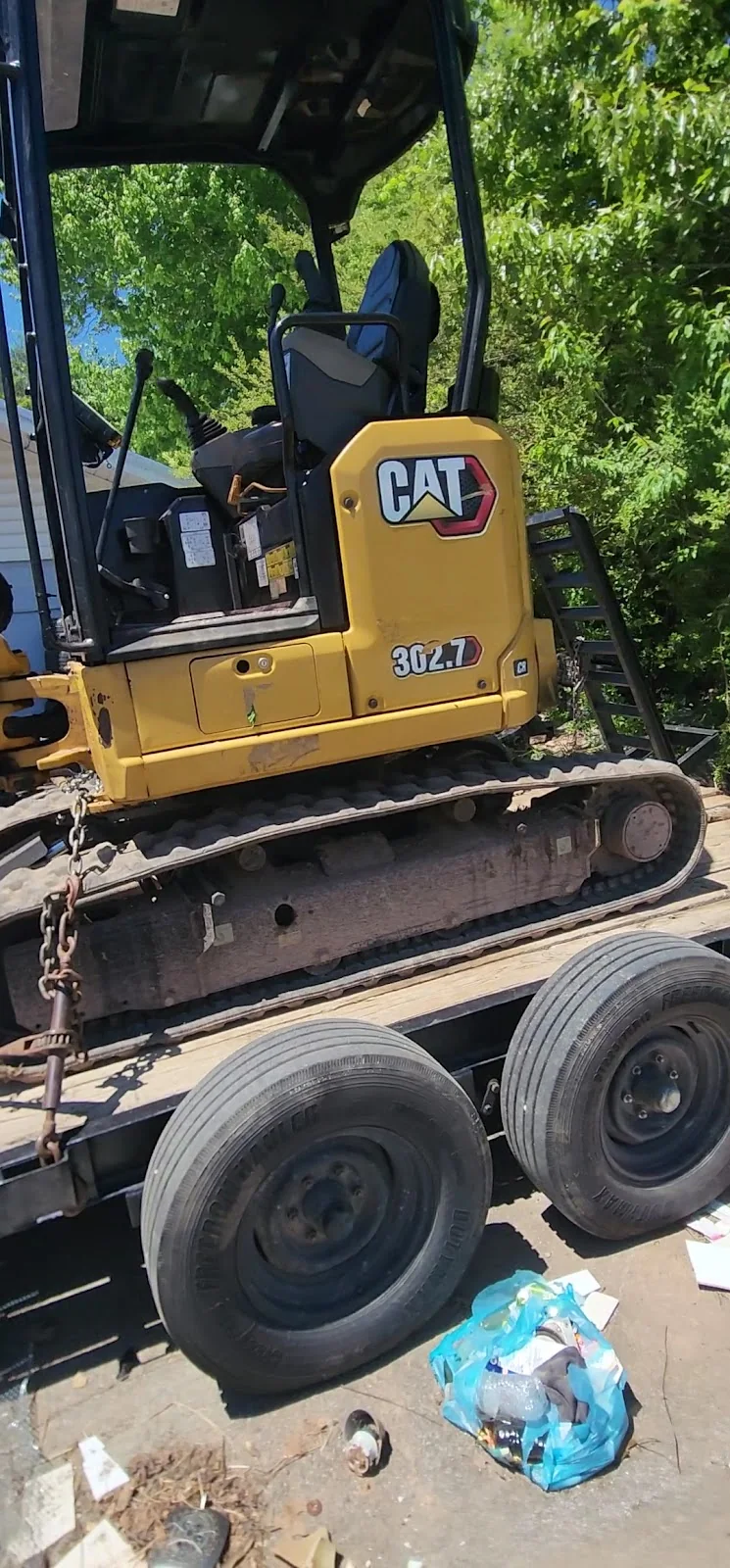
Day two is the cut. A mini-excavator follows the marked line at a consistent fall, which on Fairview's grades usually means working uphill-to-downhill so the trench stays true. If a French drain is in the scope, the trench gets filter fabric, washed stone, perforated pipe, and a socked outlet — then the stone, then the fabric wrap, then native soil. A single 100-foot run is a one-day dig for a two-man crew; a yard with three separate water paths is two to three days of trenching alone.
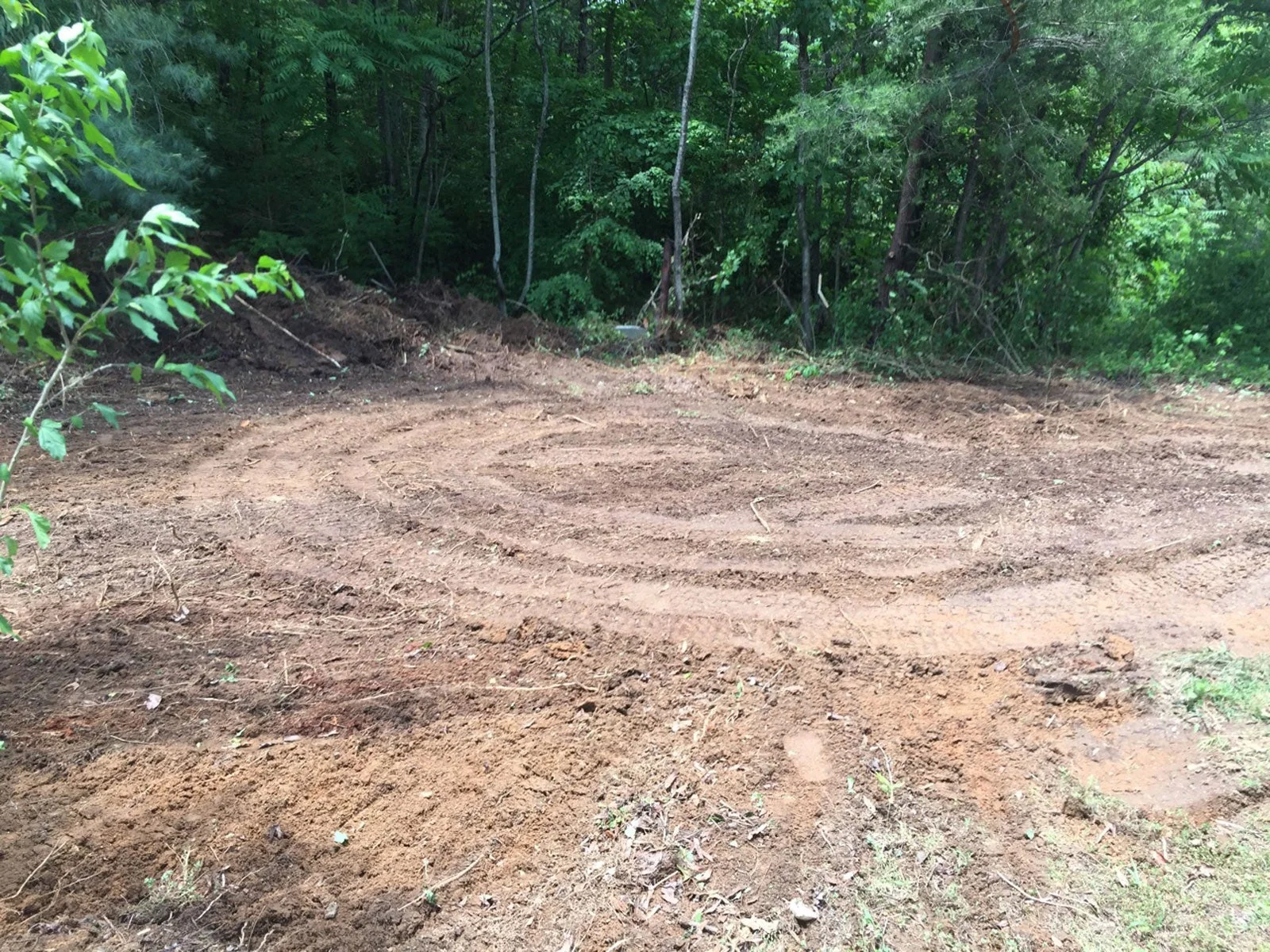
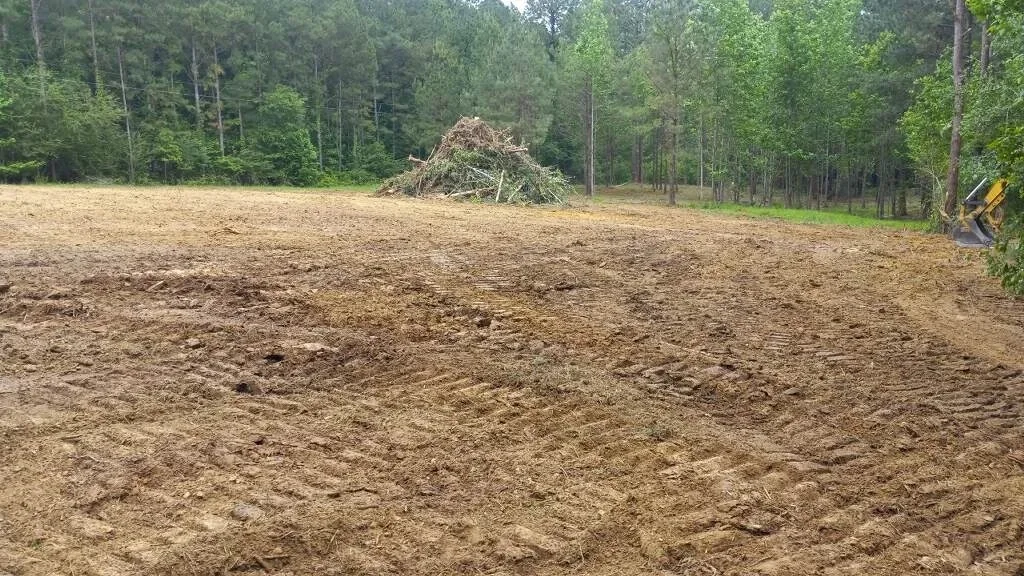
Days three through five are restoration and regrade. That backfill gets compacted in lifts, not dumped, because uncompacted trench soil settles into a visible swale within a season — the exact problem you paid to fix. Final grade is raked to shed away from the foundation, and the outlet gets checked under a hose test before anyone leaves. Most Fairview residential drainage jobs close out in two to five working days; steep lots with a retaining element can run to a week.
What Fairview's terrain does to a drainage plan
Fairview sits in the Cane Creek and Garren Creek drainages south of Asheville, and the residential ground here is mostly sloped, wooded, and cut into hillsides rather than laid out flat. That produces three recurring patterns. First, the driveway: a steep gravel or asphalt apron acts as a chute, and water that sheets off it hits the yard at speed. Second, the cut bank: homes built into a slope have a raw uphill face that weeps after every storm. Third, the downslope exit: there has to be a legal, stable place for the water to go, and on a Fairview lot that outlet is often the hardest part of the design.
The federal record explains why this matters more than it used to. 19 declared events touch Buncombe County across 1973-2026, and they skew heavily toward storm and flood categories. Each one pushed water at yards graded for a drier assumption. That is not a reason to panic; it is a reason to route water deliberately instead of hoping the slope handles it.
Scope-to-price table for Fairview yards
These ranges reflect residential drainage work in Buncombe County's mountain terrain. Slope, outlet distance, and how much restoration the yard needs are the three price movers — the last one surprises people most, because a job that ends in bare dirt is not finished.
| Scope | Typical range | Time on site |
|---|---|---|
| Single French drain run, one water path | $3,000–$9,000 | 1–2 days |
| Surface drains, swale, and downspout tie-ins | $3,500–$12,000 | 2–4 days |
| Full-yard drainage with multiple runs and outlet | $7,000–$12,000 | 3–5 days |
| Whole-yard regrading and recontouring | $15,000 and up | 1–2 weeks |
| Cut-bank seepage control with drainage blanket | $3,500–$12,000 | 2–4 days |
The Buncombe County grading cost breakdown carries the line-item detail behind these numbers, and the drainage and erosion control guide walks through how each system is specified.
Erosion, outlets, and the rules that apply
Moving water is a regulated activity once it leaves your property line or touches a protected waterway. Cane Creek and its tributaries are real receiving waters, and any work that disturbs soil near them or alters a drainageway can require review before a shovel moves. Sediment is the specific concern: a French drain outlet that discharges dirty water onto a neighbor or into a creek is a problem regardless of how well the trench was built.
Two authority references are worth knowing before you sign anything. The North Carolina Licensing Board for General Contractors sets the threshold at which a grading or drainage project requires a licensed general contractor, and it is lower than most homeowners assume. Separately, the U.S. Environmental Protection Agency maintains the stormwater and erosion guidance that state and local rules are built on, which is useful reading if your lot drains toward a creek. A contractor who can't tell you where your water legally exits is not finished with the design.
Sequencing questions to ask before you hire
On a Fairview slope, the order of operations is the quality signal. Ask any crew three things. Where does the water leave the property, and is that outlet stable year-round? What happens to the trench soil after backfill — is it compacted in lifts? And how is the uphill cut bank handled, since that is usually the actual source and not the low spot everyone notices. A bid that answers all three in plain language is a bid worth comparing; a bid that quotes only a length of pipe is not.
For vetting the crew itself, the Fairview grading contractor page covers what to check in this market. Expect a proper job here to be measured in working days, not weeks, with the restoration phase taking as long as the digging on steep lots.