What the ground under Swannanoa yards actually is
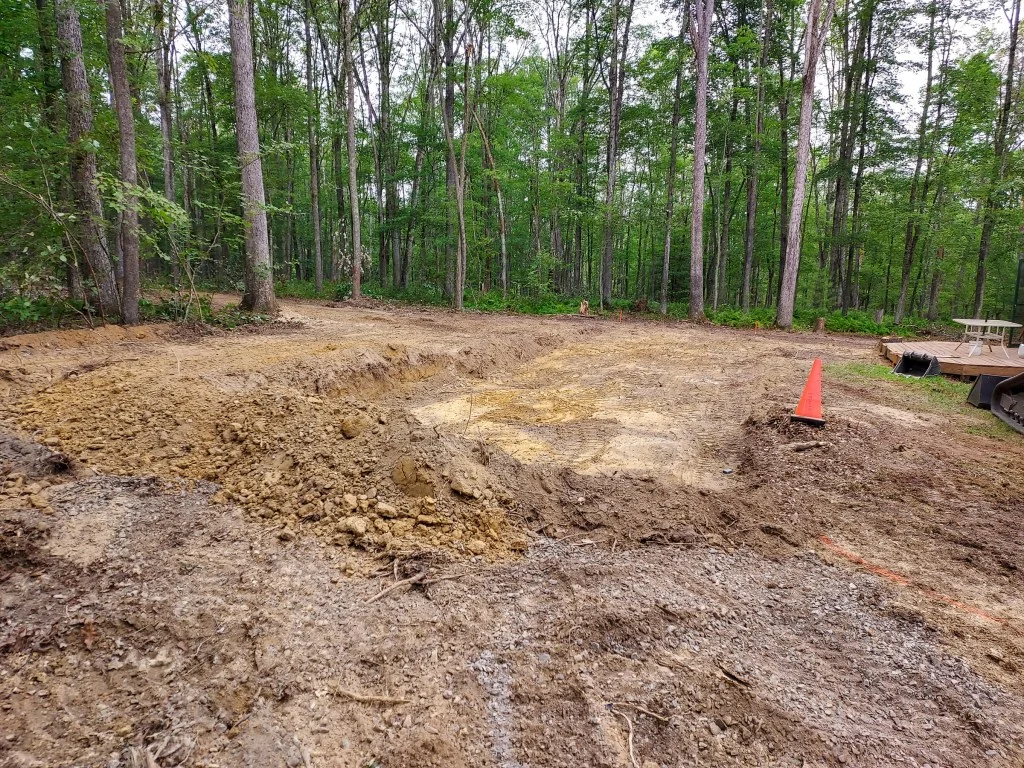
Dig a test hole almost anywhere in this valley and you will hit one of three things before you expect to. Red clay that holds water like a lined pond. Rock that starts as a scrape and turns into a wall three inches down. Or old fill — the graded-over leftovers of how the lot was made buildable in the first place, which compacts unevenly and settles in pockets for years.
That trio is why a Swannanoa yard leveling job almost never matches the online calculator. Clay means water has to be pushed somewhere, not just absorbed. Rock means a machine that was quoted for topsoil suddenly needs a breaker or a different access plan. Old fill means the low spot you see on the surface is often a symptom of what is happening a foot below it, and simply adding dirt on top kicks the problem down the road.
The yard leveling guide covers the general method; the Buncombe version has to start with which of those three you own.
Swannanoa sits in the upper Swannanoa River valley east of Asheville, where the valley floor was farmed and then subdivided in waves. Lots along the older roads often carry fill from a previous cut-and-fill cycle, and lots on the slopes above the river were graded flat enough to build on with whatever material was on hand. That history is why two neighboring yards can price a thousand dollars apart for what looks like the same job from the street. One is clay on native grade; the other is clay over trash fill and a buried stump pile. The surface looks identical. The machine time does not.
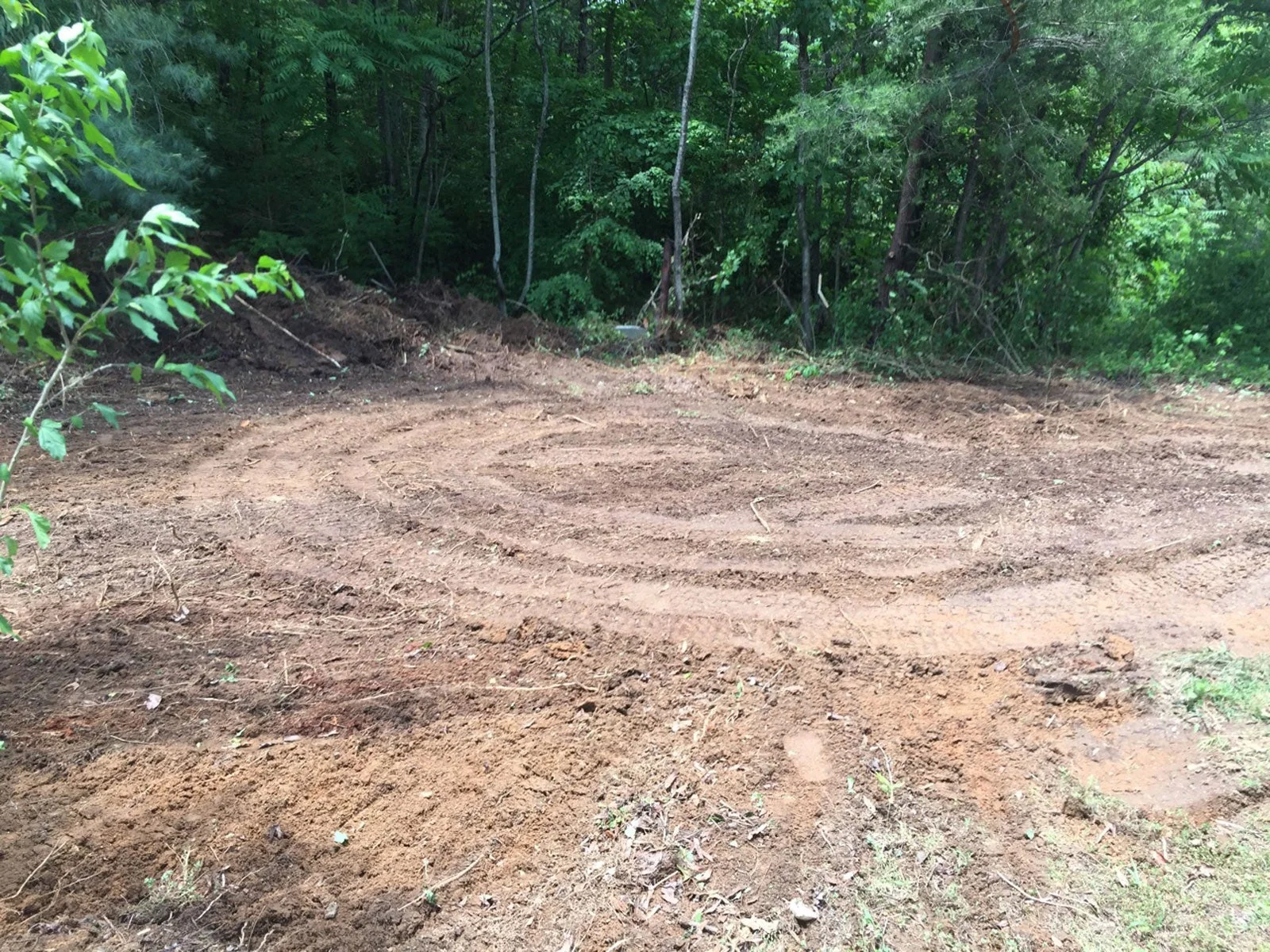
Homeowners here also deal with a specific nuisance: the low corner that stays soft for days after a rain while the rest of the yard dries in hours. That pattern is almost always a compaction or drainage-path problem, not a simple slope problem. Adding topsoil to the soft spot raises the surface for a season and then sinks again, because the water still has nowhere to go.
Reading a Swannanoa yard before anyone quotes it
What a legitimate walkthrough looks for here: where the water goes when the valley gets its usual heavy rain, whether the low corner is a grading issue or a drainage issue, how much slope you actually have between the house and the property line, and whether the ground you would be adding is going to sit on clay, rock, or old fill. Those are not upsells — they change the equipment, the dirt volume, and whether the job is a one-day scrape or a multi-day regrade.
The federal disaster record is not decoration on this point. 19 declared events touch this county across 1973-2026, weighted heavily toward storm and flood family. Every one of those events moved water across yards that were graded for a drier assumption. A leveling plan that ignores where that water is going is a plan that gets undone the next time the valley gets a hard week, so the drainage question gets answered before the dirt question does.
Two field clues a Swannanoa crew reads that a generic quote does not: the color of the soil in the low spot versus the high ground, and where the neighbor's runoff crosses the property line. Darker, greyer soil in a depression usually means water is sitting there, not just passing through. And on lots that back up toward the ridges, the neighbor's grade often dumps water onto your yard before you have any say in it. Both get discussed before a machine ever shows up, because both change the scope.
Scope versus price in this town
Ranges below sit inside the site-wide band for yard leveling and regrading. Local conditions — rock, access, old fill — move a job within that band, not past it. For the full county picture, see the Buncombe County grading cost breakdown.
| Scope | Typical price range | What drives it here |
|---|---|---|
| Small clay-yard re-slope, seed and straw | $1,800–$3,000 | Machine access, how far dirt has to move |
| Typical half-acre residential level and grade | $2,500–$6,000 | Volume, clay handling, drainage correction |
| Rock encountered mid-job | $4,000–$8,000 | Breaker time, haul-off, re-grading after |
| Old-fill lot with settling pockets | $5,000–$9,500 | Over-excavation, re-compaction, added material |
A quote that does not name which row you are in is a quote that has not looked at the ground yet. Treat it as a starting conversation, not a number.
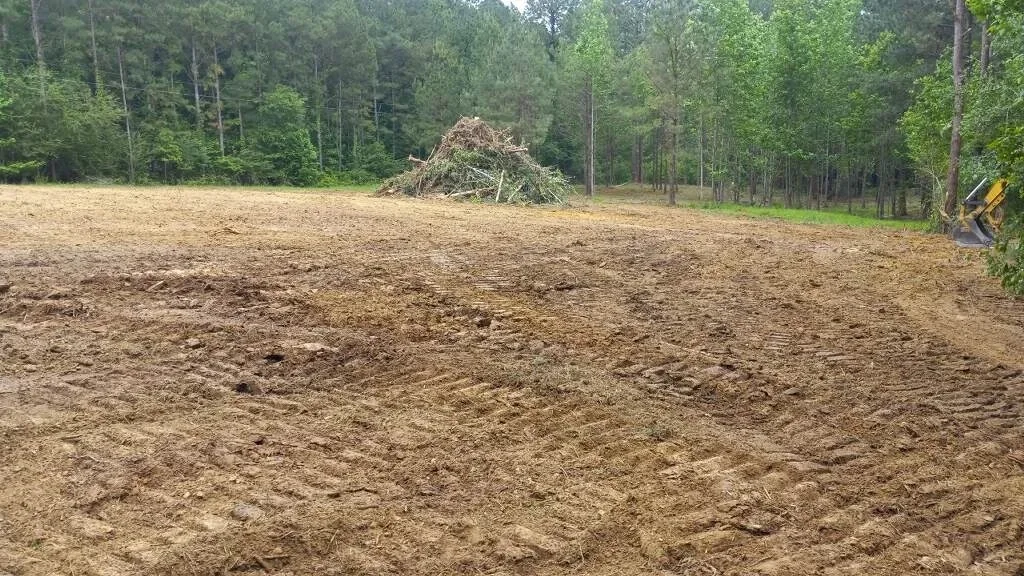
Practically, the price moves for a handful of local reasons. Access is the quiet one: a yard reachable only through a narrow side gate or over a septic field limits machine size and adds hand work, which shows up as a higher row on the table even though the dirt volume is the same as a wider lot. Rock is the loud one, because breaker time and haul-off are billed, not absorbed. And old fill is the expensive one over the long run, because the honest fix — over-excavating the pockets and re-compacting in lifts — is more machine time than the homeowner expected when they called about a low spot.
For budget planning, the smart move is to get a written scope that separates the four lines: dirt volume, drainage correction, rock contingency, and final grade and seed. When those are broken out, a bid you can actually compare appears, and a change order conversation becomes an honest one instead of a surprise.
Drainage, code, and the parts people skip
Grading is a water-management trade wearing a dirt costume. In a valley that collects runoff from both ridgelines, the finish grade has to move water away from the foundation and off the lot, and the swales and slopes that do that are not optional decoration. The International Code Council publishes the residential provisions that treat site drainage as a first-class requirement, and the logic applies whether or not a permit is triggered.
Two other practical notes for Swannanoa work. First, any job that involves moving enough dirt to change drainage patterns on a slope may cross the threshold where a licensed general contractor is required — the NC Licensing Board for General Contractors sets those thresholds and is the right place to check before signing. Second, if the plan involves clearing or grubbing near a stream or ditch, sediment and erosion control becomes part of the scope, and the EPA publishes the stormwater guidance that local rules are built from. A crew that volunteers this without being asked is a crew that has done valley work before.
One more local layer matters: the Swannanoa River and the creeks that feed it run close to a lot of residential ground, and the county's terrain rules care about how close earth-disturbing work sits to those drainageways. That is not something a homeowner is expected to know cold, but it is exactly why the walkthrough should include a look at where the lot drains and whether the ground is close enough to a channel that sediment control needs to be in the plan. Skipping that step is how a weekend regrade turns into a complaint and a fix-it order.
Choosing a crew for this specific ground
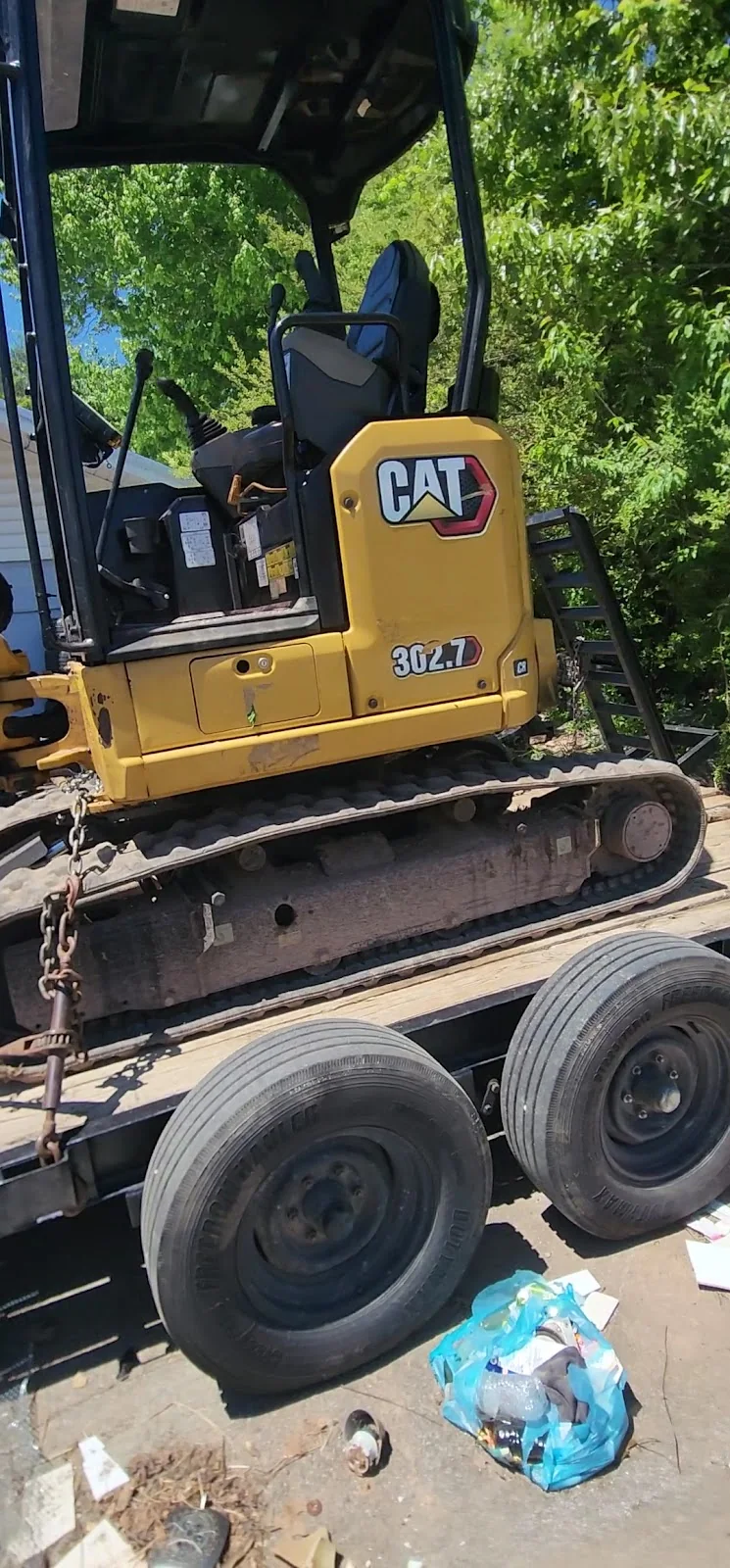
Ask three questions and the field narrows fast. Do you bring your own machine, or sub it out — because on a Swannanoa lot with rock and tight access, the operator is the job. How do you handle clay that will not drain — because the answer tells you whether they understand the valley or just push dirt. And what happens if you hit rock — because a bid that has no line for it is either guessing or planning to come back with a change order.
Two more local tells worth listening for. A crew that has worked this valley will ask about the last time the low corner flooded and whether the driveway drains toward the house or away from it. And a crew that understands old fill will talk about compaction passes and lift thickness without being prompted — because on a lot that settles, the cure is in how the material is placed, not how much of it is dumped. When a bidder can explain the difference between correcting a grade and correcting a drainage path, in plain words, they have probably solved this exact problem before on a neighboring street.
When you are ready to get real numbers, the Swannanoa grading contractors page covers how to compare bids apples to apples, including what should and should not appear in a written scope.