Where the water comes from on a Laurel Park lot
Laurel Park sits on the west shoulder of the Blue Ridge, just above Hendersonville, and almost every problem culvert here is a downhill problem. Rain lands on a ridge lot, gathers in the swale above your driveway, and shows up at your crossing whether or not you planned for it. Streets like Laurel Park Highway and the lanes feeding off US-25 climb at grades that turn a half-inch of rain into a fast, focused stream in minutes. By the time it reaches a driveway apron, it is carrying leaves, gravel, and whatever the neighbor's bank gave up.
That is why pipe diameter and pipe length matter here more than they do in flat country. A 12-inch pipe that handles a Charlotte driveway will not swallow runoff off a 20-percent grade above it. The grade has to move water under the drive, out the downstream end, and away from the foundation of whatever sits below, ideally into a defined swale or natural drainage path rather than the next property's yard.
The terrain around here has a specific shape: the town wraps around a bend of the French Broad drainage above Hendersonville, and lots that look tame from the road often drop 30 or 40 feet across their depth. That means the culvert at the top of the property is only the first link in a chain — water that exits the pipe can still cross a lower drive, cut a bank, or end up in a drainage that feeds the town's reservoir system. When we walk a Laurel Park lot, the first question is not how big the pipe should be but where the water goes after it leaves the pipe. Answer that honestly and the sizing usually falls into place.
Sizing the pipe before you price the pipe
Culverts are sized for a rainfall event, not a memory. Contractors working Henderson County slopes typically check the drainage area feeding the crossing, the slope of that drainage, and local storm-rainfall data from the National Weather Service before recommending a diameter. The state code that governs how stormwater is handled on developed sites lives in the NC building code, enforced locally through the NC Office of State Fire Marshal code-enforcement structure.
In practice, exposed mountain driveways around here run 15- to 24-inch pipe where a flat-lot quote might say 12-inch. Upsizing costs inches; undersizing costs a flooded driveway every spring and eventually a washed-out apron. If your crossing also serves a shared drive, the drainage area doubles and sizing follows.
The other half of sizing is the shape of the drainage area itself. A long, narrow hollow above the driveway that funnels water like a chute needs a bigger pipe than a broad, shallow bowl of the same acreage, because the chute concentrates flow into a smaller opening. Laurel Park's older lots were often carved from larger tracts, so it is common to find a driveway crossing at the pinch point between two original parcels. That pinch point is where the water was always going to collect, and it is where the pipe has to work.
It also helps to know how the property drains in a wet season versus a dry one. Mountain soils here hold water differently depending on depth to bedrock, and a swale that runs dry all summer can carry a surprising volume after a multi-day event. Design the pipe for the wet version, and treat the dry version as a bonus. FEMA has logged 16 federal disaster declarations affecting this region across a record span of 1978-2026, a reminder that the design storm for the Blue Ridge is not theoretical.
What culvert work runs in Laurel Park
Prices below reflect what trenching into rocky Blue Ridge ground actually costs. Hauling rock, cutting a concrete apron, and adding headwalls or riprap push jobs to the upper band.
| Scope | Typical installed range |
|---|---|
| Replace existing 12-15" driveway pipe, same length | $1,800-$3,000 |
| New 15-18" pipe crossing with trench and bedding | $2,800-$4,800 |
| 18-24" pipe with concrete headwalls and riprap | $4,500-$7,500 |
| Long shared-drive crossing (60 ft+) | $6,000-$12,000 |
| Regrading and re-ditching feeding the pipe | $1,200-$4,000 |
The pipe is the cheap part. Trenching through mountain clay and rock, tying the inlet to a graded swale, and getting the outlet to daylight are where the numbers move. For the dirt-work side of the same job, see Henderson County grading costs.
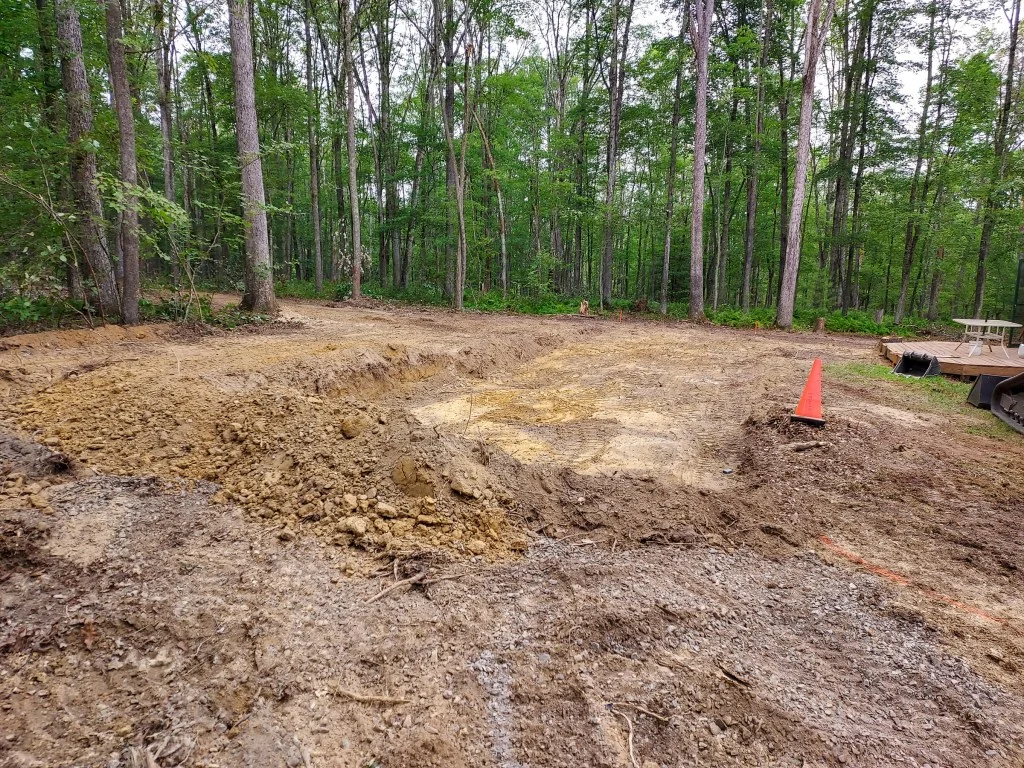
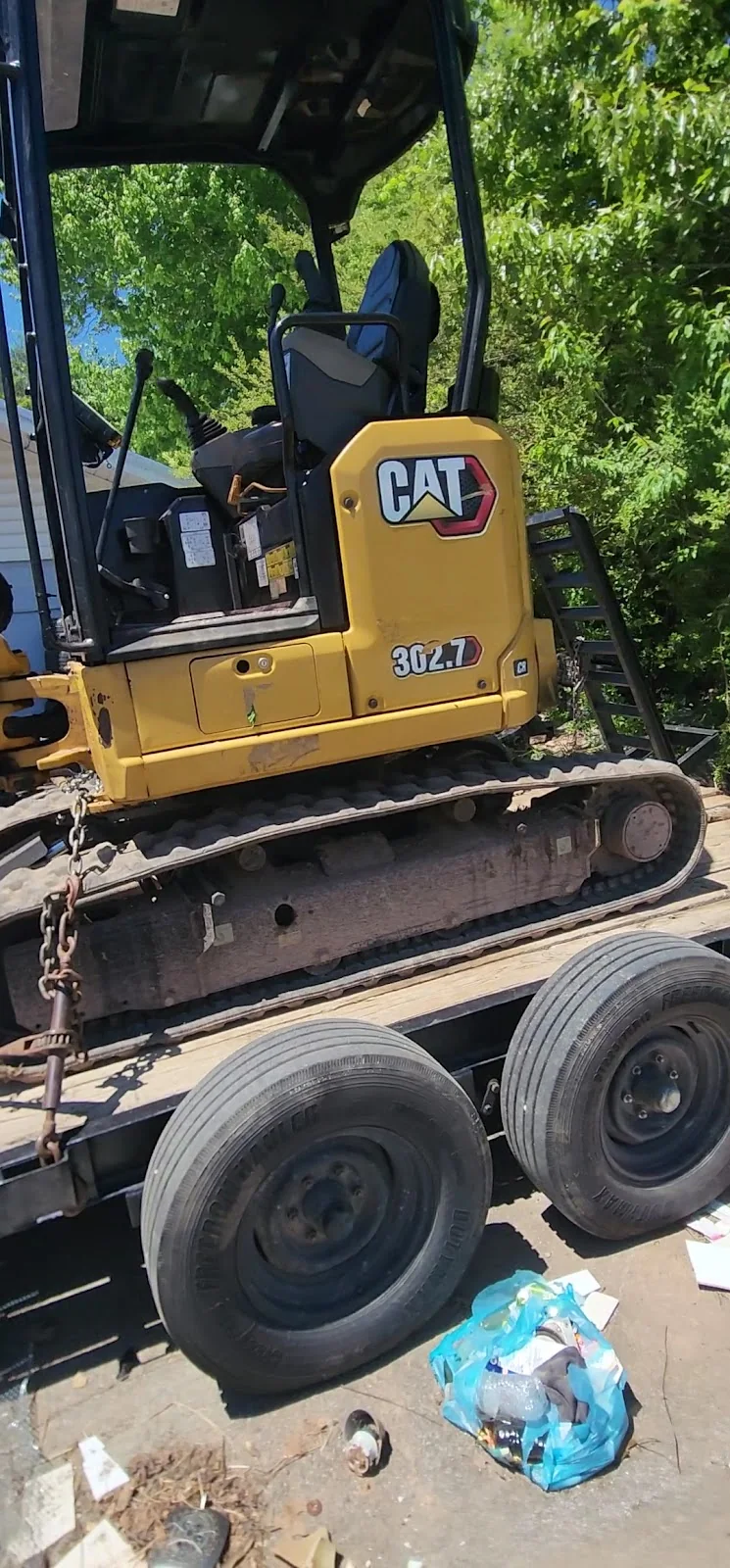
Two cost drivers are worth calling out because they are so specific to this side of Henderson County. First, access. Many Laurel Park driveways are narrow, switchbacked, or lined with mature trees, which means the excavator that could trench a flat lot in an afternoon may need a smaller machine and more time here. Second, rock. The geology under the town runs shallow to weathered schist and gneiss in spots, and hitting a shelf of that mid-trench can add hours of breaker work that no flat-lot estimate ever includes. Ask any bidder how they handle unexpected rock, because the answer tells you whether your quote is a real number or a starting point.
The pieces that make a culvert last
Four details separate a pipe that drains for 40 years from one that plugs the first fall. First: bedding. Pipe laid on rock or on the native hardpan point-loads and cracks. Second: slope. The pipe needs to run at a grade that keeps sediment moving, not dropping out at the low end. Third: inlet protection. A flared end section or a headwall keeps the pipe mouth from undermining. Fourth: outlet energy control. Riprap at the discharge point stops the pipe from digging a hole in your downstream embankment.
Our culvert and driveway pipe guide walks through each of these with the materials. When a culvert fails, the fix is often the regrade around it. That is grading work with its own scope, and the crews who do it well are the ones profiled on our Laurel Park grading page.
On the slopes above Hendersonville, there is a fifth detail that matters more than it does in flatter terrain: keeping leaves and debris out of the inlet during fall. Oak, hickory, and poplar cover much of the town, and a single season's leaf drop can cap a 15-inch pipe mouth if the inlet sits flush with the ground. A small grade-level grate or a headwall that stands a few inches proud of the surrounding swale solves most of it. Homeowners who have fought a plugged culvert through one October usually ask for that detail the second time around, and it is worth the modest upcharge to avoid the mid-storm shovel routine.
What to confirm before signing anything
Ask whether the work disturbs a stream or wetland buffer. The federal Clean Water Act is administered by the U.S. Environmental Protection Agency, and any crossing near a mapped stream may need coordination before excavation begins. On the contracting side, jobs above the state threshold for general contracting fall under the NC Licensing Board for General Contractors, so ask for a license for larger scopes. Then ask about the pipe itself: smooth-wall HDPE, corrugated HDPE, or RCP, and why. The right answer names your soil and slope. The wrong answer names the cheapest option in the yard.
One more: get the outlet plan in writing. If your contractor cannot say where the water lands downstream on your property or a neighbor's, the job is not fully scoped.
Finally, think about timing relative to Henderson County's wet season. Late winter and early spring bring the heaviest and most persistent rain in this part of the state, and a freshly disturbed trench on a bare slope can erode fast if the job runs into a multi-day event before the site stabilizes. Scheduling a culvert replacement for late spring or early fall gives the new pipe a chance to settle and the disturbed ground a chance to revegetate before the next heavy cycle. It also keeps heavy equipment off saturated clay, which is safer and, in practice, cheaper than fighting a stuck machine on a muddy grade above US-25.
HUD's guidance for property and site drainage and the International Code Council's model codes both reinforce the same principle: manage water at the source and give it a defined path, rather than letting it find one on its own. On a Blue Ridge slope, that principle is not abstract. It is the difference between a driveway that survives the spring and one that washes out.