Read the ground that's already there
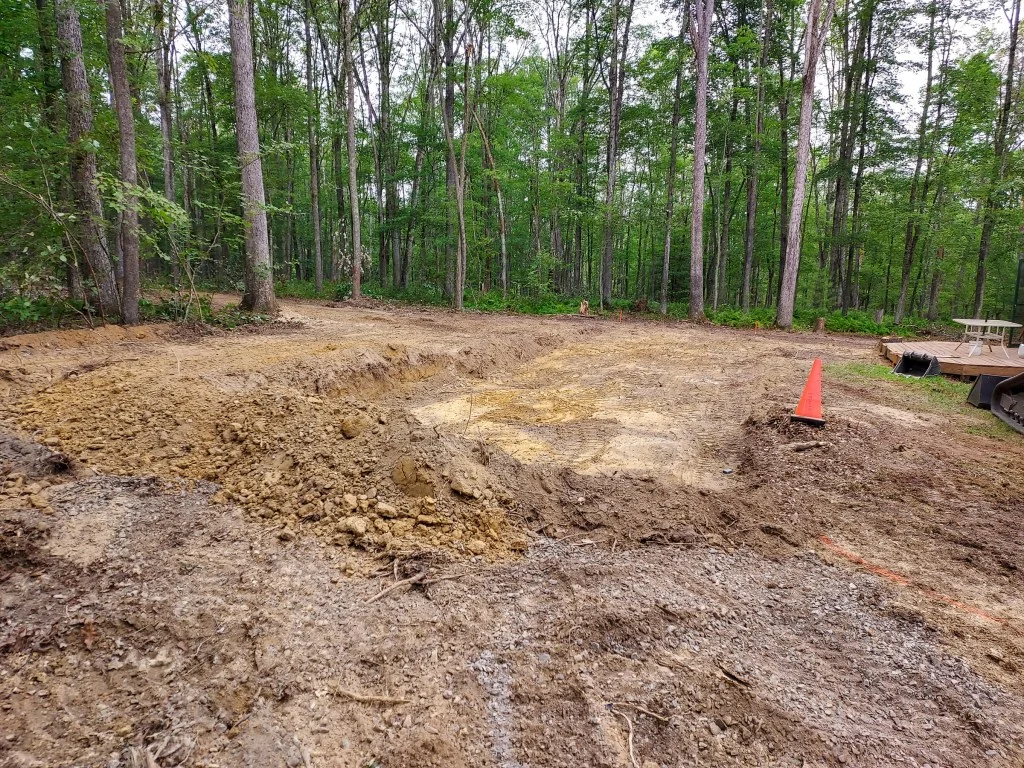
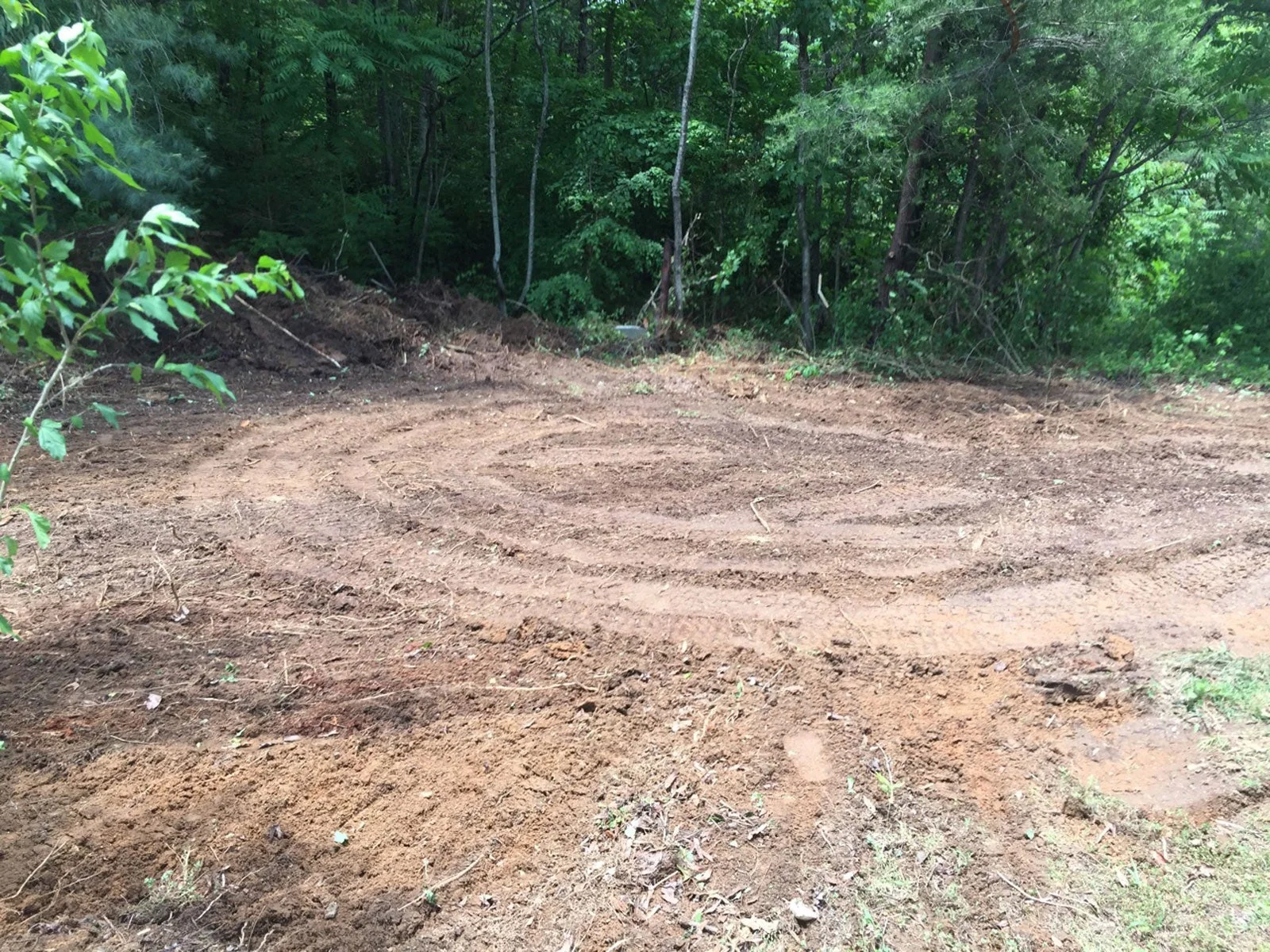
Hot Springs sits where the French Broad cuts a gorge through Madison County, and most buildable ground here is a shelf cut into hillside — a lateral bench above the river, a shoulder off a switchback road, or fill pushed in decades ago for a mill or a trailer. Before anyone quotes a pad, the smart money reads what the site already has: the pitch of the existing gravel driveway, where it drains in a hard rain, whether the old pad is holding or sagging on one corner, and where the uphill water goes when it leaves the neighbor's cut.
Spec work that ignores this is how a $6,000 pad turns into a $14,000 repair two summers later. A driveway too steep for a loaded concrete truck, a pad crowned the wrong way, a culvert sized for a drizzle — those are redo costs. Reading them first is the cheapest part of the job.
The redo pattern is consistent enough to name. A Franklin Mountain-side lot gets a fresh pad poured one fall; by the following spring the downhill corner has dropped two inches because the fill was placed on an old leaf-and-topsoil layer that was never stripped. A River Road parcel near the springs gets a culvert sized for a gentle rain, then the first tropical remnant backs water up the driveway and washes out the gravel apron. None of those are exotic failures — they're the ordinary mistakes that happen when a crew shows up with a machine and a number instead of a level and an hour of walking. The walk is what tells you whether the existing driveway can be re-crowned for a few hundred dollars or whether the whole approach needs to be cut back into the hill.
On a Hot Springs parcel specifically, three reads matter most. The driveway grade, because anything over roughly a fifteen percent pitch makes a concrete truck driver think twice and a fire apparatus turnaround questionable. The uphill cut, because on a bench lot the water you must manage comes from ground you don't own. And the old pad subgrade, because decades-old fill settles unevenly and a fresh surface poured on top hides the problem for one season and reveals it the next. All three reads are free. All three save money.
What site prep actually costs on a Madison County slope
Numbers below are regional working ranges, not quotes — slope, tree cover, rock, and haul distance swing them hard. The county-wide breakdown lives in the Madison County grading cost table; below is scope-by-scope for a typical Hot Springs parcel.
| Scope | Typical range |
|---|---|
| Driveway read + rework (re-crown, re-ditch, culvert swap) | $900-$3,200 |
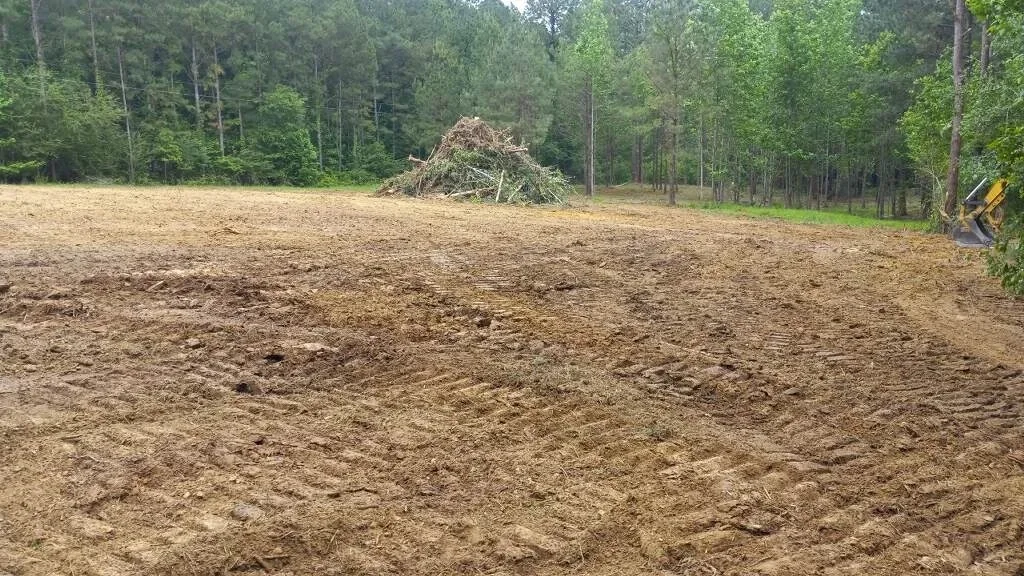
| Small building pad, gentle grade, good access | $2,500-$6,000 |
| Cut-and-fill pad on hillside, engineered | $6,000-$12,000 |
| Full site prep: pad + driveway + drainage + silt control | $9,000-$22,000 |
| Rock removal / blasting (by volume, when hit) | $1,800-$8,000+ |
| Erosion control plan install (silt fence, matting, basin) | $800-$3,500 |
Anchor your expectations to a real site visit, not a phone number. A quote without a walk of the slope is a guess dressed up as math.
What pushes a job toward the top of a band on a Hot Springs lot: a long steep drive that needs its own culverts and turnout, rock that turns out to be blue shale instead of the soft red clay the machine operator hoped for, or a pad that has to be benched into a grade steeper than three-to-one. What keeps a job at the low end: a bench lot with an existing gravel drive the crew can rework instead of replace, shallow topsoil over sound subgrade, and a pad position that lets spoil stay on site rather than get hauled out. Haul distance alone swings these numbers by thousands — a load of spoil that has to be trucked down a narrow switchback to a county-approved fill site costs real time and fuel, while spoil that can be pushed into an on-site borrow area costs almost nothing.
If your lot sits above the river and has never been built on, expect exploratory digging before the quote is firm. Two hours on a machine poking test holes tells a contractor whether the subgrade is clay, sand, or rock — and that single fact can move a pad bid by thirty percent in either direction. A crew that quotes a river-hill lot without ever turning a bucket is quoting a hope, not a scope.
Water is the whole job
Madison County's federal disaster record is storm-dominated: 21 declared events touch this county across 1978-2026, and the French Broad corridor specifically has a long history of high-water events. That record shapes how site prep should be engineered here — drainage isn't a finishing touch, it's the load-bearing assumption.
Two rules worth repeating. First, a pad is only as good as the ditch above it. Second, silt leaving your site is a code problem, not just a neighbor problem — the NC Office of State Fire Marshal code library and local land-disturbance rules put erosion control on the responsible party, and the EPA treats sediment as a real pollutant under the Clean Water Act. Practically: silt fence downslope, matting on any steep disturbed face, and a basin or check dam before runoff reaches a creek or the river.
The upstream side of a Hot Springs lot is where honest drainage design earns its keep. On a hillside bench, the neighbor above you owns the water that arrives on your pad, and you can't control what they do with their trees or theirs. So the ditch above the cut has to be sized for a worst case, not an average — a five-inch rain in an afternoon is not unusual in the French Broad gorge, and a ditch that carries a gentle shower will not carry that. A culvert sized on dry-season flow is a culvert that plugs in the first leaf drop and blows out in the second storm.
Downslope of the pad, the rule is slow it down before it leaves. Silt fence alone is the minimum, not the answer — on a steep cleared face, matting and a settling basin do the real work, and they are what inspectors look for. Runoff that reaches a tributary of the French Broad carries sediment into a river that the state already watches closely, and the county's storm history means regulators take mud leaving a construction site seriously. Building drainage for the storm that hasn't happened yet is not pessimism here; it is the local standard of care.
Who can legally take the job
North Carolina draws a line between grading that stays on your property and work that triggers general-contractor licensing. The NC Licensing Board for General Contractors publishes the current thresholds — think in terms of project value and whether the work is for you or for resale. On slope-lot work with structural fill, you also want an engineer's stamp on the pad design; a failed cut-and-fill pad is expensive to litigate and cheap to design right the first time.
Ask any crew three things: who stamps the pad plan, who pulls the land-disturbance permit, and how they handle the mud leaving your driveway. A team that answers those plainly belongs on your slope. Our own site prep and building pads overview walks through the sequence.
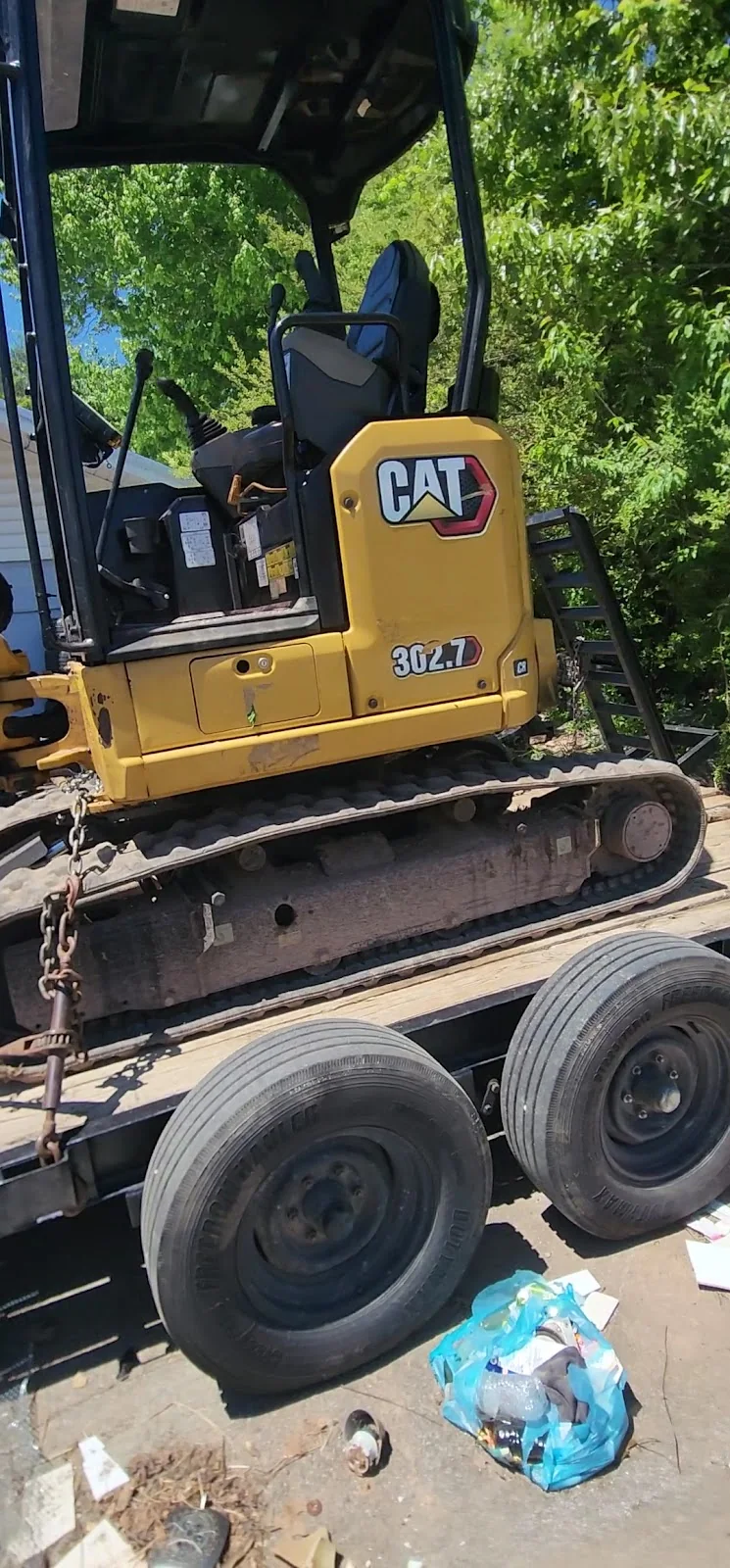
Local access adds a wrinkle a flatland contractor won't expect. Some Hot Springs-area parcels come in off roads that are narrow enough to make a loaded tandem dump truck a two-person job — one to drive, one to watch. Others sit at the end of a private drive with a weight-limited bridge or a gate too low for a full-size excavator. Sorting that out before mobilizing saves the change-order argument that arrives the morning the lowboy can't get up the hill. Ask the crew what equipment they plan to bring and whether they've walked the approach with a tape, not just eyeballed it on a satellite view.
Insurance matters here too. Grading on a slope above a neighbor's property is a real risk position — a rolled machine or a slope failure that damages downhill property is not hypothetical. Confirm the contractor carries liability coverage and can produce a certificate before mobilizing, and confirm workers' compensation coverage if they have employees. A cheap bid from an uninsured operator is not cheap if something slides downhill.
Fixing a pad that's already failing
Most of the calls here aren't new builds — they're redo jobs. A pad that shed water toward the house. A driveway that turned into a gully after one wet spring. A gravel apron that pumped mud every time a truck crossed it. Those aren't signs the original crew was bad; they're signs the site changed — the neighbor cleared uphill trees, a culvert silted in, the fill settled more on one side than the other.
The fix usually starts with a re-read: re-shoot the slopes, re-check the ditch, confirm where water actually goes in a hard rain. Sometimes the answer is a $1,200 culvert swap. Sometimes it's a $9,000 regrade with an engineered swale. Honest local crews will tell you which one it is, in writing, before breaking ground. That's the difference between a contractor and a quote. For vetted local teams, see our Hot Springs grading contractors page.
A few redo patterns show up again and again on Madison County slopes. The crowned-the-wrong-way pad is the most common: water is meant to leave a pad on the downhill side, but the surface was built slightly toward the house, and the first hard rain finds the foundation. The fix is usually a re-slope of the pad surface and a proper swale, not a full regrade — but it only works if the ditch uphill of the pad is doing its job. The silted culvert is next: a pipe that worked for two seasons fills with gravel and leaf litter, backs up, and cuts a new channel around the road. Widening the pipe or adding a trash rack is often a same-day fix. The settled fill corner is the expensive one, because it means the subgrade was never stripped properly and the whole pad section has to come up, be re-compacted, and be re-poured.
Timing matters for a redo. In this climate, the driest workable window runs roughly from late spring into early fall, before the wet season returns. Scheduling a drainage fix in October means the first test of your new ditch may also be a storm that undermines it. Crews here know the calendar, and they'll push to get dirt moved while the ground is workable. If a contractor tells you a July start beats an October start on a drainage-sensitive Hot Springs lot, that is not a sales tactic — it is how the weather works on this side of the county.